
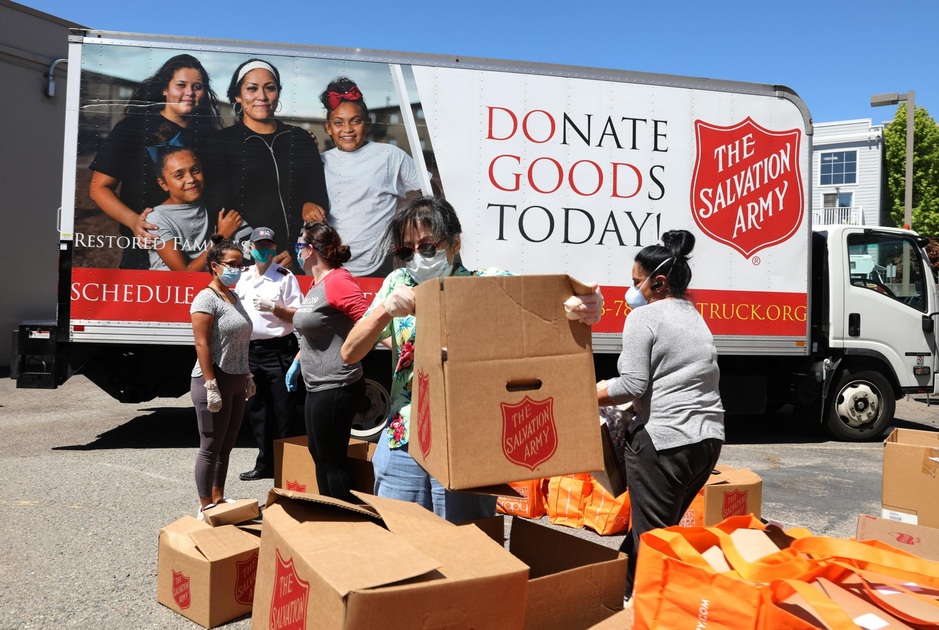
The Salvation Army is looking to sell property it has owned since the 1950s for $58 million, pitching the two adjoining parcels as one of the largest development opportunities in the city.
The 1.9-acre site at the corner of Valencia and Cesar Chavez was purchased in 1955, the nonprofit confirmed, and a 65,000-square-foot, three-story building went up the following year. The building, which has a parking lot, is now used as a warehouse for donations; an abutting property, which was added in the early 1980s and currently houses recovering addicts, is also part of the listing.
In just over a week on the market, the offering has sparked interest from developers, indicating that the city’s drought of housing construction may be turning a corner. The site is zoned for up to 65 feet in height, with the potential to go higher under state and city density bonuses, given that it is on a transit corridor.
Matt Madsen, the Salvation Army’s divisional secretary for San Francisco, said “the time was right to sell to the right buyer,” underscoring that no programs or projects would be terminated due to a sale.
“We would have a transition plan in place to ensure no disruptions for clients,” he said, declining to provide specifics. “They are always our top priority.”
The property houses the nonprofit’s Joseph McFee Center, a 96-bed program that is part of its addiction-recovery initiative known as “The Way Out.” Three-quarters of the program’s participants start unhoused, then stay at a detox and drug-free shelter, graduating to longer-term housing with supportive services, with the eventual goal of living independently. The program, which was started in 2021, has a 76% success rate, according to the Salvation Army. More than 1,100 people went through its recovery programs in 2025.
In recent years, the Salvation Army has gained favor in City Hall because it offers an abstinence-focused alternative to rehabs that are considered more tolerant of drug use. The nonprofit won at least two contracts last year to run treatment centers in Nob Hill and the Marina. The San Francisco branch of the organization runs the city’s only sober shelter, plus another emergency shelter, three permanent housing complexes, and six addiction recovery and transition housing operations, plus community centers, nutrition and activity centers, and family services offices.
In addition to the 15,000-square-foot McFee center at 3500 Cesar Chavez, the parcel includes the much larger warehouse and parking lot at 1500 Valencia.
The Salvation Army owns two more properties across Valencia, including a thrift store at 1501 Valencia St. These are not for sale.
Located around the corner from California Pacific Medical Center’s Mission-Bernal Campus, the parcel has attracted the interest of several local and statewide market-rate housing developers since it hit the market Feb. 11. A nonprofit interested in building a community center has also inquired about the property, according to Douglas Elliman agent Catherine Marcus Bassick.
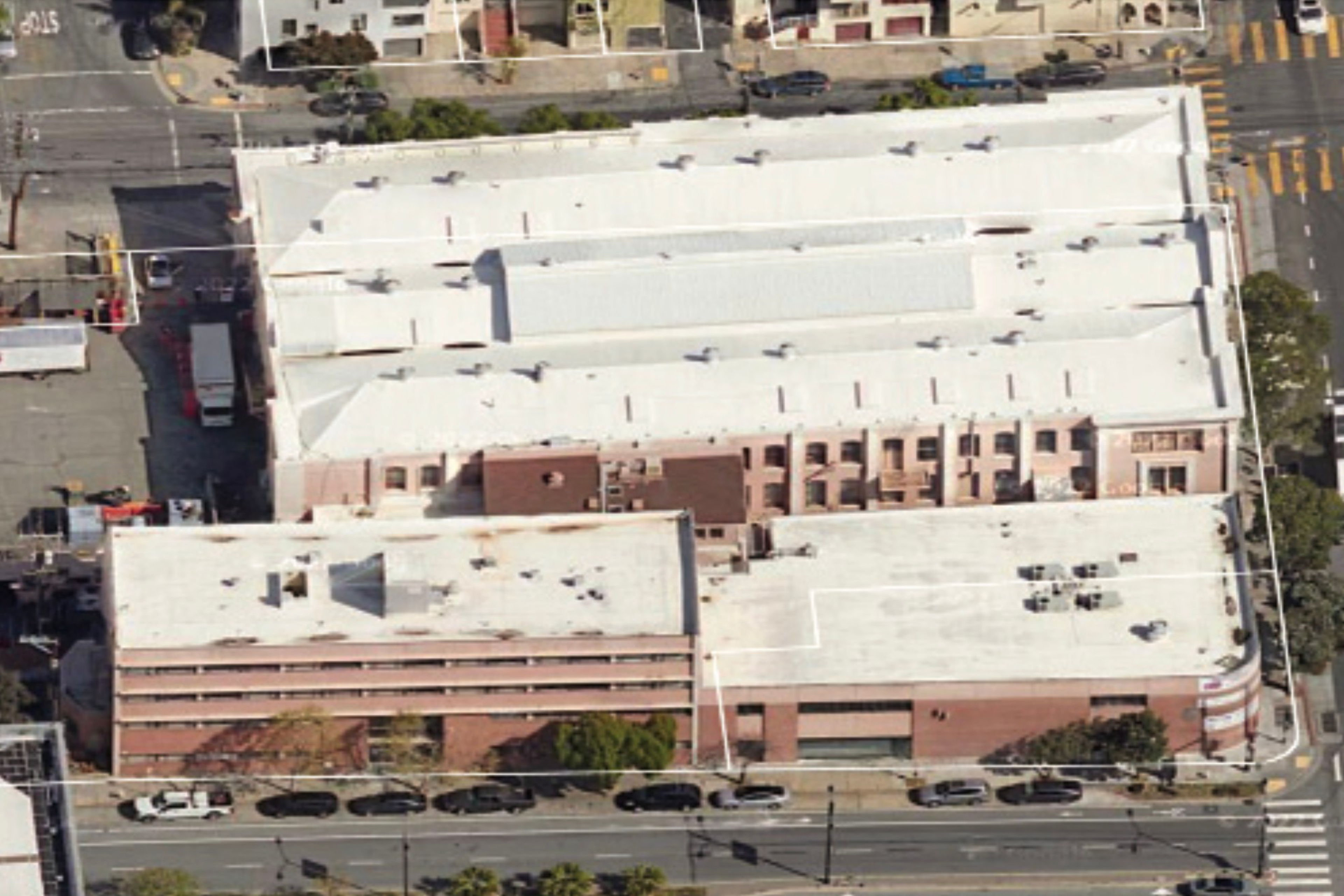 An overhead view of the site, showing the warehouse, McFee Center and parking lot, as well as the lot lines. Image courtesy of Salvation Army/Douglas Elliman Commercial Real Estate
Bassick, the Salvation Army’s exclusive real estate agent for the western region, was first contacted by the Southern California office to list a 2.36-acre lot in downtown Los Angeles near the Crypto.com (opens in new tab) arena that is on the market for $100 million. The idea was to capitalize on the interest and rising real estate values related to the 2028 Olympics.
Bassick said that after discussing the L.A. listing, the organization considered the SF properties as well and decided to put both on the market this month. San Francisco may not have the Olympics, but it does have the AI boom, though the parcels are the only Salvation Army properties currently on the market in the Bay Area.
The $58 million asking price was guided by a bid made before the pandemic that fell through as the real estate market collapsed. Recently, the appetite to restart housing developments has returned, spurred by the AI gold rush.
The scarce supply of housing and heated battles for rentals in the city remind Bassick of what Silicon Valley was like in the early 2000s.
“I think someone’s got to really take a chance and look at the future and not the past,” she said. “Look at what happened in Mountain View with Google to see what’s going to happen here.”
The potential development site is one of the largest available parcels in San Francisco, according to Bassick. It’s also one of the few flat sites in the city that would not require major remediation efforts before construction.
“We have good, clean land,” she said. “That’s very rare.”