
The decision by the Los Angeles County Board of Supervisors to pursue another sales tax is just the latest example of fiscal irresponsibility by elected officials in California. While other states balance their budgets, provide better services (e.g., schools that actually educate students) and lower taxes, California continues its journey in the opposite direction.
Although the majority of supervisors claimed that the proceeds of the tax will be used to replace federal health care funding taken away by the Trump administration, the levy as proposed is a “general” tax, meaning that the funds would be unrestricted and available for any purpose.
Caveat emptor. The tax proceeds might be used for health care but could just as easily – and legally – be used for salaries and benefits for public employees, grants to favored NGOs, or remodeling of supervisor offices.
Under the current interpretation of Proposition 13, a tax for a limited or special purpose requires a two-thirds vote. Although that threshold is more difficult than a majority vote, hundreds of local taxes have been approved in recent years with the approval of two-thirds of local voters. Moreover, “special taxes” are preferred by citizens to ensure that tax proceeds for specific purposes are spent for those purposes, not some governmental black hole.
But in order to get their cake (tax) and eat it too, local governments will propose general taxes but promise (pinky swear) that the proceeds won’t be spent for purposes other than those in the accompanying political advertising.
The odd thing is that, many years ago, this political deception was rejected by Newsom. No, not Gov. Gavin Newsom, but his father, William Newsom III, who was a Justice in the California Court of Appeal.
In 1982, the California Supreme Court, led by the infamous Rose Bird, ruled in City and County of San Francisco v. Farrell that Proposition 13’s reference to “special taxes” would be interpreted very narrowly. The decision overruled the lower Court of Appeal decision which was favorable to taxpayers and consistent with the letter and spirit of Prop. 13. The high court ruling, conversely, opened a huge loophole in Prop. 13’s effort to restrict the imposition of other local taxes intended to re-take the money the government wasn’t receiving in property taxes under the popular new law.
What few California voters know is that when the Farrell case was at the Court of Appeal level in San Francisco, it was Gov. Newsom’s father who wrote the opinion which interpreted the term “special tax” in Prop. 13 to be expansive and would have included even taxes that now are classified as “general.”
In reaching that conclusion, Justice Newsom, who authored the unanimous opinion, stated the following: “We accordingly are convinced that sustaining the tax at issue would mark the first crack in the wall of tax reform contemplated by Proposition 13, would lead to the creation of a loophole nearly as large as the wall itself, and would flout the public will as we understand it to have been expressed in the subject initiative.” He went on to write, “In our view, the intent of [Proposition 13], as envisioned by the electorate which enacted it, was to impose a two-thirds popular vote requirement as a prerequisite to the establishment of any new tax, including a rate adjustment, so as to prevent local governments from circumventing the tax-cutting purpose of article XIII A in the absence of such a popular mandate.”
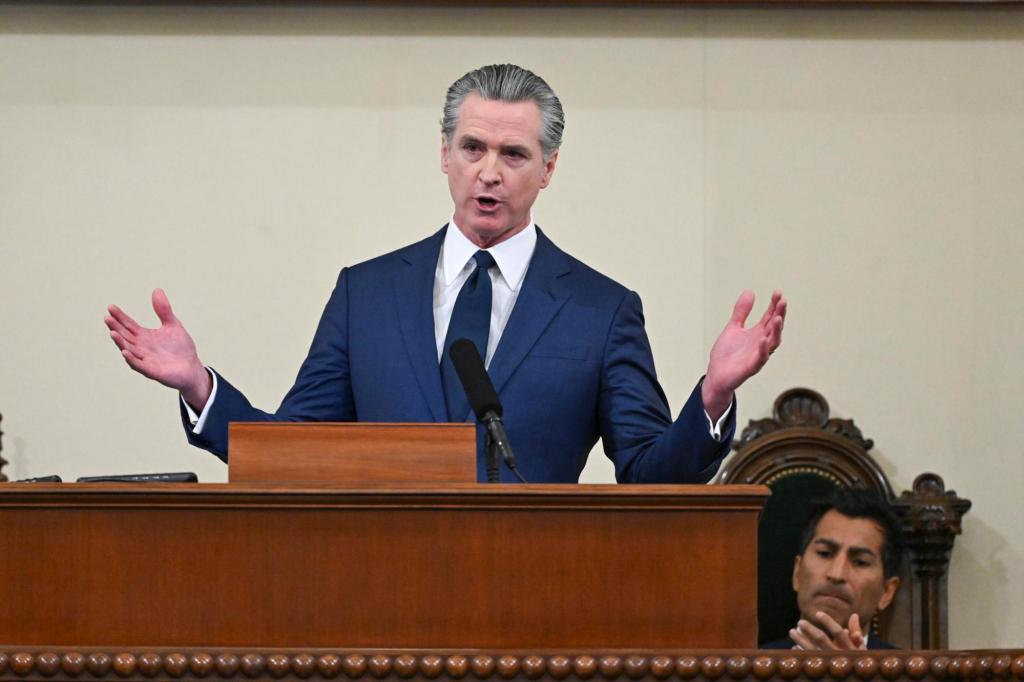
It’s too bad that our current governor lacks the same concern for California’s citizen taxpayers that his father had. (Recall that the younger Newsom was a petitioner in the lawsuit to remove a major tax reform measure, the Taxpayer Protection and Government Accountability Act, from the ballot in 2024).
In this case, the nut fell very, very far from the tree.
Jon Coupal is president of the Howard Jarvis Taxpayers Association