
What’s at stake?
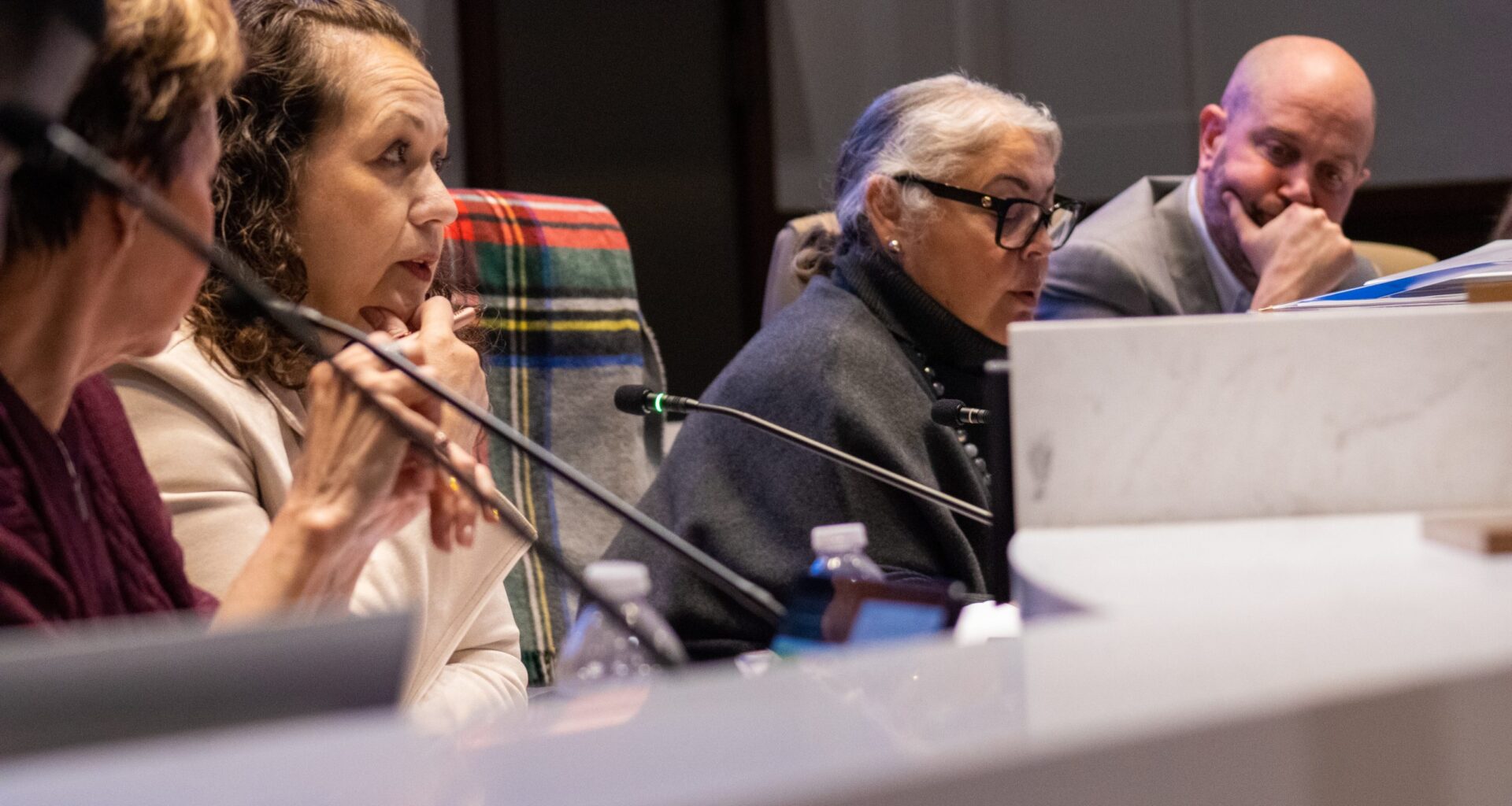
The way that Fresno Unified doubled the pay of its trustees — through a change to board bylaws — could’ve been clearer, according to Fresno Unified Board President Veva Islas. Additionally, two board members had to ask district staff questions at a Jan. 14 board meeting to learn that the trustees were actually considering pay increases for themselves, and that it would take effect starting Feb. 1.
As Fresno Unified retirees scrambled this winter amid stalled healthcare negotiations, the district’s elected trustees doubled their own pay.
The vague language that the Fresno Unified Board of Education used during a January board meeting frustrated workers and union leaders, who fear looming layoffs and pay cuts as the district tries to balance a projected $59 million deficit.
“It is so easy for you all to talk about cuts for frontline workers,” veteran groundkeeper Albert Ross told the trustees on Feb. 11, “while you so eagerly approve for more for yourselves.”
Instead of a formal vote to increase trustee pay, the Fresno Unified School Board passed it as a change to their own bylaws, titled “Remuneration, Reimbursement, and Other Benefits.” The bylaw change – one of a dozen total changes OK’d with a single vote — did not list how much board trustees would be paid.
Even board members seemed confused by the agenda language.
At the tail end of the Jan. 14 school board meeting, trustees Elizabeth Jonasson Rosas and Claudia Cázares had to specifically ask district staff whether the board was actually considering pay increases for trustees, and when it would take effect.
When asked whether the pay increase item was transparently labeled, Fresno Unified Board President Veva Islas acknowledged that it could’ve been clearer.
“I think it was listed appropriately, albeit (it) could have been more plainly stated,” Islas told Fresnoland. “I don’t think it was listed to intentionally confuse anyone.”
The pay increase was passed through a 6-1 vote, with Trustee Andy Levine registering the only “no” vote.
Fresno Unified board members not only doubled their pay — the new rate is also five times their pay just five years ago.
Before Feb. 1, board members were compensated $2,110.65, or about $24,727.49 annually. After the increase, board member compensation increased to $4,500 a month, or $54,000 annually.
“It’s not a good time to be a school board member,” Islas said. “These are not going to be easy decisions. But, you know, I stand on my vote on this.”
Fresnoland reached out to all seven board members. Only two responded to Fresnoland’s questions sent via email, text, or both — Islas and Levine.
Concerns over trustee compensation increase
The increase in compensation triggered public criticisms from community members and the SEIU Local 521 labor union, which called out the pay raise at a Feb. 11 meeting.
“Balancing the budget by freezing wages of the lowest paid employees in the district sends the wrong message, especially at a time when we’ve seen millions spent on consultants and 113% increase in the compensation of this body,” said Lourin Hubbard, a representative of SEIU Local 100.
Union members also urged the district against considering hiring freezes and layoffs against classified workers.
The changes to the board bylaws only added a reference to Education Code 35120, which was changed by a recently passed state law, and did not list how much each board member would be compensated or the maximum they could earn. Board members also have the option to forego payment.
The bylaw was included in the board’s agenda after going through the board bylaw subcommittee, according to Fresno Unified spokesperson AJ Kato, which has been staffed by Cázares, Islas and Levine in 2025 and so far in 2026.
Levine, who was the only one to vote against the bylaw amendments, pulled it for discussion at the Jan. 14 meeting. He explained that he supports the adjustment’s purpose to properly compensate board members and ensure their complete commitment to the boards they serve on.
At the same time, Levine expressed concern over increasing pay amid financial woes.
“As been said a few times tonight, the reality is that we are in a moment of operating under a budget deficit, and having to make some difficult decisions over these next few months, if not longer,” Levine said. “So I am concerned about any action taken on this item while we’re in this current budget moment.”
What do board members say about the increase?
When Gov. Gavin Newsom signed AB 1390 in October 2025, it was the first statewide adjustment to school board trustee pay — tailored to student enrollment — in over four decades.
According to CalMatters, the bill received support from the California School Boards Association (CSBA) and from just two school districts: Montebello Unified and Fresno Unified.
Levine and school board trustee Jonasson Rosas have forgone the pay increase and will continue being paid $2,110.65 monthly, according to Kato.
Cázares, along with board members Valerie Davis, Keshia Thomas and Susan Wittrup, did not answer questions about the stipend.
Levine confirmed rejecting the payment but declined an interview on the subject.
“While I’ve opted out of the increase, I fully respect my colleagues’ own thought processes and decisions on it,” Levine said via text.
When Islas spoke with Fresnoland, she acknowledged that increases to board member compensation is not typically done through changing a board bylaw.
She also acknowledged it took place amid challenging financial times at Fresno Unified. She also said the board’s prior stipend rate made it more difficult for lower-income candidates and people from underrepresented backgrounds from serving.
“I don’t want the cost of serving as a school board member to be a hindrance in getting a better representation of folks to decide to run for office,” Islas added.
Moreover, Islas also said the pay increase adjusts along with the district’s own attendance.
“I do want to be forward thinking about what this means to future candidates, and I do want to see more representation from disadvantaged families serving in these decision making roles,” Islas said.
During the Jan. 14 meeting, Thomas argued that the board went without an annual 5% raise for many years back when the district’s budget was struggling.
“Here’s my thing, if you don’t want it, don’t take it, but we work hard. I work hard,” Thomas said at the meeting. “And city council, supervisors, you name it: every board gets a stipend, and I don’t want anybody minimizing my opportunities. So that’s where I stand.”
Wittrup agreed with Thomas, saying that all the board members are engaged with their work and that the increase was an adjustment, not a raise.
“It’s really not full compensation, it is an adjustment from something that was decided many, many years ago, and inflation has had an impact recently,” Wittrup said during the vote discussion.
What financial challenges is the district facing?
Islas said the district’s budget will force the board to make hard decisions.
“I think our unions are doing exactly what they are organized to do, and that’s to fight for their constituents, but that is going to be a real challenge to meet any expectations around increases for any one of our labor partners, because we are looking at, you know, millions of dollars that we need to shave off of our budget,” Islas said during an interview.
AB 1390 tethers trustee pay to average daily attendance — also known as a school district’s ADA. Fresno Unified’s ADA last year was over 60,000, qualifying the board for a maximum compensation of $4,500 under the adjustment.
But the district is bracing for even greater declines in student enrollment, which could trigger pay cuts for the trustees.
FUSD’s chief financial officer Patrick Jensen noted that the district is far from alone facing declining enrollment projections.
Jensen said declining enrollment at elementary schools since 2018-19 has led to the district going from three schools with under 400 students to now having 10 schools serving under 400 students.
“And this is fundamentally an unsustainable graph, and one that we’re going to have to address, as we’ve spoken about,” Jensen said.
Across the state, the largest school districts have discussed or even approved layoffs to address decreasing revenues from declining enrollment or deficits in their budgets.
This includes the largest district, Los Angeles Unified, which approved layoffs on Tuesday.
That same day, Elk Grove Unified in the Sacramento area — California’s fourth largest school district — voted to approve reductions in staff as well as increases in board member compensation.
Fresno Unified’s board has yet to announce any plans to vote for layoffs or cuts in the district.
Related