
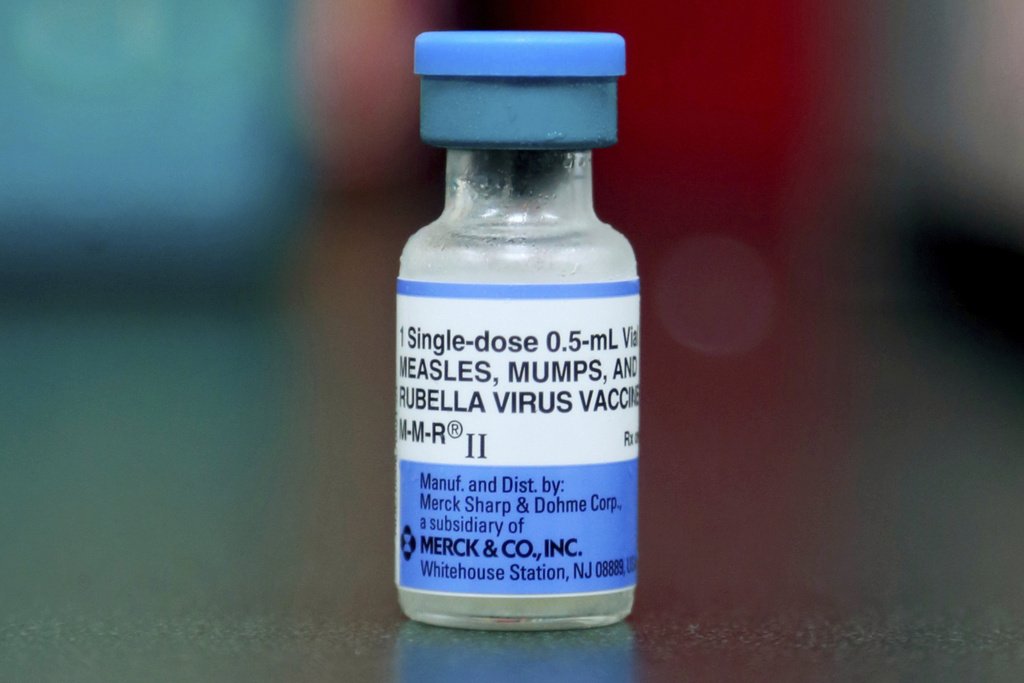
 A vial of a measles, mumps and rubella vaccine. File photo: AP/Paul Vernon
The Berkeley High community was alerted Tuesday that people on campus may have been exposed to mumps earlier this month.
An email, signed by Berkeley High Principal Juan Raygoza and City of Berkeley Public Health Officer Noemi Doohan, said staff, parents and students who were at BHS during the school day on Feb. 2 might have been “exposed to a person with Mumps.”
The disease had just 348 cases reported across the country last year, according to the Centers for Disease Control and Prevention (CDC) .
Symptoms of the viral, contagious disease typically start with a few days of fever, headache, muscle aches, tiredness, and loss of appetite, followed by salivary gland swelling. It spreads through droplets of saliva and mucus from the mouth, nose, or throat of an infected person.
Some people never have symptoms. In most others, it is a mild disease that people completely recover from in a few weeks. Sometimes it can lead to complications: hearing loss, meningitis and swollen testicles. In rare cases, infections lead to sterility.
Raygoza advised anyone experiencing symptoms to contact their doctor. His message urged medical providers and community members with additional questions to contact him directly, district nurse Nick Koovshinoff or the city’s communicable disease program at 510-981-5292.
The city’s health department is investigating the possible exposure, according to the message sent to community members.
A spokesperson for the Berkeley Unified School District (BUSD) told Berkeleyside Wednesday that the information in Raygoza’s email “reflects all the details we have regarding the reported mumps case.” The city health department has not yet responded to Berkeleyside’s questions about the total number of cases or whether there have been other mumps cases in Berkeley in recent years.
Mumps alert comes amid rising vaccine misinformation
The possible exposure comes amid increased prominence of anti-vaccine activism nationally, fueled by misinformation and belief in the unfounded claim that vaccines may cause autism.
U.S. Secretary of Health Robert F. Kennedy Jr. falsely told Dr. Phil last year that the mumps component of the measles, mumps, and rubella (MMR) vaccination “never worked.” Although he later endorsed the vaccine, his frequent vaccine skepticism has caused confusion and may have contributed to declining support for the MMR vaccine.
U.S. vaccination rates have dropped and the share of children with exemptions has reached an all-time high, according to federal data. At the same time, rates of diseases that can be protected against with vaccines, such as measles and whooping cough, are rising across the country.
By early summer, California had already recorded more measles cases than in all of 2024.
In late July, Doohan urged Berkeley families to stay up to date with their kids’ vaccines ahead of the school year to prevent measles, polio, and whooping cough. Children in California are required to have certain immunizations to attend private and public institutions, though exemptions are offered for religious and personal beliefs.
All 11 BUSD elementary schools reported MMR vaccination rates at 90% or above, according to an April data visualization map by EdSource. Experts say that at least 95% of students should be vaccinated to maintain herd immunity and prevent outbreaks.
Across California, more than 96% of kindergartners were vaccinated for MMR during the 2023-24 school year, the most recent data available, according to the Public Policy Institute of California. Alameda County kindergarteners were vaccinated at a rate of 93.8% that year, while the national average was 92.7%. The state of California is auditing 34 Oakland schools, and 428 schools statewide, over low vaccination rates.
Mumps cases remain extremely rare
While measles cases spiked last year, mumps cases have remained low, according to CDC data. Between 2020 and 2025, there were under 700 cases each year, following one of the largest surges in decades, beginning in 2016, which saw upward of 6,000 cases per year.
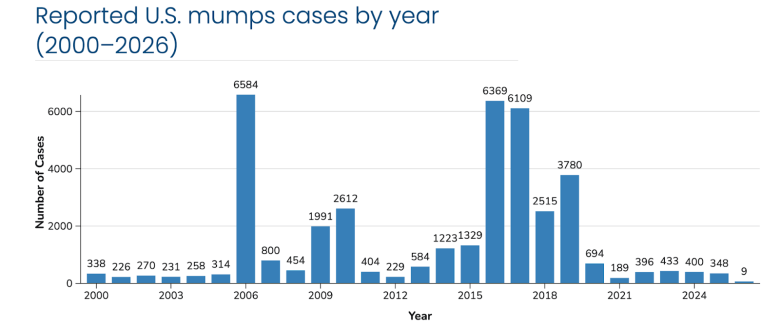 The data for 2026 is as of Jan. 29. Courtesy: CDC
But the recent Berkeley High alert comes amid other warnings in California. In December, UC Davis issued an alert that a person with a suspected case of mumps had been on campus, potentially exposing others to the virus.
Before the February alert, the most notable mumps outbreak in Berkeley occurred in 2011, afflicting 20 UC Berkeley students. At the time, Berkeleyside reported that a significant number of city residents were not vaccinated against the virus. Before that outbreak, Berkeley had seen only six reported mumps cases since 1990.
Mumps is largely preventable by the MMR vaccine. The CDC advises children to receive their first dose at 12 months or older. The second dose is administered before the child begins kindergarten. Students (including those in college), healthcare workers and international travelers are advised to receive two doses of the vaccine.
The Associated Press contributed to this story.
“*” indicates required fields