
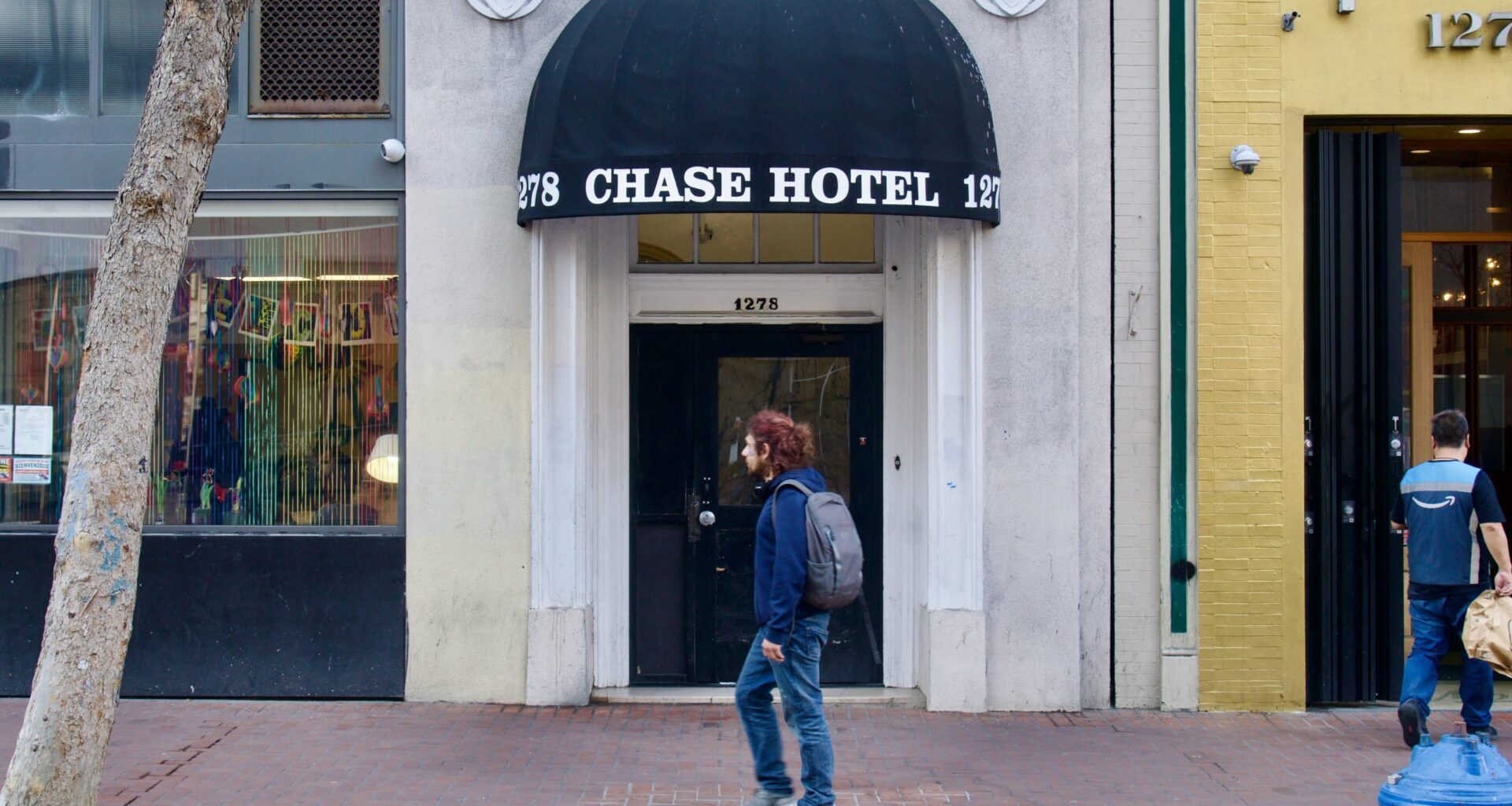
On a brisk January morning, a group of Latino residents — one nine-months pregnant, others accompanied by their children — walked together three blocks from the Chase Hotel, a single-room occupancy building on Market Street, to San Francisco’s Department of Building Inspection to testify about deteriorating conditions where they live.
Over four years, people had reported problems at the hotel, where one tenant called conditions “deplorable.”
Now, for the first time, residents were able to escalate their complaints and receive a hearing about rampant mold, cockroach and rodent infestations, and myriad other symptoms of deteriorating habitability.
When the tenants arrived for the hearing, they were welcomed by organizers from the Single Room Occupancy Collaborative Program, aka the SRO Collaborative, a city-funded program that supports a coalition of community-based nonprofits advocating for low-income residents of single-room occupancy hotels. When hearing officers called the tenants to testify, each approached the podium cautiously.
“We want to testify and clarify how difficult it is for the families and children living in these conditions,” said Miguel Carrera in introducing the speakers. Carrera is an organizer with the SRO Collaborative, which provided support and language interpretation for the group.
For years, Chase Hotel residents have lived with mold, pests, broken elevators and missing carbon monoxide detectors that a building representative said owners didn’t know were required, problems the city has repeatedly cited, several tenants told the Public Press. City records show January’s hearing on outstanding violations was the first of its kind on the building and marked an uncommon escalation in enforcement, according to the Department of Building Inspection.
Unsafe living conditions at the Chase Hotel went largely unresolved for years, not only because of poor building management and challenges with enforcement but also because many Latino tenants were afraid to speak up, raising broader questions about how fear can delay accountability in San Francisco’s single room occupancy housing. Residents said their concerns about retaliation from management discouraged them from complaining about mold, pests and broken safety systems. Meanwhile, heightened anxieties about immigration nationwide have contributed to wariness among Latinos of drawing attention to themselves. But now the tenants, working together and with encouragement from local housing advocates, are organizing to get the city to intervene.
F & M Oberti, Inc. which owns the Chase Hotel, has until Friday to remedy the violations after repeat warnings from the Department of Building Inspection. The company has not responded to multiple requests for comment from the Public Press.
Navigating unsafe conditions as a parent
Six Chase Hotel residents told the Public Press that conditions at the building have been poor. Their chief concerns were filth and health risks to their children, some of whom have suffered from bug bites and mold-borne infections. Many who shared their experiences were monolingual Spanish speakers and most spoke anonymously for fear of retaliation.
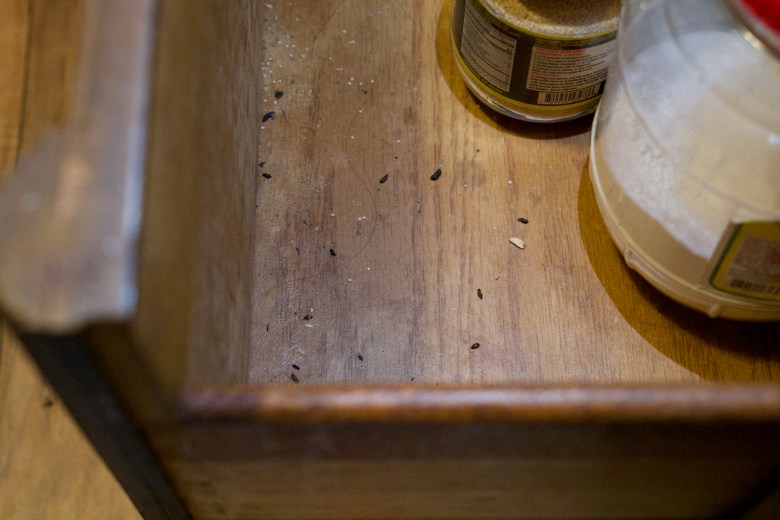 Residents of the Chase Hotel have struggled with rodent and roach infestations as well as mold growth in their units. Parents in the building said living conditions are harming their children. Credit: Madison Alvarado / San Francisco Public Press
Some tenants expressed concern about building security. Jessenia Curimania said an unknown person gave one of her children an unknown substance in a small plastic bag in the hallway of their floor late last year.
Children living in the building often play in the hallways since SRO units don’t have space for them to run around. So parents like Curimania worry about lax security. One possible solution, she said, would be to fix or replace security cameras that residents say are nonfunctional.
Another resident, who wished to remain anonymous, said building management had compromised their safety by giving out their address without their permission — in one case, to someone with whom they had severed contact and who later showed up at the front desk.
Language differences are a big obstacle for reporting problems to Chase Hotel management, several tenants said.
The on-duty manager speaks Tagalog and English, while many families in the building speak only Spanish. Residents said they often relied on bilingual janitorial staff to relay concerns, but were told complaints needed to go directly to management, creating confusion about how issues should be reported. The owner did not respond to questions around the complaint protocol.
Many families did not want to talk publicly about property issues because they did not want to alienate management, said Miguel Carrera, an organizer with the SRO Collaborative.
One resident, who spoke anonymously for fear of retaliation, said that during the summer they found bed bug bites all over their child’s arm. While the parent dealt with the infestation and took their child to a doctor, they never told management about the bites because they said they would rather live in discomfort than upset the manager and risk losing their home.
“We live here because we don’t have the resources” to live somewhere else, the parent said. “Sometimes, living in this country isn’t so easy. It’s a day-to-day struggle.”
According to organizers and tenants, management has been flexible on late payments but tenants worry that will change if they speak out publicly.
“They don’t want to be evicted from the only place they have,” Carrera said, noting that families worry that if they end up on the streets, they will have to interact with Child Protective Services or police.
ICE raids and the Trump administration’s attacks on Latinos are another lingering fear, for immigrants and citizens alike.
President Trump has put in action an operation beset by legal challenges that includes stripping immigrants of their legal status, detaining and deporting people for exercising their right to free speech, arresting and detaining U.S. citizens, and sending immigrants to prisons in foreign countries. Under a recent U.S. Supreme Court decision, immigration authorities in Los Angeles could detain someone for speaking Spanish or appearing Latino.
“The other problem they’ve been facing is all these nasty, crazy things going on with the president, the abuses and trauma,” Carrera said.
To address some of those fears, the collaborative is putting plans in place such as sending scouts to look for ICE agents at City Hall when families speak at city meetings, Carrera said.
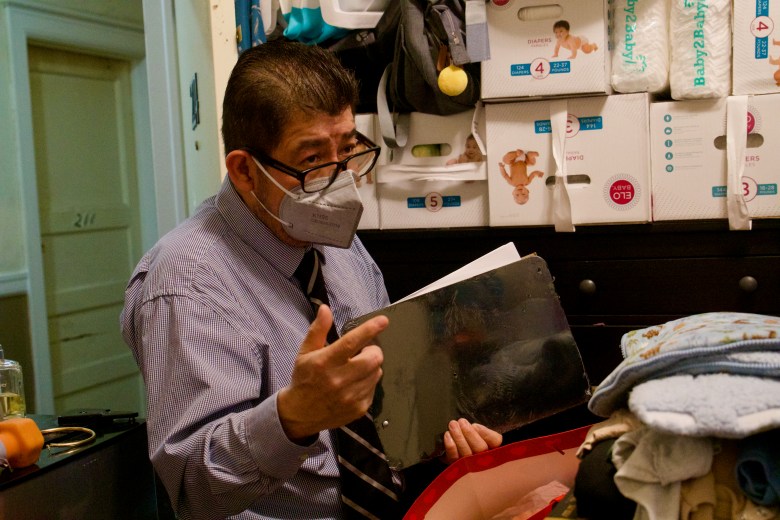 Miguel Carrera, an organizer with the SRO Collaborative, regularly calls Chase Hotel residents and visits the building weekly to offer them support. Credit: Madison Alvarado / San Francisco Public Press
City intervenes to help tenants
Following a Chase Hotel tenant’s complaint in early September, a Department of Building Inspection representative cited the owner for mold, rodent and cockroach infestations, failure to certify the fire alarm system annually, and failure to provide carbon monoxide and smoke detectors in numerous units.
While the Department of Building Inspection has repeatedly told the owner, F & M Oberti Inc., to remedy the issues, multiple re-inspections showed it has not done so and residents continue to live in unsafe conditions.
Philip Oberti, the company’s CEO, did not respond to multiple requests for comment.
This is not Oberti’s first brush with the Department of Building Inspection. Residents have filed at least 10 complaints over the past 20 years about pests and the city found at least six violations related to infestations or unclean conditions that could lead to infestations.
In the past, tenants said the building management addressed safety and health issues once the Department of Building Inspection got involved. That isn’t the case today. Records show the current case marks the first time violations at the Chase Hotel have remained uncorrected long enough — over four months — to warrant a hearing.
“Most violations do not reach the hearing stage,” Kelley Omran, a spokesperson for the Department of Building Inspection, wrote in an email. While the department issued 1,736 notices of violation in 2025, it only sent 370 cases to hearings on citations issued that year, including some originally issued in prior years.
At the Jan. 15 hearing, a representative for the building owner blamed the problems on tenants, saying they cooked food in the units when they were not supposed to.
The owner’s representative also told Department of Building Inspection officials that he was not aware that each unit needed to have a carbon monoxide detector. However, records show that the building was cited for that violation in 2019, when the department found that several units did not have detectors.
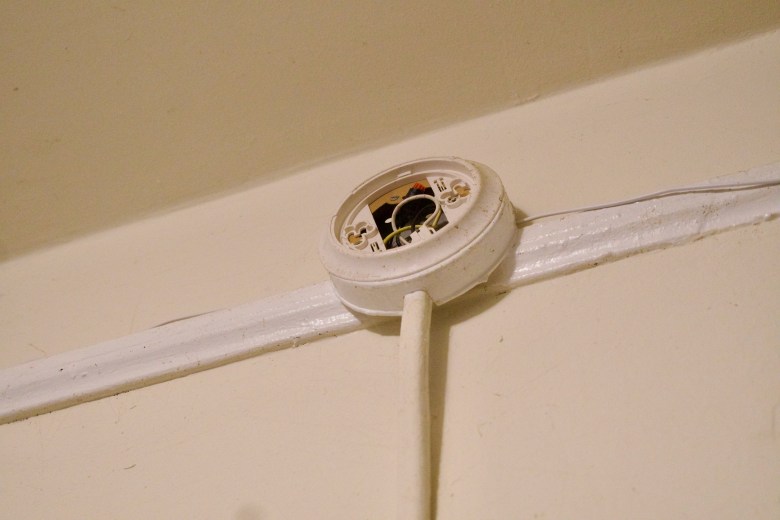 The Chase Hotel has been cited multiple times for not providing each unit with a functioning state- and city-required smoke and carbon monoxide detector, putting residents at risk. Credit: Madison Alvarado / San Francisco Public Press
Support our local in-depth reporting and investigations.
The Department of Building Inspection issued an order of abatement to the owner on Jan. 29 stating the conditions “constitute an unsafe building or public nuisance.” If the violations aren’t addressed by Friday, the city will place a notice similar to a lien on the property title. These notices can make it hard to refinance or sell the property according to the city’s website. If a property has more than three liens, the department may refer the case to the city attorney.
Strength in Latino communities
It took nearly four years for Chase Hotel residents to receive a hearing with the Department of Building Inspection, with the help of the SRO Collaborative.
The decades-old program, which receives city funding that was almost cut during the city’s budget cycle last June, is helping Latino families assert their rights in a fear-laden climate. Though the collaborative has been working with Chase Hotel tenants for years, its staff said organizing today requires more time, to invest in trustbuilding, and effort to get residents to speak out than in the past.
The Trump administration’s immigration enforcement has rippled through major facets of Latino life, including housing. Local housing rights advocates said San Francisco families were scared to open their doors or answer their phones as well as to go to work or take children to doctors appointments and school.
But even in the face of fear, Latino families are building community and finding strength in their voices, said Solange Cuba, the organizer-director of the collaborative.
“Latino families, I noticed they’re good neighbors and they take care of each other,” she said. “So, when you talk to one of them and you get somebody, they will talk to each other. So in that way, it’s good — so they protect themselves.”
Carrera echoed the sentiment and said a pivotal part of organizing within the Latino community comes from empowering people simply through helping them engage with one another.
The SRO collaborative has helped more than 500 families transition out of supportive housing over the last five years, organizers said. They don’t plan on stopping with the tenants at the Chase Hotel and will continue to push for compliance with city protections.
“We want these families to get out from there, to have a better life, and the children have a better life, too,” Carrera said.
Keep up to date — get the latest news in your inbox weekly!
Related