
(Content Warning: This post contains images of deceased birds)
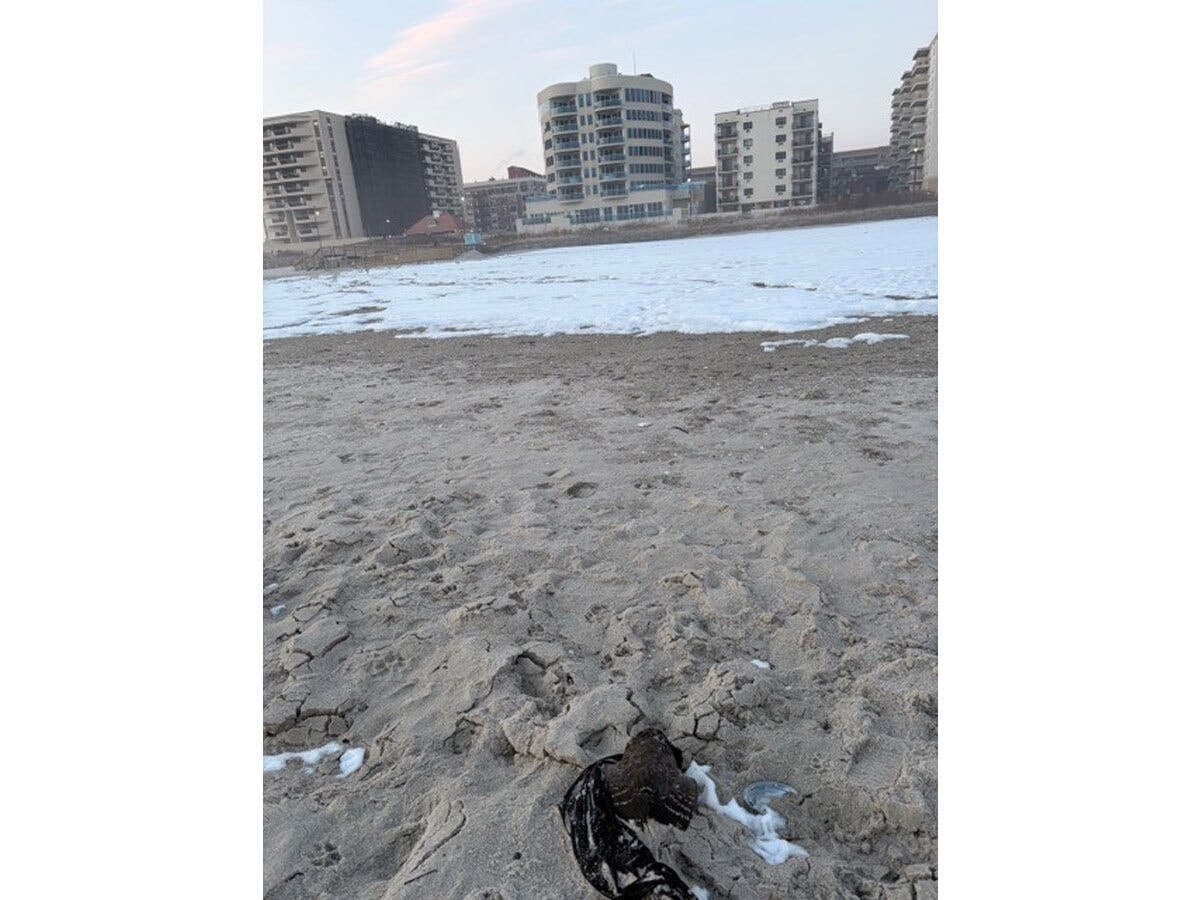
LONG BEACH, NY. — Long Beach resident Elaine Choban said she was out for a walk on the beach Tuesday when she found 34 birds washed up in the sand in a narrow stretch between Lincoln & Neptune Boulevards. Choban said it was a jarring sight to see, while experts say the birds’ deaths could be part of a larger sweep of highly pathogenic avian flu (HPAI) across Long Island, also known as H5N1.
For Choban, the site of almost three dozen bird bodies was as confusing as it was alarming.
Find out what’s happening in Long Beachfor free with the latest updates from Patch.
“Why am I seeing, you know, 40 ducks in the ocean?” Choban asked.
The presence of this many dead birds at one time, she said, was an anomaly in the 20 years she has spent in Long Beach. She’s seen whales and seals, but said she’d seen nothing like this.
Find out what’s happening in Long Beachfor free with the latest updates from Patch.
“You’d see a random one, in the stretch of a year, but this was like every two feet. They’d stumble right next to each other,” Choban told Patch.
The birds, she said, were present, “every other step.”
Thursday morning, South Shore Audubon Society President Russ Comeau said that the New York State Department of Environmental Conservation has been monitoring dead bird incidents across the state, with similar reports coming in from other parts of Long Island and New Jersey. An advisory, he said, is currently in effect for H5N1, which he said is expected to remain in effect through the birds’ spring migration period. For Long Islanders who come across a possible case of H5N1, there’s also an online reporting tool available.
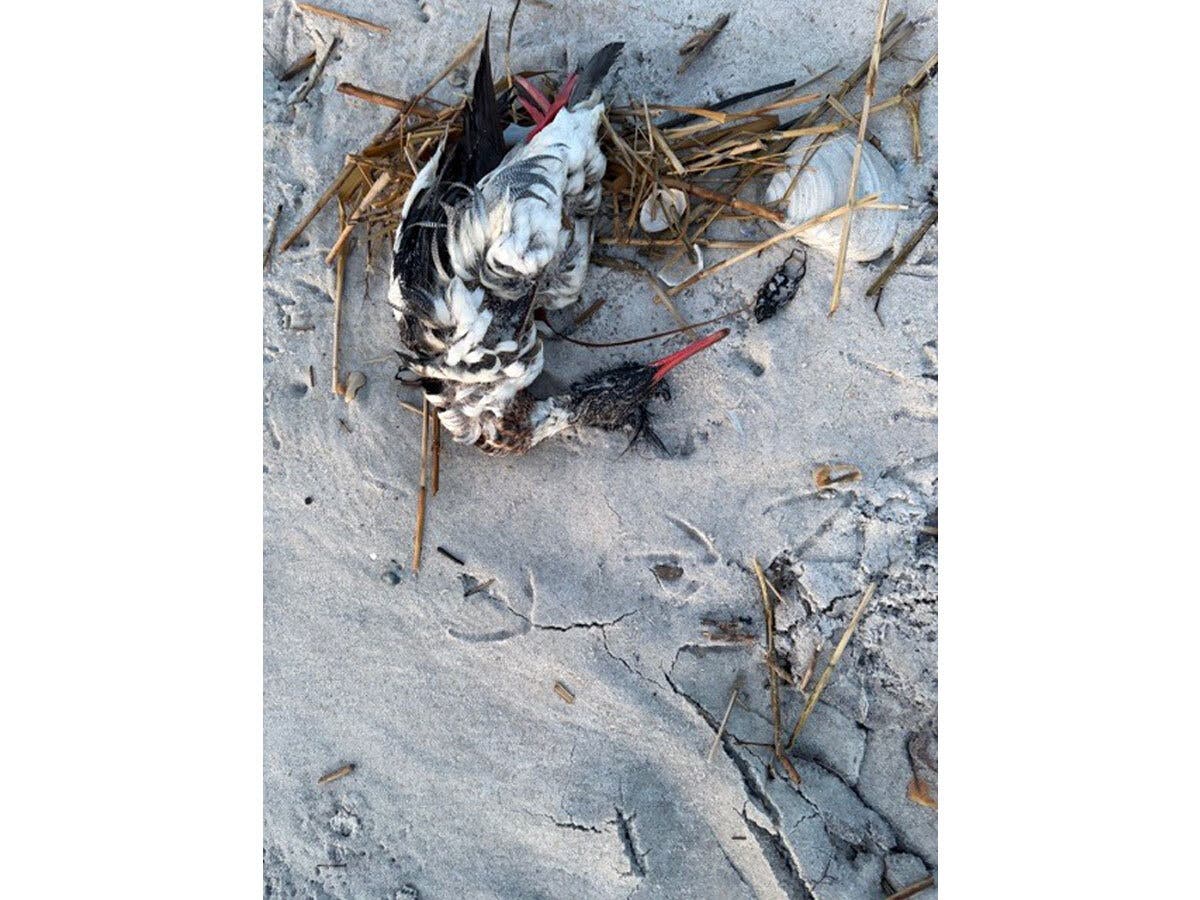 A Red-Breasted Merganser, which Comeau described as, “A sea bird that rarely leaves the water to come to land.”
“They released the advisory Jan. 12, it’s recent, and they’re urging residents to stay alert, to report them,” Comeau said. “They’re saying to avoid contact, to not touch sick or even dead birds. Some birds will just be listless, not able to fly, not able to walk. Some birds have just been standing in peoples’ driveways, just standing…They say that the human risk remains low, but caution, of course, is necessary whenever you’re around wildlife.”
For now, humans are advised against touching, feeding or eating birds afflicted with the avian flu. For Long Islanders who need to move dead birds, proper protection, including gloves and masks, is advised.
As for what kind of bird is being most seriously affected, Comeau said ducks, geese and other waterfowl are at the center of the outbreak.
“In this time of year we have the winter waterfowl, the ducks and geese,” Comeau said. “When all the fresh water ices over, they all come out to Long Island to the sea coast, because it’s the only place they continue to get the aquatic plants or the fish, worms, marine species that they need to eat. When all the fresh water freezes, they come to Long Island for the winter.”
In a Thursday morning conversation, Comeau identified one of the dead birds Choban had seen as a loon, noting the bird’s back-facing feet that make it hard for loons to walk on land and impossible for them to take off without a long enough stretch of water. In addition to waterfowl, Comeau said corvids and raptors are at risk from the flu, noting that raptors eat some of the waterfowl and can contract the disease that way. The avian flu, he said, has been confirmed in local foxes, skunks and raccoons, but he hasn’t seen any instances of it being passed to marine species.
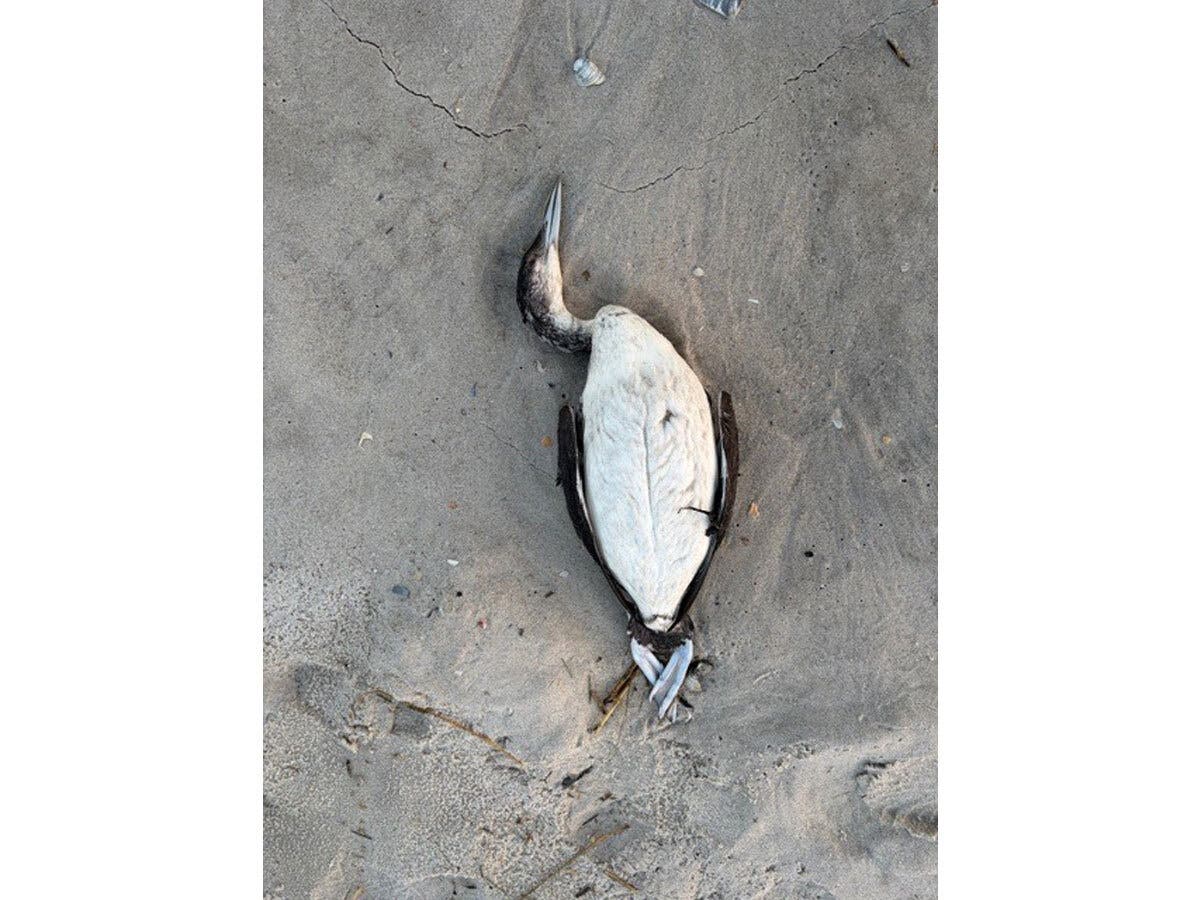 (Elaine Choban) A loon, found in the sand in Long Beach this week
“It’s Island-wide, from Breezy Point to Montauk Point. It’s my opinion that Long Island is the epicenter, just because we have the winter waterfowl, the rest of New York really doesn’t have that sea coast like we do.”
Choban also wondered if recent mild winters might have exacerbated the birds’ condition, noting that this January was colder and snowier than most in recent years.
“We’ve had very mild winters up until now. So, I don’t know if they were like, ‘You know what? I’m gonna save the gas and just hang out.’” Choban said. “I don’t know, but climate change is real, and it’s in our face, and it’s not being addressed at all. And these guys are suffering. These poor things, they look like they were beaten to death.”
The U.S. Fish and Wildlife Service says that European-Lineage HPAI was introduced to North America in 2021, and has been severely damaging to both domesticated and wild bird populations, causing, “extensive morbidity and mortality events in a range of wild bird species.”
Both Fish and Wildlife and the Cornell College of Veterinary Medicine say that the risk H5N1 poses to humans right now is low, with Cornell saying there is, “no evidence of person-to-person transformation.”
Thursday morning, Long Beach city officials confirmed to Patch that the city had reached out to the DEC about collecting samples to test for bird flu, but said it was incumbent on the state agency to collect the samples from Long Beach.
Comeau said Thursday morning that the description Choban gave, of 30-plus birds dead in the sand, could be consistent with birds having died out at sea and washed ashore postmortem.
For Choban, the fact remained that more than 30 birds had met their end. That fact, she said, was upsetting.
Get more local news delivered straight to your inbox. Sign up for free Patch newsletters and alerts.