
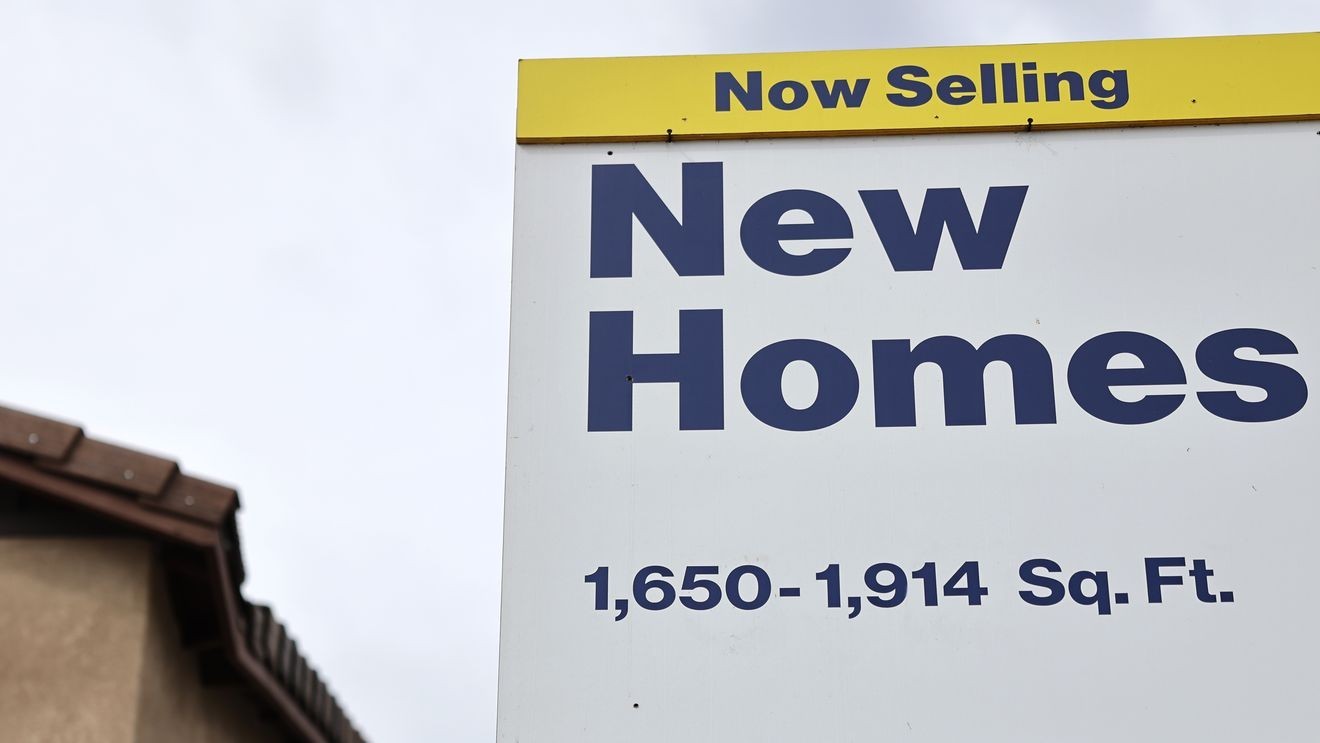
WASHINGTON (TNND) — New construction of single-family homes stalled in 2025 with higher costs and mortgage rates squeezing builders and buyers as lawmakers try advance new reforms to tackle the nation’s housing shortage.
The slowdown comes as the U.S. faces a shortage of millions of homes after nearly two decades of underbuilding in the aftermath of the financial crisis and asking prices above $400,000. Housing affordability is a top concern for voters and a key driver of bipartisan efforts to facilitate new development.
Total housing starts were nearly flat for the year, falling to 1.36 million from 1.37 million in 2024. Construction varied by region, with new projects falling 4% in the South and 0.8% in the West and climbing 8.7% higher in the Northeast and 7.2% in the Midwest.
The slips in construction were also concentrated in single-family homes, which fell by 6.9% for the year. Facing a slumping market with high costs shrinking their margins, many builders opted for bigger multi-family projects like townhomes and apartments that offered better returns.
Builders are facing higher costs across the board with a shortage of labor, rising costs for materials due to inflation and tariffs, and a limited pool of buyers able to afford completed homes.
“2025 was a challenging year for builders, one in which they had to offer lucrative incentives and slash prices to engage buyers, and the weak demand for homes combined with rising costs of land, labor, and materials has led builders to pull back,” said Joel Berner, senior economist at Realtor.com.
Lawmakers are hoping to get more shovels in the ground with legislation making it easier to start new projects and for buyers to access them.
The House and Senate recently passed their own versions of bills to address the housing shortage and are working to reconcile them into one piece of legislation that can be sent to the president’s desk. The Senate’s slate of bills aims at reducing regulations and giving communities more incentives to build homes and renovate existing ones, while the House package aims to create a national building code that would streamline the existing patchwork builders have to work around.
Experts generally agree that local- and state-level governments have the most sway over zoning laws and other restrictions that hinder housing construction, but Congress is hoping to incentivize more communities to take up policies that encourage building.
With fewer homes on the market and a growing pool of buyers, prices have continued to climb and priced people out of the market entirely after pandemic-era mortgage rates supercharged the problem.
The Senate’s package would create a pool of money communities could use for building housing and improving infrastructure. It also incentivizes them with rewards like making it easier to get federal funds for projects that are built near transit hubs.
Both bills also try to tackle zoning and land-use restrictions that builders often cite as a primary barrier to construction. If passed, the Department of Housing and Urban Development would develop guidelines for communities to follow and give grants to create a collection of building designs for builders to choose from that would speed up the permitting process and lower costs.
Another provision directs HUD to loosen regulations that make it more expensive to build smaller multifamily homes and exempt smaller projects from environment requirements that can delay construction.
Congress is also hoping to loosen regulations to make manufactured and modular homes easier to get approved and built. Those homes are quicker and cheaper to build but have been held back by building codes and limited financing options.
President Donald Trump has offered his own series of solutions to take on housing affordability, but those have been centered on giving wishful buyers more wiggle room in budgets that could backfire and increase demand if not paired with more building.
He directed mortgage buyers Fannie Mae and Freddie Mac to buy $200 billion in mortgage-backed securities earlier this year in hopes of lowering interest rates. Trump also signed an executive order directing federal agencies to evaluate how institutional investors are impacting the housing market. Economists say those steps could provide modest relief but do not address the underlying supply shortage.
Economists are expecting modest improvements in 2026 on lower mortgage rates and hopes of additional cuts from the Federal Reserve that will make it easier to finance projects and purchases. Overall housing affordability made some improvements nationally in 2025 as homes sat on the market for longer and limited price growth, but buyers are still looking at median prices exceeding $400,000.
“The housing outlook in 2026 is one of cautious optimism as builders contend with rising material and labor prices and policy uncertainty, while builders and buyers alike should benefit from anticipated fiscal and monetary easing that will moderate housing finance costs and mortgage rates,” Robert Dietz, chief economist of the National Association of Home Builders, said in a release.