
What’s at stake?
The Fresno City Council voted on Thursday to delay the adoption of the Central Southeast Specific Area Plan.
What should have been a relatively procedural hearing, however, devolved into a contentious debate on the merits of the move.
Fresno City Councilmembers threw accusations of backdoor dealing and inappropriate decorum at one another Thursday in a case of mudslinging that also resurrected an old debate around a controversial city rezoning plan.
Thursday’s testy council argument erupted during a hearing to adopt the Central Southeast Area Specific Plan. Specific plans are roadmap documents that City Hall uses to map out the future of land use and investment in a given region.
The plan has been in the works for about six years. Residents of southeast Fresno thought their plan, like others that have come before the council, would be approved quickly following a procedural hearing.
However, discussions quickly derailed following a motion from Fresno City Council President Mike Karbassi to delay the hearing due to an email from a local attorney threatening to sue the city if the plan was approved.
“I don’t feel comfortable moving forward without legally considering the legal risk here, and then I don’t want to say anything on record without knowing the legal analysis that could jeopardize that,” Karbassi said.
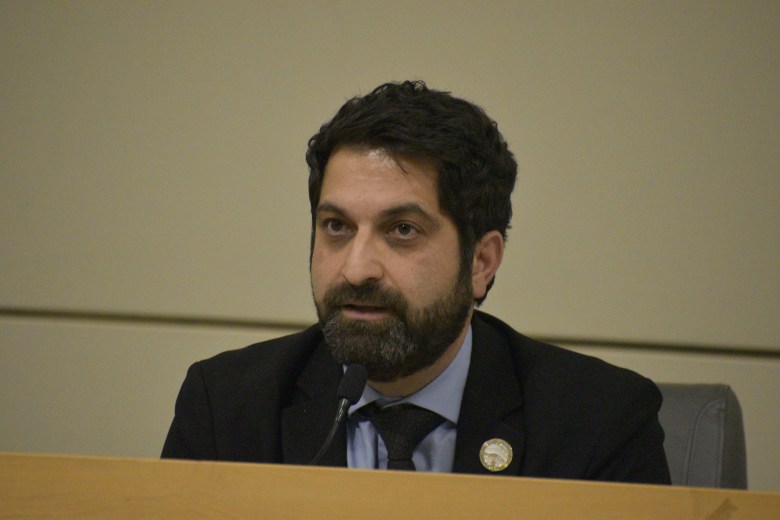 Fresno City Council President Mike Karbassi initiated the motion punt the hearing to March following a threat of litigation received over email Thursday morning. Pablo Orihuela | Fresnoland
The email came from John Kinsey, a north Fresno attorney representing Mid Valley Disposal and a handful of developers who have spent years trying to get the city to approve their contentious effort to rezone about 50 acres of southwest Fresno — most of it along Elm Avenue — from mixed-use residential to industrial.
Residents of southwest Fresno have strongly pushed back against the effort, citing the punishingly poor environmental conditions caused by the existing neighboring industry. Community members say more industrialization would only exacerbate the poor conditions. The site in question is developed with industrial and warehousing uses, and was zoned mixed-use when the Southwest Specific Plan was adopted in 2o17.
Kinsey’s email, which came three minutes after the start of Thursday’s meeting, specifically called out the Central Southeast Specific Plan’s exclusion of a property and associated environmental analysis, which the attorney goes on to allege that the Elm rezone landowners paid the city to conduct, despite it not being in the vicinity of the desired rezone properties.
“…if the (Central Southeast Area Specific Plan) is considered today…the landowners will sue and their damages will be significant,” Kinsey said in the emailed statement.
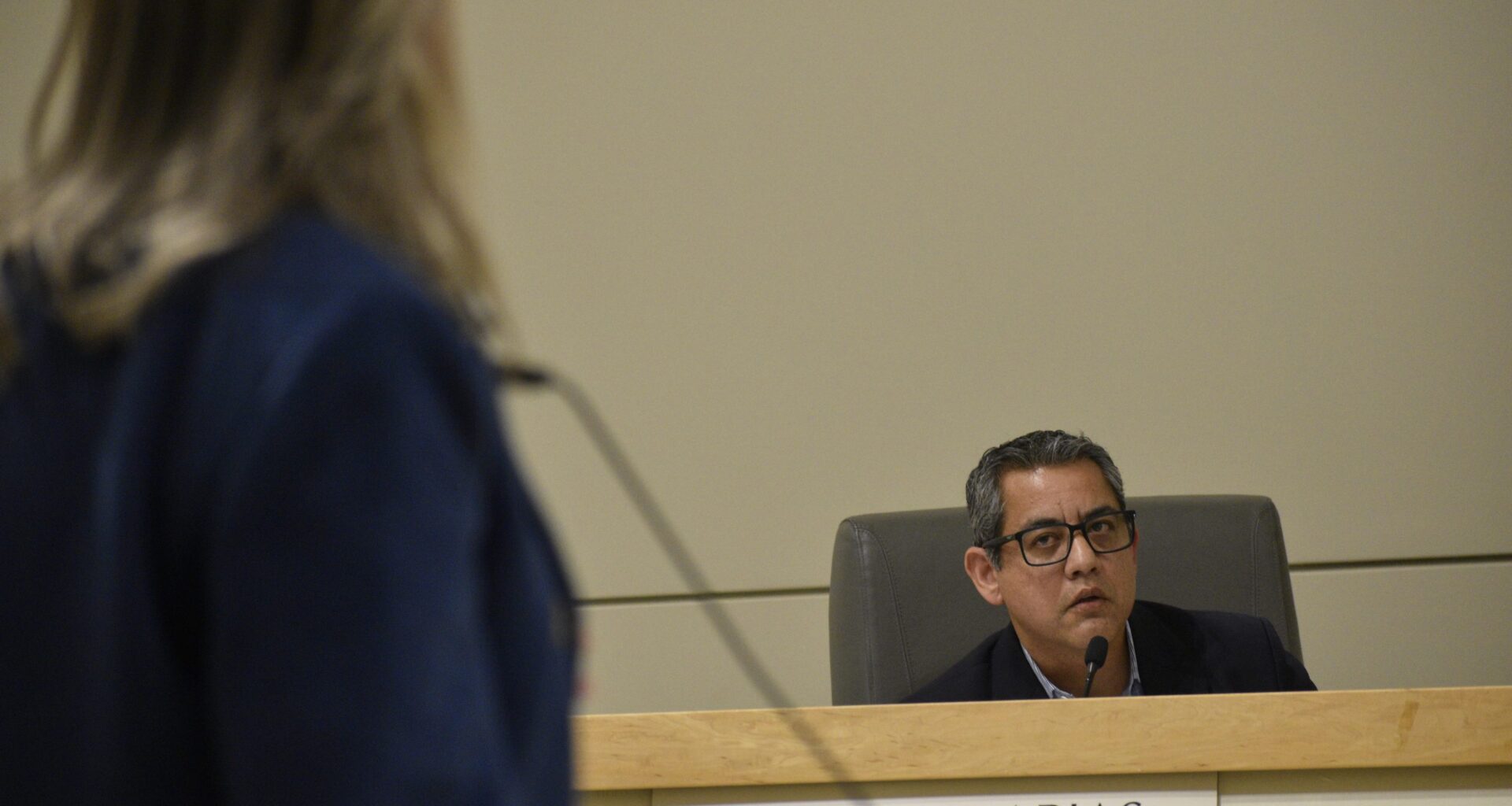
Councilmembers Miguel Arias and Brandon Vang were quick to cry foul play.
Arias, in particular, said he only felt comfortable voting to postpone Thursday’s hearing if he could get a commitment from the city’s planning and development department that it would not return on the council agenda alongside the proposed Elm Avenue rezone.
Rezoning Elm Avenue in southwest Fresno would remove land that, at least on paper, could be used down the line for housing. That means that, under state law, the city must find somewhere else to place the hypothetical housing before the rezone could be fully approved.
Arias said he believes there is “clearly a behind-the-scenes, coordinated effort” inside City Hall to try and conveniently attach extra housing to the Central Southeast Specific Area Plan to remove red tape currently barring the council from approving the Elm rezone.
“This, what we’re about to do today, smells really bad,” Arias said, “…this is dirty, and I can only tie it to folks who are actively trying to fundraise from industrial developers for political reasons on why this is taking place.”
Arias accused Karbassi of colluding with local developers as well as with Alex Tavlian, a prominent city lobbyist and political fixer who is also running Karbassi’s campaign for the county board of supervisors. Tavlian is a lobbyist for some of the industrial land owners and developers favoring the Elm rezone.
Arias said, before Thursday’s meeting got underway, Karbassi tried to use a procedural maneuver to postpone the vote and, Arias claimed from the dias, when that move failed, Kinsey’s email “magically” landed in the city attorney’s inbox around the same time the council was finishing the meeting’s opening prayer.
Karbassi called Arias’ claims baseless and rude.
“I will not stand for accusations about any merit or evidence meant to harm any council member’s reputation,” Karbassi said. “I don’t give a damn who it comes from. It’s inappropriate, and you owe an apology to this council, sir.
“Let’s put up or shut up,” Karbassi continued. “Let’s talk about consultant contracts next week. We’ll look at yours, too, sir.”
Among the Fresno City Council’s biggest responsibilities is to make land use decisions for the city. The council does not directly bring those decisions before the board, however, as that’s the responsibility of the planning and development department.
Karbassi added that his hesitation to approve the plan Thursday stems mostly from fear the city could lose “thousands” or “millions” in a courtroom fight.
Vang also took City Attorney Andrew Janz to task for waiting more than five hours to inform the council about Kinsey’s threat. The central southeast plan is in Vang’s district.
The southeast councilmember went on to deliver uncharacteristically lengthy and passionate comments criticizing Thursday’s debacle.
“It appears that southeast Fresno and southwest Fresno is being screwed over and over again,” Vang said. “…I believe when the mayor says we are ‘One Fresno,’ but today demonstrates that we are not ‘One Fresno.”
“This is miniscule — minor,” Vang added, in reference to Kinsey’s threat. “Stop playing politics here on the dais. Represent the people who elected you to this position, not the next position you’re seeking.”
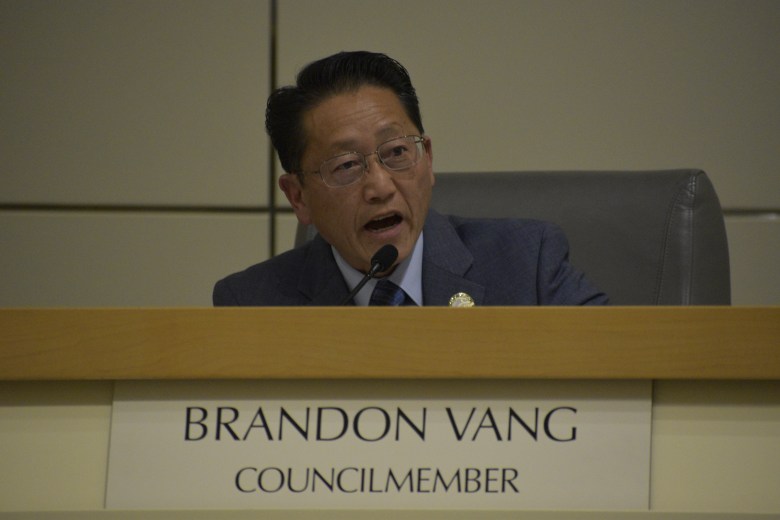 Fresno City Councilmember Brandon Vang said on Thursday that the city continues to overlook southern Fresno. Pablo Orihuela | Fresnoland
The pleas from the pair of south Fresno politicians ultimately fell on deaf ears. The Fresno City Council ultimately delayed the hearing until at least theMarch 19 meeting. The vote was 5-2, with Arias and Vang dissenting.
“I’m a little embarrassed by those that are politicizing this agenda item,” said west central Fresno Councilmember Annalisa Perea from the dais on Thursday.
Most other councilmembers who spoke Thursday ultimately agreed with Karbassi’s sentiment, that it’s better to be safe when it comes to threats of litigation. Many, including councilmembers Perea and Nelson Esparza added that the vote is not a denial of the plan, just a short delay to get matters settled.
Council votes to continue funding over a dozen homeless shelter beds
The City of Fresno unanimously voted to approve funding for dozens of emergency shelter beds alongside Parkway Drive well into next year. The vote was 6-0, with Councilmember Tyler Maxwell absent.
The council’s actions deliver about $4 million in state funding to Elevate Community Services, to continue operating the Ambassador Inn, Fresno Home and Villa Motel emergency bed shelters. The three shelter sites account for 155 shelter beds.
The council also voted to approved an extension to award the Fresno Economic Opportunities Commission with a little over $500,000 to keep managing eight youth shelter beds at their Sanctuary Transitional Living Center at 1046 T St. until June 30, 2028.
The contracts come following news last year that some shelters would be closing down following funding cuts from the state.
One of the primary sources of state funding comes from the California Homeless Housing, Assistance and Prevention Program, which has been disbursing funding to local cities and counties since 2019. The City of Fresno has received over $41 million in HHAP funding, according to city documents.
The state has awarded over $5 billion through HHAP, according to the governor’s press office. However, the constantly shifting state budget landscape has led to growing concern among state leaders.
Last year, a coalition of California mayors — including Fresno’s Jerry Dyer — held a news conference to lobby state lawmakers to reinsert HHAP funding from the last year’s budget.
California Gov. Gavin Newsom’s proposed budget for the next fiscal year allocates $500 million in HHAP funding, half of the usual billion dollar allocation. County leaders across the state have protested the amount.
City moving forward with plans for pedestrian bridge connecting Roeding Park to southwest Fresno
The Fresno City Council unanimously voted to apply for millions of dollars in U.S. Department of Transportation funding for a project that would connect one of the city’s historically isolated neighborhoods to a premier park.
The application asks DOT for $25 million toward the city’s Parkway Drive Pedestrian Bridge Project — which would connect Roeding Park across Highway 99 to the Jane Addams neighborhood. Current plans for the bridge have it built between Olive Avenue and Belmont Avenue.
The bridge project has been in the works for years. In 2023, the city received $600,000 in federal funding with initial plans to use it toward the project. Thursday’s application, if accepted, would dwarf that.
The bridge would connect a community that has been segregated for decades by Fresno’s neighboring highways and railroads to one of the city’s largest green spaces. City documents say that, other than Roeding Park, the next closest green space for the neighborhood is about two miles away.
The bridge could also serve as an amenity for lower-income residents already living near the bridge’s planned site.
Parkway Drive is home to a host of hotels-turned-shelters purchased by the city using state funds, including the three that had their contracts extended earlier Thursday. These shelters have long-term plans of becoming affordable housing, with some already opening as such.
The funding is from a competitive $1.5 billion pot of funding renewed annually that DOT has made available for applicants since 2021 following federal legislation.
Related