
There are many ways to stand up to antisemitism.
Some march.
Some write.
Some organize.
Some advocate in boardrooms and statehouses.
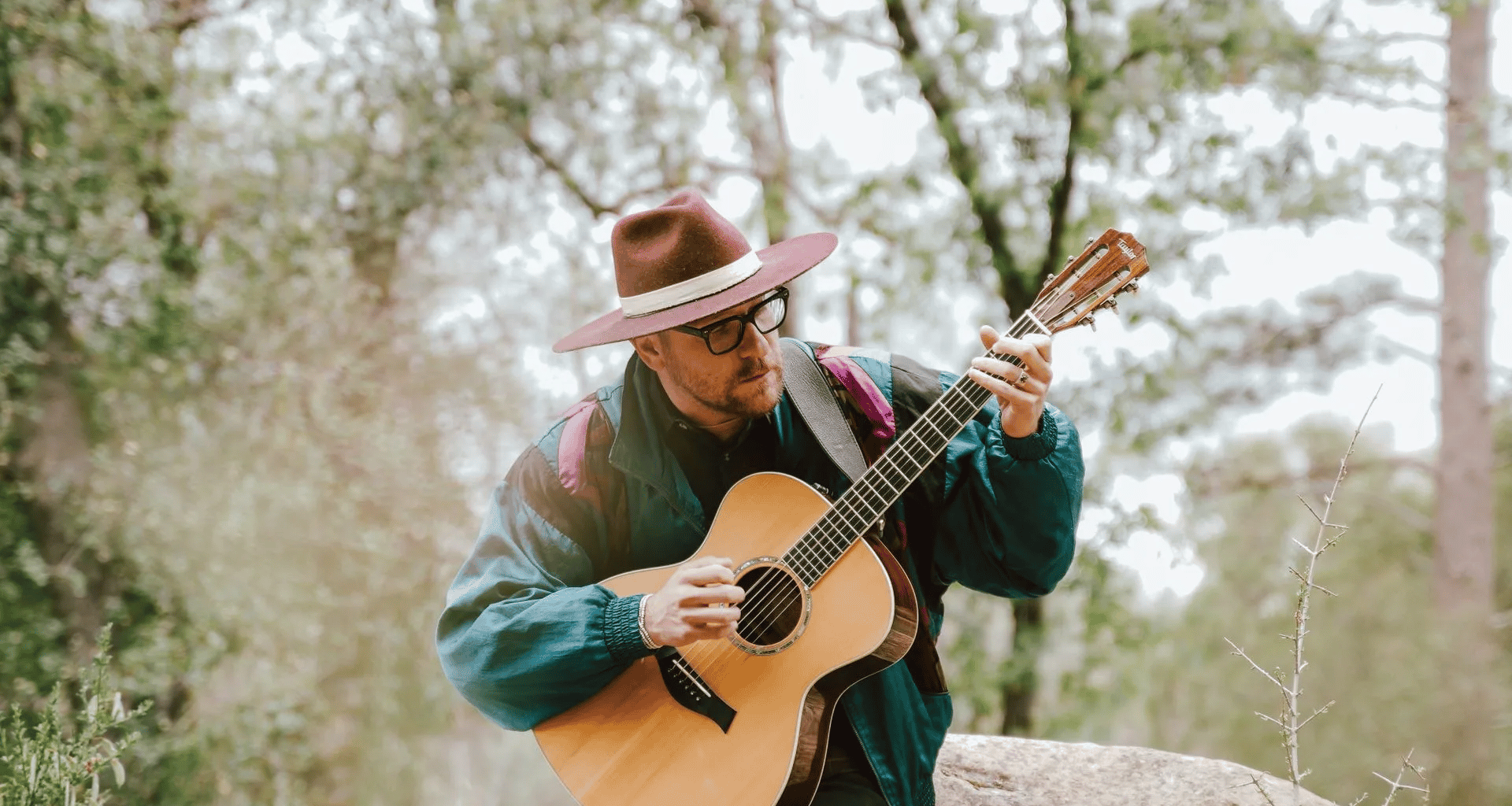
Brother Mikey Pauker (San Francisco, 2007) sings.
And he sings louder when it matters most.
Finding Brotherhood — and His Voice
Growing up in Orange County, California, Mikey headed to San Francisco State University intending to major in theater. Music was part of his life, but not yet his mission.
During his freshman year in the dorms, he ran into a familiar face: Russell Kipnis (San Francisco, 2005), his former song leader from summer camp. “He said, ‘Do you want to come rush?’” Mikey recalls. “I didn’t even know what that meant.”
The Beta Alpha chapter didn’t have a house at the time, so rush events were held at a local Hooters restaurant. Mikey remembers sitting there eating wings, looking around the table.
“There were some cool young Jews there, and I felt an immediate connection.”
That night changed everything.
Russell would become his AEPi big brother and Mikey would become deeply involved in AEPi, serving as Brotherhood Chair and later Risk Management Chair. Through AEPi’s close partnership with Hillel, he became active there as well, helping lead services and music.
What started as fraternity involvement slowly became something deeper.
“AEPi started this whole journey for me.”
A Spiritual Turning Point
Mikey’s musical focus sharpened after an AEPi-sponsored trip to Israel with Aish HaTorah. Soon after, following his graduation from San Francisco, he worked as a song leader at a Jewish summer camp and he met legendary Jewish musician Debbie Friedman, along with Craig Taubman and Jeff Klepper, artists whose songs had shaped a generation of Jewish music and worship.
That summer changed his life.
“I was leading a Kabbalat Shabbat, and I had this experience, like lightning went through my body. I felt I felt like I saw a premonition of many things that ended up happening and some things I still haven’t seen yet.”
From that moment on, music wasn’t performance. It was purpose.
From Synagogues to Red Rocks
After graduation, Mikey immersed himself in Jewish learning and music. He moved to Israel and studied in yeshiva, diving deeply into prayer, tradition, and spiritual expression.
“My music became more spiritual. I wanted to see how far it could grow.”
It grew farther than he imagined.
What began in synagogues and camps expanded to festivals in Hawaii, shows at Red Rocks in Colorado, and on stages throughout the country opening for artists like Stephen Marley and Matisyahu. Singing in Hebrew and English, blending Jewish soul with reggae and world music, Mikey went from audiences of 50 to thousands.
At music festivals, he would lead Shabbat sets on Friday nights. Local Jewish communities would gather in the middle of these secular events to pray, sing, and reconnect.
In those moments, music became a bridge — between worlds, between identities.
October 7 — and the Cost of Visibility
Then came October 7, 2023.
“Everything changed.”
Friends and collaborators distanced themselves. Tours were cancelled. Invitations were rescinded. Concerts disappeared.
“I lost people I’d toured with for years … I think people were being fed this massive propaganda by these Qatari bots and/or they had deep-rooted antisemitism that was being uncovered in real time.”
The accusations followed familiar, ancient patterns: blood libel, defamation, erasure.
His entire tour was cancelled. But Mikey refused to retreat.
Working with the Israeli-American Council (IAC) and legal partners, he filed a federal lawsuit alleging discrimination, making a bold argument that Zionism is an intrinsic pillar of Judaism.
And then, in the face of it all, he did what he knows best. He booked a Hanukkah tour.
“I love fighting antisemitism through playing gigs.”