
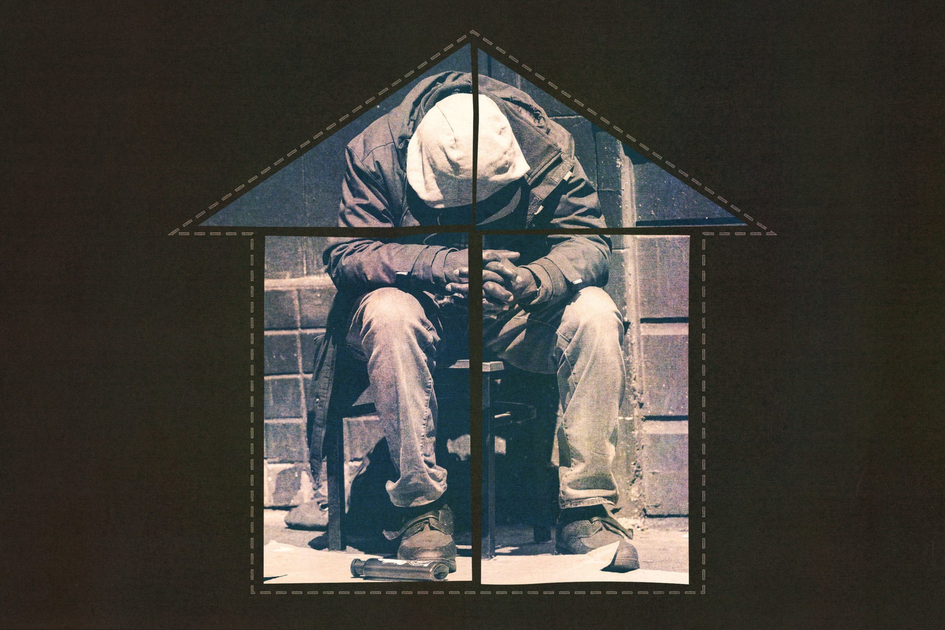
Are San Francisco’s sidewalks full of out-of-town invaders or down-on-their-luck locals who were priced out of their homes? The reality is somewhere in between.
According to a sample of 2025 data obtained by The Standard through a public records request, 36% of homeless people seeking services in San Francisco reported that they had most recently lived outside the city. The out-of-towners narrative has generally supported the idea of spending fewer resources on homelessness overall: fewer apartments, more buses out of town. But the city provides housing for out-of-towners at roughly the same rate that it houses locals.
Now, officials are considering giving homeless locals a competitive edge.
A new report from the Local Homeless Coordinating Board recommends that workers with the Department of Homelessness and Supportive Housing ask homeless people how long they’ve lived in San Francisco on an intake questionnaire and prioritize them accordingly. If the policy is approved, those who have lived in the city longer will receive more points toward housing eligibility.
Officials from the Department of Homelessness and Supportive Housing are considering the proposal. No timeline on a decision has been released.
The proposal, according to a co-chair of the coordinating board, isn’t meant solely to prioritize locals but to specifically aid Black residents, who have been historically displaced and overlooked. According to the most recent data, 25% of homeless people in San Francisco are Black.
Federal law allows cities to prioritize local residents for public housing, but some experts fear a policy change could trigger legal action from the Trump administration, which has “equity” in its crosshairs.
Others worry that the effort is more deeply flawed, as it would deprioritize certain vulnerable residents. Homelessness spending is zero sum: When one group is prioritized, another stands to suffer.
Where are you from?
San Francisco’s Black population has steadily declined since racist redevelopment policies of the late 1940s gutted the city’s historically African American neighborhoods. The impacts of those policies have echoed for decades. Between 1970 and 2021, the city’s Black population dropped from 13.4% to 5.7% of city residents, according to census data.
A 2024 investigation by The Standard in partnership with The New York Times found that elderly Black men die of overdoses at a higher rate in San Francisco than in any other U.S. city — a disparity largely linked to persistent economic hardship.
The city’s “coordinated entry,” a federally mandated system known as the front door of the local homelessness response, was designed to ensure that resources are distributed equitably. However, a 2022 assessment found that even though Black homeless people are prioritized for housing at a rate proportional to their population, they’re more likely to have their referral for housing denied than other races.
 An outreach worker chats with a homeless woman in the Mission. | Source: Manuel Orbegozo for The Standard
Supervisor Rafael Mandelman says the city can’t afford to indefinitely subsidize housing for a growing homeless population over which it has no control, while failing its locals.
“One of the painful realities of local government is that if you create benefit structures that attract people with needs, you will end up having more people with needs under your care,” Mandelman said. “We have to design solutions that don’t dig us deeper into a hole. And that becomes even more imperative if the hole that we’re digging is racist.”
Critics of the coordinating board’s proposal say there are other ways to correct for racial disparities than preferencing based on residency. Most cities experience some influx of homeless people, and San Francisco’s rate appears on par with other urban centers. Sacramento reported in 2024 that roughly 38% of its homeless population was from outside the city. Portland, Oregon, reported that 40% of its homeless population was from outside the county.
“We’re pushing far more poor people out of San Francisco than are coming in,” said Jennifer Friedenbach, executive director of the Coalition on Homelessness. “What we should be doing is prioritizing based on need and matching people with appropriate resources instead of getting derailed by political tropes.”
Is that even legal?
Under the federal Fair Housing Act, cities are allowed to enforce a residency preference, which must encompass the entire municipality. However, they are prohibited from enforcing a residency requirement on the basis of race.
The city previously prioritized locals for housing from 2014 to 2018, but then switched to a ranking system based on vulnerability and length of homelessness.
The Department of Homelessness and Supportive Housing said it is considering the residency question to prioritize all San Franciscans — not just the Black population. However, any time the prioritization process is changed, advisers and advocates say they consider how it will affect marginalized racial groups.
Since Donald Trump reassumed the presidency, the Department of Housing and Urban Development has cracked down on what he described in an executive order last year as “discrimination,” banning “equitable decision-making” in government programs distributing aid.
In March 2025, HUD threatened to cut federal funding for programs promoting diversity, equity, and inclusion. San Francisco and seven other plaintiffs sued the department, alleging that the new conditions violated the Constitution and would put lives at risk. But in February, a federal judge sided with Trump despite expressing concerns that the executive order could lead to “valuable grants gutted in the dark.”
“What we used to define as equity work federally now is defined as discrimination,” said Megan Rohrer, co-chair of the coordinating board. “Now it’s unclear how much equity work can be done.”
The policy change could invite the scrutiny of other groups that have taken a strong stance against public programs aimed at equity. San Francisco has recently been a target of civil rights litigation from the California for Equal Rights Foundation, which has sued the city over financially supporting programs that preferenced Black and brown residents. After the group sued in 2023, the city paused its pilot of a program that dispensed financial aid to Black mothers. The group filed another lawsuit this month aimed at stopping the city’s proposal for reparations.
Who’s more vulnerable?
Critics of the possible policy change worry that even if it doesn’t inspire a lawsuit, it could cause more immediate problems in the city by pitting long-timers against sanctuary seekers.
The coordinating board found that while the proposed residency question would benefit Black residents, the policy change would lead the city to underserve homeless migrants, Rohrer said.
In recent years, San Francisco has seen a surge of these migrant families, many of whom arrive in the city with children and little else. As of last month, 296 families were waiting for shelter in San Francisco.
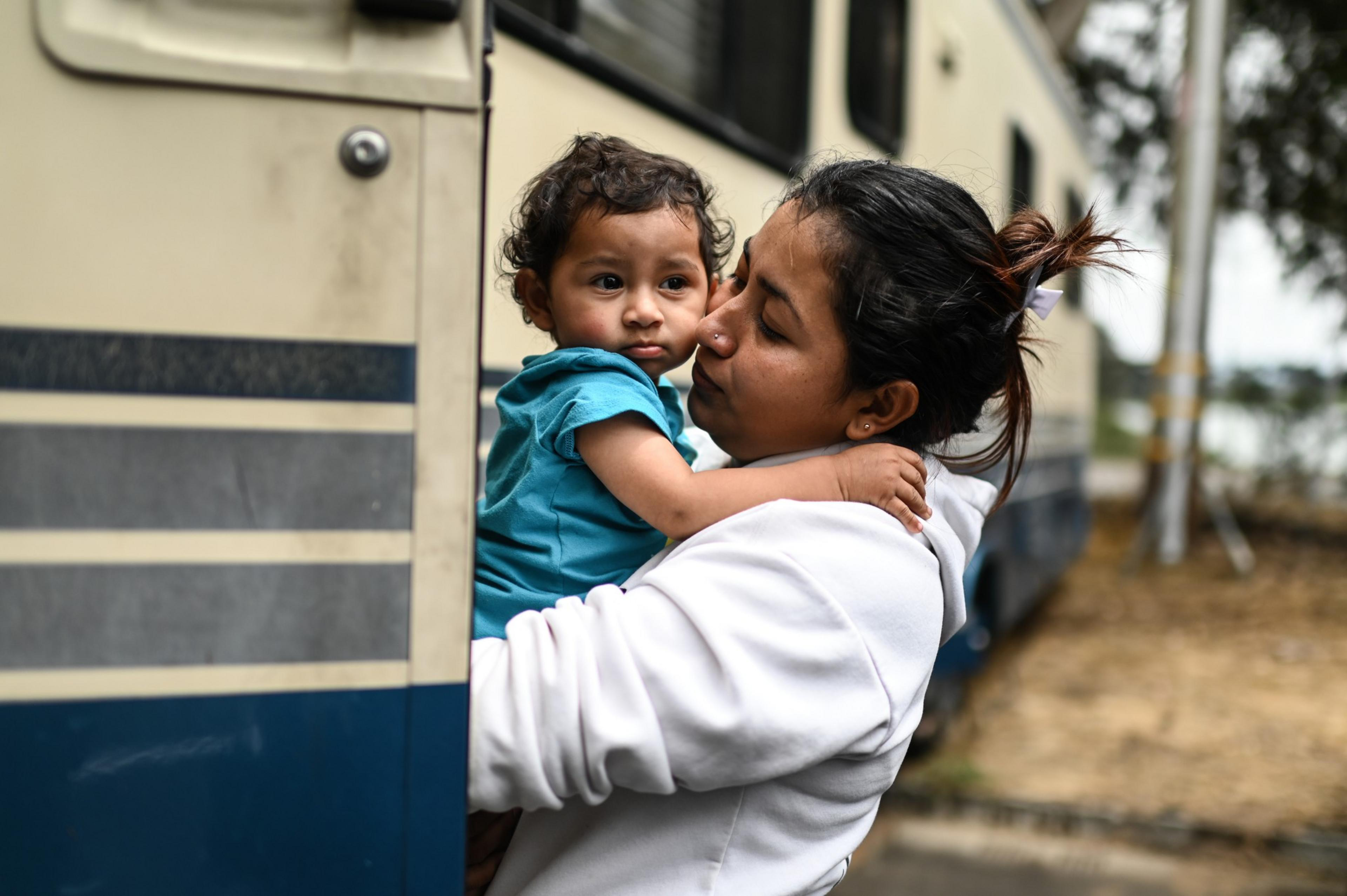 Veronica Cañas holds her son next to their RV in San Francisco. | Source: Pablo Unzueta for The Standard
Maria Zavala, who immigrated to the city from Honduras with her 7-year-old daughter, said she understands the city’s desire to house locals first. However, she reasoned that some newcomers may be at a greater disadvantage because they enter the country without a support network.
“We don’t even speak the language,” she said.
Some coordinating board members say the system needs deeper reforms and should serve people on a first come, first served, basis.
“One person has been here 20 years, one person has been here seven nights, but they’re both homeless,” said Del Seymour, co-chair of the coordinating board. “If someone comes into the office and they’re ready to leave their street alone, and they’re ready for housing, as long as they give you their legitimate identifications and stuff, they should be put on the list.”
Matt Alexander, a community organizer for homeless families, said the underallocation of resources forces an impossible balancing act.
“This whole question is based on a scarcity model,” Alexander said. “If we instead made a commitment to not have homeless children and families, then you wouldn’t have to have a long debate over who gets housing first.”