
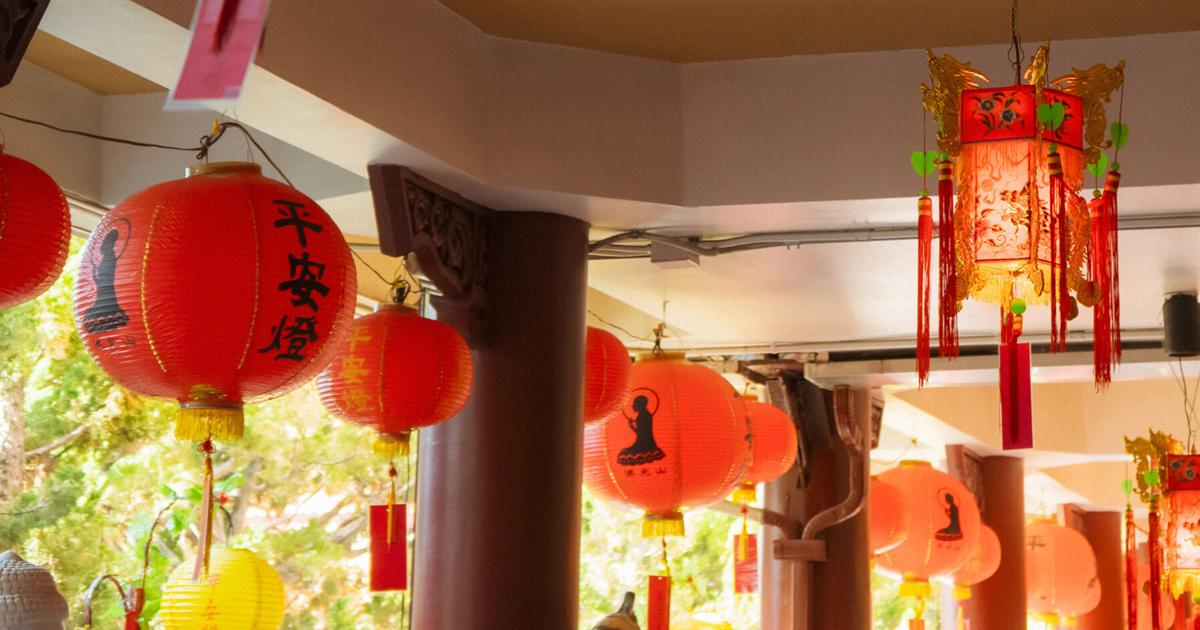
UC Berkeley shamelessly takes pride in its diversity, equity and inclusion initiatives, or DEI. Yet, despite its predominantly Asian student body, UC Berkeley does not recognize the Lunar New Year as a campuswide holiday. UC Berkeley’s failure to institutionalize Lunar New Year forces students to choose between their education and cultural identity, while the university cowers behind its performance of DEI. If UC Berkeley wants to truly honor its student body and uphold its professed commitment to inclusion, the campus must recognize Lunar New Year as an academic holiday.
Feb. 17, 2026, marked the start of the Year of the Horse, welcoming rapid change and bold energy while leaving painful pasts in the Year of the Snake. Lunar New Year is celebrated not only across East and Southeast Asia, but also within the Asian diaspora scattered across the globe.
But for the Asian diaspora at UC Berkeley, a day packed with historical traditions is reduced to another day of classes.
On Lunar New Year, also known as “Seollal” in South Korea, I should be eating rice cake soup (“tteokguk”) so wealth and blessings stick to me in the new year. But like many other students at UC Berkeley, I am forced to forfeit this special New Year’s Day because, to me, it is safer to attend my classes than fall behind.
Although Berkeley does hold Lunar New Year celebrations, there is still an academic price to pay that prevents full cultural observance. Students who choose to miss class may miss important material, especially in courses that do not record lectures. Further, students may be marked down for attendance and miss out on critical engagement with class materials during discussions, adding another layer of burden to the already long to-do list of UC Berkeley students.
Under UC Berkeley’s Religious Holidays and Religious Creed Policy, students can take the exams they missed on the Lunar New Year in the fall semester. However, students are left with greater stress as they have to study the material again, far after their course ends, during their break. The policy also only accommodates missed exams, failing to relieve the stress of assignments and missed lectures
Other school systems, such as the San Francisco Unified School District, established the Lunar New Year as an academic holiday, appropriately reflecting the legacy of Chinese immigrants in San Francisco. The district’s establishment of the holiday both recognizes who their students are and prevents the decision between academic success and cultural celebration.
Furthermore, UC Berkeley’s conformity to federal holidays without reflection of its student population constructs an “American” narrative that completely contradicts the cultural diversity that truly makes up the American population. Through the exclusion of cultural holidays, institutions are forging an “American” identity that refers exclusively to pilgrims and extreme patriots, warping the American melting pot into a monolithic culture. Such attempts foster a counterfeit sense of nationalism that fails to truly represent America, let alone UC Berkeley’s student body.
Instead, we are supposed to commemorate Washington’s birthday on Presidents Day, completely disregarding that he owned more than 100 slaves. Besides, students spend the day planning road trips to Yosemite, taking extra shifts at work or just rotting in bed, without any feelings of cultural belonging.
Therefore, institutional changes are necessary if UC Berkeley wants to truly stand behind its student body and its DEI mission. U.S. Congresswoman Grace Meng paved the way for New York schools to recognize the Lunar New Year, and in 2024, all public schools were finally required to close for the New Year. UC Berkeley should look to changemakers like Meng, who prove that institutional change is not only necessary, but possible.
However, change requires collective movement. Meng was able to enact change only through persistent petitioning, action and voicing from numerous cosponsors. This means we, as UC Berkeley students, can do the same. We can start by petitioning and loudly demanding for Lunar New Year be an academic holiday, which is just the start. We must ensure that UC Berkeley recognizes other cultural holidays important to a significant proportion of the student body. Let us refrain from being bystanders of a constructed cultural hierarchy.
Giving students a day off on the Lunar New Year will grant students, such as myself, the opportunity to honor our cultural heritage without paying a steep academic price. Rather than cramming three assignments at the library and quickly eating Trader Joe’s chicken dumplings for dinner — because the nearest Asian grocery store is a 20-minute bus ride away — students can go home to their families, cook traditional Lunar New Year meals with their friends and simply have the freedom to choose how to celebrate this special holiday without the stress of missing class or looming assignment due dates.
Whatever one does to celebrate, a day off is necessary to honor the cultural identities of UC Berkeley students without making it a mere afterthought that doesn’t deserve a holiday.