
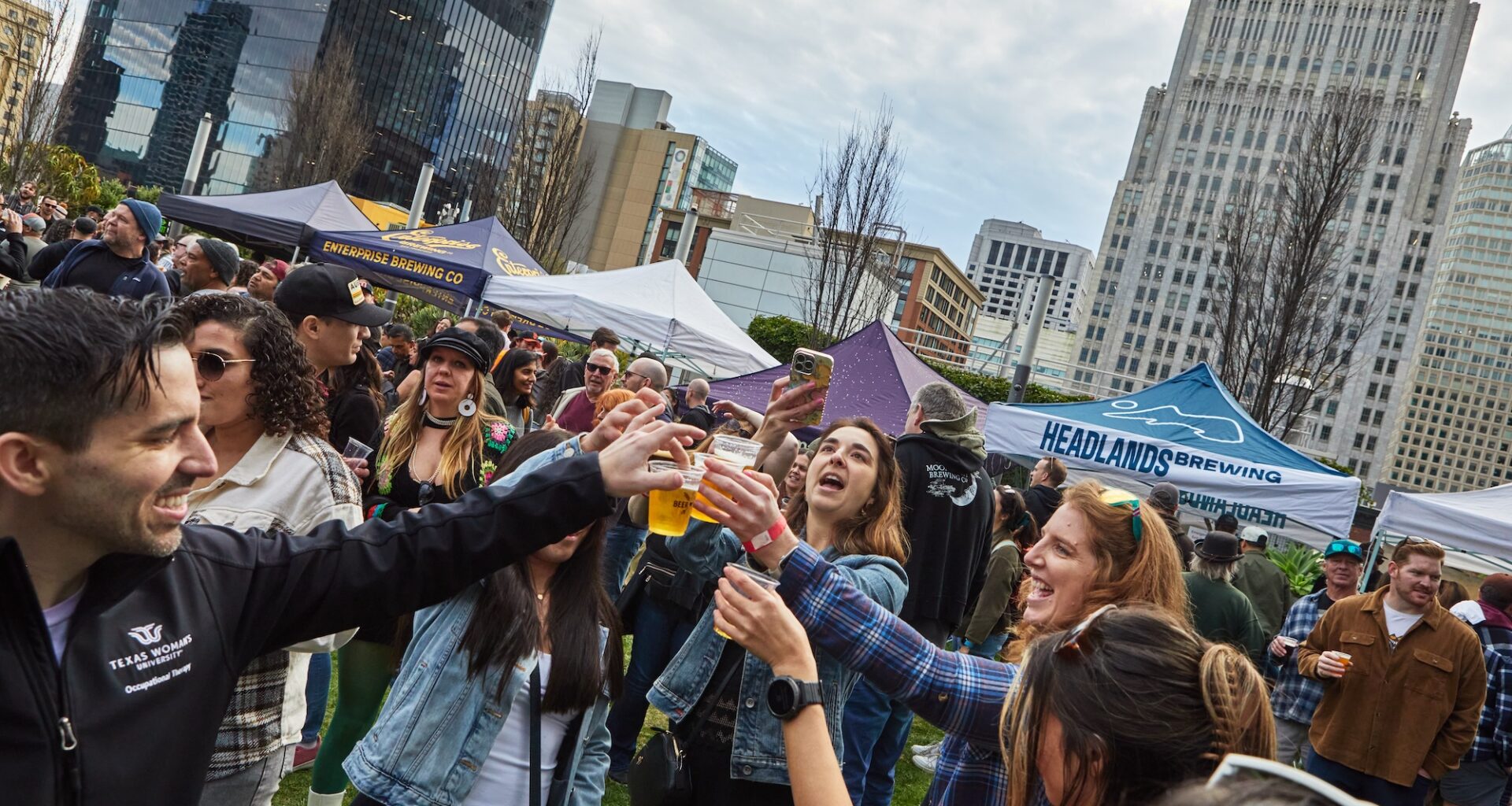
Another reason for SF Beer Week, Piotrkowski laments, is that breweries are struggling across the industry. But not for the reasons one might assume.
“You will see a lot of stuff talking about ‘wellness trends’ and ‘abstinence trends’ around alcohol. I still think those are pretty small,” Piotrkowski asserts. “The big thing is that, if you’re under 40 and you live in an expensive place in this country, you don’t have any expendable income.”
Bars, and the beer industry as a whole, are struggling for the same reason many restaurants, night clubs and concert venues are having a hard time staying above water, says Piotrkowski. Cheaper and more convenient forms of fun, like staying home and enjoying subscription entertainment services, have replaced the drive for people to spend money at bars.
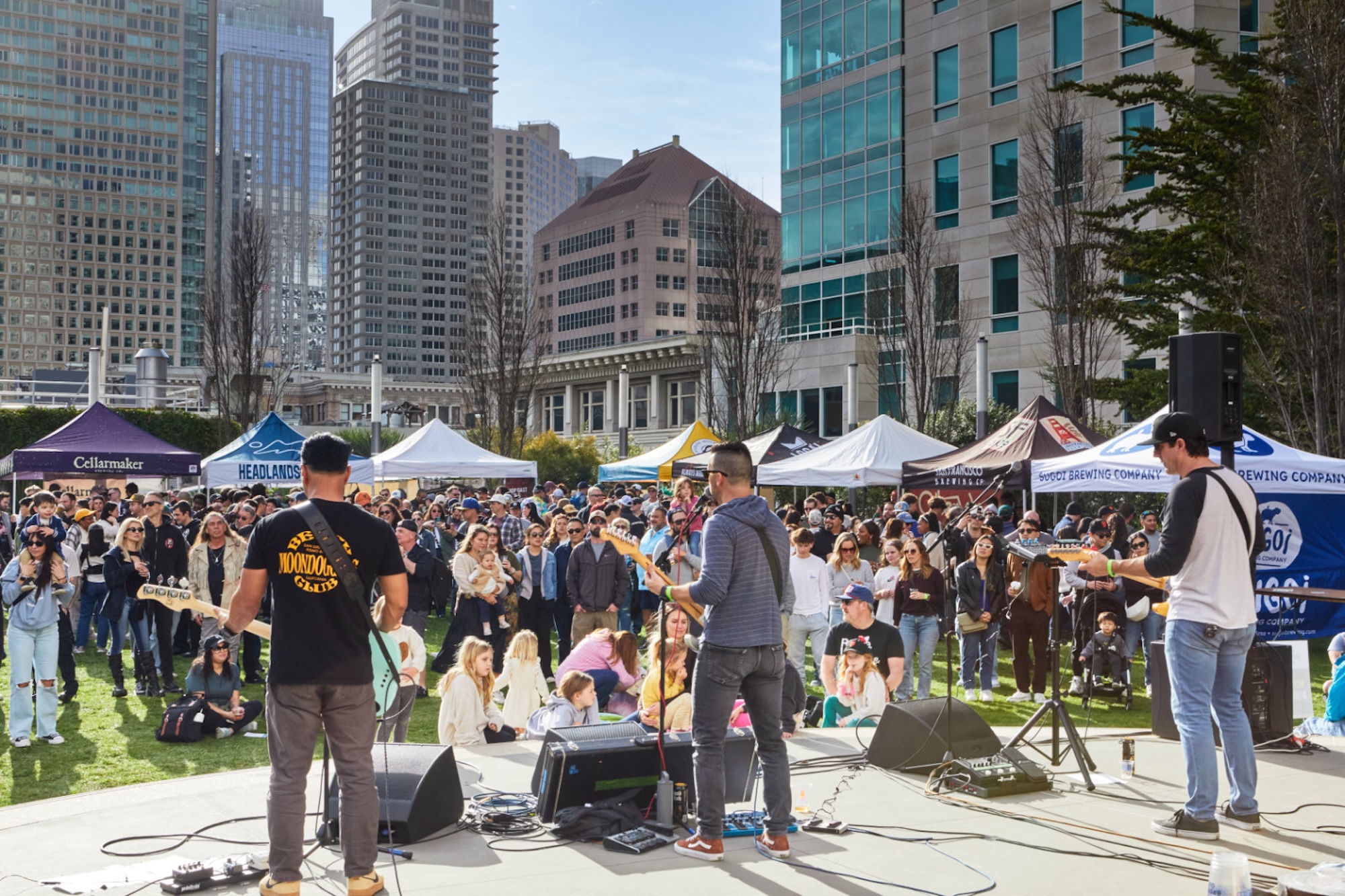 SF Beer Week offers a number of opportunities for people to hear live music all across the region, from small dive bars to larger outdoor venues. (Arnold Suliguin)
SF Beer Week itself was born out of a slower season for the industry, as the rise in the popularity of “dry January” has pushed people to put down the booze during the start of the year.
“February has always been a time when the local beer scene celebrated,” Piotrkowski says, “and did so with strong and rare beers.” He mentions Hayward’s Double IPA Festival, which just celebrated its 26th year, as well as Strong Beer Month, which was founded in the late ’90s by Magnolia Brewing and 21st Amendment Brewing. And now, the current iteration of SF Beer Week is more reflective of the current state of small breweries in the Bay Area.
The latest frontier for craft beer, Piotrkowski explains, is making the everyday beer — something he calls the “just-give-me-a-beer beer.”
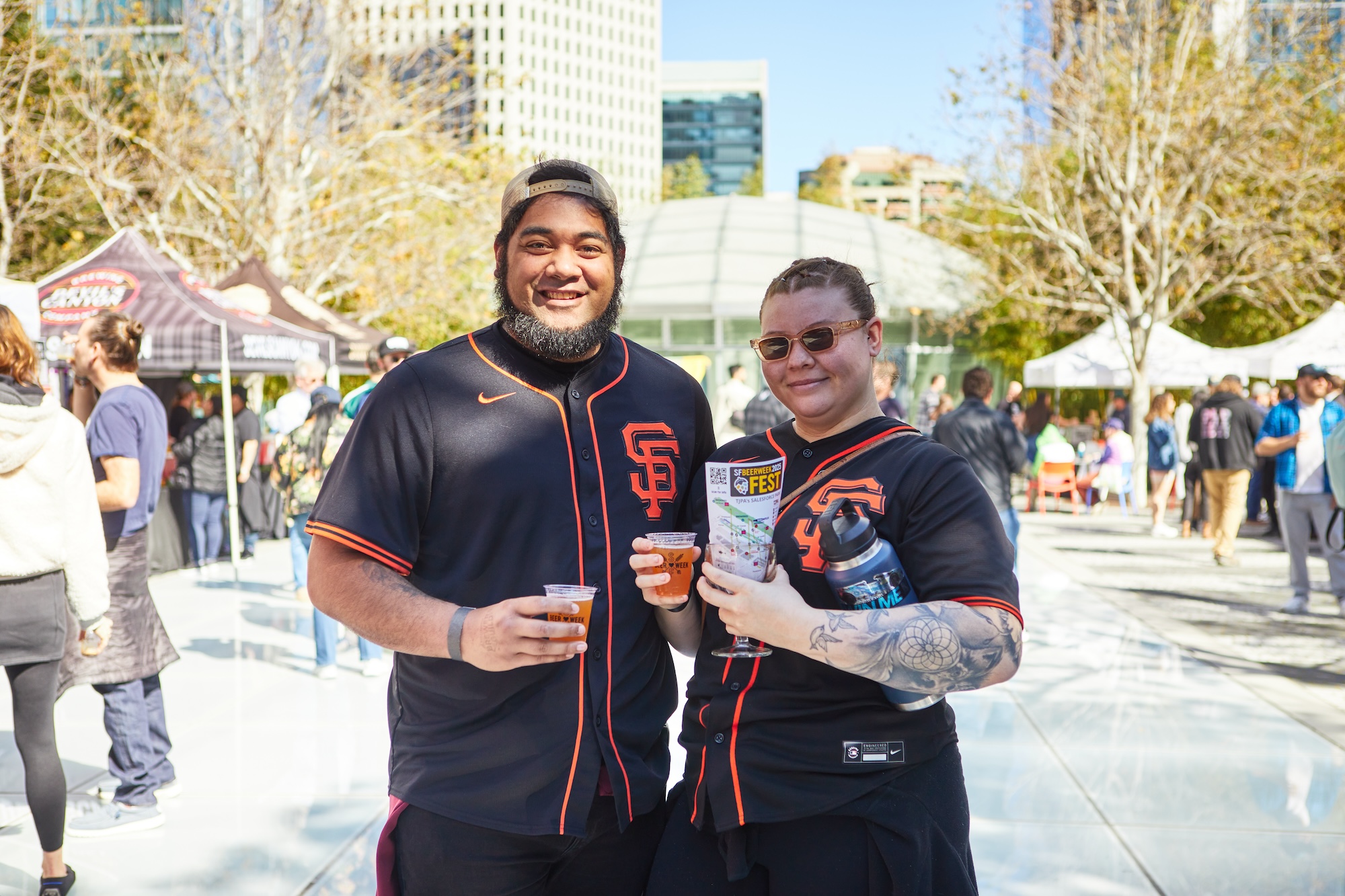 SF Beer Week: where people support local breweries and local teams. (Arnold Suliguin)
“If you go back 15–20 years,” Piotrkowski says, “craft breweries really got their foothold at the periphery.” It was the creation of “loud, attention-getting” beers like imperial stouts and double IPAs that were antithetical to common beers, like light lagers and other beverages readily sold by big, well-known brand names.
“Over time,” Piotrkowski tells me, “we sort of won the Slow Food argument, and people just wanted to buy their beers from local companies.” In turn, small breweries began to make pilsners, light lagers and cream ales that could compete with the titans of the industry.
He points to Oakland’s Temescal Brewing, which is releasing a special Mexican-style lager made from blue corn and barley, as an example of the change that he’s seeing of late. “It’s probably akin to a Negro Modelo,” Piotrkowski says of the new brew. “Except that no multinational corporate entity gets a penny out of your purchase of that beer.”
Instead, the local brewery sources ingredients from nearby farms. It’s like “farm to fork,” but for beer. “Grain to glass,” he calls it.
Piotrkowski, who represents the 71 breweries in the Bay Area Brewers Guild, knows that there are a lot of options for entertainment in Northern California. But SF Beer Week, with activations like “Beer 39‘” — a scavenger-hunt-style sampling of beers at San Francisco’s Pier 39 — Piotrkowski says this event offers people something that can “invigorate your life and culture in a way that some of those other things won’t.”
He adds, “This is of your community — world-class beer being made in your community, by people who are accountable to you.”
For more information on events, activities and happenings around SF Beer Week, check out their website.