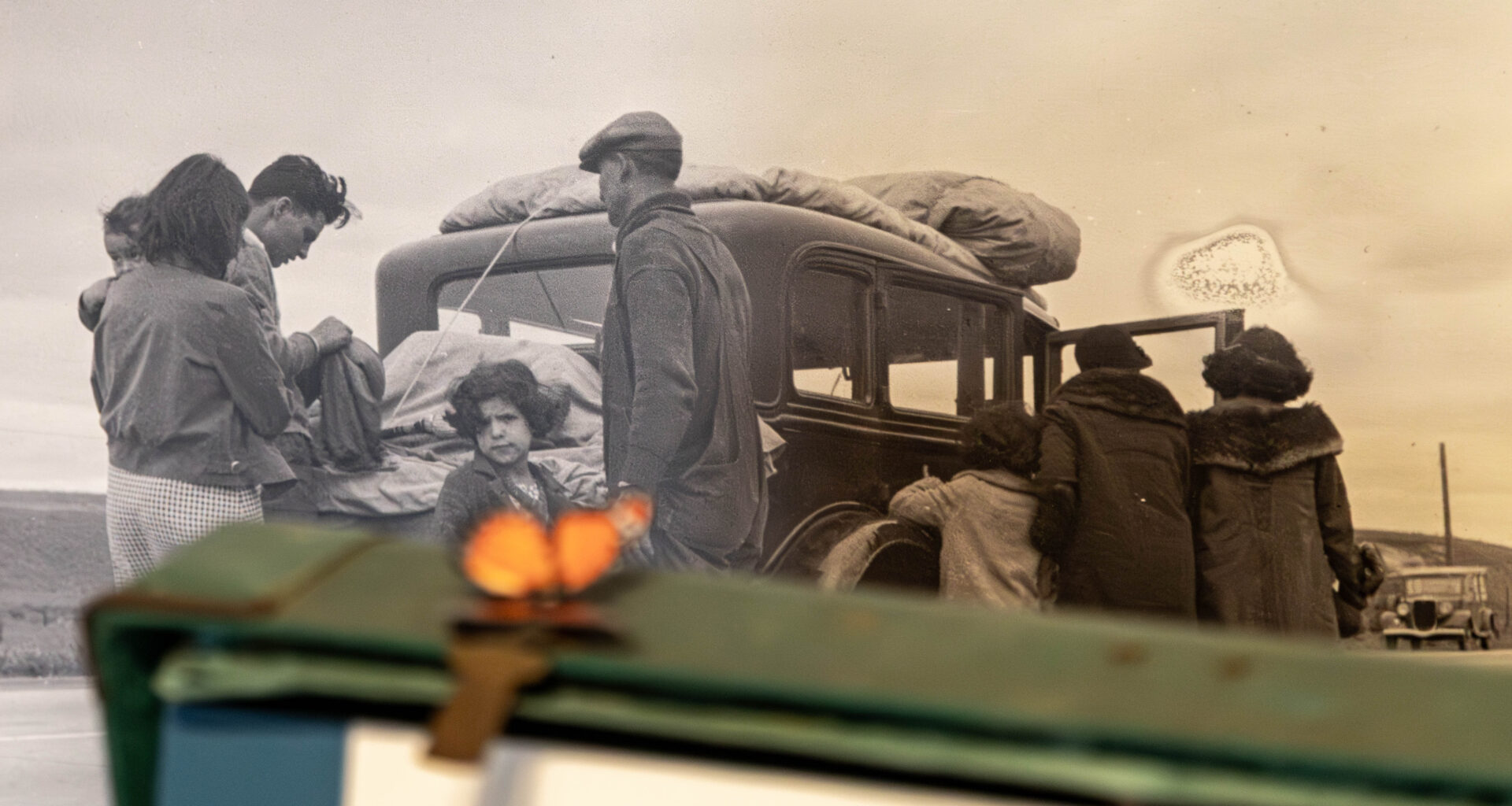
“Those who do not learn from history are doomed to repeat it.” This astute observation is often heeded as a warning, but for Rancho Los Cerritos’ “Seeds of Resilience” exhibit, repetition is the goal.
The museum covers a 40-year period of the Mexican-American experience from the early 1900s to the 1940s. Cerritos’ exhibit doesn’t shy away from the past, instead it chooses to highlight the Mexican community’s varied responses to discrimination, exploitation and ultimately, mass deportation. It does not dwell on the unjust treatment of Mexican-Americans, but features a careful examination of the lessons we can learn from those who endured and overcame.
“I personally wanted my community to walk away with this sense of hope that we’ve been here before, and we came out on the other side of it,” said Rancho Los Cerritos Collections Manager Magda Cervantes. “We’ve been here before, and we have persevered. We have prevailed, with our dignity and with our culture.”
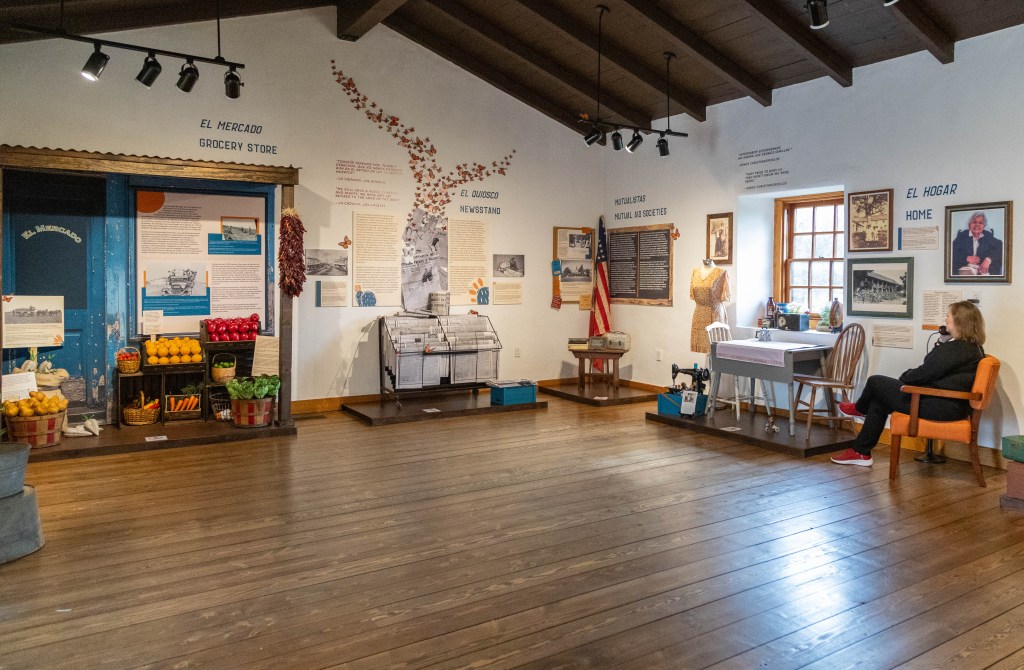 Rancho Los Cerritos’ historical exhibit “Seeds of Resilience” takes viewers through nearly 50 years of the Mexican community’s forms of resilience and mutual aid in the face of discrimination and repatriation. (Samuel Chacko | Signal Tribune)
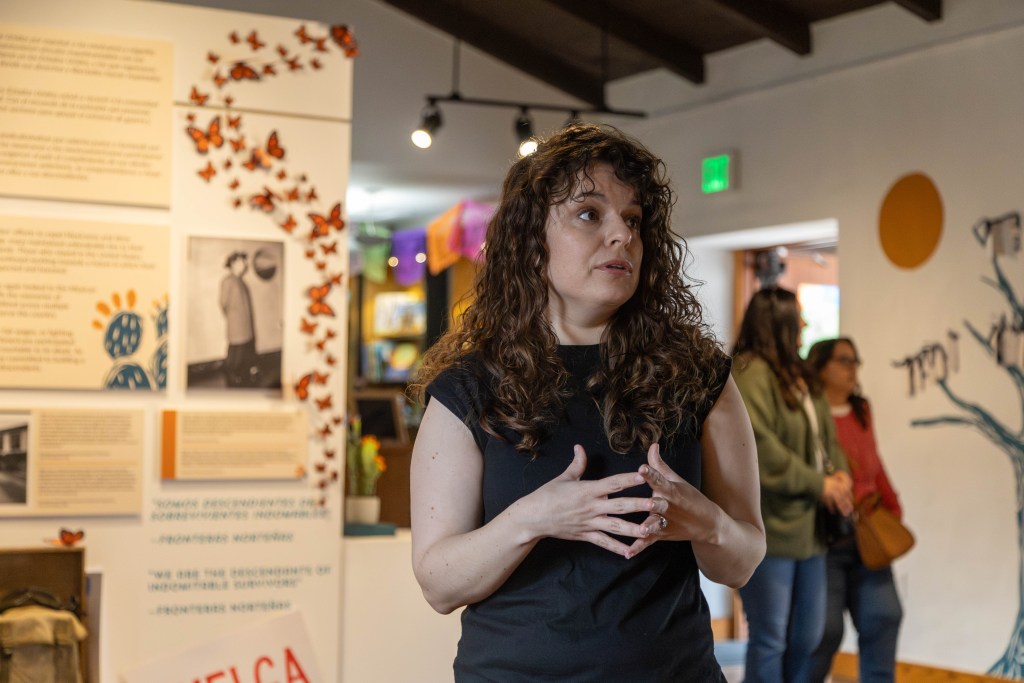 Collections Manager Magda Cervantes talks about the history that’s associated with the Rancho Los Cerritos museum and the deeply personal connections staff had to the current exhibit “Seeds of Resilience” on Feb. 15, 2026. (Samuel Chacko | Signal Tribune)
“Seeds of Resilience” was a deeply personal project for the staff and volunteers at Rancho Los Cerritos, Cervantes explained, as they dug into their own family histories and found connections with traditions of the past. Museum volunteer Richard Nieto’s mother Hortencia Nieto is prominently featured in the exhibit, detailing her own experience of repatriation.
During the 1930s, in the midst of the Great Depression, raids swept through Mexican-American neighborhoods, or barrios, across the country in states like California, Texas, Michigan, Colorado, Illinois, Ohio and New York. These raids were done without due process, and in the end nearly 2 million people were deported to Mexico. About 60% of those deported were U.S. citizens, according to historians.
If the situation sounds depressingly familiar, then consider the stars of the exhibit: mutual aid and radical forms of care within barrios. Escuelitas (little schools) born outside of people’s homes; women sewing clothing for their children from thrifted fabric; Spanish newspapers not only covering repatriation news and resources, but also acting as a conduit for Chicano literature, publishing poetry and prose from Mexican-Americans; labor unions fighting against farm labor exploitation.
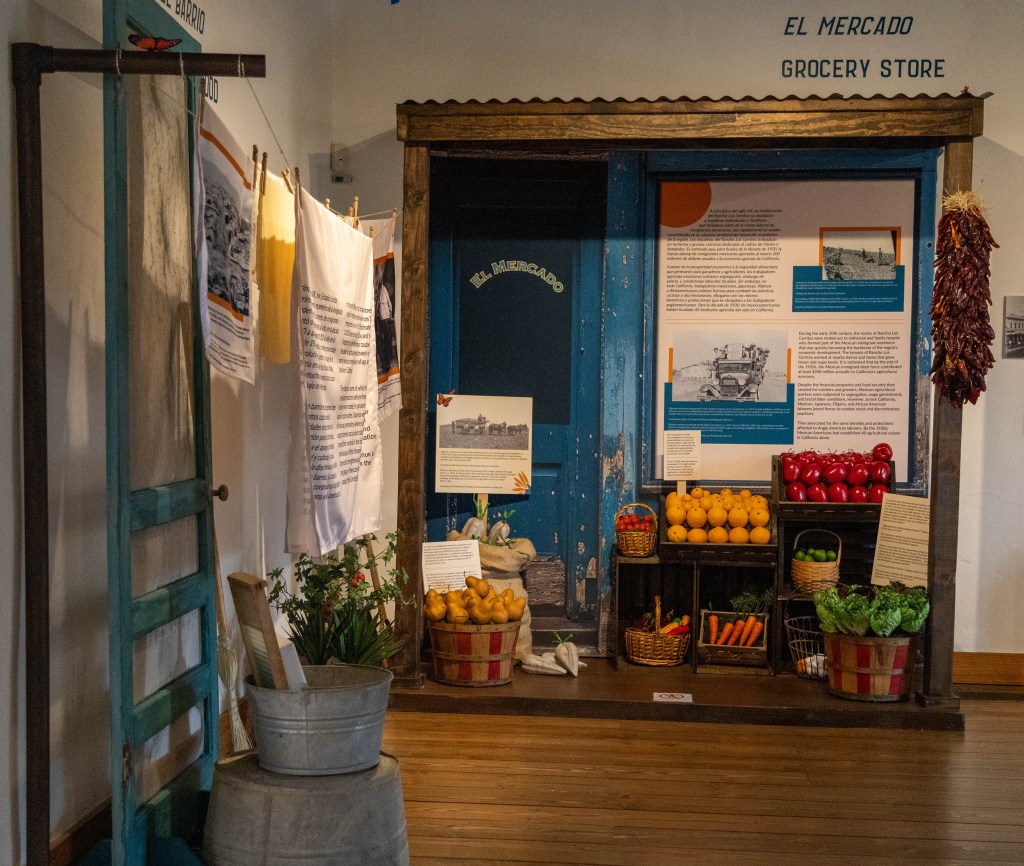 Tenants of Rancho Los Cerritos would work on nearby dairies and farms during the 20th century with the total Mexican immigrant labor force contributing at least $200 million annually to California’s agricultural economy. (Samuel Chacko | Signal Tribune)
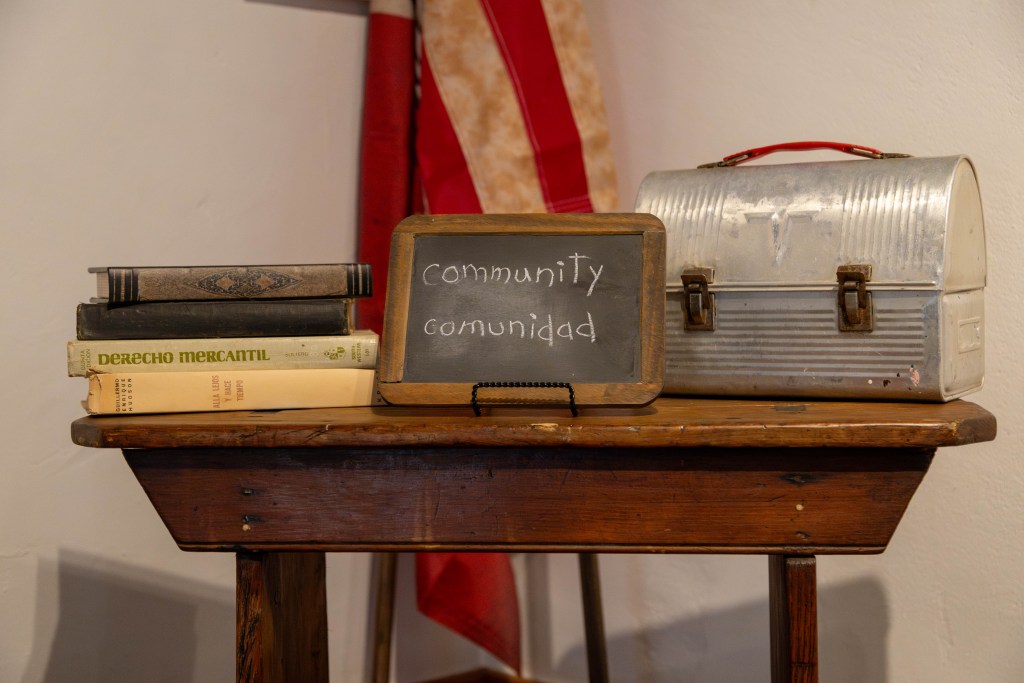 Newspapers such as the Los Angeles-based Spanish-language newspaper La Opinión and notable books like Dr. Rafael Soltero’s book “Derecho Mercantil” are on display on Rancho Los Cerritos’ cultural museum on Feb. 15, 2026. (Samuel Chacko | Signal Tribune)
The theme was executed with intention and a sense of historical purity, especially as the United States of America celebrates its 250th anniversary this year.
“We were also sort of hesitant to take on a sort of, if you’ll excuse the word, a patriotic take on this celebration,” Cervantes said of their earliest conversations on what “Seeds of Resilience” would be.
Executive Director Alison Bruzelhawk encouraged her staff to “look beyond 1776” and interrogate what it means to be American, and “hopefully get people to consider who and what has comprised these 250 years, and what it means to be American,” Cervantes said. The result is an intimate space of cultural perseverance, a portrait of everyday heroes and out of seeds of resilience, the fruit of hope.
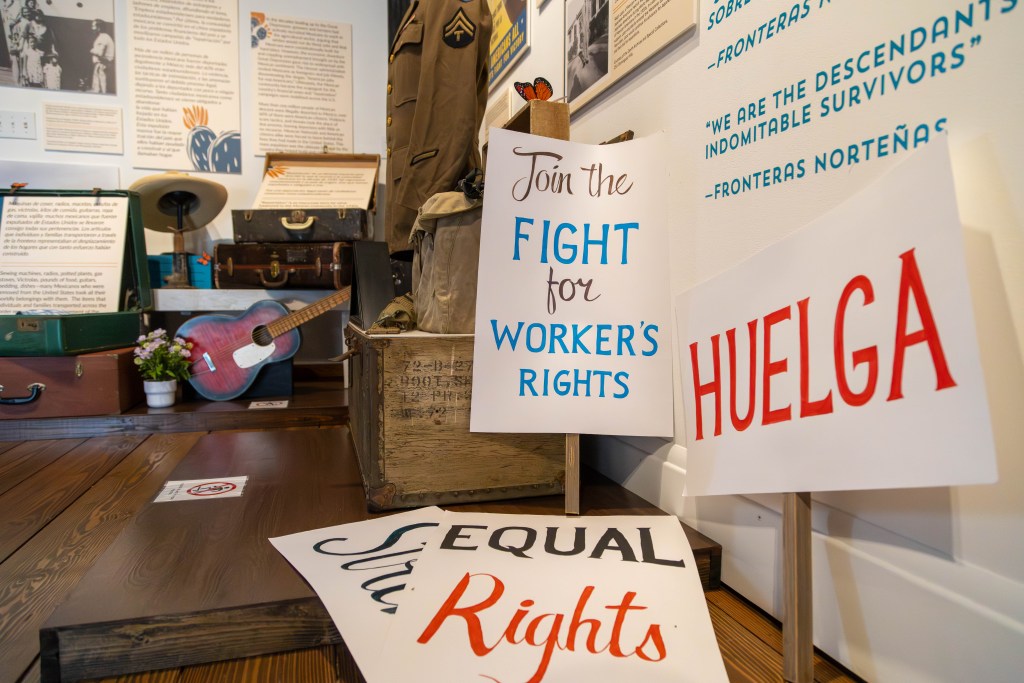 The adelante (moving forward) portion of the “Seeds of Resilience” exhibit features signs from historical movements in the 1900s focus on equal rights and workers rights, as well as a quote from Fronteras Norteñas that says, “We are the descendants of indomitable survivors.” (Samuel Chacko | Signal Tribune)
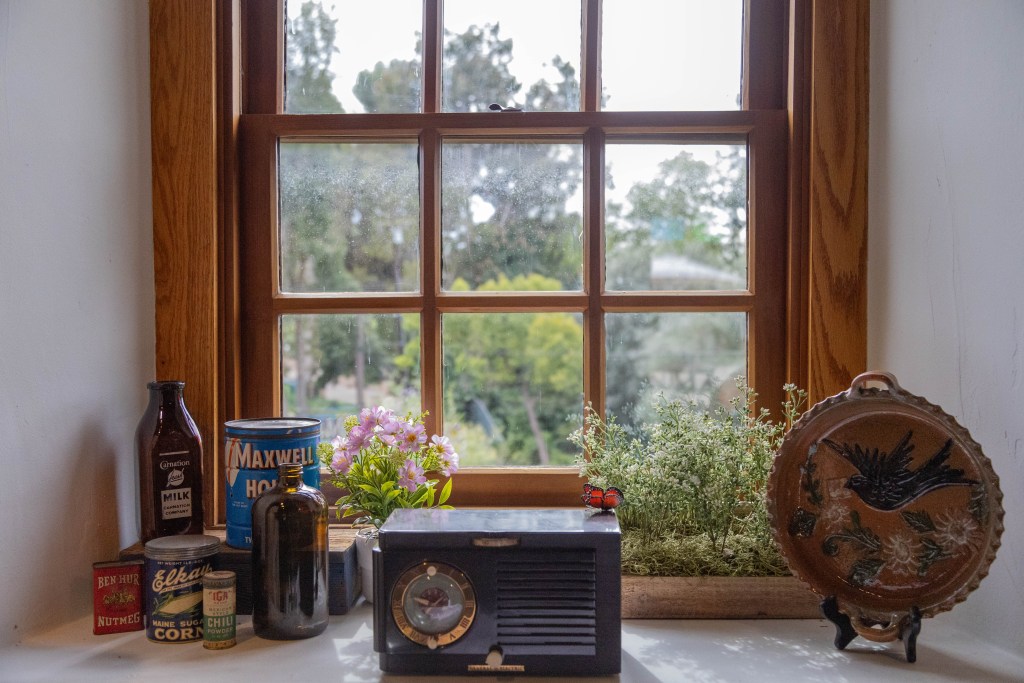 Antique sewing machines, radios and food items found in Mexican homes and barrios in the early 20th century are on display in Rancho Los Cerritos on Feb. 15, 2026. The home was an important place of resistance and community for Mexicanos to survive daily adversities. (Samuel Chacko | Signal Tribune)
“We’re not trying to replace one narrative with another, we’re just expanding our [understanding of] what American history is. And so, in that way, we’re actually creating a more accurate depiction of history,” Cervantes said. “We want people to recognize that the Mexican community is part of the nation’s past and a part of the nation’s future.”
Visitors can get a sense of a Mexican barrio during the early 1900s while walking through the room, with colorful potted plants, a clothesline holding cloth, a small mercado (market), a newspaper stand, a chalkboard, a vintage sewing machine, children’s toys and a small radio. Near the end of the exhibit, a bus stop sits with a suitcase bound for Mexico.
Visitors can also hear a real-life story of repatriation from Hortencia Nieto, through a 40-minute interview she did with her son Richard, who is a volunteer with the museum.
“I personally wanted my community to walk away with this sense of hope that we’ve been here before, and we came out on the other side of it,” said Rancho Los Cerritos Collections Manager Magda Cervantes. “We’ve been here before, and we have persevered. We have prevailed, with our dignity and with our culture.”
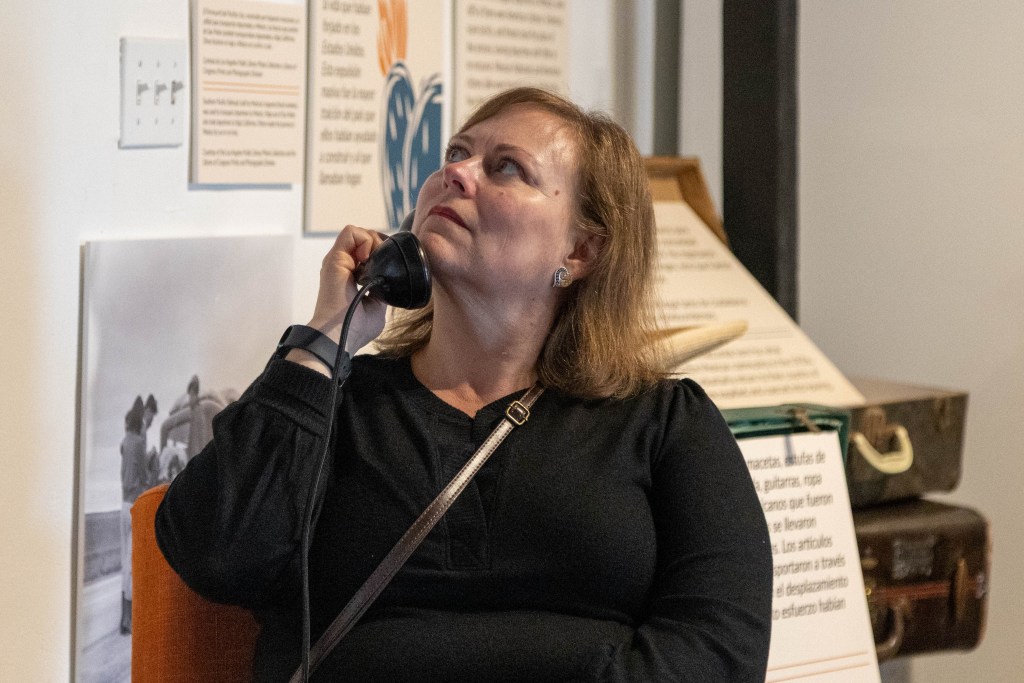 Visitors can hear the story of Hortencia Nieto, who was an American citizen sent to Mexico when she was two years old and unable to return to the United States until 1944. The phone contains a near 40-minute recording of Hortencia Nieto being interviewed by her son Richard Nieto, who is a volunteer at Rancho Los Cerritos. (Samuel Chacko | Signal Tribune)
Photos of Mexican families near what is now Long Beach decorate the walls, adorned by monarch butterflies symbolizing dreamers of the DACA (Deferred Action for Childhood Arrivals) era.
Everyday spaces became places of resistance and care, as people started newspapers and schools out of their own homes. Spanish newspapers were the only ones covering repatriation and Mexican issues at the time, and many also used their platform to help teach their community English. Mexican children were often offered a subpar education and chastised for speaking Spanish at school, and not allowed to learn about their culture. Thus, escuelitas bridged the gap in education for many Mexican children.
“A lot of times Mexicans were not allowed to own property, so it’s not like they could open up a newspaper office or open up a school,” Cervantes said. “They really had to find these alternative ways to kind of make sure that their community got these resources.”
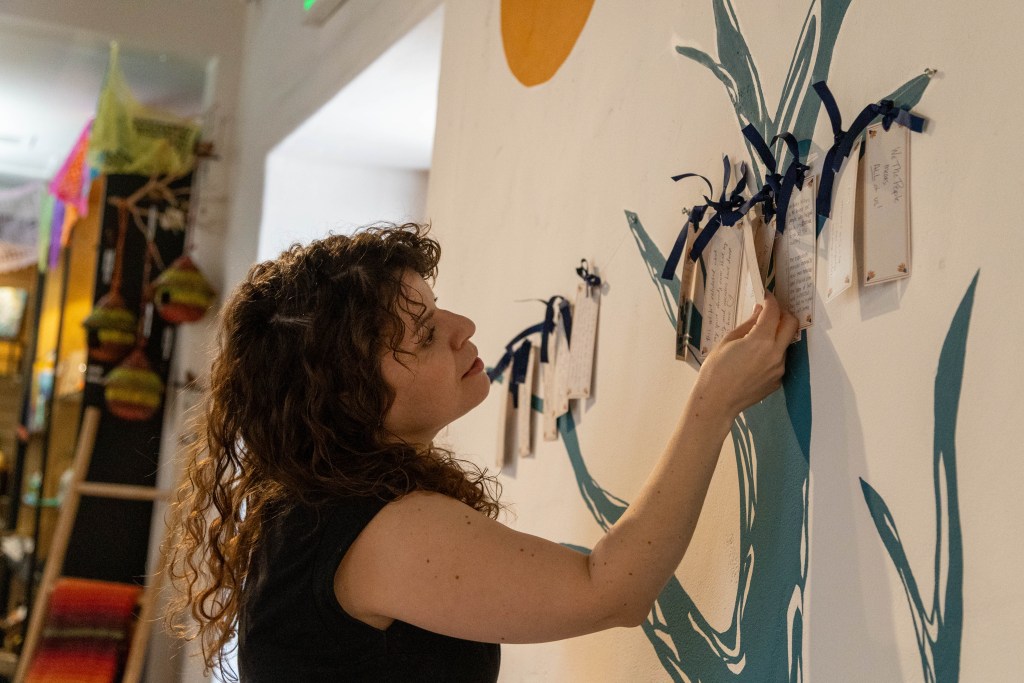 Visitors can leave notes on the community tree after walking through the “Seeds of Resilience” exhibit and write how the exhibit impacted them. (Samuel Chacko | Signal Tribune)
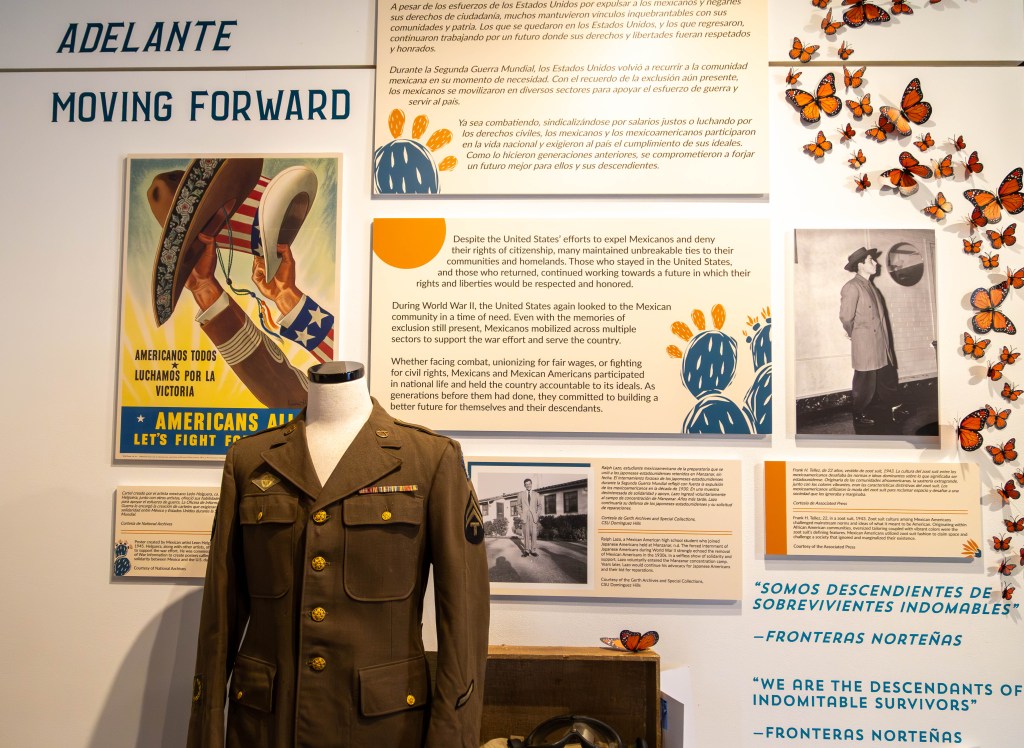 Notable figures Ralph Lazo and Frank H. Tellez have brief biographies covering their contributions to Mexican-American history at Rancho Los Cerritos’ “Seeds of Resilience” on Feb. 15, 2026. Lazo was known for volunteering to enter the Manzanar concentration camp in the 1930s and Tellez demanded Chicano representation and respect with his 1940s zoot suits. (Samuel Chacko | Signal Tribune
Panels in both English and Spanish explain the decades of transformation within Mexican barrios, the various struggles they faced and the acts of care and resilience they took to look after one another. The exhibit ends with an adelante portion (moving forward), highlighting the Mexican-Americans who fought in WWII, including 250,000 Mexicans and 53,000 Puerto Ricans, according to the National WWII Museum. Adelante also briefly covers the zoot suit era and Chicano activist Ralph Lazo, the teenager who voluntarily entered a Japanese internment camp in protest of the internment policies.
After walking through the exhibit, attendees can contribute to the community tree and write what lesson they learned through “Seeds of Resilience” and what feels most prevalent today. From the organized forms of care to the quiet, everyday examples of resilience, these histories of the past bear repeating.
“Seeds of Resilience” will be on display for a year at Rancho Los Cerritos (4600 Virginia Road). Entry is free. The museum will be hosting panels, celebrations and other events in theme with the exhibit throughout the year.
Rancho Los Cerritos is open Wednesdays through Fridays from 1 p.m. to 5 p.m., Saturday from 10 a.m. to 5 p.m. and Sundays from 1 p.m. to 5 p.m.
 Samantha DiazManaging Editor
Samantha is an award-winning journalist, sports fanatic and mother. She’s worked for the Signal Tribune for over three years and is passionate about covering environmental news, small businesses, mutual aid efforts and resources.