
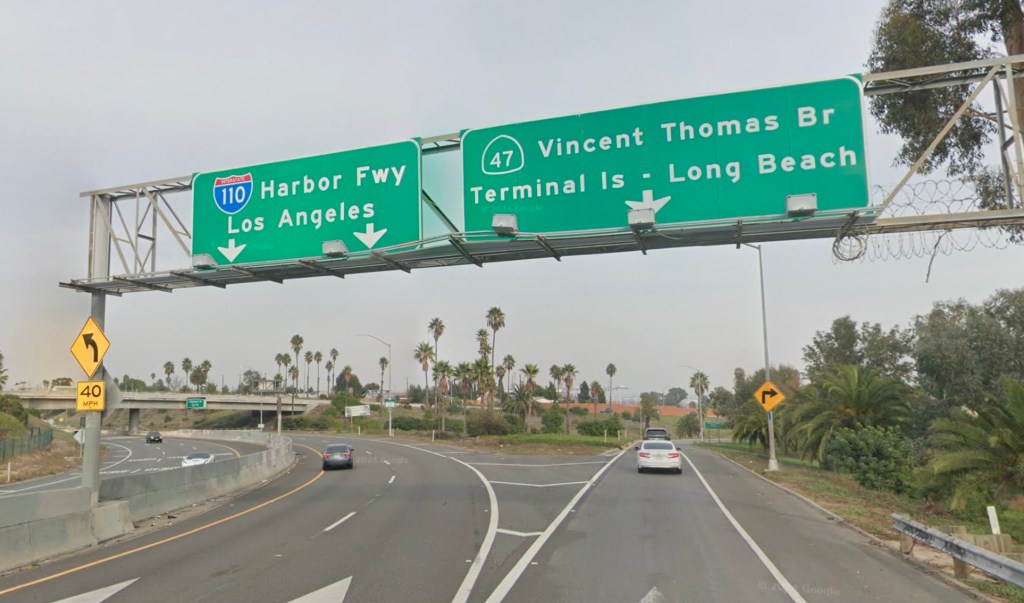
A fallen power pole that caused a major traffic backup at the 110 Freeway offramp in San Pedro on Wednesday, Feb. 18, has prompted Los Angeles Councilmember Tim McOsker to introduce a motion designed to improve emergency coordination and traffic response.
The motion includes steps to “strengthen emergency coordination, improve resource availability and ensure clearer communication during infrastructure failures and roadway closures.”
A fallen power pole forced the full closure of the 110 Freeway near Gaffey Street, which is the primary route in and out of San Pedro. The incident caused significant congestion throughout the Harbor Area and required a multi-agency emergency response.
“This incident made clear that we are not where we need to be when it comes to coordination and readiness,” McOsker said in a written statement. “For a community like San Pedro, where the 110 serves as the primary way in and out, we cannot afford delays, confusion or a lack of basic resources during an emergency. Our residents deserve timely information, clear communication, and a response that reflects the urgency of the situation.”
During the incident, city staffers requested portable changeable message signs from the Los Angeles Department of Transportation to help redirect traffic and notify the public. The office, however, was informed that no signs were available for deployment.
And because the closure occurred on a state freeway, coordination with the California Department of Transportation was also required, exposing gaps in communication, resource deployment, and clarity of responsibility between city and state agencies, McOsker said.
McOsker’s motion calls for a comprehensive report back within 30 days from the Los Angeles Department of Transportation, Los Angeles Department of Water and Power, Caltrans, the Emergency Management Department, LAPD and other relevant agencies. The report will include:
A full timeline of the Wednesday incident, including agency roles and communication protocols.
The availability and use of, and protocols for electronic notifications to residents of similar road disruptions.
An inventory and status update of portable message signs and other mobile traffic control devices across the city.
A review of existing coordination protocols with Caltrans for incidents on state freeway facilities within Los Angeles.
Recommendations to improve resource availability, interagency coordination and public communication during future emergencies.
McOsker’s motion, according to a news release, seeks to ensure that “Los Angeles is better prepared to respond quickly and effectively when critical infrastructure fails, provide timely and accurate communication to the public, minimize disruption and prioritize public safety.”