
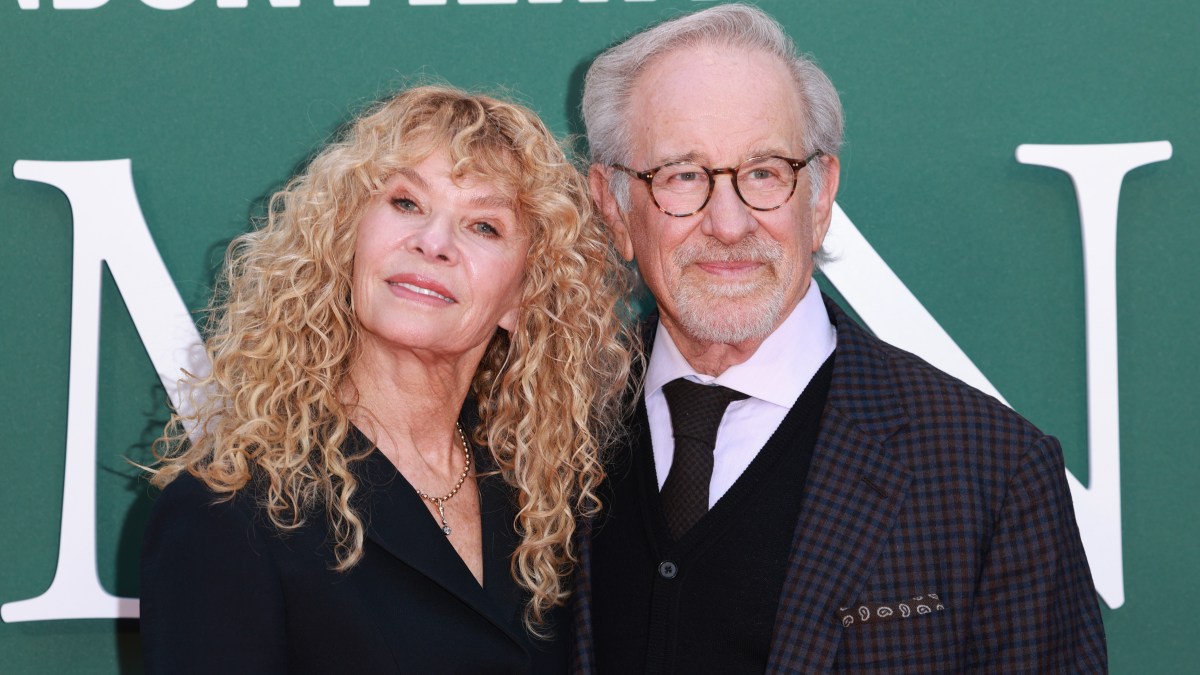
The blockbuster director Steven Spielberg is the latest billionaire to leave California after other super-rich residents blamed a proposed wealth tax for their decision to flee the state.
The controversial Billionaire Tax Act would impose a one-time levy of 5 per cent on the total wealth of Golden State residents with a net worth of $1 billion or more. Supporters say that it will help to pay for healthcare for California’s most vulnerable residents while opponents say it is badly thought through and will damage the tax base.
• Sign up for The Times’s weekly US newsletter
David Sacks, the Trump-supporting venture capitalist, said in December that he was opening an office in Texas while the PayPal co-founder Peter Thiel’s firm opened an office in Florida. Mark Zuckerberg, whose Meta is headquartered in Menlo Park, California, is reported to be buying a vast compound in Miami.

Peter Thiel
MARCO BELLO/GETTY IMAGES
Spielberg’s move to New York was purely motivated by a wish for him and his wife, the actor Kate Capshaw, to be closer to family, the director’s representative said. Terry Press said: “Steven’s move to the east coast is both long-planned and driven purely by his and Kate Capshaw’s desire to be closer to their New York-based children and grandchildren.”
Spielberg, 79, and Capshaw, 72, officially became residents of New York City on January 1, according to the Los Angeles Times.
They are living in the famous San Remo co-op in Central Park West that has been home to celebrities including Mick Jagger and Warren Beatty.

The San Remo building in New York
BEATA ZAWRZEL/NURPHOTO/GETTY IMAGES
Amblin Entertainment, Spielberg’s production company, has also opened an office in New York.
The proposed wealth tax has emerged as a ferociously divisive issue in California, which is home to more than 200 billionaires. Silicon Valley heavyweights have criticised the proposal. Organisers are working to gather enough signatures so that it qualifies for a November ballot. It is unclear whether it would have the backing of voters.
The state has a volatile budget due to its reliance on the super-rich, whose wealth fluctuates with the stock market.