
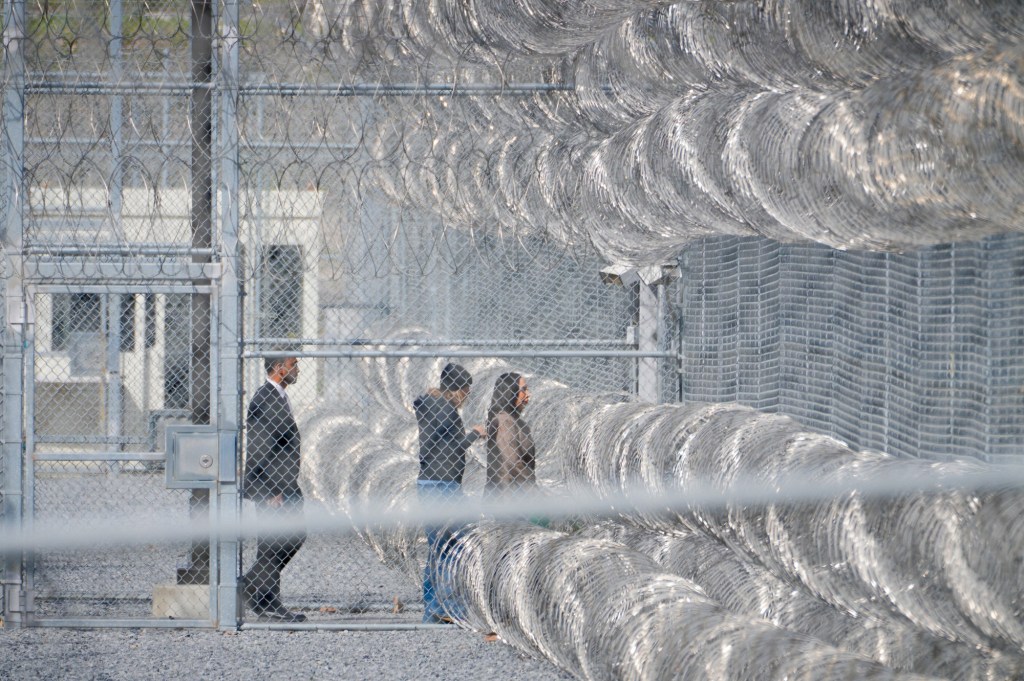
Two county health officials set to perform a planned inspection of the Otay Mesa Detention Center were granted only limited access Friday, and two county supervisors who said they had prior written approval to also tour the facility were subsequently turned away.
An hour later Friday, U.S. Sen. Alex Padilla, who also wished to conduct an oversight visit, was also denied access to the San Diego immigration detention center.
“I am very deeply concerned,” Supervisor Terra Lawson-Remer told reporters. She and Supervisor Paloma Aguirre said they had both received prior written clearance from local U.S. Immigration and Customs Enforcement officials but were told Friday they required additional approval from the agency’s national office.
“It is a huge red flag to me that they will not let us in,” Lawson-Remer said.
The events Friday only add to the ongoing inconsistencies in access faced by Democratic public officials trying to inspect local facilities that detain immigrants. The day prior, Rep. Mike Levin was granted access for a brief tour of public areas.
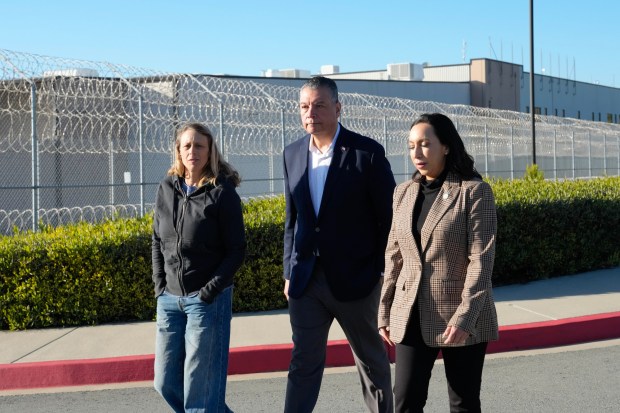 U.S. Sen. Alex Padilla walks with San Diego County Supervisors Terra Lawson-Remer and Paloma Aguirre after he was denied access to the Otay Mesa Detention Center on Friday. (Nelvin C. Cepeda / The San Diego Union-Tribune)
County officials said their visits were in response to reported concerns about conditions inside the detention center, including the quality of food and nutrition and access to medical care. The news site L.A. Taco first reported that detainees earlier this month had thrown lotion bottles with handwritten notes denouncing the situation inside the detention center to protesters attending a weekly vigil outside the U.S. Immigration and Customs Enforcement facility, which is run by a private contractor.
During her visit to San Diego last week, Homeland Security Secretary Kristi Noem touted the agency’s standards for detention facilities nationwide. “We’re proud of the fact that every single individual, when they come, that they’re well taken care of,” she said.
Padilla referenced the secretary’s statement and asked, “If that’s the case, what are they afraid of?”
Members of Congress are allowed to conduct oversight at any facility operated by or for the U.S. Department of Homeland Security “used to detain or otherwise house” immigrants, as stated in the Further Consolidated Appropriations Act of 2024.
On Jan. 8, Noem issued a memo insisting that requests to visit facilities must be made at least seven calendar days in advance. She also stated that any requests to shorten this period must be approved by her.
“The basis for this policy is that advance notice is necessary to ensure adequate protection for Members of Congress, congressional staff, detainees, and ICE employees alike. Unannounced visits require pulling ICE officers away from their normal duties,” she wrote in the memo.
Padilla did not provide advance notice to the facility, his office said. Lawson-Remer said they were given a copy of the DHS policy even though they explained that they were there to conduct a public health inspection, not as members of Congress.
Prior to the visit, county officials said the inspection was set to focus “on core public health conditions, including sanitation practices, access to medical care, temperature control, food safety, and compliance with applicable health standards.”
Aguirre said that while the county’s chief medical officer was allowed inside along with another public health official, he was not permitted to review the detainees’ medical records, was not given a copy of the policies and was not allowed inside the general population area.
“He basically was only allowed to see the kitchen and the medical base, which is insufficient information to properly conduct an inspection,” Aguirre said.
“He said he was able to just look at the facilities and speak with a couple of staff members, no detainees,” added Lawson-Remer.
Aguirre said the county will explore litigation because they were not allowed to conduct a proper inspection.
California Health and Safety Code allows county health officers to investigate private detention facilities if necessary, according to officials.
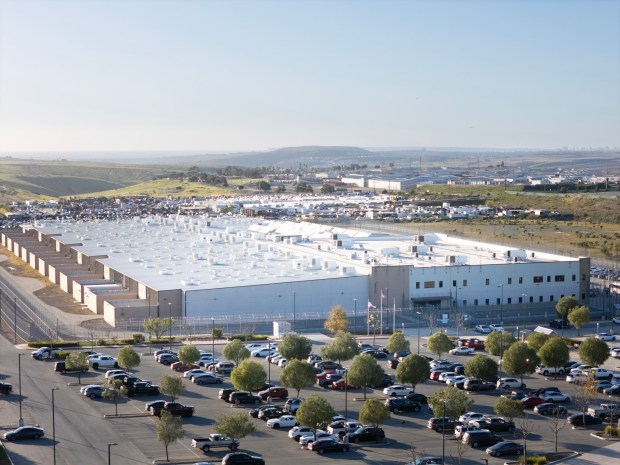 The Otay Mesa Detention Center in San Diego. (Nelvin C. Cepeda / The San Diego Union-Tribune)
A spokesperson for CoreCivic, the private prison operator that runs the facility, said Friday in a statement that “the leadership and staff at OMDC welcome the oversight of the San Diego County Health and Human Services Agency and are cooperating fully with the Public Health Officer related to an on-site visit.”
The spokesperson added that “all visits and/or tours must be coordinated and approved by our government partners at ICE.”
ICE did not respond to requests for comment on Friday.
The CoreCivic spokesperson also said that the facility provides medical and mental health services to all detainees and nutritious meals to those in its care, among other services. “The safety, health and well-being of the individuals entrusted to our care is our top priority,” said CoreCivic spokesperson Ryan Gustin.
Amid the Trump administration’s efforts to carry out mass deportations, there have been reports of overcrowding.
Data obtained by the Deportation Data Project from the federal agency indicates that the Otay Mesa detention facility exceeded its contractual capacity of 1,358 from July 23 to Oct. 15, the last date of available data.
The data, obtained via public records requests, show that during the Biden administration, the facility was occasionally over capacity, though never by more than 100 people. During the Trump administration, however, there were periods when the facility exceeded capacity by more than 200 people.
Neither ICE nor CoreCivic responded to questions about the data.
Other lawmakers had previously requested access to the Otay Mesa Detention Center and other San Diego immigration detention facilities.
It took two attempts before Reps. Juan Vargas and Scott Peters, who were later joined by Levin and Rep. Sara Jacobs, were granted entry to conduct an oversight inspection of a holding facility inside the Edward J. Schwartz Federal Building in downtown San Diego late last year.
On Thursday, Levin did gain access to the Otay Mesa facility, as well as the Schwartz building again. He said that he gave advance notice and was able to see the common areas at Otay Mesa, which looked clean. He said he didn’t see many detainees because he arrived when they were being held in their cells for the headcount.
Earlier this month, Vargas attempted to do so but was denied access. He was also handed a copy of the DHS policy.
“Something has changed,” Vargas said on Feb. 6. “Each and every other time that I’ve been here, they’ve allowed me in, and they’ve allowed me to go each and every place that I’ve asked to go. I’m extremely disappointed.”
Three days after Vargas’ unsuccessful visit, county health officials sent a letter to the detention center’s senior warden saying it was “necessary at this time” to conduct a site visit to investigate health and sanitary conditions. County officials said they got a response shortly after.
Staff writer Kristen Taketa contributed to this report.