

Reporting by Lara Heard
The Oakland Museum of California (OMCA) is showing Black Spaces: Reclaim & Remain through March 1. The exhibition explores the concept of home—including when it’s taken away by forces like eminent domain—through the histories of local Black communities.
To tell these stories, the exhibit showcases a combination of artwork, including an installation by Oakland artist Adrian Burrell, and historical materials.
The exhibition spotlights two East Bay Black communities: Russell City, in present-day Hayward, which was destroyed by the city of Hayward and Alameda County to pave the way for an industrial park, and West Oakland, the “Harlem of the West” and home to the Black Panther Party’s Central HQ until 1972. That community endured despite urban renewal, when, according to OMCA, 1,000 people were displaced just to build a post office.
Dania Talley, OMCA’s associate curator of history, says the exhibit “tell[s] the story of West Oakland and Russell City, but we do acknowledge that this is a nationwide issue.” There are countless examples of Black communities and businesses being destroyed across the U.S. to make way for projects like highways and city parks. In Santa Monica, for example, the city seized a nascent Black business in the 1950s. That history inspired Autumn Breon to create a multidisciplinary art event. (In November, the city settled with the family of the business owner for $350,000.)
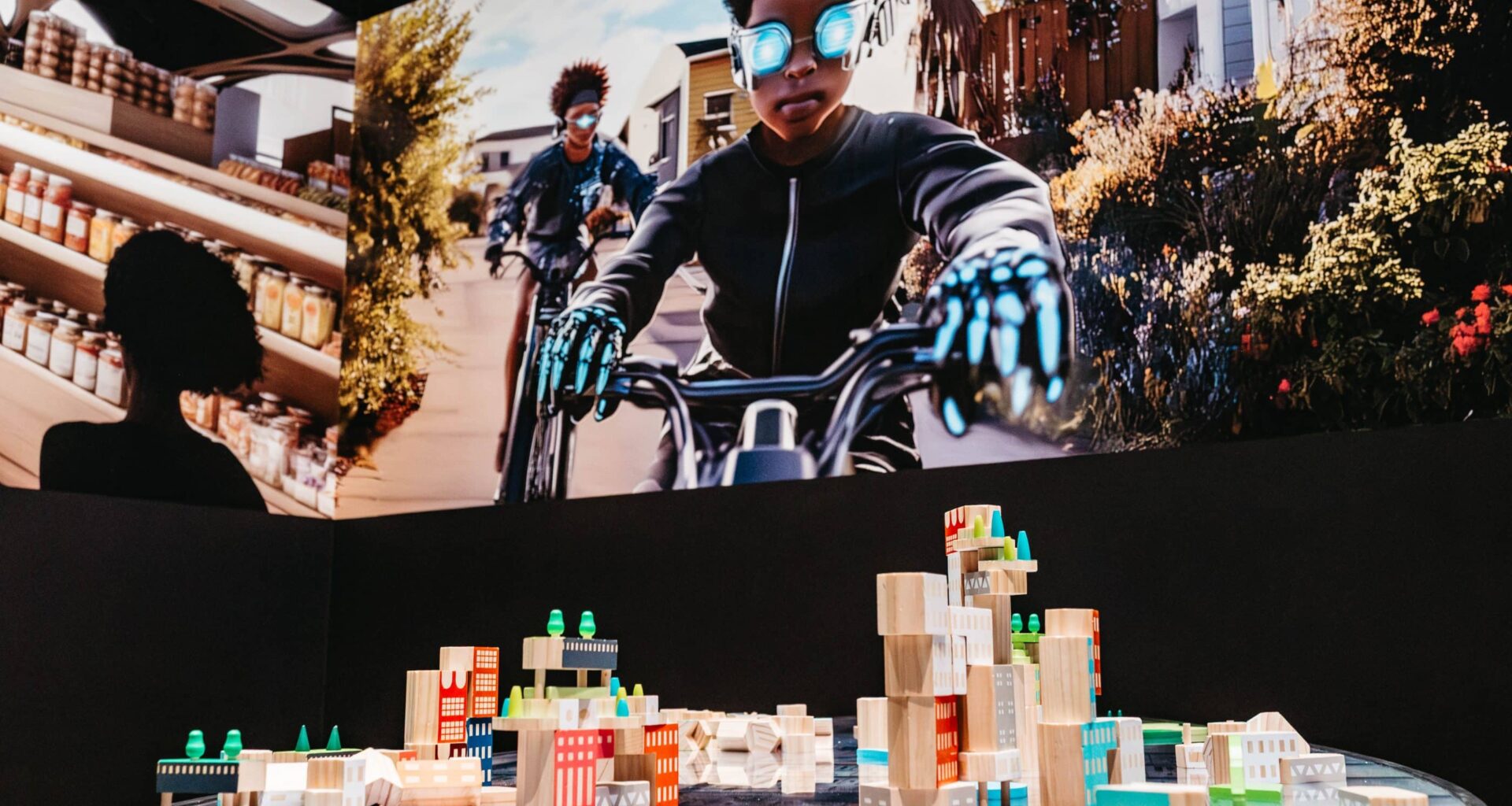
But equally important is the exhibition’s emphasis on the people who remained and the work they’ve done—and will do—in their homes and communities. OMCA included input from local architect June Grant of blink!LAB, offering a look at how Oakland could transform in years to come.
The exhibition also includes works from the local Archive of Urban Futures and Moms 4 Housing, a housing activist group that fights homelessness.
Talley says that she took inspiration from bell hooks’s concept of the Homeplace: an intentional space of care and resistance, particularly by Black women, in a world rife with racism and oppression. It’s also the title of one historical section of the exhibition, which provides a look at the arrival of Black American migrants in California. For Black Americans, she says, a home is a safe haven: “It’s the place where you don’t have to worry about discrimination, and it’s a place where you can truly be yourself.”
One of the things that I really wanted to work towards was getting away from that negative point of view that Black communities are slums, and really trying to focus on the care that Black people put into their homes.”
Dania Talley, associate curator of history at OMCA
The artists on display have a special connection to home: Rashaad Newsome’s Parenting While Black (see above), for example, was created at home during the pandemic. “One of the things that I really wanted to work towards was getting away from that negative point of view that Black communities are slums, and really trying to focus on the care that Black people put into their homes,” Talley says. “They really understand the weight of what a home is and how it can build generational wealth, which is why it was so significant for them to be freed and then have the opportunity to buy land or to purchase a home.”
That effort to safeguard and care for one’s home historically extended to the whole community—particularly when the city would not provide the amenities Black residents needed. In Russell City, residents worked together to buy a fire truck in the 1940s. In West Oakland, residents held a regular clean-up day—photos that show this in the exhibition are dated between 1964 and 1970. “One of the reasons why is because the city of Oakland did not provide them with waste management,” Talley says.
Black Spaces: Reclaim & Remain is on view until Sunday, March 1. OMCA is closed on Mondays and Tuesdays. For more information on visiting hours and ticket prices, visit OMCA’s website.
About the Author