
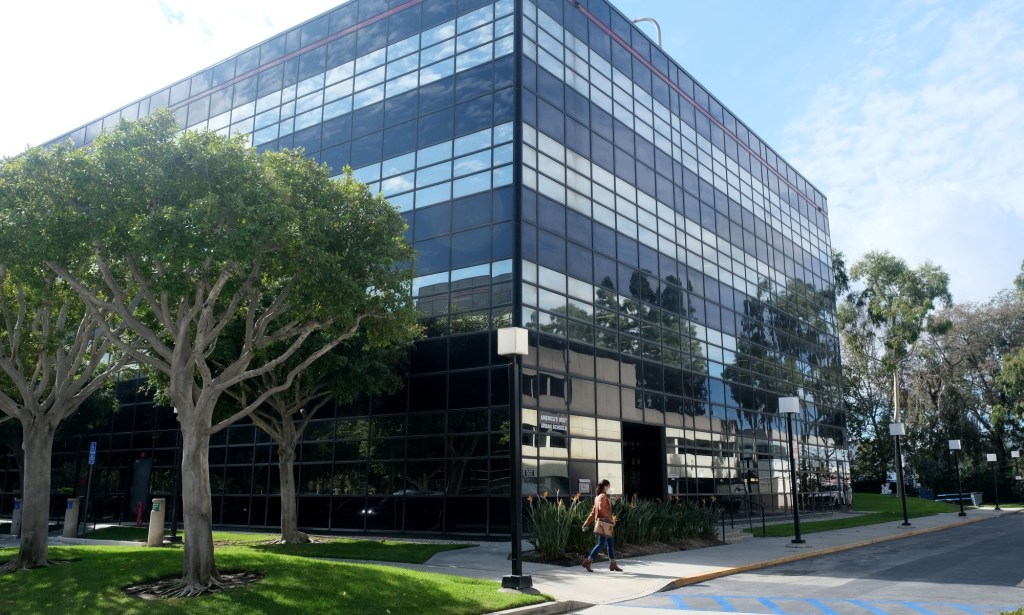
Hundreds of contracted workers, alongside 54 classified employees, will be laid off from their Long Beach Unified School District jobs after the Board of Education OK’d the action during its Wednesday, Feb. 18, meeting.
For the past few years, the Long Beach Unified School District has been grappling with immense budgetary pressures, including an operating deficit. In 2024, for the first time, the district had to dip into its reserves to clear up a projected $44 million budget shortfall — caused by declining enrollment, increased cost of living adjustments and the expiration of pandemic-era funding.
The district’s financial forecast has continued to worsen through the 2025-26 school year, resulting in what outgoing Superintendent Jill Baker called a “grave situation” during the board’s Wednesday meeting.
The bulk of the layoffs approved on Wednesday will impact temporary certificated employees, according to a staff report. These employees are hired on a temporary basis by LBUSD to fill specific staffing needs. The board’s vote will end the contracts for 515 temporary employees at the close of the current school year, the staff report said.
The Teachers Association of Long Beach, which represents more than 3,700 school district workers, including teachers, nurses and librarians, said on Friday, Feb. 20, that a majority of those 515 workers are teachers, psychologists, nurses and other key staff members who have temporary contracts rather than permanent positions.
“These people aren’t being let go because their services aren’t needed, because we really do need them. The kids need them, the schools need them,” Peder Larsen, TALB’s vice president, said in a Friday interview. “And when you have less people working, you’re undoubtedly going to have less services for the kids — but also less services and support for the teachers who are already struggling with large class sizes and kids that need extra help.”
The district’s staff report split the groups of workers being impacted by the layoffs into three main categories based on how their positions are funded. The first group, made up of 253 workers, are temporary contractors who typically fill positions when permanent ones go on leave or sabbatical, or take another extended absence.
“When someone is on a leave of absence, whether they’re on sabbatical, or they’re on a medical leave, or they’re doing something else,” Larsen said, “the district by (educational code), has the right to fill in their place with someone with a temporary contract.”
The second group of impacted workers, 240 people, is mostly composed of workers whose positions are funded by the federal government through the Head Start program. Since those positions are federally funded, they are temporary by nature and dependent on continued funding that is determined on a yearly basis, Larsen said.
“That’s kind of standard. It’s really annoying. But every year we’re just kind of left hanging,” Larsen said. “It could be March, April, May or June, and when they say, ‘Oh, look, we’re going to give you money next year,’ we don’t know.”
The final group, comprising 22 workers, are typically teachers with permanent contracts who have been moved into a temporary contract position, Larsen said.
“So I guess an analogy might be if I, even though I was a high school math teacher, if I really wanted to teach little kids, then I would apply, and they would accept me to do that,” Larsen said, “but then they would replace my high school position with a temporary contract math teacher.”
In a separate vote on Wednesday, meanwhile, the Board of Education also OK’d layoffs for 54 classified employees, including 14 librarians/media assistants, 11 bilingual intermediate office assistants, four campus staff assistants, four instrumental music instructional aides and two instructional aides for intensive reading clinics.
Those positions, Larsen said, are on the front line with teachers — and without them, students, parents and teachers are likely to feel the absence. Libraries, he said, will likely operate fewer days a week, for example, and some campuses may only have nurses on campus on certain days rather than daily.
“When you have cutbacks anywhere in the system, because we all work together as a team, the teachers and everyone else — it’s an education community, we work together,” Larsen said. “So if you start eliminating positions, there’s only so much slack that can be picked up by everyone else.”
Baker, for her part, said during the meeting that the decision to cut these positions wasn’t made lightly.
“First of all, it is always hard to reduce staff in an organization that fully depends on staff to change the lives of students, and that is true for certificated and classified staff,” Baker said to board members during the meeting. “And so there’s nothing about tonight that feels other than a grave situation that we face, and I have deep empathy for those who may be impacted by the changes that you have to take action upon tonight.”
Enrollment decline has been, and continues to be, a serious issue for the district, since a large portion of its budget comes from the state through the Local Control Funding Formula, which provides school districts across California with money based on student enrollment and attendance levels.
LBUSD’s general fund revenue for the 2025-26 school year totals $1.19 billion — while its budgeted general fund expenses total $1.35 billion. Nearly 70% of that revenue, or about $827 million, comes from LCFF funds, according to the district.
But enrollment has been on the decline for at least the past six years. When Baker took the position as superintendent in 2020, for example, there were more than 71,000 students enrolled at LBUSD schools. During the 2026-27 school year, though, LBUSD is expecting just 59,000 students to enroll.
“Over about 15 years time, we’ve lost the equivalent of a third of our district, which is larger than most of the school districts in the state of California,” Baker said. “Our enrollment continues to decline.”
LBUSD’s attendance rates are also an issue, as they’ve yet to rebound from the impacts of the COVID-19 pandemic, the district said. Before the pandemic, the attendance rate sat around 95 to 96%. During the pandemic, daily attendance dropped to about 89% and while those numbers have improved since, they stalled at about 91% in the 2024-25 school year.
“Each student day of attendance generates approximately $75 in revenue, and every 1% of attendance improvement at the district level is approximately $8 million in additional funding,” Baker wrote in a December memo. “The District has launched the You Belong attendance campaign, which seeks to build awareness of the importance of attendance both for student learning and for the District’s finances.”
LBUSD also receives additional LCFF dollars to support students who are economically disadvantaged, English-learners, foster youth or homeless through the Supplemental and Concentration Grant, but attendance for students in those categories has also declined, according to the district, from about 70% in the 2018-19 school year — to just about 64% in the 2024-25 school year.
The district received about $126 million in those supplemental dollars in the 2025-26 school year. But because attendance for students who qualify for that additional support is expected to continue downward, LBUSD’s share of money from that fund will also continue to decrease in the coming years.
As that funding decreases, however, LBUSD’s operational costs continue increasing, and new challenges, including anticipated losses of federal funding and unreliable state funding allocations, are only worsening the situation.
Key expenses, including ongoing increases to health benefit rates for employees, rising utility costs, a 10% increase in student transportation costs and annual increases of about $15 to $20 million to support special education programs — all while LBUSD’s revenue remains flat or declines — have pushed the district into a period of deficit spending.
“The district entered deficit spending in 2024–25 for the first time in more than a decade, with expenditures exceeding revenues by $46.5 million,” a December staff report said. “Deficit spending quickly accelerates, with a negative balance in 2028-29 and deficit spending nearing $156 million.”
State funding, according to a February budget update from LBUSD, accounts for 92% of the district’s operating revenue. Gov. Gavin Newsom released his proposed 2026-27 state budget in January — but true allocations to local education won’t be official until the budget is finalized in June.
“LBUSD leadership continues to actively advocate at the State level for stable, ongoing funding that reflects the real costs of educating students, including special education services, employee benefits and rising operational expenses,” LBUSD said. “District leaders are engaging with education partners and policymakers to emphasize the importance of predictable funding that allows school districts to plan responsibly and sustain critical student supports.”
But besides advocating for more stable state funding, the district has implemented the Fiscal Prioritization and Stabilization Plan, which aims to reduce spending by at least $50 million by the start of the 2026-27 fiscal year.
That effort also lays out supports that will remain in place for the 2026-27 school year, including teacher literacy leaders at all Title I elementary schools; instruction and intervention coordinators at all Title I elementary and middle schools; the high school block schedule; and investments in social-emotional supports for students.
LBUSD, according to the budget update, has already cut $47.5 million via reductions in more than 60 central office positions, some school site positions, and the implementation of staffing standards in alignment with LBUSD’s projected enrollment rate of 59,000 students for the 2026-27 academic year, according to the district’s website.
Other programs that have been reduced thus far include:
Discontinuation of elementary care and support centers.
Reduction of the number of middle and high school wellness centers.
Reduction of library staffing at some school sites.
Elimination of unrestricted funding for the Educare and Child Development Center program.
“We have done, in every single department — academics, every business department — at least a 10% reduction, and some departments have faced upwards of a 20% reduction,” Baker said. “We will consolidate some Central Office departments effective July 1, that is to the tune of about $10 million and growing.”
LBUSD has also decided to close Hoover Middle School after the 2025-26 school year, which will result in about $700,000 worth of savings, Baker said. The Hoover campus, in the 2027-28 school year, will be repurposed as the home of the dual immersion programs at Keller and Stephens middle schools.
“That isn’t the end of entertaining school closure or consolidations, and this has been made public,” Baker said. “Our staff will be back to make recommendations on schools that are very low in terms of their use of their facility, along with the ability to have an academic program that supports students in that school facility, and that will come later this spring.”
Those reductions, alongside other cuts to spending — including Wednesday’s decision to approve layoffs — have resulted in $47.5 million in savings so far, Baker said. Of that, $30.5 million will support the district’s general fund.
“And that compounds over time. So when we reduce now, the compounded impact of that is about $76 million,” Baker said, “and still it’s not enough to meet the minimum reserve in 2028- 29 — and I say that back to the grave nature of where we are.”
But the Teachers Association, which held a rally in January advocating for the district to make cuts elsewhere before turning to layoffs as a budgetary solution, has argued that LBUSD’s financial priorities are to blame for the current crisis.
“We feel it’s more of a priorities problem from the district when it comes to their decisions, when it comes to their budgeting, and where they put the resources,” Larsen said. “The district likes to call it a budget problem, but we say more than that, it’s a priorities problem.”
The union, Larsen said, believes that LBUSD should take a closer look at the money it spends on contracts and consultants to ensure that money is directly benefiting students, and that the district could also consider putting other costly projects on the backburner.
“Long Beach has always been a very, very big district, and I think they’ve had these grand plans,” Larsen said. “But when you scale back, you’ve got to make sure that you keep the focus always on the students and the schools.”
Larsen, for example, argued that LBUSD is not taking advantage of certain methods to help reduce operating costs that other school districts across the state — which are grappling with similar enrollment declines and attendance issues — have taken to strengthen their fiscal positions.
One solution, Larsen said, is a retirement incentive, which effectively offers an early retirement to faculty who have been teaching the longest (and thus, have the highest salaries in the district), in exchange for a payment spread out over a number of years.
“The thought is, if you can get some of the people to retire a little bit earlier, and they’re at the very top of the pay scale,” Larsen said, “they’re going to be replaced by people that are on the far side, the newer teachers, and you’re saving money that way.”
The union, Larsen said, has brought this kind of incentive, which has been put in place by other large districts — including in San Diego, San Francisco, Oakland and Santa Ana — up to LBUSD to no avail.
“So we’ve kind of pointed it out to the district, and I made this comment on Wednesday night, that there are all these other districts across the state that they’re doing this — but Long Beach keeps on saying that it’s not something that would work here,” Larsen said. “We’re continually asking them, why or why won’t it work here? Can you explain that?”
Larsen said they’ve yet to receive an answer, but TALB will keep asking the question anyways.
Additional updates to the district’s budget situation will be given to the public in the coming months. Information about LBUSD’s budget updates are made available online at lbschools.net/about/budget-updates.