
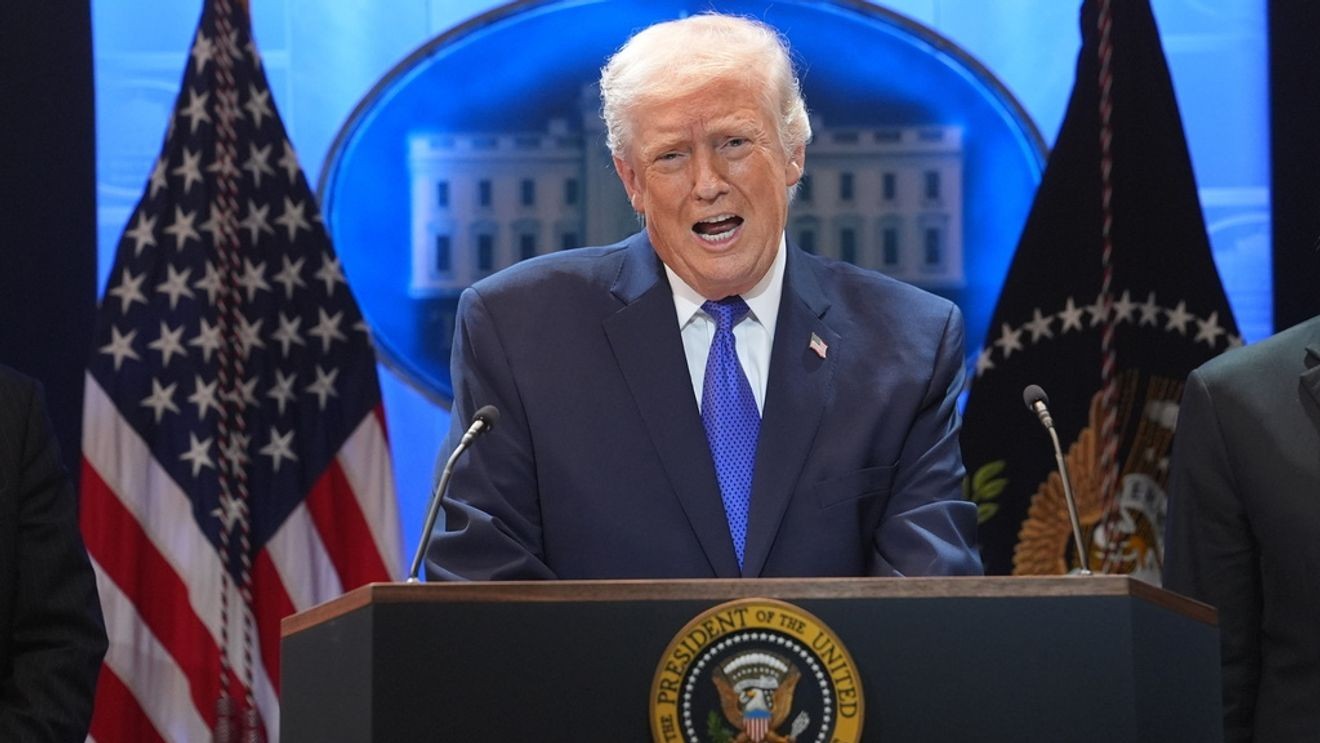
WASHINGTON (TNND) — President Donald Trump announced on Friday that he will immediately impose a 10% global tariff in response to the Supreme Court ruling that his emergency tariffs are illegal.
“Today I will sign an Order to impose a 10% GLOBAL TARIFF, under Section 122, over and above our normal TARIFFS already being charged, and we are also initiating several Section 301 and other Investigations to protect our Country from unfair Trading practices,” the president said and shared on Truth Social.
The new tariffs can only be put in place for up to 150 days; continuation beyond that would require congressional action. Unlike the International Emergency Economic Powers Act (IEEPA), Section 122 has explicit congressional authorization to impose tariffs in specific economic conditions, though much narrower in scope and duration than his previous global tariffs.
“We’re doing something in a different way… and we’re using things that some people thought we should’ve used in the first place… but the end result is going to get us more money,” he told reporters.
Trump repeatedly criticized the Supreme Court, saying it was swayed by foreign interests and suggested certain justices were influenced by people outside of the U.S. government. He was quick to voice that he was “ashamed” of certain justices and called them “unpatriotic and disloyal.”
“I’m ashamed of certain members of the court, absolutely ashamed for not having the courage to do what’s right for our country,” Trump said. “They’re very unpatriotic and disloyal to our Constitution.”
However, he praised the three justices who dissented – Samuel Alito, Clarence Thomas and Brett Kavanaugh. Trump called Kavanaugh’s dissent “genius,” adding that his “stock has gone up.”
“Reversing the tariffs may be an exercise in futility even without IEEPA, numerous other federal statutes authorize the President to impose tariffs and might justify most (if not all) of the tariffs at issue in this case,” Kavanaugh wrote in his dissent.
Trump was in the middle of his closed-door governor’s breakfast at the White House when an aide reportedly handed him a note about the ruling.
A source told Fox News that Trump “called it a disgrace, and then he went on with the remarks.”
The 6-3 decision held that the IEEPA does not authorize the imposition of tariffs during peacetime without clear congressional authorization, reaffirming that tariff powers belong to Congress.
“The International Emergency Economic Powers Act authorizes the President to ‘regulate importation or exportation’ during a declared national emergency,” the justices said. “Nothing in IEEPA’s text mentions tariffs, duties, or taxes.”
During hearings in November, the judges appeared to question the legality of the tariffs.
Lower courts have already ruled that Trump “overstepped his authority” in imposing the reciprocal tariffs on imports from most of the United States’ foreign trade partners.
These courts sided with the case, which was brought by businesses hit with tariffs in a dozen states, that Trump could not use the 1977 IEEPA law to impose the tariffs, which led the Trump administration to appeal.
President Trump has argued extensively that the tariffs case is one of the most important for the nation and has made regular posts on social media about the arguments, calling on justices to rule in his favor.
Early January, Trump said he hopes the Supreme Court “does the right thing” when it comes to tariffs.
“We’re getting rich because of tariffs, by the way,” Trump said Tuesday at a retreat with House Republicans. “I hope everyone understands that. They hate to report. We’ll have over $650 billion poured into our country, or coming in shortly, because of tariffs.”
Federal data as of December shows the Treasury has collected more than $133 billion from the import taxes.
In an interview with The National News Desk, former U.S. attorney John Fishwick suggested that the court might strike down the tariffs, as Trump needs to prevail on several legal issues, including the appropriate delegation of power by Congress under a 1977 law.
Fishwick said, “If I have to read the tea leaves here, I think the Supreme Court is going to strike down the tariffs.”
Normally, a major decision like this would not be expected until May or June. But the Supreme Court expedited the case so it could be argued last November, which left speculation that the justices would put out the decision sooner than expected.