
Here are some of the charts that appeared on Bloomberg this week on the latest developments in the global economy, markets and geopolitics:
US & Canada
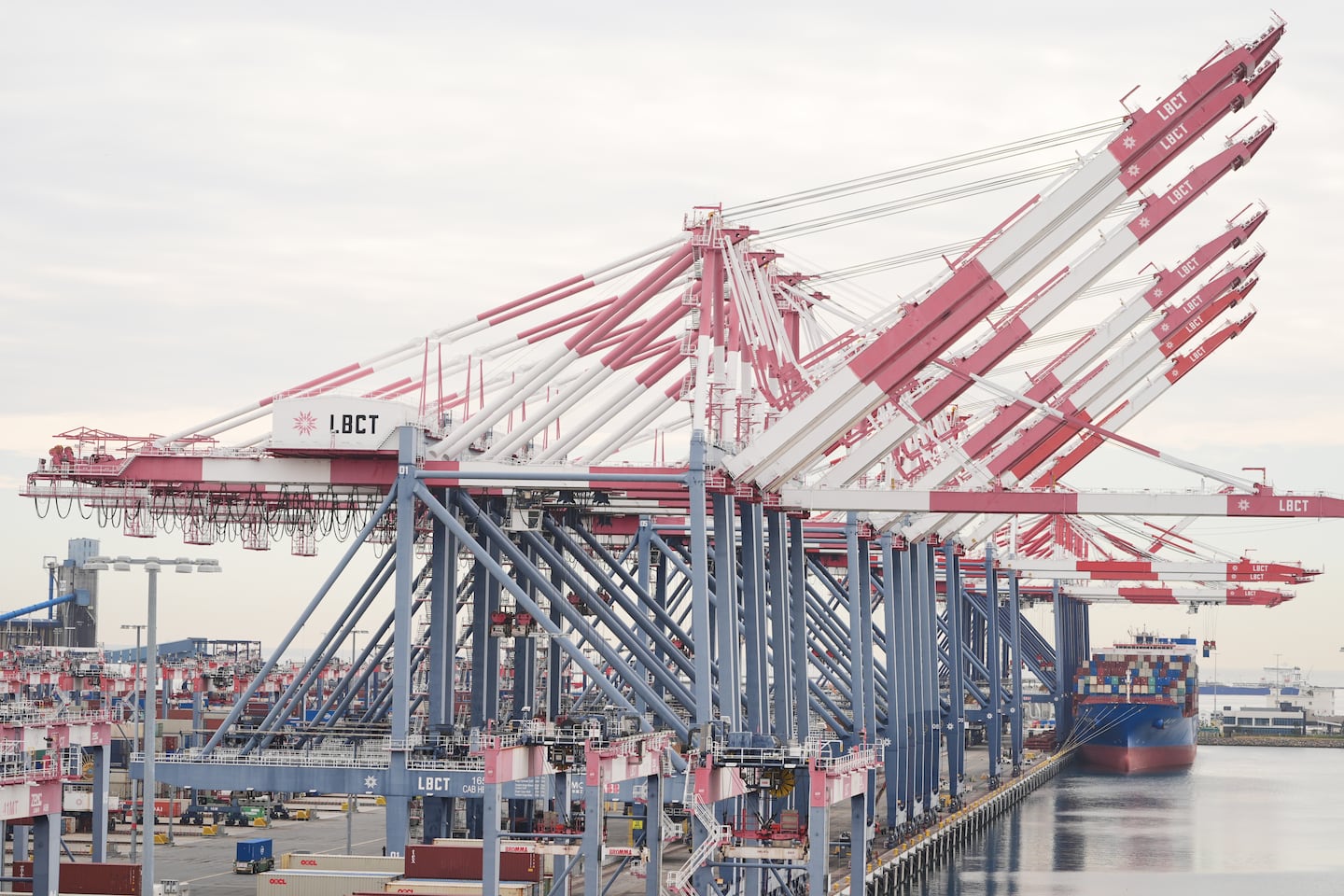
Tariff refunds for companies that paid tens of billions were left unresolved by the Supreme Court, which ruled on Friday that Trump didn’t have legal authority to impose the duties under an emergency law. Importers and retailers will likely try to recoup as much as $170 billion in tariffs they’ve already paid to the US government.
Get Starting Point
A guide through the most important stories of the morning, delivered Monday through Friday.
The US economy grew less than expected at the end of last year, dragged down by a record-long government shutdown, consumer spending and trade. Even so, a gauge of underlying demand was still strong in the fourth quarter, capping a solid year for the US economy.
The Trump administration’s war on foreign vehicles is threatening the long‑term viability of Canada’s automotive industry, which has depended on the flow of parts and vehicles across North American borders — mostly tariff-free — since the 1960s. Many in the Canadian sector are sympathetic to Trump’s desire to have more auto assembly jobs in the US. But the real threat, they argue, is from China.
Europe
UK unemployment reached its highest since the pandemic and wage growth eased as the labor market continued to weaken, prompting traders to increase bets on further interest-rate cuts from the Bank of England. Youth unemployment in Britain soared above the European Union average for the first time.
After Russia’s invasion of Ukraine triggered an about-face on NATO membership, Sweden is starting to consider another historic shift: adopting the euro. If a shift does firm up, it would bolster the euro’s credibility at a time when dollar dominance in world trade and as a reserve currency is being questioned.
Asia
Japan’s manufacturing activity stayed expansionary for a third month on the back of solid output, signaling firmer corporate sentiment as Prime Minister Sanae Takaichi prepares to promote her investment plans. Friday’s report suggests that growth is becoming more broad based, providing a tailwind for Takaichi’s government as it moves to ramp up business investment in targeted industries.
Australia’s central bank assessed the economic outlook had “materially shifted” when it decided to execute a U-turn and raise interest rates this month, even as policymakers stopped short of signaling a follow-up move, minutes of its Feb. 2-3 meeting showed.
Emerging Markets
Russia’s oil producers reduced the pace of drilling in 2025 to the lowest level in three years, dimming the outlook for output growth this year as Western sanctions and a strong ruble undercut revenue.
Deep in Argentina’s rust belt, the decades of duress that have hollowed out the steelmaking port town of Villa Constitucion are everywhere on display. President Javier Milei promises his flagship labor reform, the next step in his efforts to remake the Argentine economy, will streamline expenses, boost investment and bring well-paying employment back to the country — and few places need that more than Villa Constitucion.
World
The US imported more from Taiwan than China for the first time in decades as President Donald Trump’s tariffs reshape trade flows while a global boom in artificial intelligence fuels demand for tech products. The US trade report showed the wider December deficit culminated in a full-year gap of $901.5 billion, still one of the largest in data back to 1960.
Romania, New Zealand, Namibia, Indonesia kept interest rates unchanged. Central bankers in Guatemala, the Philippines and Paraguay lowered borrowing costs. The National Bank of Rwanda delivered its largest rate hike in almost three years.
–With assistance from Nojoud Al Mallees, Philip Aldrick, Irina Anghel, Laura Curtis, Charlie Duxbury, Patrick Gillespie, Isabel Gottlieb, Yian Lee, James Mayger, Alaric Nightingale, Swati Pandey, Augusta Saraiva, Zoe Schneeweiss, Zoe Tillman, Manuela Tobias and Erica Yokoyama.