
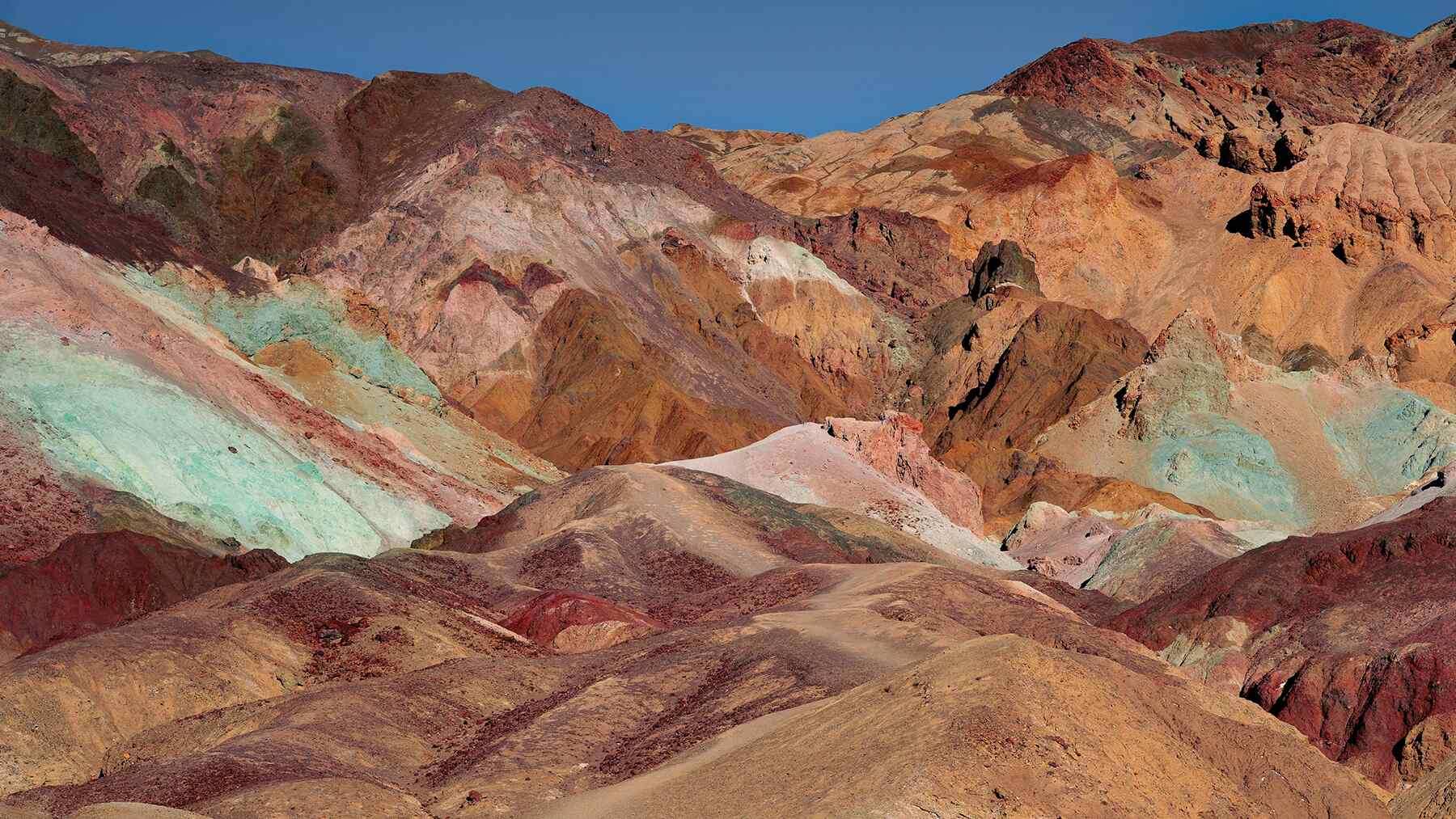
Many people believe they know how spring looks in the Californian desert – subtle, muted, with all the promise of the beginning of something rather than the full glory of the spectacular.
However, the desert has a habit of breaking its own rules, and so does its landscape.
The signs are already emerging that suggest that there may be another one of those unbelievable displays of color and beauty in store, reminiscent of 2005 and 2016.
Superblooms: An underlying pattern and rhythm
In Death Valley, superblooms have been happening for decades and have followed a somewhat irregular but certainly recognizable rhythm. The National Park Service says the three most recent significant superblooms were in 1998, 2005, and 2016 — approximately once every ten years.
Superblooms, despite being known as predictable “once-a-decade” events, do not have a scheduled occurrence. Instead, they depend on a very specific combination of conditions: heavy and consistent fall and winter rain, minimal dry wind, and sufficient spring warming to stimulate widespread seed germination.
As experts at Death Valley describe it, “the perfect” conditions must exist for a superbloom to take place.
Therefore, each spring, visitors can’t help but hope, park rangers sit back and patiently await, and scientists monitor both the condition of the soil and the weather.
However, this winter was different. Sufficient amounts of precipitation (exceeding much of the annual average) and small sprouts of wildflowers have emerged at the earliest possible time.
Early signs of a spectacular display in Death Valley
While winter storms continued to move through the western United States, Southern California desert areas received up to 70% of their total annual rainfall before the end of January. This is the type of intense, early wetting that is necessary to remove the protective coverings from dormant wildflower seeds, which is needed for superbloom-level germination.
Death Valley, one of the driest places on the planet, also experienced a record-breaking amount of rainfall in late 2025, and that indicates the ground was ready for more than just a typical bloom. Visitors to the park and rangers reported the emergence of early blooms along the southern part of Badwater Road.
These conditions are not a guarantee of a once-in-a-lifetime display; however, they are indicative that the timing may be aligning itself in a manner similar to that of 2016.
The moment clarity occurs for the National Park Service
The official information from the National Park Service estimates that the peak bloom will occur during a six-week period from late February into early April.
A six-week window is an unusually long and specific window for the timing of a superbloom and provides a level of confidence that is rarely expressed by experts who study superblooms.
The six weeks represent the culmination of several months’ worth of precipitation, soil moisture levels, and temperature trends. If these factors continue, California will be looking at its third superbloom of the 21st Century, continuing a legacy established by the three superblooms that took place in 2005, 2016, and potentially 2026.
Additionally, the phenomenal bloom will not be limited to Death Valley. Experts report that Anza-Borrego Desert State Park is experiencing robust bloom activity and that blooms will likely surge across Joshua Tree, Mojave National Preserve, and the Antelope Valley poppy fields.
This is a statewide awakening, not a singular park event
If the current conditions hold true, California’s deserts will transition from dull brown hues to vibrant displays of color and life with fields of gold, purple, and pink.
While superblooms are inherently rare due to the need for specific and favorable growing conditions, the current alignment of the timing of these conditions provides a unique opportunity for many to witness a super bloom, specifically, a super bloom that will display its full glory.
And, for the first time in over ten years, experts were able to predict when it would happen so you can catch the spectacle.