

Olivia Wise/The Examiner
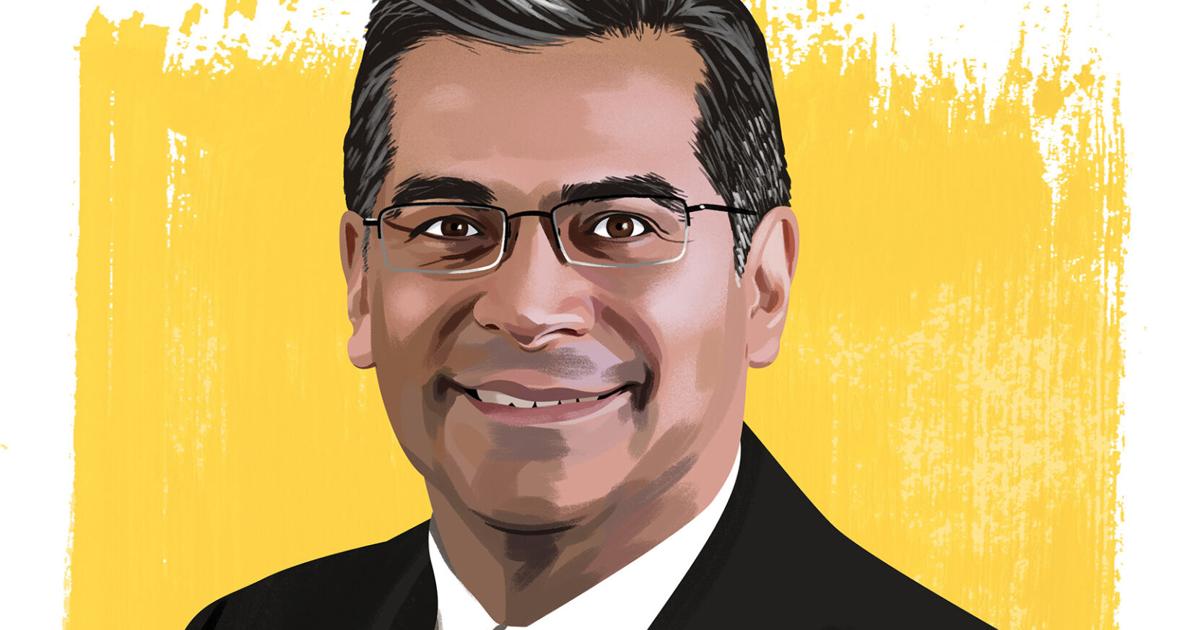
Xavier Becerra promises to restore California’s “way of life” and protect it against threats from above if elected governor.
Becerra, who was California attorney general during President Donald Trump’s first term, is assuring voters that he’s a proven “fighter” who will take on the president once again if he ends up in the state’s highest office.
As much as any other Democratic candidate, Becerra has leaned into positioning himself as the president’s polar opposite. But the Sacramento-raised, Los Angeles-based politician also promises to expand health-care access and help young people buy homes here in California.
He also highlights his depth of experience, which includes 12 terms in the House of Representatives and, most recently, his service as secretary of health and human services under President Joe Biden.
As head of HHS, he helmed a budget of more than $1 billion. As a member of the House Ways and Means Committee, he helped write tax policy. As attorney general, he sued to stop Trump’s so-called “Muslim travel ban.” Now, he’s hoping to make the jump to the governor’s mansion.
You’re promising to protect our “California way of life.” I wonder what that means to you, how you define it, and whether or not that’s a message that will resonate with voters when, for many, the California way of life right now means a really high cost of living? To me, it means going back to my history, growing up in a home with parents who were working class, never had a chance to go to college, who finally had an opportunity to buy a small home.
They made it possible for my three sisters and I to get a decent education or military service. When it came time to decide to call it quits from all the decades of work, they didn’t have to leave. They didn’t have to go to Idaho or Arizona, they got to stay in California.

Former state Attorney General Xavier Becerra, seen during a January candidates debate: “No hardworking Californian who’s got a roof over their head will lose that roof on my watch.”
Craig Lee/The Examiner
So to me, the way of life is you can still dream to accomplish what a construction worker and a clerical worker did a generation ago and make California home. I can’t tell you how many hardworking but low-paid workers are out there like my parents who, today, could not dream of doing what they did, or how many young families who’ve gotten their college degrees and are still trying to struggle through to make California home. Certainly there are people who are trying to retire today, who are not sure they can stick it out in California.
To me, it’s restoring that sense that that way of life is not gone.
I can imagine a voter hearing you out and agreeing that the state should get back to that way of life and asking you, “Well, how are you gonna do it?” I had a question almost to that point, not long ago by a young woman — and it was in San Francisco. I had said that my parents were able to buy their house, and I went through the whole thing, and she said, “I don’t even think about buying a house.”
I’m gonna make sure California steps up to make sure that those who are doing right by their landlord and paying their rent have a chance to not just rent that place, but own that place. And the only thing separating them from owning that place is coming up with a down payment.
We have programs right now in the state to help people. I would expand those. I’d also come up with some other creative ways. You don’t have to just give people the down payment, and they pay you back once they sell the house. You can, for example, help them buy down the interest rate so they can afford to, to get the whole down payment done on a loan and not pay that much interest.
I also have a different cost-of-living-related question — what should the state do to help alleviate some of the pain people are going to feel because of increased health-care costs? The first thing is not go backwards and essentially give Donald Trump a victory because he cut $1 trillion out of the Medicaid — what we call Medi-Cal in California — program, and because he’s been unwilling to extend the [Affordable Care Act] subsidies. [Editor’s note: The federal spending bill Trump signed into law July 4 would cut $1 trillion in Medicaid spending nationwide through 2034. Gov. Gavin Newsom’s Office estimated the state will lose more than $28 billion in federal funding.] Simply because he’s decided to create a man-made disaster from D.C. doesn’t mean we have to follow suit.
So on health care we won’t follow him. We won’t go backwards, and we will continue to increase the number of Californians who actually get health care.
Think about the math — we can make this happen. We spend more money on health care in California than any other state. We spend more money on health care in this country than any other country.
Upcoding or downcoding, it’s a game that’s played by providers, the hospitals, the doctors, and the insurers. The providers, they upcode. They want to get as much reimbursement back for the service or procedure they gave as possible, so they’ll try to select the highest code they can find for the procedure that they did so they can get the best, highest reimbursement. The insurers want to pay as little as they can, so they try to downcode.

Former Health and Human Services Secretary, Xavier Becerra speaks during the Gubernatorial Candidate Forum at UCSF Robertson Auditorium at 1675 Owens St. in San Francisco on Monday, Jan. 26, 2026.
Craig Lee/The Examiner
Both sides spend billions of dollars hiring accountants, lawyers, technicians, computer programmers to come up with ways to upcode better and downcode better. Nothing happens with health care. Nobody gets better health care because of that.
We just have to tell them we don’t have the money to spend on that. I’ve said this to the health care sector, hospitals, doctors, insurers, “You guys are all gonna have to sit down at the table with me.” Because here’s the beauty of a crisis, right? Never let a good crisis go to waste.
At the end of the day, it costs me a lot less to make sure that low-income family can send their child to the pediatrician or the family-care doc at a low cost than waiting until things get so bad, because they don’t have insurance, and then they will walk in through the emergency room where it’s the most expensive care possible.

Hillbilly Robot is a staple at The Plough and Stars during the month of February

Court filings come from neighborhood groups and pro-housing construction organizations with very contrary agendas
West-side residents are collecting signatures for a November ballot measure to reopen the controversial roadway to traffic on weekdays
You just have to know the system — and by God, do I know the system, having gone through it with Medicare and Medicaid with the [Affordable Care Act]. Remember, when I took over as HHS secretary, we were losing health-insurance coverage in this country because too many Americans were losing their jobs during COVID, and as a result they were losing their health-care insurance. But by the time we left, we had reversed it completely.
We’ll do this the smart way. We won’t do it the expensive way.
I did want to tackle the state budget deficit a little bit. How do you approach this if you’re elected governor? We should be forecasting forward. When you know you’re a state and you have to balance your budget, you can’t afford to say, “Hey, I’ve got a great surplus, let’s really spend away,” and then next year we’re gonna have deficits, “Oh gosh, really cut away.”
We don’t want this constant fluctuation. We can’t just wait for the good years and AI to give us a ton of extra money revenue this year, and then find it’s a bubble and it pops and all of a sudden we don’t have the money. Having been on the [House] Ways and Means [Committee] for 20 years, [that means] I’ve done a lot of tax policy … and so what we’ll do is we’ll find sources that are predictable, reliable, and steady.
Does a billionaire tax not meet that threshold of stability for you? It doesn’t. It’s a one-time deal. It gives you a ton of revenue once. So what’s the Legislature going to do with it? What’s the governor going to do? All of a sudden you’re flush with all this money. I know they want to use it for health care, but what about housing? The way it’s written, that money is going to be used for healthcare … but it’s not a stable path.
We have to start to look at passive income because … most of the government’s revenue is income tax. What we fail to note is that when we tax income, we’re only taxing those who get paid by check, by salary. And all that passive income — capital gains and other types of income — is taxed far differently.
And that’s why, at the end of the day, these billionaires end up paying tax rates that are lower than a teacher or a firefighter. We will make sure that those who have really large wealth, if they are paying less than a teacher or a firefighter or a police officer or a nurse, that they’re going to be paying more in taxes.
What can the state do, beyond what it has already done in recent years, to push cities such as San Francisco to build more housing, or support their push to build more housing? And then what can the state do to alleviate the homelessness that’s felt acutely in San Francisco? I give the Legislature and the governor credit for what they did last year and really trying to not just expand opportunity to develop more, but provide the confidence that builders need to believe that this will work.
The streamlining of the permitting process, for example, trying to change zoning laws so that you don’t run into conflicts because the local governments can stop you based on a zoning provision. Those types of things where we try to be smart with the way we handle that regulatory framework is gonna give confidence to those who do the building.
Secondly, we’re going to continue along the lines of what the legislature also did, which is smart construction. You know, in places like San Francisco, you build up, and you build up around transit hubs, everybody knows. You allow more ADU development.
We need to stabilize rents, and for me that doesn’t mean rent control. It’s targeting the outliers — and by outliers, I mean those landlords that are gouging and those tenants who are abusing of the tenant protection laws and staying on forever.
Here’s a guarantee I’m gonna make as governor — I’m pretty sure I can keep it. No hardworking Californian who’s got a roof over their head will lose that roof on my watch.

Xavier Becerra, left, and Steve Hilton participate in the California gubernatorial candidate debate Tuesday, Feb. 3, 2026, in San Francisco. (AP Photo/Laure Andrillon)
Laure Andrillon/Associated Press
Having been at HHS and having been the chair of the Federal Interagency Council on Homelessness, I know how much more it costs to get someone off the street and into housing than it costs to help someone stay in housing who’s on the verge, one paycheck away from losing it.
And finally, these down-payment programs.
That all requires statewide housing policy and enforcement, and here now I use my hat as the former attorney general to tell you that we have laws that require jurisdictions to follow our state housing policies. But rarely do we enforce and … it’s those freeloaders, those local governments that don’t wanna build cause they like the character of their place.
I get it. We’re not gonna completely change the character, but everybody’s got to chip in.
I think your campaign is focused, as heavily as any other, on the threat that the president poses to California, and maybe the country. Is that a message that is resonating with voters? I’m wondering how you balance … both taking on the president while focusing on California if you’re elected governor. You cannot commit to resolving California’s cost-of-living problems and anything else that may be a challenge if you’re not willing to deal with the man-made crisis coming out of Washington, D.C.
Remember that the federal government is the state’s largest partner, whether we like it or not. And if the state’s largest partner is depriving the state of its fair share of revenue — even though we’re the largest contributor to the federal treasury of all the 50 states — you’ve got to deal with Donald Trump. You can’t let him continue to strip so much money from the state and not let it come back in a fair share way.
No one running for governor can say they’ve had an experience dealing with Donald Trump the way I have. I became AG a week or so after he became president. Within the first days, when he tried to implement the Muslim travel ban, we started going at him and saying you can’t do that here, and we beat him.
I took on [the U.S. Immigration and Customs Enforcement agency] as AG. At the same time I sued ICE and beat them in court, I was working with ICE on a day-to-day basis as AG because we have a law-enforcement operation at the Department of Justice in California, and we do a lot of investigations and enforcement actions with our federal and and international partners.
It helps to have the experience and it also is important to make sure that it’s clear that regardless of what Trump does, we have to both fight and win against him at the same time we keep the partnership where possible.