
MILAN — William Shakespeare didn’t attend the Milan-Cortina Winter Games, having died more than 400 years before they began. But he did use Italy as a backdrop in more than a third of his plays including “Romeo and Juliet,” which he set in Verona, transforming a city once known for violent feuds between noble families into a locale synonymous with romance.
And his lament over the pain of farewells likely will be felt by many of the athletes gathering Sunday for the Olympic closing ceremony at Arena di Verona, a 1st century Roman amphitheater.
The Milan-Cortina Games were the first Winter Olympics to feature two host cities, and it will become the first to have the opening and closing ceremony at different sites. In between, everyone seemed to have a good time.
“It’s a lot of fun,” American pairs skater Danny O’Shea said. “Skating on Olympic ice is literally dreams coming true. [It’s] been an amazing experience.”
“It’s been everything and more,” U.S. figure skater Isabeau Levito added. “I don’t think there’s anything not to enjoy.”
There’s certainly a lot to remember.

Parting is such sweet sorrow
(Romeo and Juliet, Act 2, Scene 2)
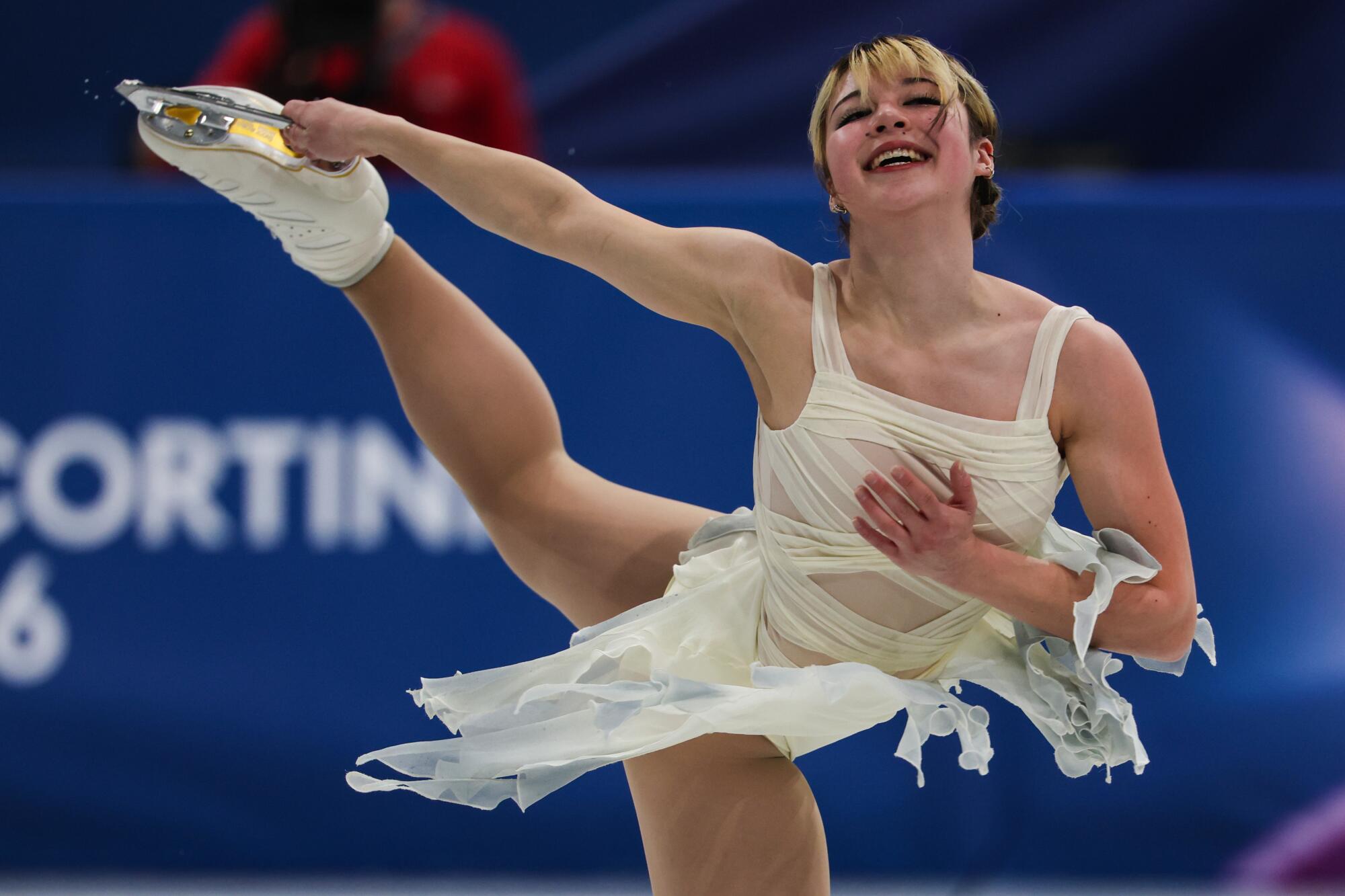
U.S. figure skater Alysa Liu competes at the Milan-Cortina Olympic Games on Feb. 17.
(Robert Gauthier / Los Angeles Times)
These were a Games that saw two forty-something American bobsledders, Elana Meyers Taylor and Kaillie Humphries, win medals in front of their children while Mexico’s Sarah Schleper, competing in her seventh Olympics, skied alongside one of her kids, making them the first mother-son to duo to participate in the same Winter Games.
This may not have been an Olympics for the ages, but it was certainly one for the aged with three athletes over the age of 40 — including Meyers Taylor in monobob — winning individual gold medals. Before Milan-Cortina only one athlete over 40 had won an individual Winter Olympics gold ever. And curler Rich Ruohonen, an attorney from Minnesota, became the oldest U.S. winter Olympian at 54.
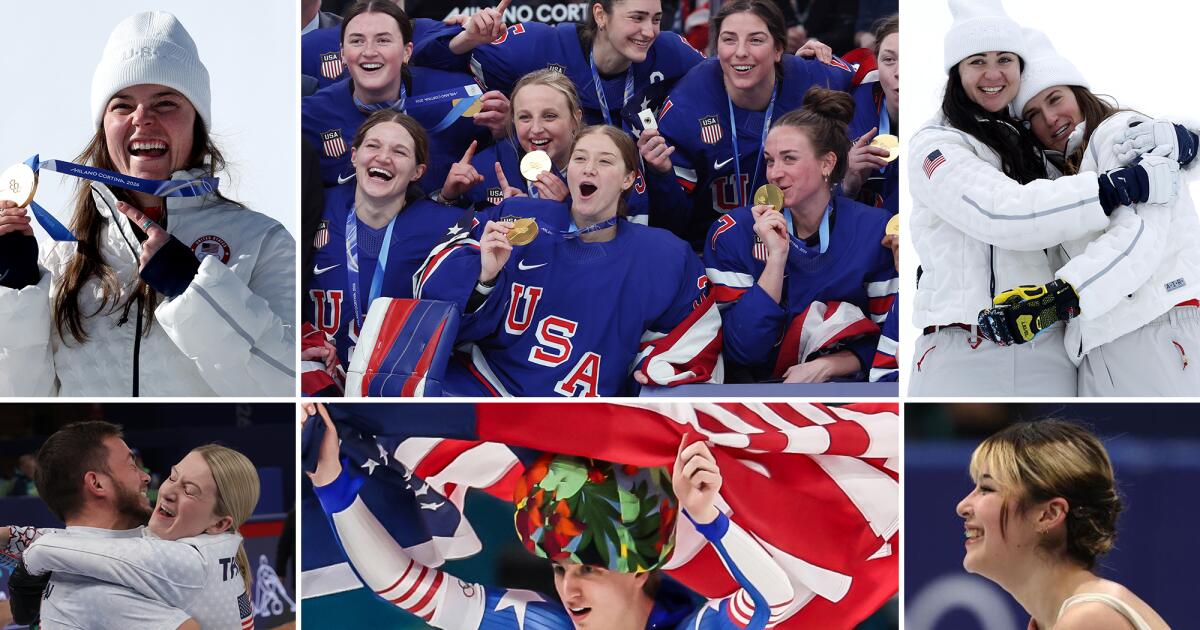
Figure skater Alysa Liu became the first American woman to win gold in singles in 24 years, adding that title to the one she won earlier in the team event, while Mikaela Shiffrin claimed gold in the slalom. Jordan Stolz climbed to the top of the medal stand twice in speedskating.
Led by Elizabeth Lemley’s gold, the U.S. so far has won six medals in freestyle skiing, but Lindsey Vonn’s run in the downhill only run lasted less than 13 seconds before she clipped a gate, triggering a horrific crash that shattered her left leg. She’s still in the hospital.
The U.S. won gold in women’s hockey, beating Canada in overtime; the men will play Canada on Sunday in the final event of these Games.
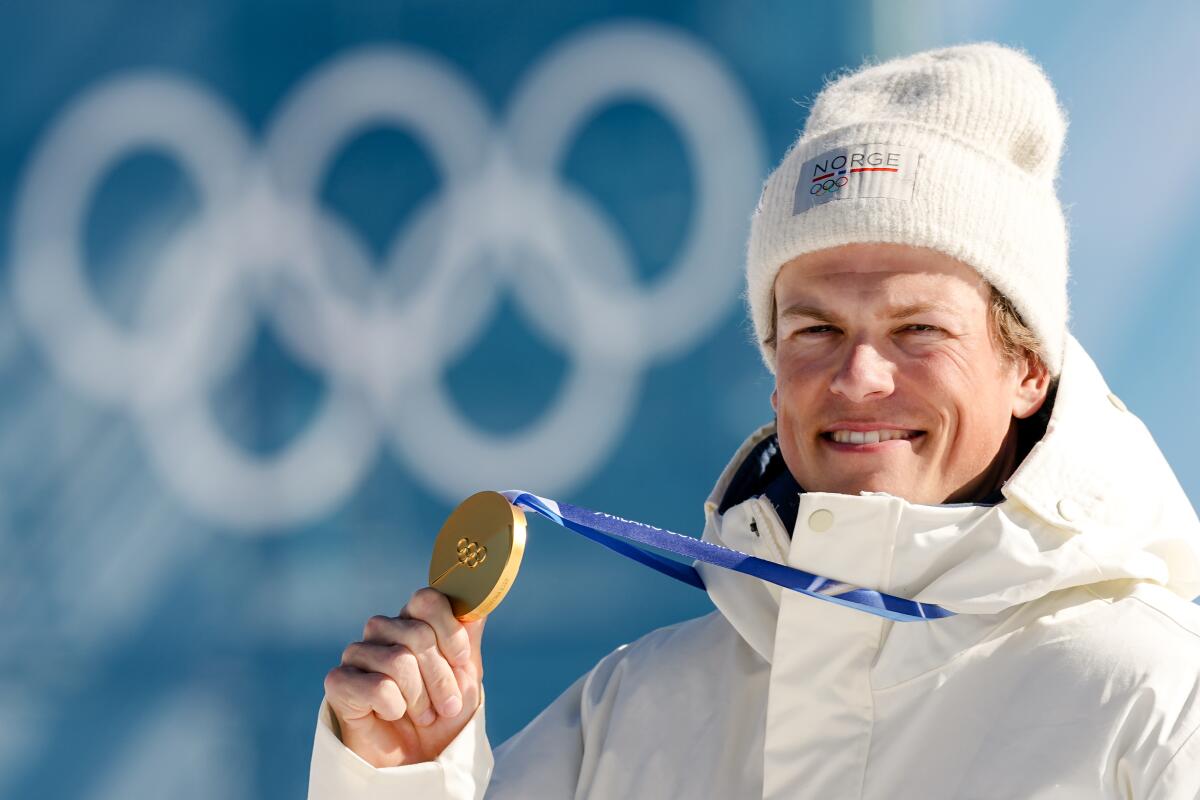
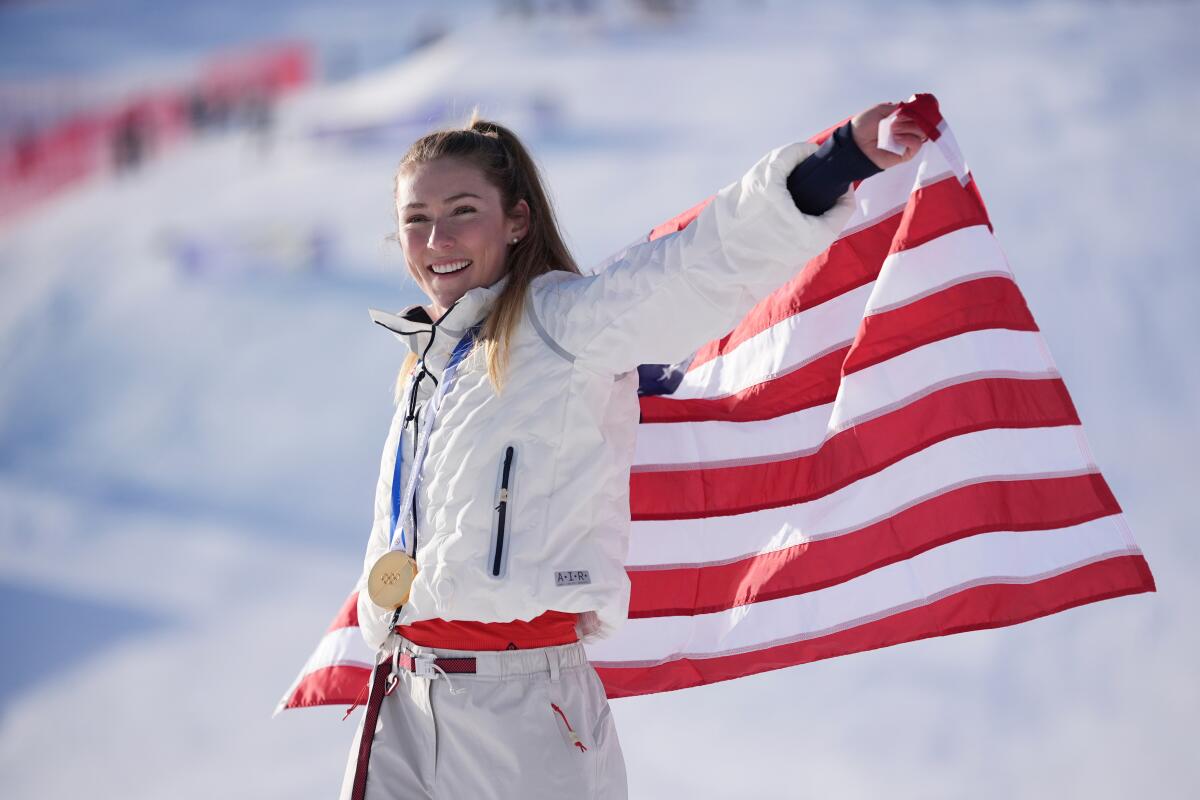
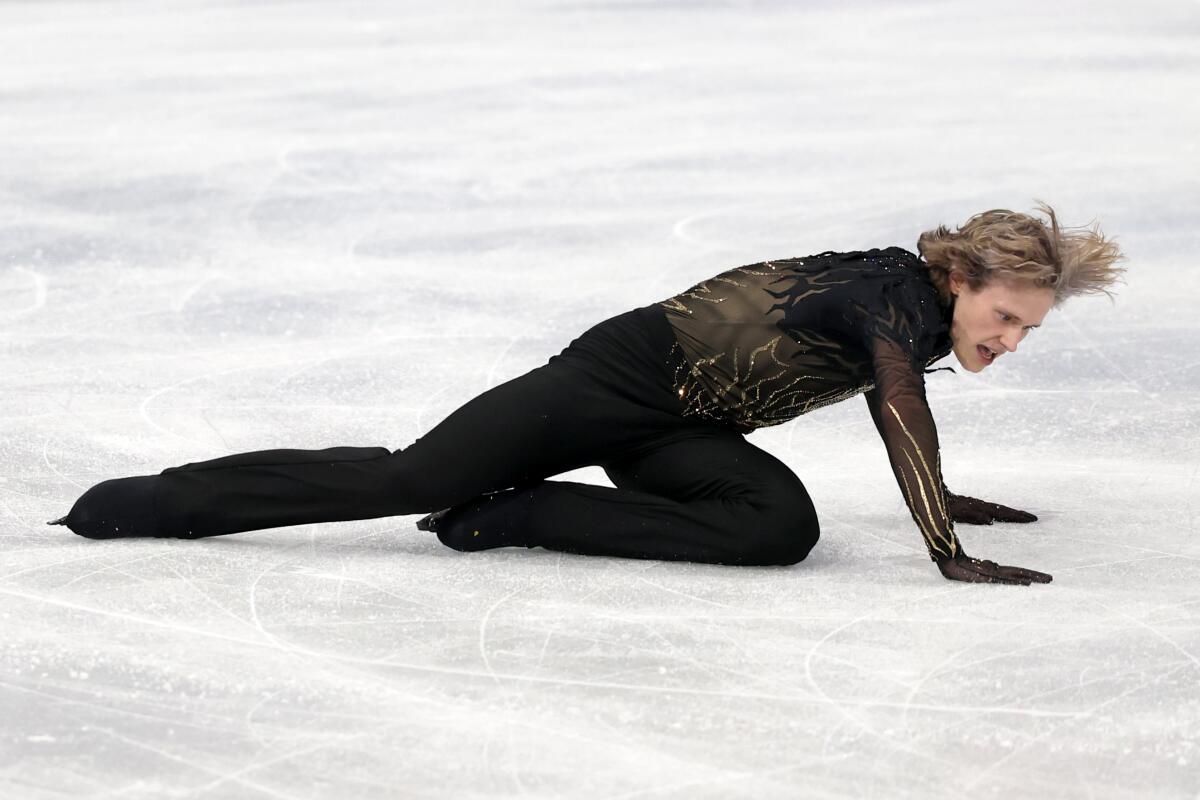
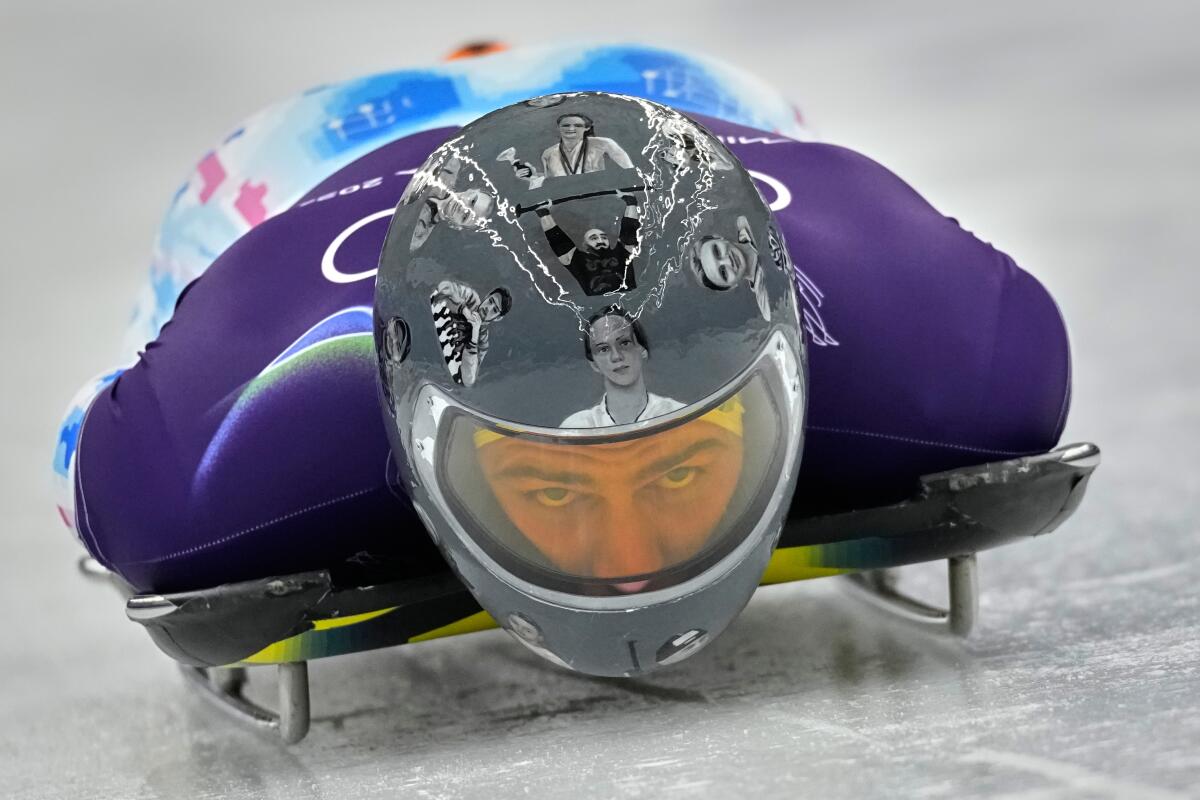
1. Cross-country skier Johannes Hoesflot Klaebo of Norway broke the record for most Winter Olympic gold medals. (Matthias Schrader / Associated Press) 2. U.S. skier Mikaela Shiffrin won gold in the slalom. (Jacquelyn Martin / Associated Press) 3. Ilia Malinin was the heavy favorite to win gold in men’s figure skating before a devastating free skate. (Robert Gauthier / Los Angeles Times) 4. Ukraine’s Vladyslav Heraskevych takes part in a skeleton training session. (Alessandra Tarantino / Associated Press)
Accusations of cheating against Canada marred the normally friendly curling competition while Ukrainian sledder Vladyslav Heraskevych was disqualified for insisting on wearing a helmet covered with pictures of athletes and coaches killed during his country’s war with Russia.
Politics entered the Milan-Cortina Games in another way, too, with many U.S. athletes being asked, and then answering, questions about the federal immigration raids in Minneapolis.
“Just because I’m wearing the flag doesn’t mean I represent everything that’s going on in the U.S.,” freestyle skier Howard Hess said.
Norway was the big winner, getting six titles from cross-country skier Johannes Hoesflot Klaebo and winning a record 18 gold medals overall. Speaking of cross-country, the U.S. men, who had won one medal in the previous century, won two here with Ben Ogden taking silver in the individual, then joining Gus Schumacher to finish second in the team sprint. Jessie Diggins took home a bronze in the 10-kilometer freestyle, the fourth Olympic medal of her career.
Led by Klaebo, Norway is set to win the overall medal count for fourth straight Winter Games. It had 40 medals heading into Sunday, a phenomenal total for a country with a population nearly equal to that of Los Angeles County.
The U.S. finished with 33 medals, including 12 gold, the most U.S. golds ever in a Winter Olympics. However no medal went to the Czechoslovakian wolfdog named Nazgul who got loose on the course and sprinted to the finish line in a women’s cross-country race, finishing 20th.
In fair Verona, where we lay our scene
(Romeo and Juliet, Act 1, Prologue)
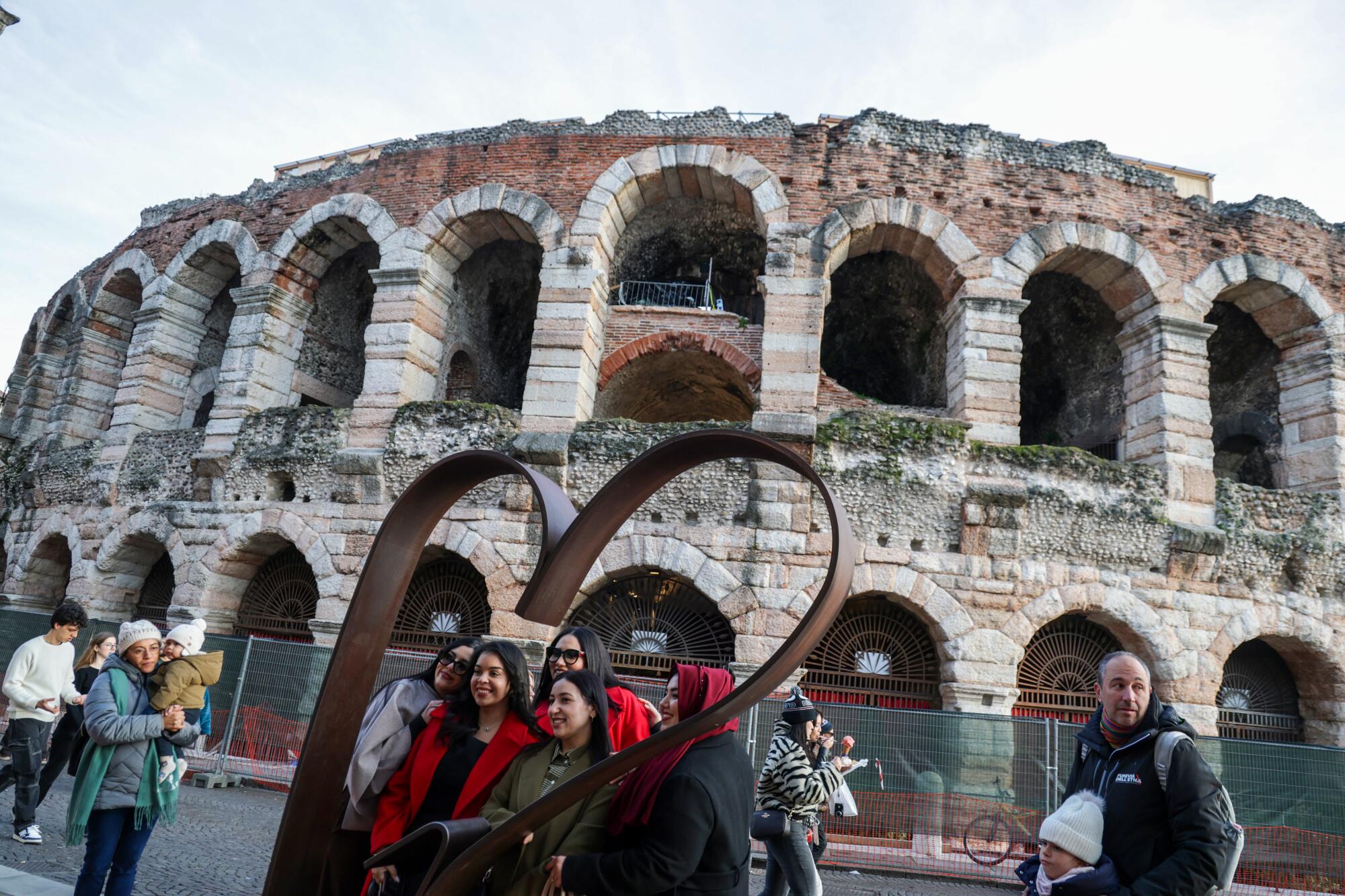
Visitors stand in front of Arena di Verona, site of the Milan-Cortina Winter Olympics closing ceremony.
(Robert Gauthier / Los Angeles Times)
Organizing the Milan-Cortina Olympics was an immense $6.7-billion gamble. They were the largest and most expansive Winter Games in history, with nearly 3,000 athletes from 93 countries competing at a dozen venues spread over an area about the size of New Jersey, stretching from the urban grit of Italy’s second-largest city to the breathtakingly beautiful Alpine villages of the Dolomites.
It was if the Games were held in two countries, with Italian spoken in the city and German up the mountains. Yet it all worked.
“These Games have been truly successful in a new way of doing things, a way that I think many people thought maybe we couldn’t do or couldn’t be done well. And it’s been done extremely well,” IOC president Kirsty Coventry said Friday.
In both Milan and Cortina d’Ampezzo, there was a rush to get some venues completed in time. The main hockey arena opened with roughly 3,000 seats missing, but that didn’t impact the competition.
“They pulled it together sort of right at the last minute,” said Alpine skier Piera Hudson of the United Arab Emirates. “I know there was a lot of drama coming into it. But as far as my experience goes, I had a really good one.”
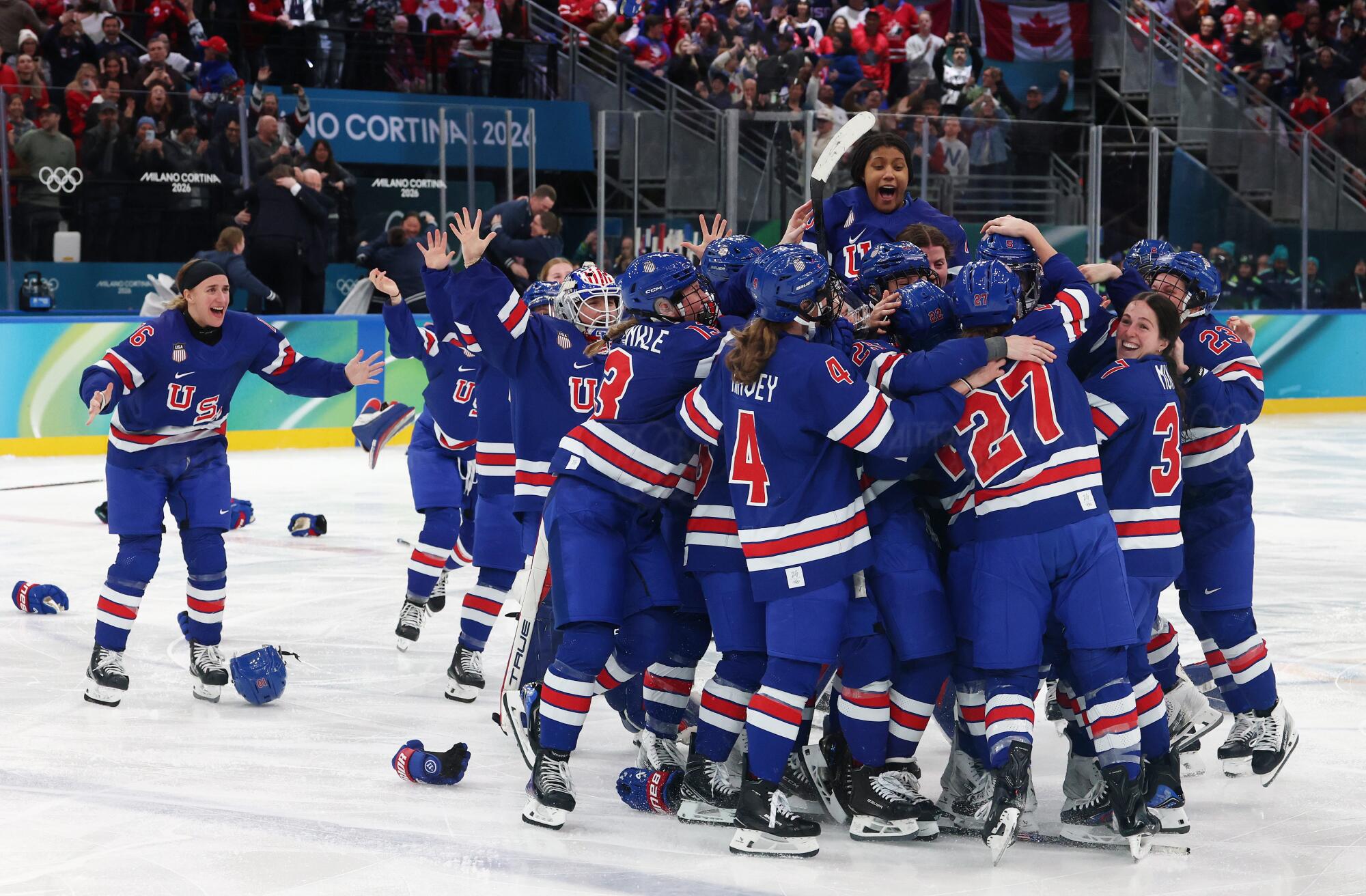
U.S. women’s hockey players celebrate after beating Canada in the gold-medal game on Feb. 19.
(Robert Gauthier / Los Angeles Times)
What was lacking was much of an Olympic fever, at least in Milan, where most people avoided the high ticket prices and watched the competition on television. Tourist traps such as the Duomo Cathedral were packed with foreigners, as was the Arco della Pace, where the Olympic flame burned.
At the nearby Sforza Castle, people gathered in a fan village to watch the Games on a large-screen monitor.
Like Romeo and Juliet, U.S. skier Breezy Johnson, who won gold in the women’s downhill, also found love in northern Italy, receiving a marriage proposal from partner Connor Watkins, who dropped down to one knee near the the super-G finish line. Hilary Knight, captain of the women’s hockey team, proposed to speedskater Brittany Bowe the day before her third-period goal helped rescue the U.S. in its gold-medal win over Canada. She learned a day later she would carry the U.S. flag in the closing ceremony.
“I’ve had a heck of a week,” Knight said.
They weren’t the only ones who found the area romantic: the Olympic village’s two-week supply of condoms was exhausted in three days.
A rose by any other name would smell as sweet
(Romeo and Juliet, Act II, Scene II)
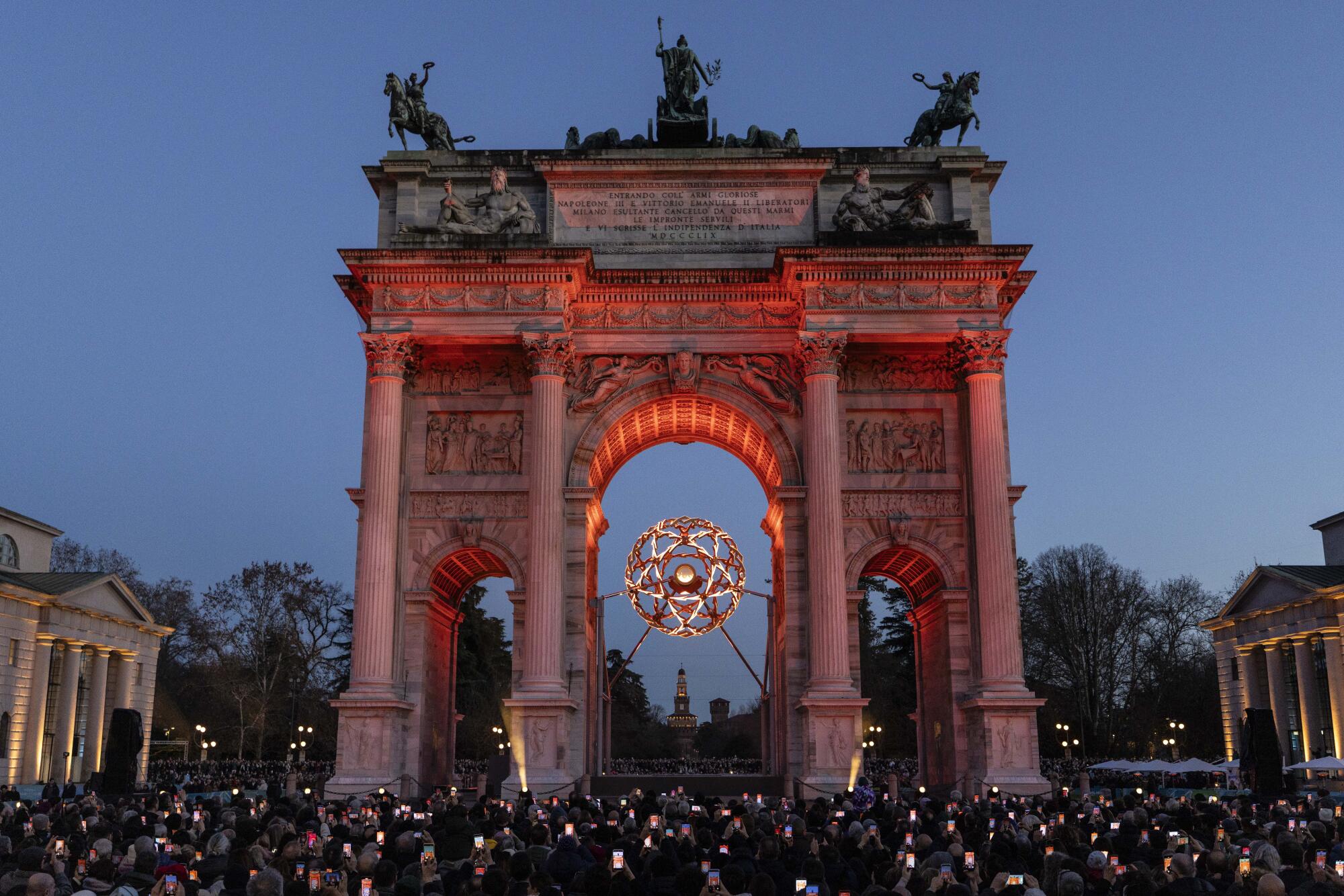
Visitors take pictures of the Olympic cauldron at the Arco della Pace in Milan on Feb. 15.
(Maja Hitij / Getty Images)
The next time the Olympic cauldron is supposed to be lit will be in Los Angeles on July 14, 2028. Those will be another overly large Games with venues spread from the beaches of San Clemente to a softball venue in Oklahoma City. Soccer matches will be played across three time zones.
Whatever the legacy of the Milan-Cortina Games may be, Coventry said the athletes more than delivered.
“I don’t think you can be leaving these Games without being inspired,” she said. “It’s been really magnificent.”
Times staff writers Sam Farmer and Thuc Nhi Nguyen contributed to this story.