
The Boyle Heights artist looks back on 2025 and what’s next
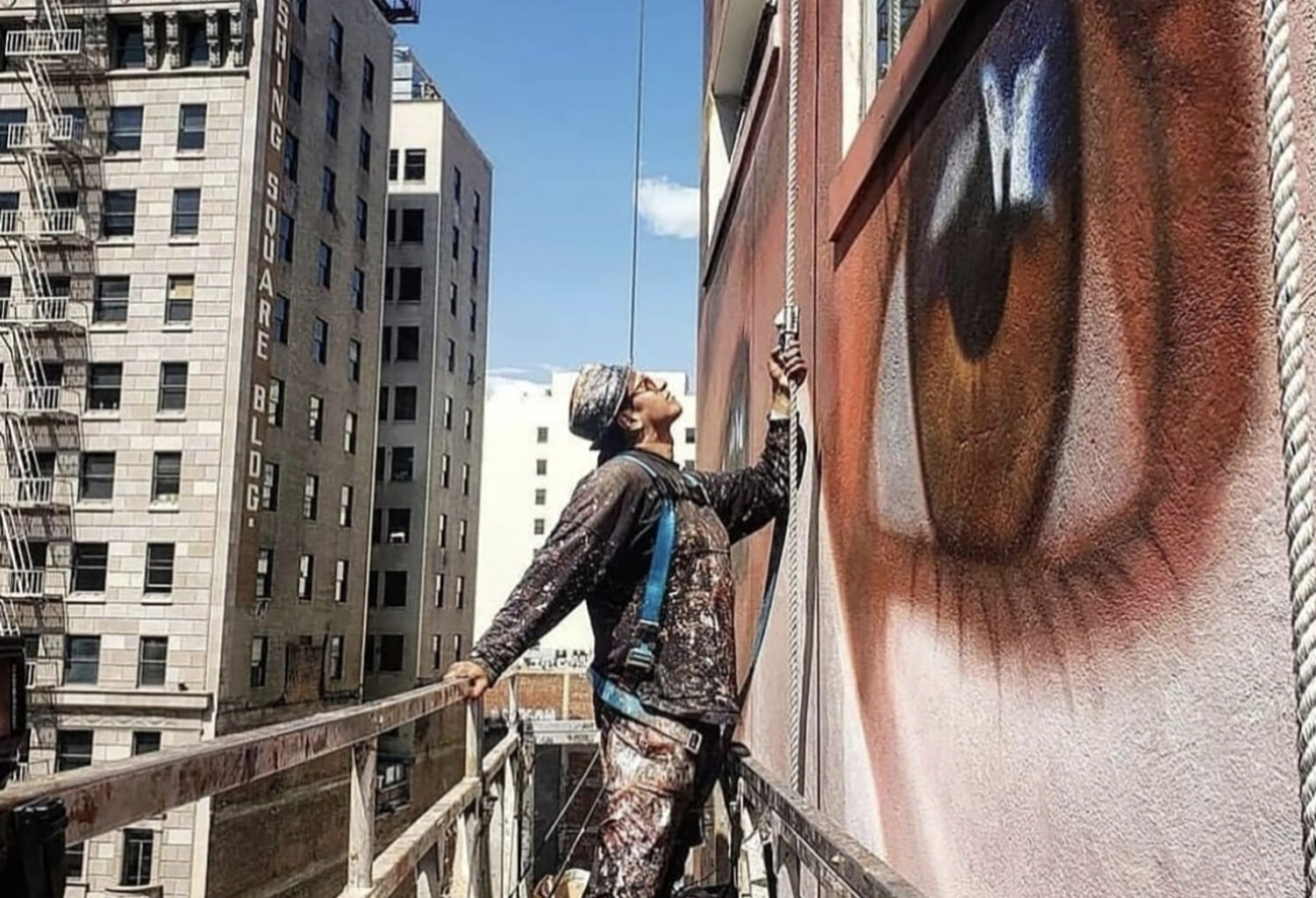
Robert Vargas is on track to break a world record. For the last few years, the Boyle Heights-born artist has been painting a 60,000-plus-square-foot piece at Pershing Square in Downtown Los Angeles that will result in the largest mural by one artist in the world, logged in the Guinness World Records.
“To finally see that through and then hand it over to the community of L.A., it’s going to be pretty special,” he says. Vargas doesn’t remember a time in his life when he wasn’t painting. Best known for his murals around the city— like the Shohei Ohtani “L.A. Rising” mural on the side of the Miyako Hotel in Little Tokyo, which graced the cover of Los Angeles magazine’s December issue — the sixth-generation Mexican-American Angeleno’s fruitful career and community-focused work has earned him Robert Vargas Square in Boyle Heights and the declaration of Sept. 8 as Robert Vargas Day by the city. Some of his other murals include “Our Lady of DTLA” (2013) on the corner of Spring and Sixth Streets; “Fernandomania Forever” in Boyle Heights near Mariachi Plaza; and “Nourishing the Community” on the Project Angel Food Vine Street headquarters.
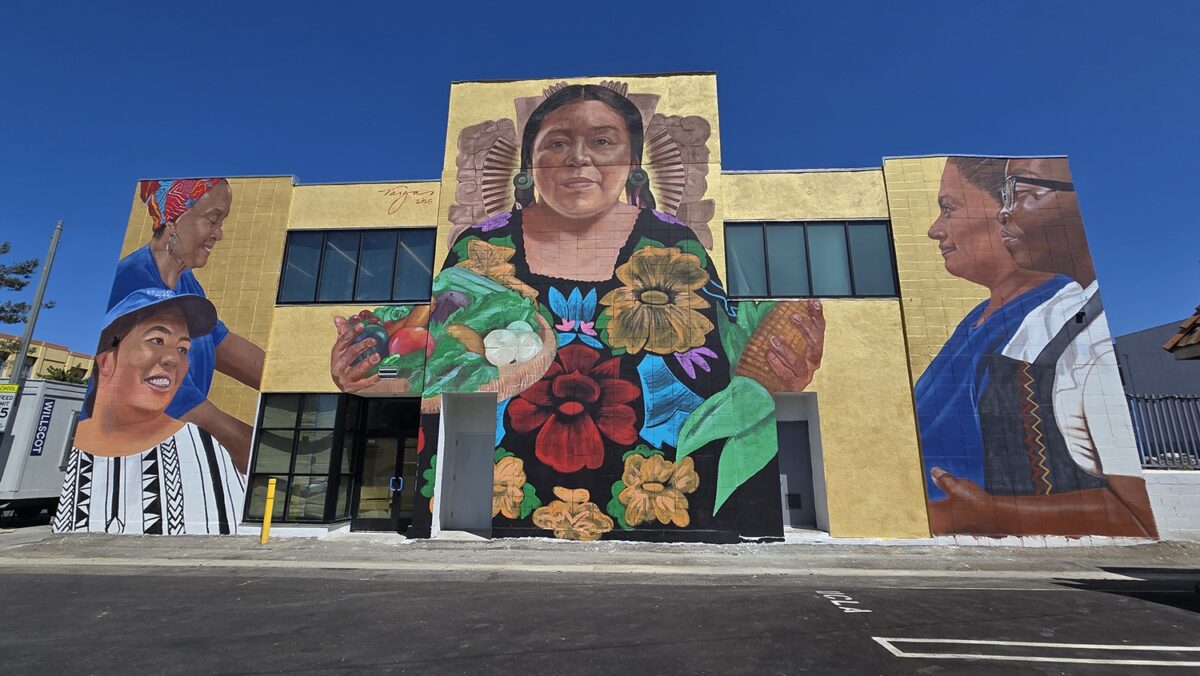 “Nourishing the Community” on Project Angel Food headquartersCredit: Courtesy Robert Vargas
In addition to the mural at Pershing Square, Vargas’ 2026 plans include a Dodgers mural in Torrance and jet-setting to Europe and Japan again. Last year, Vargas jumped from Paris to London, Venice, Italy, Brazil and Japan (four times) in between his time in Los Angeles. But he considers his hometown murals as some of his most important pieces of last year, having kicked off the year with his “Heroes” mural at the L.A. Art Show that honors the first responders involved in the Eaton fire — which was featured on a February 2025 cover of Los Angeles. Then in June, he painted “From the Ashes” on Fair Oaks Burger in Altadena, channeling the stories of residents who lost their homes.
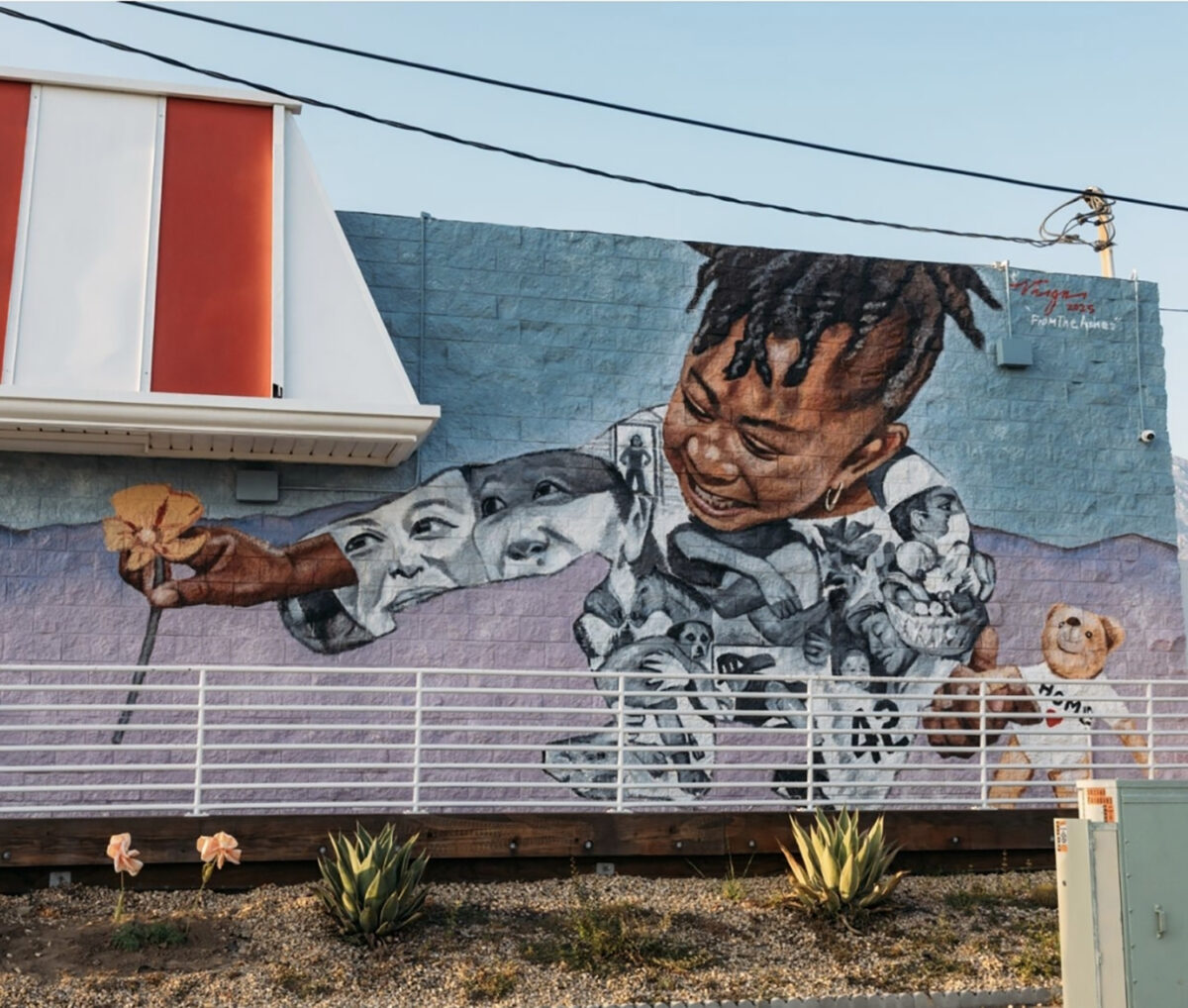 “From the Ashes” In Altadena. Credit: Courtesy Robert Vargas
“The public artwork, especially the murals, is really different than [my] studio work,” explains Vargas. “The studio work is accessible to a certain kind of art aficionado in a gallery setting, where the nontraditional art space of just this open-air gallery outside allows work to be accessible to everyone and people who don’t feel that the traditional spaces are meant for them…. My process is very, very accessible as well. So I think that people get to also feel like they’re a part of seeing something through and witnessing the work happen firsthand, so it really humanizes the built environment.”