
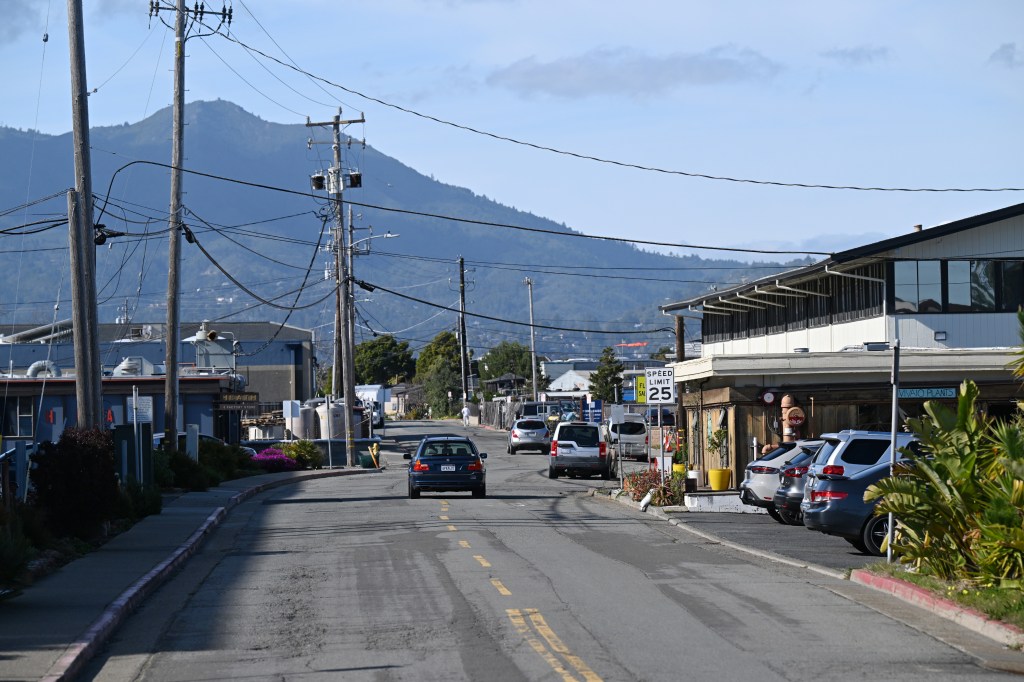
With Sausalito needing millions more dollars for infrastructure and sea-level rise projects, the city will revisit a controversial 1985 ordinance limiting the working waterfront’s development.
Ordinance 1022 is one of the city’s political third rails. It seeks to preserve its maritime character “by reducing permissible density in commercial and industrial areas.”
During two planning workshops in recent weeks, City Council members agreed the city needs to increase revenues feeding its $30 million annual budget by a third if it is to make tangible progress renovating its roads, drainage and other infrastructure as well as protect its shoreline from rising water.
“There was strong alignment on revenue, strong alignment on infrastructure and tools to finance infrastructure,” City Manager Chris Zapata said of the emerging agenda. “There was strong alignment on economic vitality. There was strong alignment on maritime waterfront and Marinship planning.”
The possible efforts include identifying every option that might raise $1 million or more in new revenue that does not involve raising property taxes, adopting a city charter to increase the city’s real estate transfer tax by twentyfold, and creating a special infrastructure financing district for the working waterfront anchored by the Marinship neighborhood.
The Marinship area is the former World War II shipyard covering 200-plus acres on the city’s northern end. In 1985, ordinance 1022 was adopted to prevent high-rise residences and hotels from gentrifying its mix of boatyards, art studios and affordable residences — which, at that time, meant unpermitted houseboats and live-aboard boats.
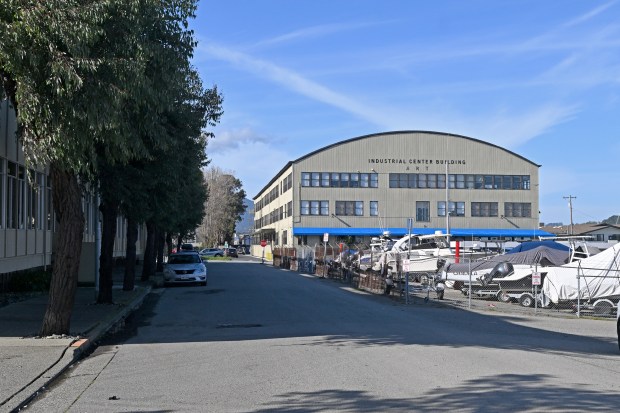 Boats are stored along Road 3 in the Marinship area of Sausalito, Calif., on Friday, Feb. 13, 2026. (Alan Dep/Marin Independent Journal)
“I proffered repealing ordinance 1022 as one measure among many to try to help fix our town,” Councilmember Ian Sobieski said during the Feb. 12 workshop. “Try to add $10 million a year to our budget.”
The mention of repealing 1022 sparked fervent public comments and eclipsed other initiatives backed by all council members.
“The maritime district is a valuable resource that requires careful planning and protection so we don’t suffer the same fate as most working waterfronts that have been gentrified, redeveloped and transformed out of existence,” said Craig Merrilees, a board member for the nonprofit Sausalito Working Waterfront Coalition.
“Let’s not wholesale remove ordinance 1022’s zoning protection, but we can make changes,” said John De Re. “Higher FAR (floor area ratio), far shorter setbacks and second-floor offices, if done right, can increase economic output.”
“I think 1022 made sense some time in the past,” said Adrian Brinton of Positive People for Sausalito, a citizens group. “It stopped the office buildings in the ’80s. Now it is protecting the office buildings. … A lot of the maritime that we say we value, so much rotting into the bay.”
Several council members said it is important to keep their strategic discussion in perspective.
“The idea of taking a look at it does not forecast what the result is going to be,” Mayor Steven Woodside said after the comments. “I think we have all learned more recently, in light of the king tides and other factors, that we have some big issues to solve and it’s going to take some investment in order to solve those.”
“To say that we’re not doing anything or ignoring the waterfront, especially the Marinship area, is just not true,” said Councilmember Jill Hoffman.
Last November, voters rezoned parcels in the Marinship area to allow 400 new residences, she said. The city’s shoreline adaptation plan is being revised with new input from maritime businesses.
Hoffman urged the council to table its review of 1022, but the rest of the panel supported taking a closer look.
“Maybe I’m impatient, but I don’t think so,” said Woodside. “We see parts of the Marinship sinking. We see parts of the Marinship unable, on its own, to sustain itself against sea-level rise.”
“How do we deal with it without some real comprehensive planning that tries to both protect and preserve, as well as create enough of an economic engine?” he said.
“Everyone on this dais cares deeply about preserving the working waterfront and preserving maritime uses,” said Vice Mayor Melissa Blaustein.
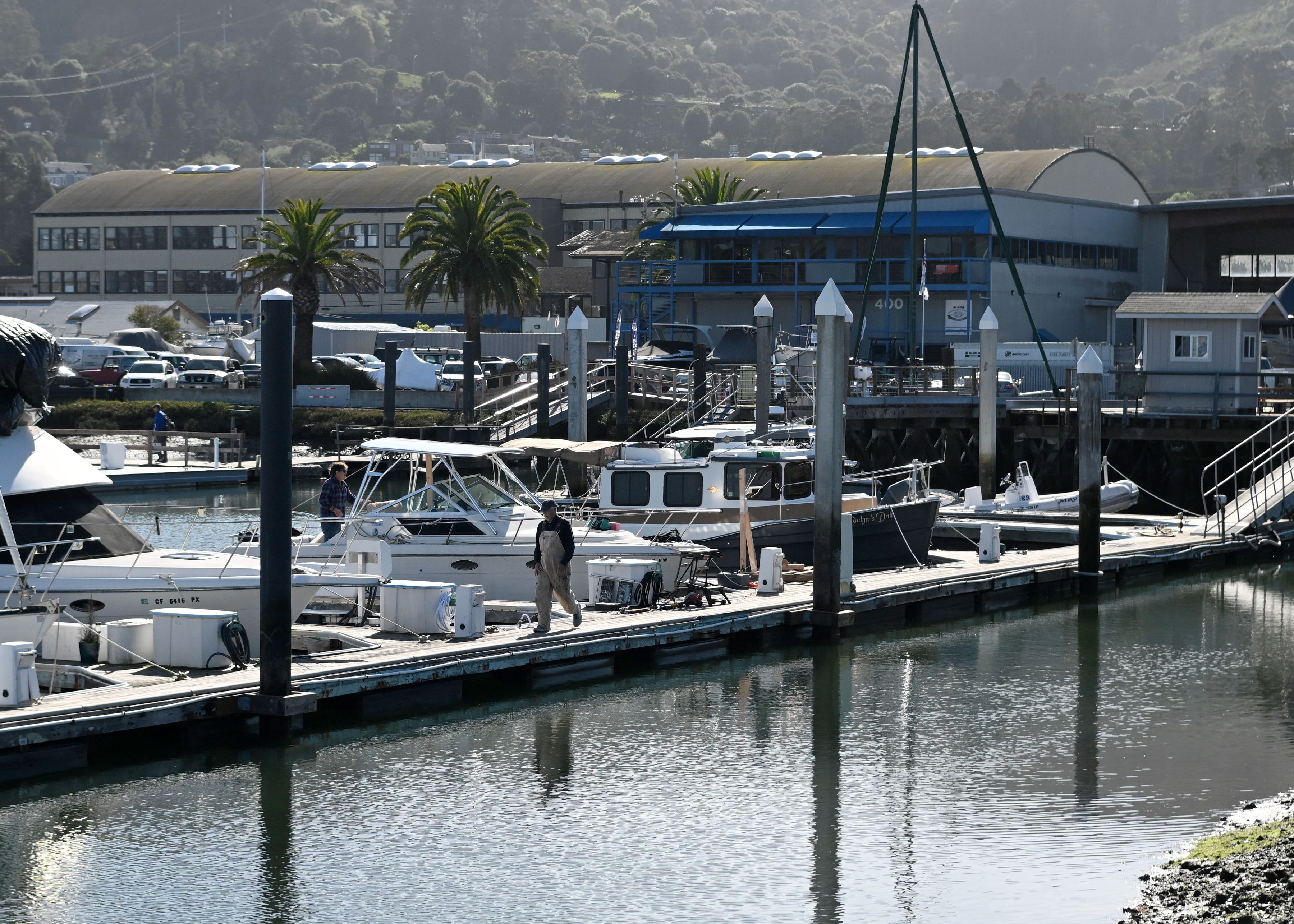
Boats are docked in Clipper Yacht Harbor in the Marinship area of Sausalito, Calif., on Friday, Feb. 13, 2026. (Alan Dep/Marin Independent Journal)

Underwater gear and other items are displayed in the shop window of Harbor Dive in the Marinship area of Sausalito, Calif., on Friday, Feb. 13, 2026. (Alan Dep/Marin Independent Journal)
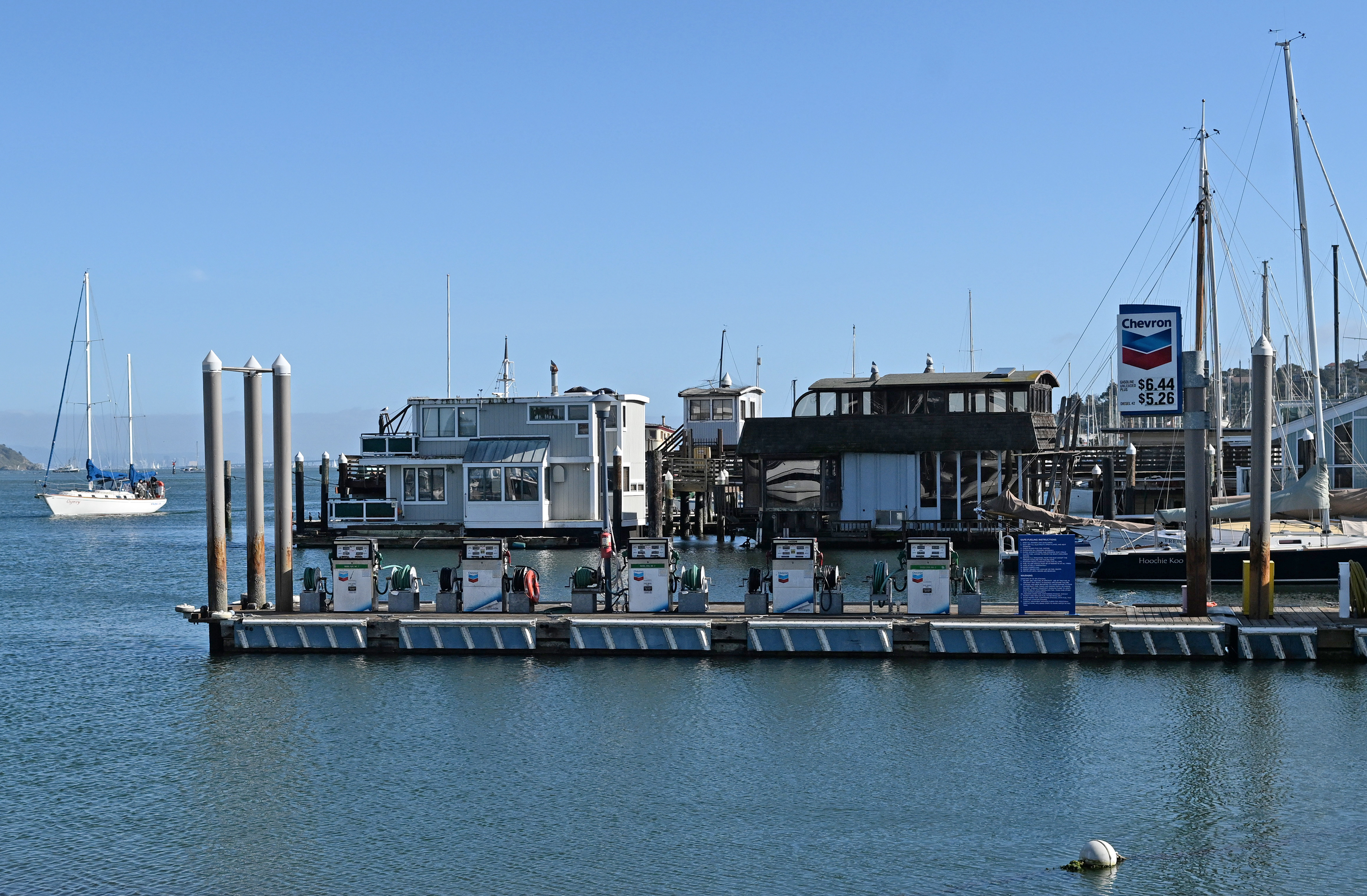
Floating homes stand beyond the Chevron fuel dock in the Marinship area of Sausalito, Calif., on Friday, Feb. 13, 2026. (Alan Dep/Marin Independent Journal)
Show Caption
1 of 3
Boats are docked in Clipper Yacht Harbor in the Marinship area of Sausalito, Calif., on Friday, Feb. 13, 2026. (Alan Dep/Marin Independent Journal)