
A debut novel set in 1973 that follows a protagonist’s flight from Queens to Berkeley, with a stop at an Arizona copper smelt; a collection of poems written in Berkeley and scent maven Mandy Aftel’s interpretation of the Renaissance emblem book are among the seven new books with Berkeley connections.
A column on books in Berkeley.
Fiction“something out there in the distance” by Grant Faulkner
University of New Mexico Press, 87 pages, $25
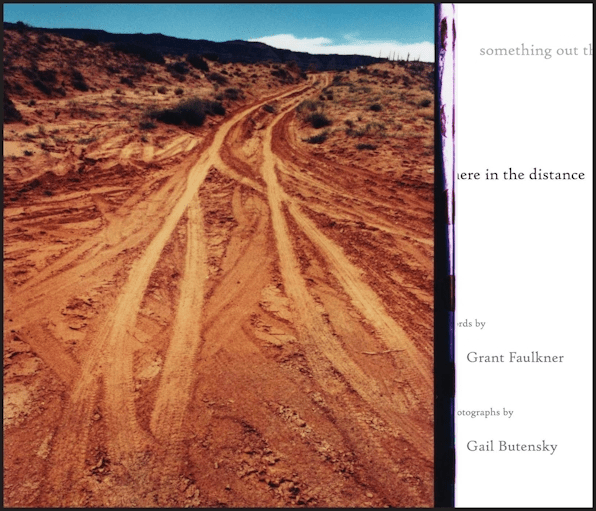
“Usually there’s a lot of angst and anguish that goes into writing a whole book,” said Berkeley’s Grant Faulkner. “This was so joyful and organic. I just picked a photo and if it spoke to me I would write about it.”
Faulkner was referring to his seventh book, “something out there in the distance,” a “flash novel” made up of super-short stories that accompany the haunting images shot by his longtime friend, the Los Angeles photographer Gail Butensky.
The book tells the tale of two lovers, Dawn and Jonny, who take a wild and searching road trip through the American West. Dawn is a photographer of desert landscapes, while Jonny looks for a home, “even as his recklessness overtakes him,” Faulkner said.
Faulkner has a lengthy resume when it comes to writing short. Both a master and promoter of flash fiction, he cofounded the literary journal 100 Word Story in 2011 and the Flash Fiction Institute, an educational learning hub, in 2025. Faulkner has also written an influential book on the subject, “The Art of Brevity: Crafting the Very Short Story” (2023). He’s also taught flash fiction on every level, from undergrads to adults, all over the country.
Faulkner believes the form has grown popular — and the Bay Area has become a hub for it — because of the short bursts of internet and social media writing. “Writers under 30 especially seem so ravenous with their interest in flash,” he said.
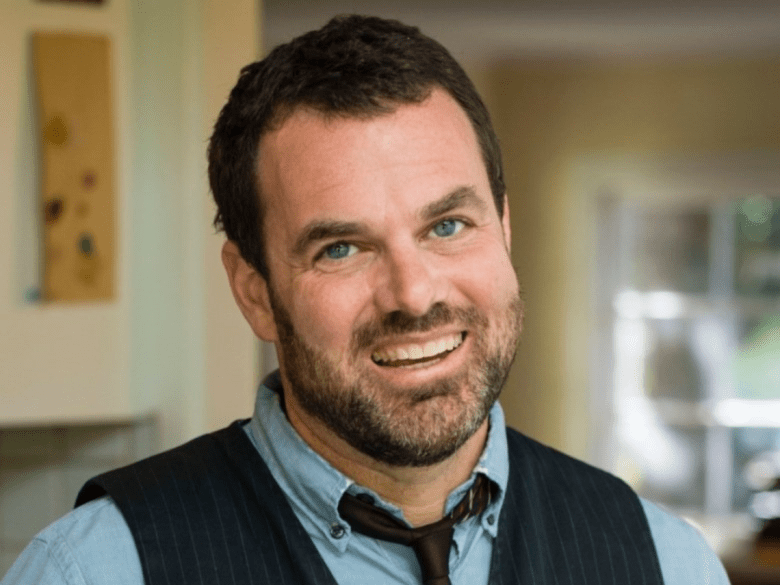 Grant Faulkner. Credit: Toby Burditt
One of the Bay Area’s most active and connected writers, Faulkner is something of a literary entrepreneur who has long promoted writing communities since he moved to Berkeley in 2004.
For 12 years he was executive director of the Berkeley-based NaNoWriMo (National Novel Writing Month) the annual writing challenge where participants aim to write a 50,000-word draft of a novel in a month. Faulkner left the organization two years before it crashed, burned and ultimately closed in 2025 after a string of controversies.
In his latest venture, Memoir Nation, launched in May 2025, Faulkner collaborates with Brooke Warner, publisher and founder of Berkeley’s She Writes Press. Designed to be a hub and a community for memoirists, the site offers different levels of membership, including classes, coaching and events. Faulkner and Warner also co-host the Memoir Nation weekly podcast.
Memoir Nation’s signature event, JanYourStory, launched this year and attracted some 1,500 participants. Faulkner described the write-in as a more achievable version of NaNoWriMo, but for memoirists, with a goal of writing 500 words a day instead of 1,700.
Faulkner has even taken writing into the realm of reality TV, partnering with Kanopy to “America’s Next Great Author,” with an air date to be determined.
Faulkner’s on the board of Litquake, San Francisco’s annual literary festival, and on the writers council at the National Writing Project, a Berkeley nonprofit dedicated to improving the teaching of writing. One more thing: he’s got a novel in the works with the University of New Mexico Press.
“Gotta make a living!” he said, of his myriad endeavors. “I love it all. My wife tells me to stop and I just can’t. I’m happier than I’ve ever been career wise.”
Faulkner will read from the book and be in conversation with ZYZZYVA editor Oscar Villalon at 6 p.m. on Thursday, Feb. 26 at the San Francisco Public Library’s main branch.
“A Very Cold Winter” by Fausta Cialente, translated from the Italian by Julia Nelsen
Transit Books, 250 pages, $19
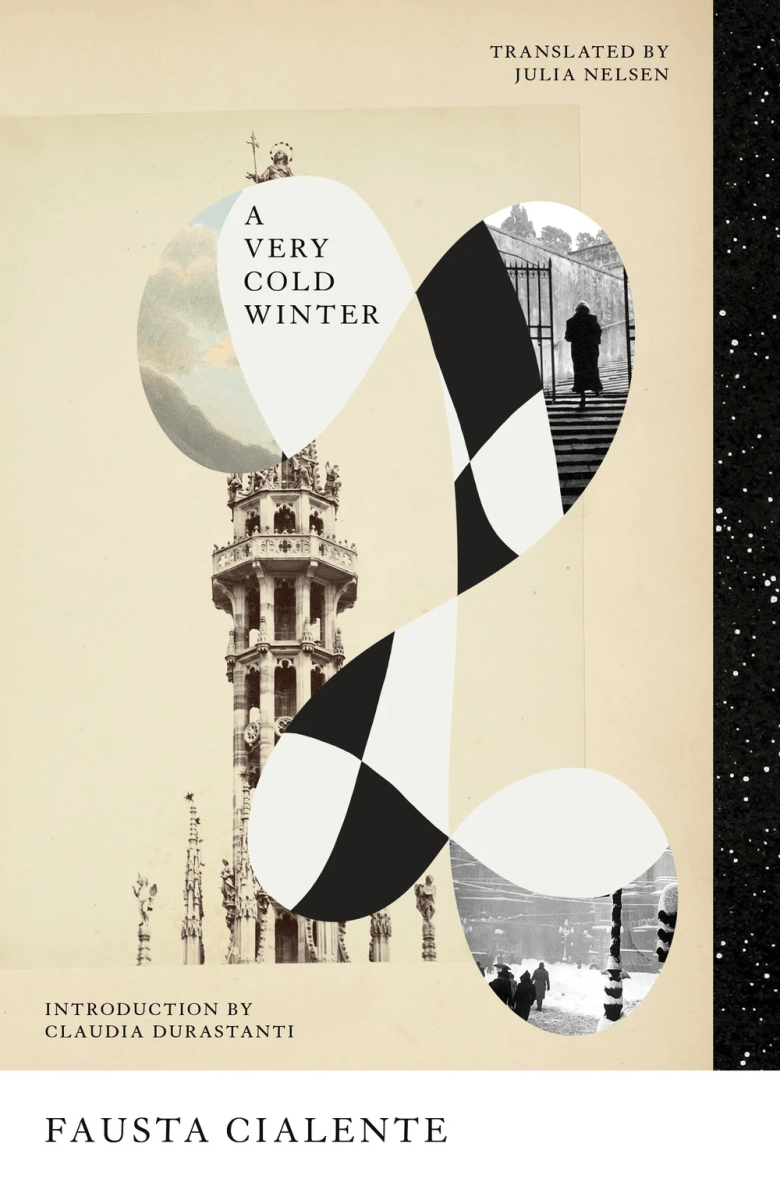
A humanities scholar with a Ph.D. in comparative literature from UC Berkeley, Julia Nelsen had long known about the Italian writer Fausta Cialente (1898-1994) from studying 20th century Italian literature and women’s writing. She described the author as “an undersung voice.”
“Compared to other female writers of her generation — Elsa Morrante or Natalia Ginsburg — Cialente dropped off the map and was more known in scholarly discussions about Italian women’s literature,” said Nelsen, who lives in Berkeley.
Cialente, a journalist, novelist and activist, is one of the first self-declared feminist Italian writers, whose early work anticipated modern feminism but was limited by fascist censorship.
In 2022, an Italian publisher rereleased Cialente’s 1966 novel, “A Very Cold Winter,” the first in a series of republished editions recognizing Cialente’s contributions. Nelsen read the book and proposed an English version to Ashley and Adam Levy, the husband-and-wife publishers behind Berkeley’s Transit Books, which specializes in literary translation. (The Washington Post recently singled out the couple in its “Next 50,” the 50 people shaping culture in 2026, for their success at uncovering international hidden gems.)
The Levys gave Nelsen the go-ahead. “A Very Cold Winter” represents the first translation of the book in English and Nelson’s first translated book. So far, the novel has been briefly mentioned in The New Yorker and blurbed by the author Jhumpa Lahiri, an Italophile, who wrote that “Julia Nelsen’s engrossing English translation is cause for celebration.”
In World War II, Cialente became active in the antifascist movement, writing pamphlets and making daily broadcasts from Radio Cairo against the Italian regime. She returned to Italy after the war and began publishing novels again, winning Italy’s most prominent literary award, The Strega Prize, in 1976.
Set in Milan in 1946, when the city is in ruins, “A Very Cold Winter” follows the lives of nine characters, mostly women in an extended family who are living in an illegal attic, as they struggle with the aftermath of war and contemplate their futures.
“All translations are difficult in their own way,” Nelsen admitted. In this case, she found that the “interesting puzzle” was to represent the unusual point of view: an omniscient character who roves through the perspectives of a vast cast of characters. “It was a fun challenge to get their voices right, to get the cadences of the conversations, the dialogues, to really enter into each character’s different perspective,” Nelsen said.
Nelsen is now at work translating Cialente’s 1930 debut novel, “Natalia,” for Transit. “I would call it a feminist discovery of self,” Nelson said. “She was very much ahead of her time.”
Nelsen will discuss the translation process and Cialente’s career with publisher Ashley Levy at 6:30 p.m. on Thursday, Feb. 26, at Transit Books.
“The Determined” by Rachel Rueckert
Kensington Books, 382 pages, $19
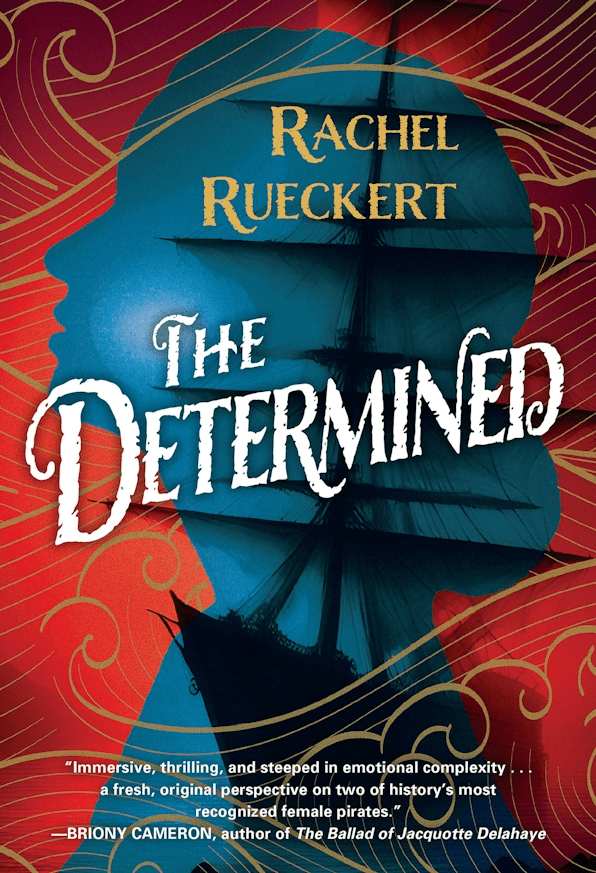
“This is not a Disney princess pirate story,” said Berkeley author Rachel Rueckert, of two of history’s most infamous women, Anne Bonny and Mary Read. “Their lives were much more interesting than the Hollywood tropes we see represented, who tend to be hot, sexy and red-headed.”
BFFs Bonny and Read are the subject of Ruecker’s second work of historical fiction, “The Determined.”
Growing up in Salt Lake City, Ruecker has long had a pirate obsession, and as a child wore a plastic sword through her belt loops. She ended up in Boston, where she lives part of the year, to get a master’s degree in education from Boston University. She also holds an MFA in creative writing from Columbia University.
Rueckert’s first book, “If the Tide Turns,” about the forbidden love between pirate Sam Bellamy and suspected witch Maria Hallett, is “Cape Cod’s most infamous love story,” Rueckert said. Like buried treasure, Rueckert stumbled upon her heroines when digging through “A General History of the Pirates,” written by Charles Johnson in 1724.
Though the book was highly sensational, Rueckert corroborated Johnson’s accounts of the women through court documents and records she discovered in Bahamian museums.
Bonny and Read spent only two months as swashbucklers, yet have inspired popular culture for the next 300-plus years, from John Gay’s 1729 opera “Polly” to characters in the Starz TV series “Black Sails” and HBO’s “Our Flag Means Death” to music by Adam and the Ants and Death Grips and video games like “Assassin’s Creed IV: Black Flag.”
Their paths collide in a notorious pirate den in Nassau, where they find kinship aboard the Revenge, the fastest ship in the Caribbean. Both women had been outcasts, born to unwed mothers. Prior to “turning pirate,” Mary served as a cabin boy in the navy to scrape by while Anne escaped an abusive situation by running away to the Bahamas.
Both subvert gender roles in their quest to survive in a male-dominated world, claiming a unique and hard-earned form of freedom they had never experienced on land. Rueckert sought to bring dignity and nuance by chronicling the entirety of their remarkable lives — not just the racy bits.
“I had to work with my intuition to go through all these layers and do this story justice,” Rueckert said.
A launch party will be held at Mrs. Dalloway’s at 7 p.m. on Tuesday, Feb. 24. Sea shanties will be performed by friends Rueckert has “pressed into service,” as pirates would say. Reservations are recommended but not required.
“Proles” by Barry Bergman
Serving House Books, 194 pages, $14
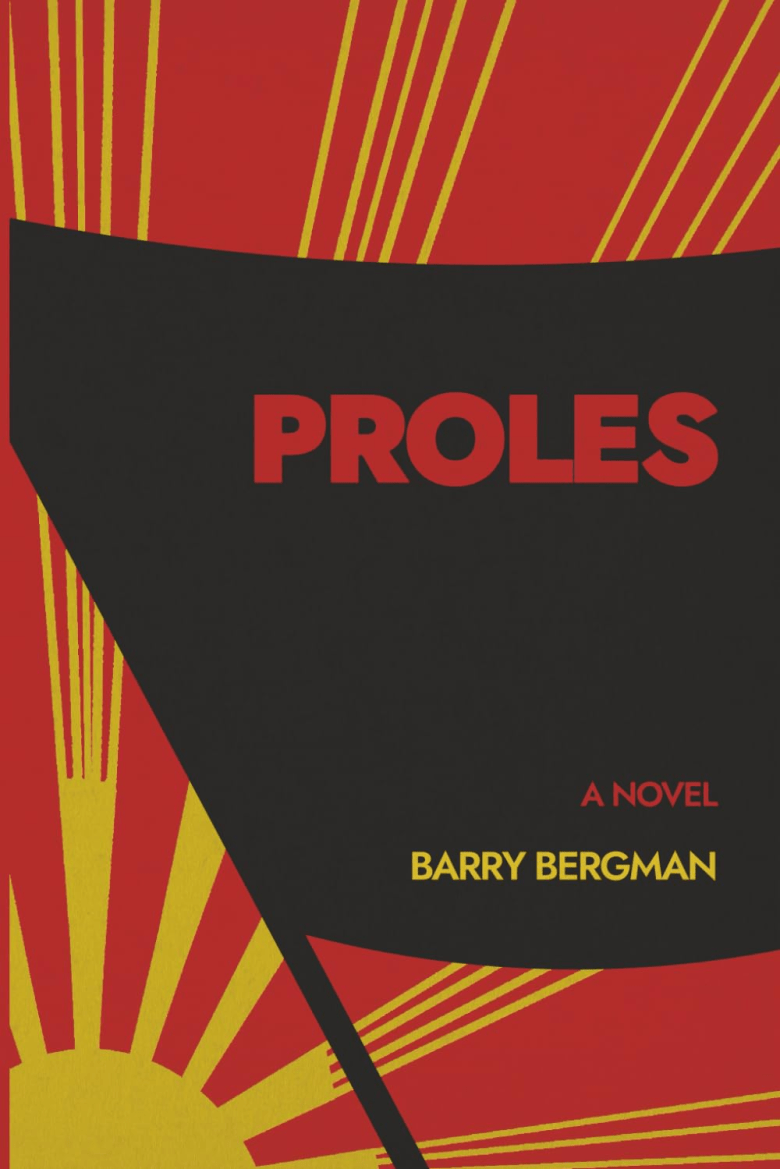
Barry Bergman was having lunch in Berkeley with a friend, describing the three-and-a-half years he spent working at a copper smelter north of Tucson, beginning in the summer of 1973. The setting, Bregman said, was Kafkaesque.
“My first shift at the smelter was graveyard, in the middle of the desert, pitch black, except for all this molten black and orange copper everywhere you looked. You don’t know what’s happening,” he said. “It was very scary honestly.”
His friend said, “You should write about that.” Bergman did.
“Proles” marks the Kensington writer’s fiction debut. A former journalist and magazine editor who spent ten years at UC Berkeley’s public affairs office before retiring in 2017, Bergman tapped his experiences at the smelter and as an idealistic youth in search of a cause to craft the book’s protagonist, Simon Bussbaum.
Like Bergman, Bussbaum flees Queens, N.Y. for an Arizona copper mine during the summer of 1973, when the Watergate hearings are being televised, after being freshly liberated from the draft. A film buff, Bussbaum is inspired by a McCarthy-era film that portrays the mine, the site of a legendary strike, as a proletarian idyll.
“A lot of what the book is about are the different mythologies and stories that people want to adopt as their own,” Bergman said, admitting that he, himself, was guilty of such youthful idealism.
After a hot summer of hard labor, toxic masculinity, unrequited love and insights into the power — and perils — of myth, Bussbaum’s reality falls short of the fantasy. His Plan B is to land in Berkeley, a haven for free speech and thinking.
Unlike his protagonist, Bergman had Berkeley in his sights from the start, likewise drawn to its progressive rep. Friends from Queens were already waiting for him in a Walnut Street rental. He took a detour, however, after following a love interest to Tucson.
“I got sidetracked,” Bergman said. Nevertheless, he ended up living in Berkeley for about six years and remained in the Bay Area ever since.
Nonfiction“Symbolorum: The Secret Wisdom of Emblems” by Mandy Aftel
Abbeville Press, 240 pages, $20

World-renowned natural fragrance expert and perfumer. Collaborator (with chef Daniel Patterson) on a book about using scent to flavor food. Creator of the first museum in the U.S. dedicated to perfume, housed in the backyard of her North Berkeley home.
Mandy Aftel has another credit to add to her many accomplishments: bibliophile. Her interest in antiquarian books has long acted as a gateway to her subject matter. The latest archaic book in her collection likewise led her down “another rabbit hole.”
Her 10th book, “Symbolorum: The Secret Wisdom of Emblems,” is modeled after a Baroque emblem book and contains images and text from the “Symbolorum et Emblematum” of Joachim Camerarius, published in 1654. Emblem books, which Aftel calls “a long-lost cousin of the tarot,” were meant to instruct and advise using aphorisms and images that often incorporate mythological figures, symbols, plants and animals.
Aftel became obsessed with tracking down the book after discovering a mention of it in a 1920s book on Arts and Crafts floral design.
“I like to look for things,” Aftel said. “I like the hunt.”
The hunt lasted about eight years. Aftel finally found the book through a dealer in Britain and bought it for $2,000. The book contains 400 wood-cut images of plants, quadrupeds, including mythic animals, birds and fish.
Because the text was in Latin, with a smattering of Greek, Aftel had to hire a translator. She excerpted from the original text, added her own commentary and hand-painted 100 wood-cut emblems using watercolors to make the black and white images “come to life.”
“They’re full of lore in some witchy ways,” Aftel said of the emblems. “During the scientific revolution everything changed. Yet, that older view of nature still appeals to me. It allows us to enter in a completely fluid and enticing way.”
“A World Appears: A Journey Into Consciousness” by Michael Pollan
Penguin Random House, 320 pages, $32
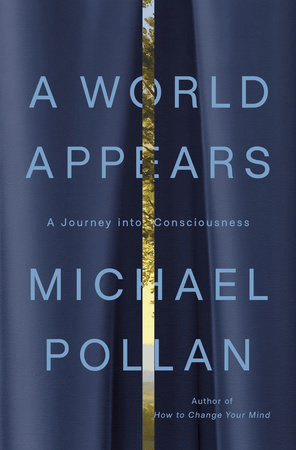
Michael Pollan’s latest deep dive seems like a logical progression from two previous books, “How to Change Your Mind” from 2018, a No. 1 New York Times bestseller, and “This is Your Mind on Plants” from 2021. “A World Appears: A Journey Into Consciousness” is described as a panoptic exploration of consciousness: “what it is, who has it and why — and a meditation on the essence of our humanity.”
In Pollan’s extensively researched exploration, he discovers a world deeper and stranger than our everyday reality. “His search takes us into the laboratories of our minds, ultimately showing us how we might make better use of the gift of awareness to more meaningfully connect with the world and our deepest selves,” according to the summary.
“A World Appears” is the Berkeley author’s 10th book. Before delving into subjects involving the mind, he was best known for books that explored the socio-cultural impacts of food, starting with “The Omnivore’s Dilemma” from 2006.
Pollan is also a professor at Harvard University and UC Berkeley, where he is the director of the Knight Program in Science and Environmental Journalism at the Graduate School of Journalism and co-founder of the UC Berkeley Center for the Science of Psychedelics, where he leads the public-education program.
Pollan will be joined in conversation with cognitive scientist Maya Shankar at 7 p.m. on Tuesday, March 10 at Berkeley’s First Congregational Church. Tickets are $39.84 and include the book.
Poetry“Atria” by D.S. Waldman
Liveright, 95 pages, $28
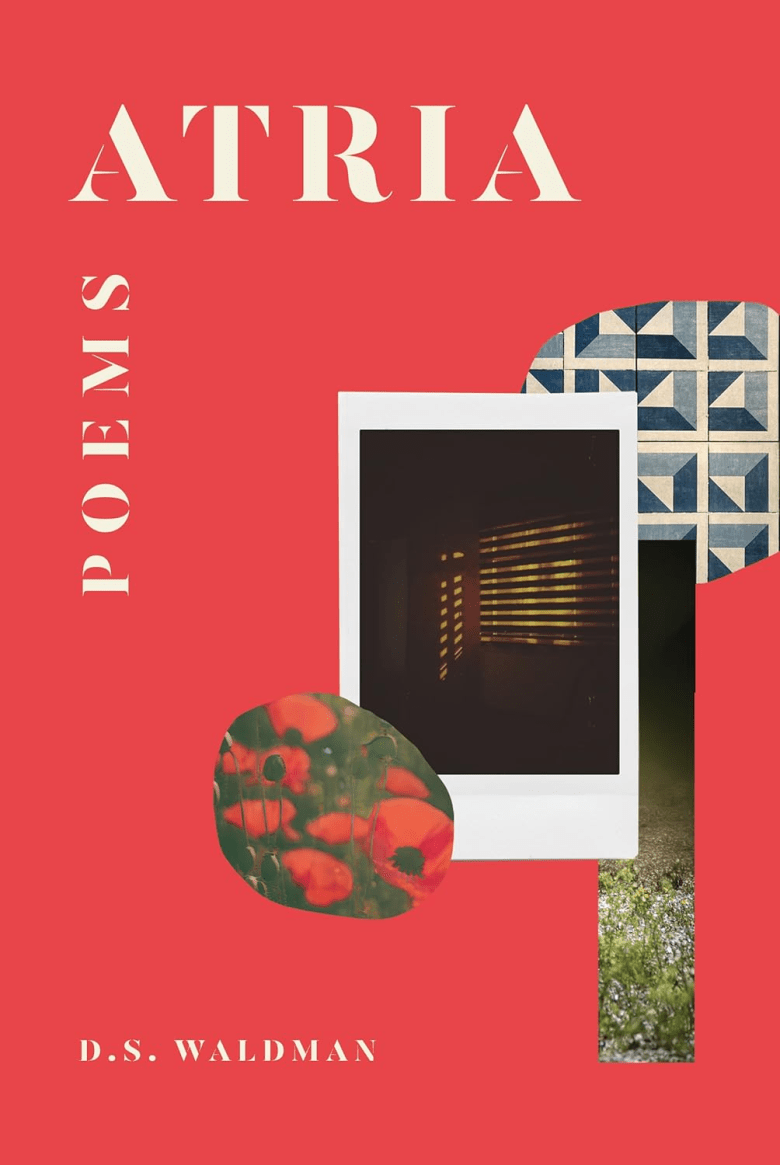
D.S. Waldman’s debut poetry collection, “Atria,” is set in the Bay Area but makes only a couple of passing references to Berkeley, such as an unnamed restaurant that is Lucia’s downtown. “Evenings in Berkeley condescended to words like funky, the wealthy down from the hills for a plate of gnocchi and delicata squash, shimmering headlights across the rain-streaked window.”
His main connection to Berkeley is the role it played as an incubator for the book.
Waldman took an apartment in the Bushrod neighborhood of Oakland after receiving a Stengner Fellowship from 2022-24 at Stanford’s creative writing department. There, he studied with the renowned poet Louise Glück, who divided her time between a North Berkeley rental and her longtime home in Vermont.
Waldman describes those weekly one-on-one sessions Glück conducted with her students as “very intimate.” Though Glück could sometimes be “a little guarded and prickly,” she became more generous and relaxed within the lush backyard garden she tended herself. Glück died in 2023.
“In a single read, she would break the thing down, point to the weak moments and pretty quickly develop ideas for how the poem could be improved,” Waldman said. “I learned a lot about revision by watching her.”
The book’s title plays on the double meaning of atria as architectural elements, inspired Waldman’s many visits to the SFMOMA, where he spent a lot of time, and the chambers of the heart, suggesting that these sonnets, prose poems and lyric essays will be meditations on art, poetry and love in all its iterations.
Waldman will be in conversation with poet David Gorin at 7 p.m. on March 17 at Clio’s Books in Oakland. Tickets are $7.18.
“*” indicates required fields