
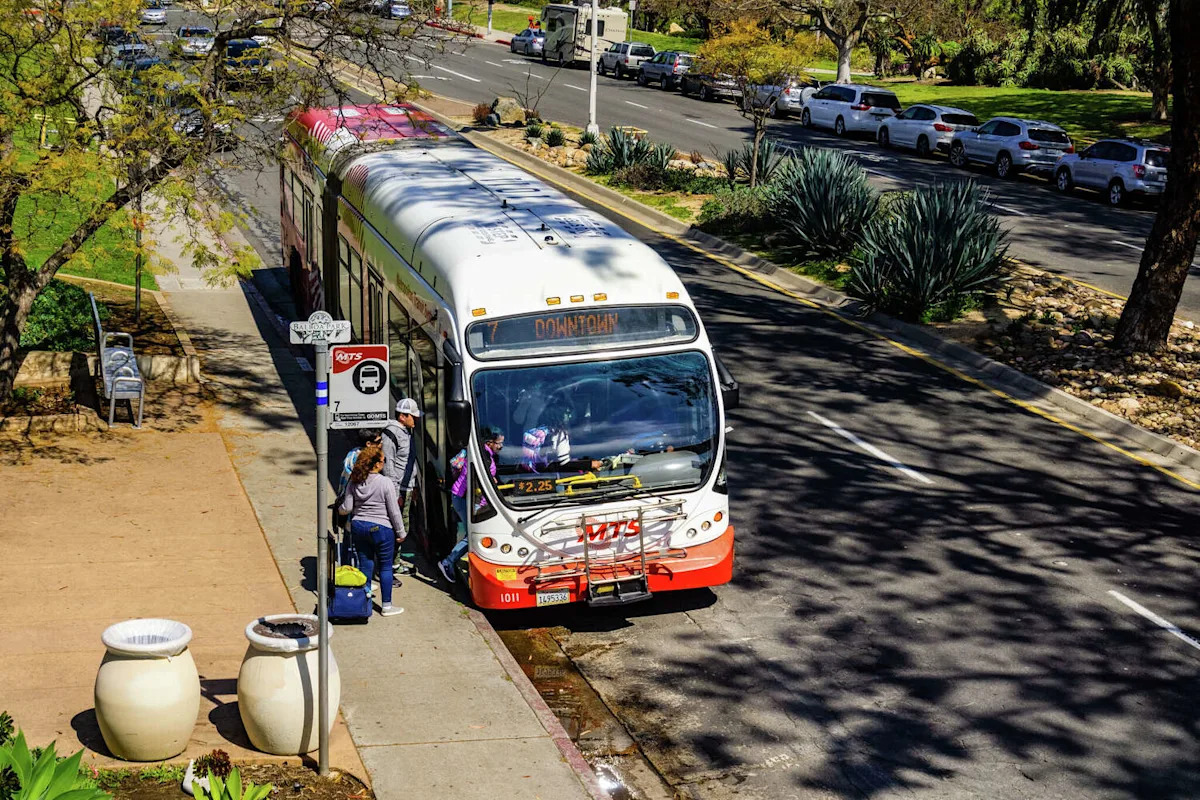
As transit officials in San Diego County stare down a hefty budget deficit, they’re weighing fare change proposals to close the fiscal gap, including adopting an aggressive option that could charge local transit riders the costliest single-trip fare in the state.
The San Diego Metropolitan Transit System faces a roughly $500 million funding gap over the next four years, but it’s not due to diminishing services. Regional riders are enthusiastic about the transit system – it has one of the fastest growing riderships in the country and ranks third for the number of passenger trips and passenger miles in California. However, like other major transit agencies such as BART, the MTS kept things moving after the pandemic through one-time emergency funds from federal and state subsidies.
With those funds starting to dry up, the MTS is looking to its riders to help shoulder the cost by adopting its first official fare hike since 2009.
Alongside San Diego County’s multifunctional planning organization, the San Diego Association of Governments, the MTS is studying fare changes and soliciting input from riders. The agency has issued a short survey to determine a new fare price structure, and the proposal features two extensive fare change packages.
Among the 15 price changes is the cost for an adult one-way fare, currently $2.50. One proposal raises the cost to $3, while a more aggressive option could raise the fare to $3.50. The SoCal Transiteer noted in a breakdown of the packages that, if adopted, the San Diego MTS would charge the most expensive single-trip local fares in the nation.
It’s important to note, with context, how that is a strict reading of “single-trip local fare,” since the average BART ride costs $4.25 – not to mention the eight-minute train ride from Oakland San Francisco Bay Airport to the Coliseum BART Station is $7.47, nearly a dollar per minute for riders. It also costs $3 to ride Muni if paying in cash and $2.85 with a Clipper card.
The proposed $3.50 in San Diego reflects a flat rate, as opposed to a multizone fare structure like Caltrain and BART. The price is similar to a transit ride in New York City, where the fare is $3 for most riders on subways and buses across the system; however, it’s $3.50 for the new single-ride OMNY ticket.
In December 2025, the MTS shared responses from around 6,000 San Diego-area transit passengers who were surveyed, showing a majority support a fare increase, though that support varied widely by income level.
“If they raise it, it’s probably because they need to,” a rider named Maria Medina told KFMB-TV. “And prices are just going to go up anyway.”
BEST OF SFGATE
Central Coast | ‘Doomsday fish’: Once-in-a-lifetime sea creature encountered in Monterey Bay
Technology| A Calif. teen trusted ChatGPT for drug advice. He died from an overdose.
Central Coast| He gifted Calif. one of its largest city parks. Then he shot his wife.
Culture | Tragedy cut Sublime’s fame short. Now the singer’s son has the mic.
Get SFGATE’s top stories sent to your inbox by signing up for The Daily newsletter here.
This article originally published at California county considers adopting costliest transit ride in the state.