
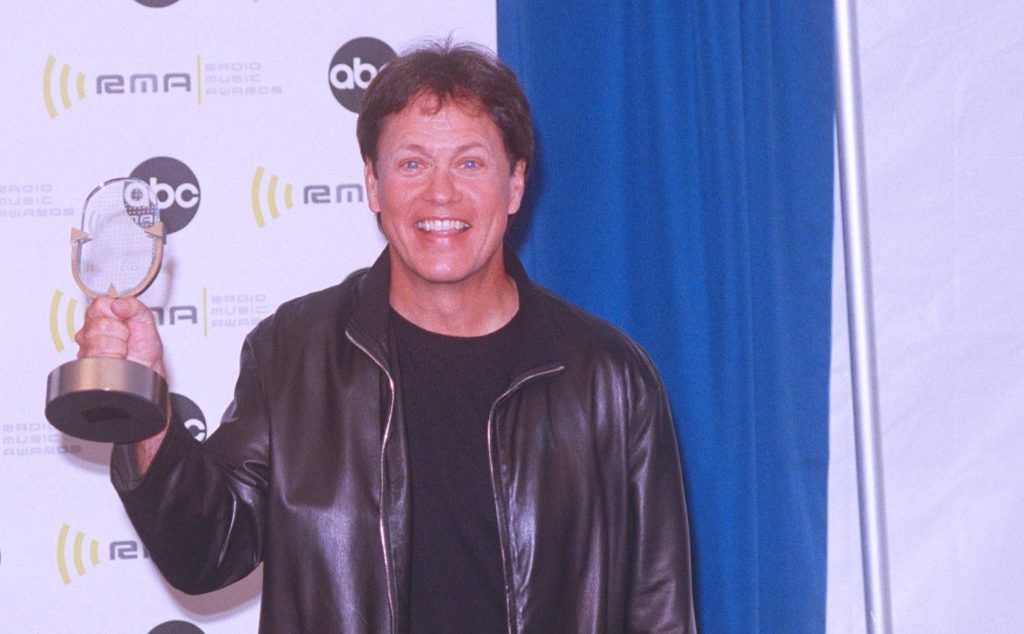
Los Angeles has many extremely talented and popular radio personalities.
We reminisced about Jim Healy recently, plenty of others come to mind: Casey Kasem, “Emperor” Bob Hudson, Wink Martindale, Al Lohman with Roger Barkley, Robert W. Morgan, “The Real” Don Steele, Ken Minyard with Bob Arthur, Gary Owens, John London with Ron Engelman, Bobby Ocean, and Dave Hull, among so many.
The list is long — I only mentioned a relative few, really — but it would be woefully incomplete without the inclusion of Rick Dees.
Born Rigdon Osmond Dees III in Jacksonville, Fla., on March 14, 1950 — sharing my wedding anniversary day of March 14, 1992, by the way — he was raised in Greensboro, North Carolina. He began his radio career while still attending Grimsley High School at WGBG/Greensboro, then made his way to other stations in North Carolina and Alabama.
While at WMPS/Memphis, Tennessee, he (along with his “cast of idiots”) recorded “Disco Duck,” a novelty hit mocking disco music, making fun primarily of the repetitive nature of so many of the genre’s hit songs. It was never intended to be a big hit; it was released by a regional label Fretone before being picked up by RSO Records for national distribution. The song eventually hit No. 1 on the Billboard Hot 100 for one week in October of 1976, almost 50 years ago.
“It was recorded at Shoe Productions in Memphis, and mixed at Art Studios, also in Memphis,” Dees told me. “I employed the famous Memphis Horns and the Nashville Strings to make the track thick and robust. ‘Disco Duck’ was masterfully produced by Bobby Manuel, who also played guitar on the session.”
For all that, Dees was not allowed to play it. Nor would competing stations in Memphis, as they didn’t want to promote another station’s DJ. He happened to mention the song on his show one day, and got fired due to a “conflict of interest.” After a short time, Dees was hired at crosstown WHBQ, where he was finally allowed to play his own song.
Then… the planets aligned. Chuck Martin was named program director of KHJ in early 1979. He was looking to remake the station back into the powerhouse it once was.
“I wanted something different from the stagnant sound” that had become KHJ, so he traveled around the country looking for talent that was new, bright and fresh. Upon a recommendation, he found himself in Memphis, tuned to WHBQ … and he found his guy: Rick Dees.
“I listened for three days before contacting him,” Martin told me. “I wanted to make sure he was the real deal – consistent on the air – and he was.” And so, after what Martin called some tough negotiations, he hired Rick to be the new KHJ morning man, and Rick’s wife Julie to be a second voice. As it turned out, Julie was an integral part of the show, providing many of the “celebrity” voices that appeared, such as “Groaning Barrett.”
Dees knew how to push the format. “In fact, Martin said he couldn’t even be held to a format. Every time I gave him more latitude, he took it another step further,” he said. “But he came through.”
It wasn’t always easy, though, especially after busting the station’s talent budget. “Rick drove me crazy, almost to the point of a nervous breakdown. I was walking on eggshells until the ratings came out,” Martin explained. But when the ratings did come out, Dees had exploded in the demographics KHJ was looking to build, primarily listeners aged 18-34.
“I can honestly say that Rick was instrumental in the rebirth of KHJ,” Martin concluded.
But station owner RKO was afraid the newfound success wouldn’t last, so in late 1980, they changed to country, leaving Dees searching for a new home. He found it at the former all-disco KIIS-FM (102.7), which was currently playing some sort of sleepy/sappy adult contemporary format. Honestly, the early days of Dees on KIIS are difficult to listen to … it was bad. Not Dees, the music. But that would soon change.
In late 1981, KIIS was becoming the hottest station on the planet. Led by General Manager Wally Clark and Program Director Gerry DeFrancesco, the station attracted some of the most talented DJs of the time, as well as developing promotions to attract listeners to the new station. And Dees was ready.
As was done at KHJ, KIIS-FM promoted the new morning show in any way possible. It seemed that Dees’ face was on every bus, every bus bench and hundreds of billboards throughout Southern California. That got the listeners to the station. But Dees (and of course the other talent) kept them there. Dees got me hooked as I commuted to UCLA in 1984, through the use of Candid Phone calls, calls to “his agent” Bernie Shelly (“Hey, Rick, I’ve got a bigger name on the other line” was always the first line spoken when Dees “called.”), ads for Heinie Winery, and of course, conversations with “Chuy from La Puente.”
In a stroke of genius, Dees never said anything crude himself. Dees was the epitome of wholesomeness. No, it was his character Willard Wiseman who said the crude jokes or one of the others in his “Cast of idiots.” Dees always appeared to be the positive guy.
Dees was instrumental in the success of KIIS-FM. He was huge – one of the most popular morning shows ever, and one that fit perfectly with the rest of the station’s day, unlike some morning shows that essentially have a separate audience, such as when Howard Stern led the KLSX (now KCBS-FM, 97.1) morning show when the station otherwise played classic rock.
The voice of Chuy from La Puente was none other than show producer Danny Lemos, who has fond memories of the time. “I remember how much fun it was to have a nugget of a funny idea, and for it to multiply once Rick spun his magic and got others involved,” Lemos told me. “It never felt like work. To this day, it baffles me how many people remember his ‘Rick Dees in the morning’ jingle … and can sing that time and temperature jingle.”
Dees’ last show on KIIS-FM was in February 2004, when he was replaced by Ryan Seacrest. You can find numerous airchecks on various places such as YouTube, MixCloud, and ReelRadio.com. For his part, Dees is still active with Rick.Com and other projects.
More blasts from the past are on the way … stay tuned.
Richard Wagoner is a San Pedro freelance columnist covering radio in Southern California. Email rwagoner@socalradiowaves.com