
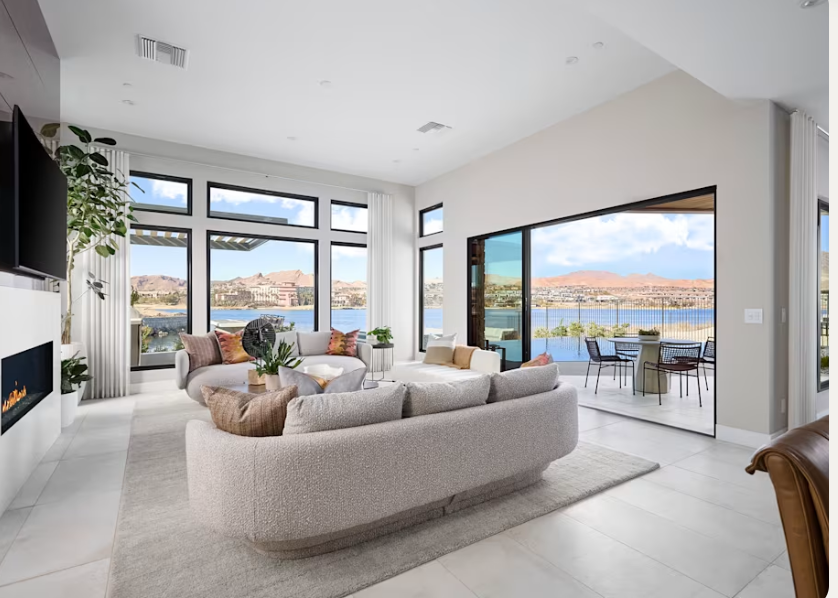
A major homebuilder with large ties to Orange County is about to be bought by a Japanese housing company in a multibillion-dollar deal that highlights the rise of foreign investment in U.S. home construction.
Japan’s Sumitomo Forestry Co., Ltd. agreed to buy Tri Pointe Homes in an all-cash deal worth about $4.5 billion, the companies announced on Feb. 13.
The deal, officials say, will make one of the country’s largest private homebuilders and greatly increase Sumitomo Forestry’s presence in the U.S. housing market. The Japanese company said it intends to supply 23,000 homes annually in the U.S. by 2030 and noted that Tri Pointe made 6,400 home closings in 2024.
Officials said the deal will pay stockholders $47 per share, representing a 29% premium over Tri Pointe’s closing price on Feb. 12 of $36.57. At press time, the shares traded at $46.34 with a $3.9 billion market cap. The shares have been on an upward swing since 2022 when they hovered around $15 (NYSE: TPH).
The deal is expected to close in the second quarter of 2026, pending shareholder approval and regulatory steps, officials said.
Sumitomo Forestry is a publicly traded company in Tokyo with a $7.1 billion market cap (Tokyo: 1911).
Tri Pointe Remains in Irvine
Doug Bauer, who was chief operating officer of William Lyon Homes, founded Tri Pointe Homes in 2009 along with two other former Lyon execs, Tom Mitchell and Mike Grubbs.
The company went public in 2013, at a valuation of about $600 million. It was the first U.S. homebuilder to go public after the Great Recession.
Tri Pointe’s biggest growth move came later that year, via a deal with another forestry-related conglomerate; it bought the homebuilding operations of Weyerhaeuser Co. for almost $2.7 billion, a deal that vaulted it to one of the country’s 20 largest builders.
Tri Pointe designs, builds and sells single-family attached and detached homes in the western U.S. The company operates in two segments, homebuilding and financial services.
It operates active selling communities and owns or controls lots. It also provides financial services, such as mortgage financing, title and escrow, and property and casualty insurance agency services.
It manages more than 150 communities in 13 states and Washington, D.C.
The sale is at a time when 2025 revenue is expected to decline 23% to $3.4 billion, according to the average estimate of four analysts.
“This transaction delivers compelling cash value for our stockholders while accelerating our long-term growth strategy as an independent brand within a scaled, multi-faceted platform,” chief executive Bauer said in a statement.
Tri Pointe officials said that upon closing the acquisition, it will retain its brand, leadership and local Irvine offices, and will operate independently within Sumitomo Forestry’s U.S. homebuilding group.
Although Tri Pointe technically relocated its headquarters to Incline Village on the Nevada side of Lake Tahoe in 2021, several of its executives continue to work in Irvine.
Sumitomo indicated that it would retain the Tri Pointe management team, saying it looks forward to partnering with Bauer, President and Chief Operating Officer Mitchell, and other executives.
“Joining Sumitomo Forestry’s impressive platform provides our customers, partners, and team members with the benefit of scale, capital, and resources, enabling the continued evolution of the Tri Pointe Homes brand well into the future,” Mitchell said in the statement.
A Tri Pointe spokesperson told the Business Journal that the builder’s identity and local focus will remain the same while it gains more capital and resources to grow.
“As a distinct brand within Sumitomo Forestry’s scaled platform, Tri Pointe Homes will be the same design-driven builder that homebuyers and communities have come to know over the past 17 years, but with expanded capacity, capabilities and resources to usher in a new stage of growth,” the Tri Pointe spokesperson said in an email statement.
“Through this strategic combination, both Tri Pointe Homes and Sumitomo Forestry are committed to supporting an increase in the supply of high-quality, affordable homes across the U.S.”
Future Growth
Sumitomo Forestry already owns several U.S. homebuilders.
Sumitomo Forestry, which reported about $14.6 billion in sales in 2025, said Tri Pointe supports its long-term plan to grow housing production in the U.S.
“The addition of Tri Pointe Homes represents a significant step forward in advancing our growth strategy,” said Toshiro Mitsuyoshi, president and executive officer of Sumitomo Forestry, in a news release.
Japanese U.S. Real Estate Investments
The Tri Pointe Homes acquisition further highlights a bigger trend: Japanese companies are steadily increasing their investments in the U.S. homebuilding industry.
A home builder’s trade magazine report found that Japanese investors have spent decades buying or funding U.S. builders, with deal sizes growing as companies aim for scale.
In 2024, Sekisui House paid $4.9 billion for Denver-based M.D.C. Holdings, which operates under the Richmond American Homes brand.
In the 1990s, Tokyo-based Mitsui & Co. acquired Birtcher Real Estate Ltd and rebranded it as MBK Real Estate, based in Irvine.
In 2020, Japan’s Daiwa House acquired a 60% majority stake in Trumark Companies, another major homebuilder with offices in Irvine and Newport Beach. Terms of that deal were not disclosed, but Daiwa officials previously said it was part of the company’s expansion push into California. A few years earlier, Daiwa had acquired Virginia-based Stanley Martin, a homebuilder operating in the eastern U.S.
Meanwhile, Sumitomo Forestry has steadily expanded its business since entering the U.S. housing market in 2003. The Japanese housing conglomerate has five U.S. housing brands, including MainVue Homes in Seattle, Edge Homes in Denver and Bloomfield Homes in the Dallas/ Fort Worth area.
Industry advisers say the U.S. market has more growth potential than Japan’s domestic housing sector. The far east country is also grappling with low birth rates and the future in the housing sector is bleak.
“The Japanese have access to less expensive capital and are trying to make a 5% return on equity,” Whelan Advisory CEO Margaret Whelan said in a report by Off-Site Builders, a trade publication.
Whelan Advisory is a New York-based investment bank that specializes in homebuilding and construction.