
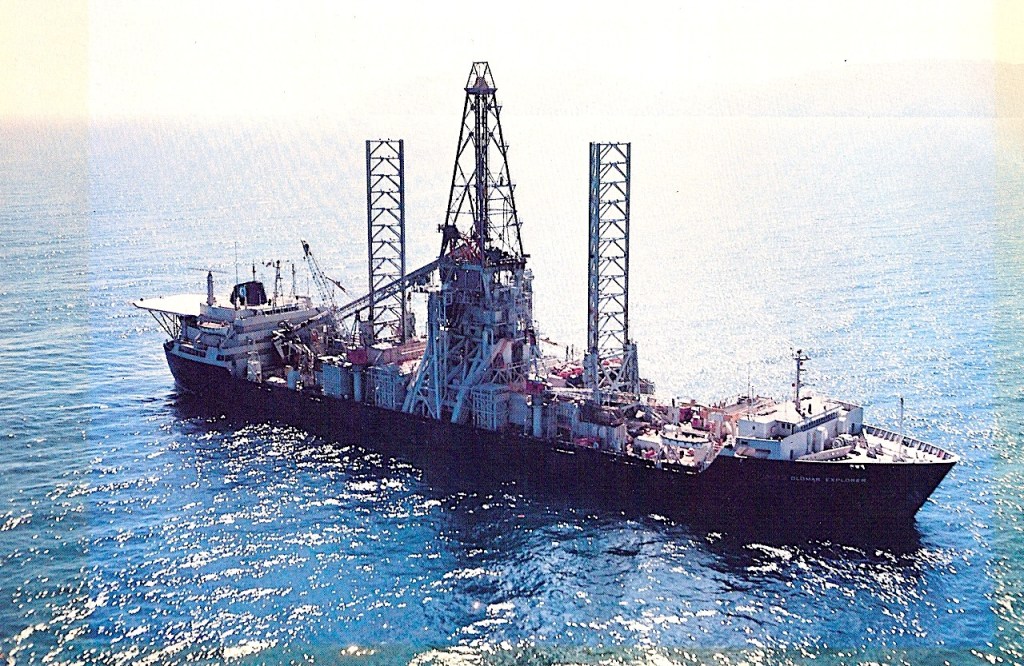
The saga of the Glomar Explorer begins with the disappearance of a Russian submarine, the K-129, in the Pacific Ocean about 1,560 miles northwest of Hawaii on March 8, 1968. Russian vessels tried to locate the sub, which was carrying five nuclear missiles, but declared it lost after an extensive search.
Remember that the Cold War between the U.S. and Russia was still very much alive during this era. Retrieving a recently operational Russian submarine had all the earmarks of an intelligence goldmine for the U.S.
The U.S. Navy located the downed sub with one of its own submarines, the USS Halibut, on Aug. 20, 1968. The problem: it had sunk to the bottom of the Pacific at a depth of 16,500 feet — more than three miles under the surface. At that point in time, the deepest successful retrieval of something heavy from the ocean floor was 1,000 feet.
There was little question that the U.S. would attempt to retrieve the sub. For the next several months, debate raged within the U.S. government over who would take command of the secret operation, which was given the codename Project Azorian. The Central Intelligence Agency finally got the assignment in April 1969.
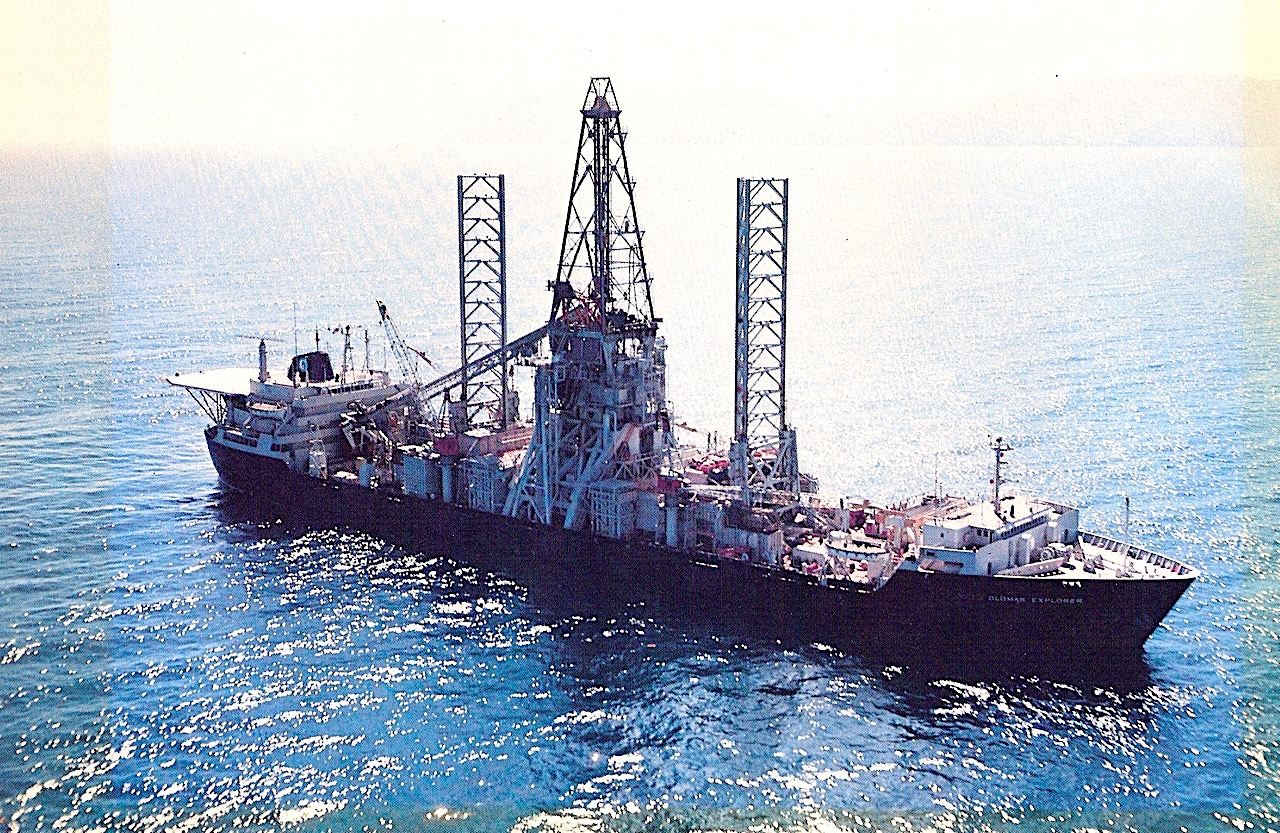
The Glomar Explorer at sea. Undated U.S. Government photo. (Wikimedia Commons)
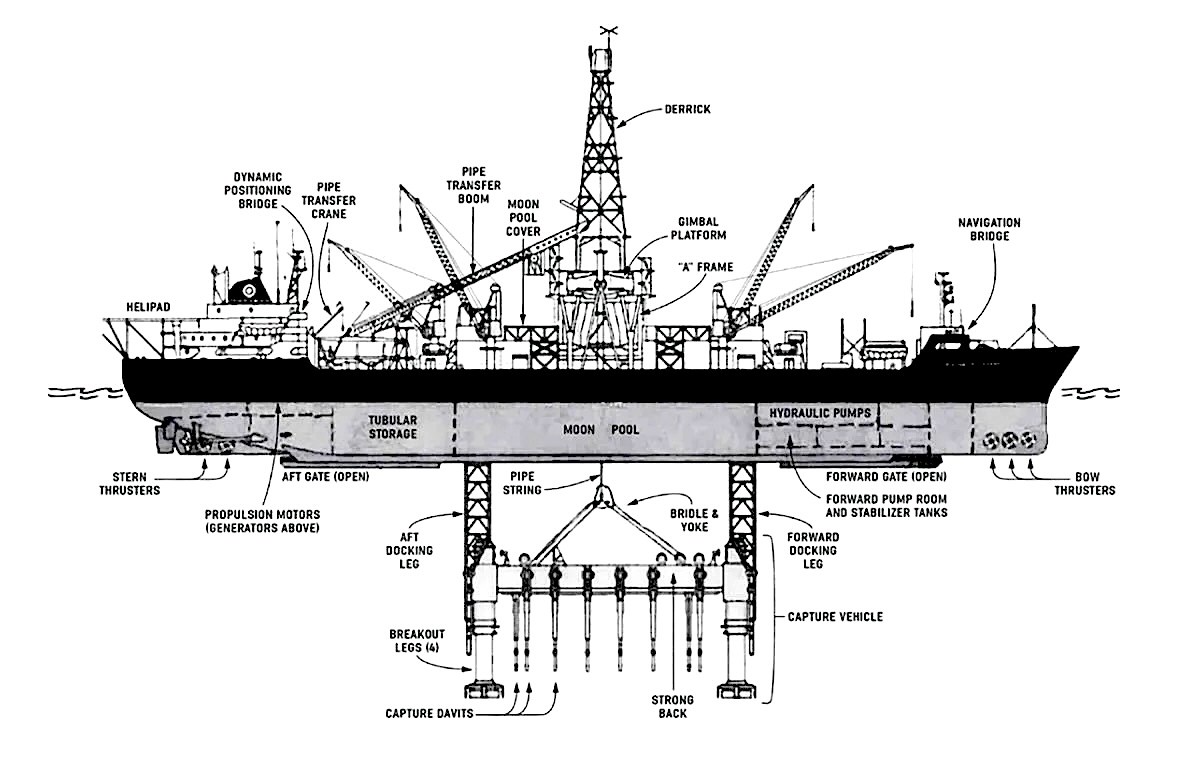
Detailed diagram of the Hughes Glomar Explorer by Antonio Raspa. (U.S. Naval Institute website)
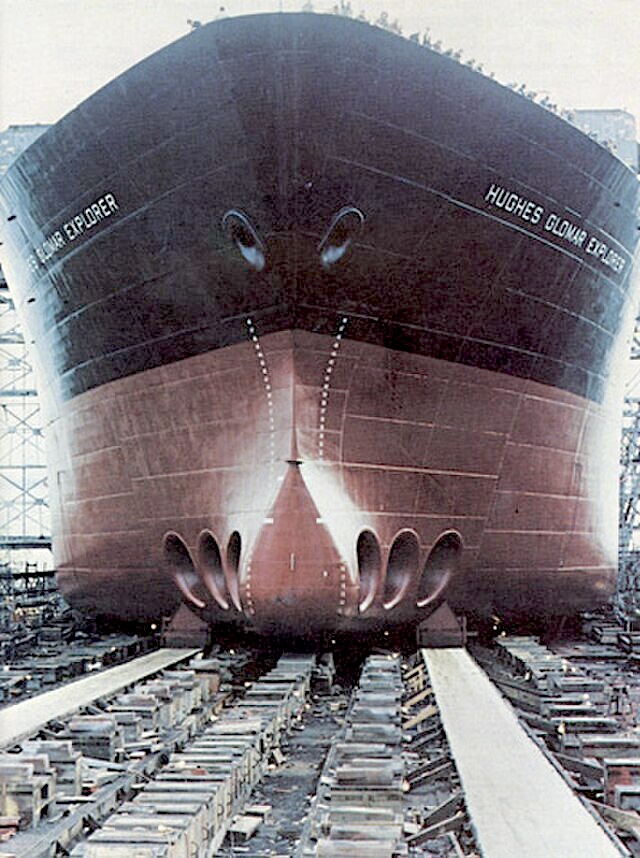
The Hughes Glomar Explorer’s initial launch on Nov., 1, 1972. (CIA photo)
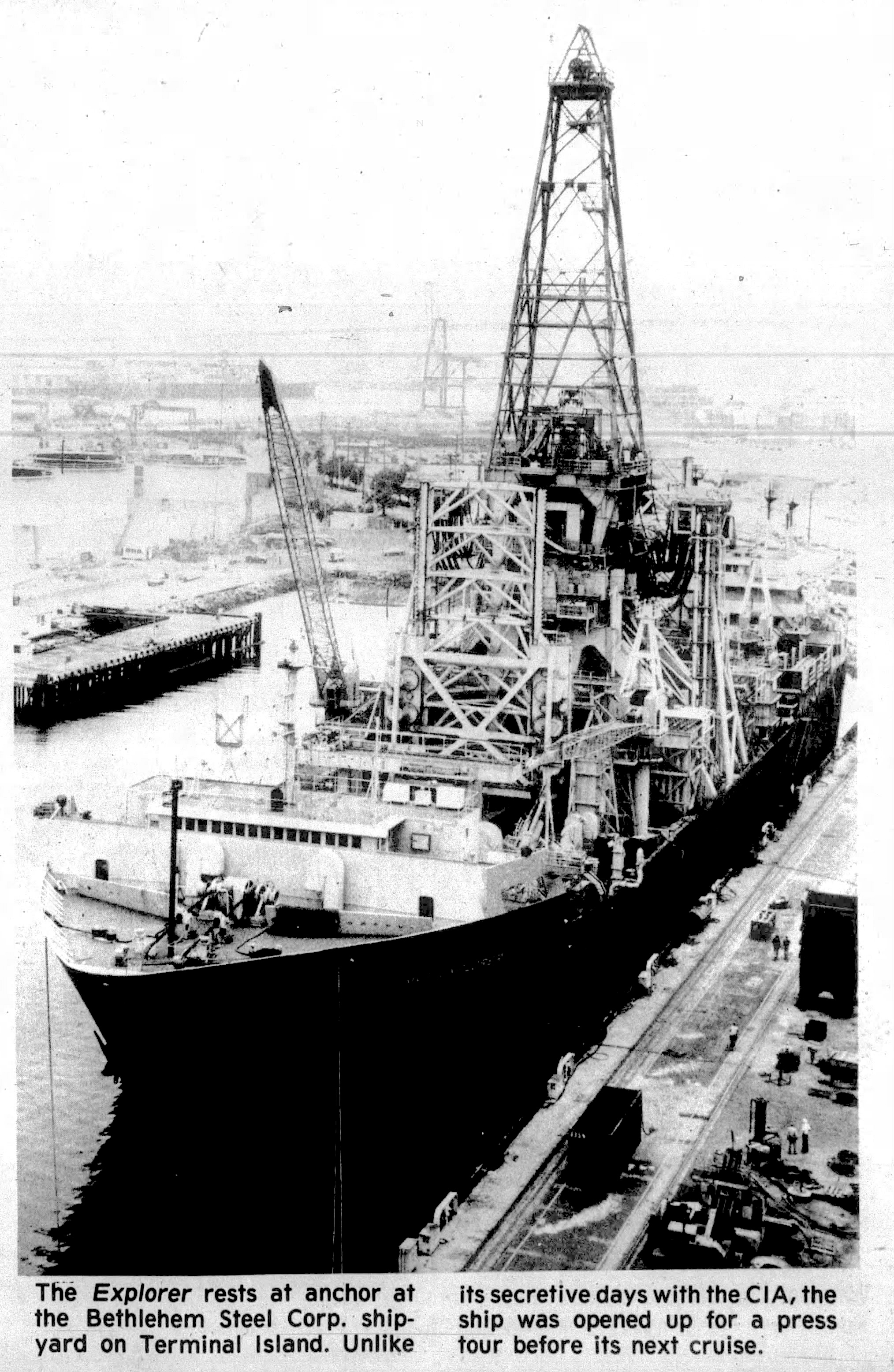
The Explorer rests at anchor at the Bethlehem Steel Corp. ship yard on Terminal Island. Unlike its secretive days with the CIA, the ship was opened up for a press tour before its next cruise. Daily Breeze, Sept. 9, 1978. (Staff photo by Jack Lardomita / Daily Breeze archives)
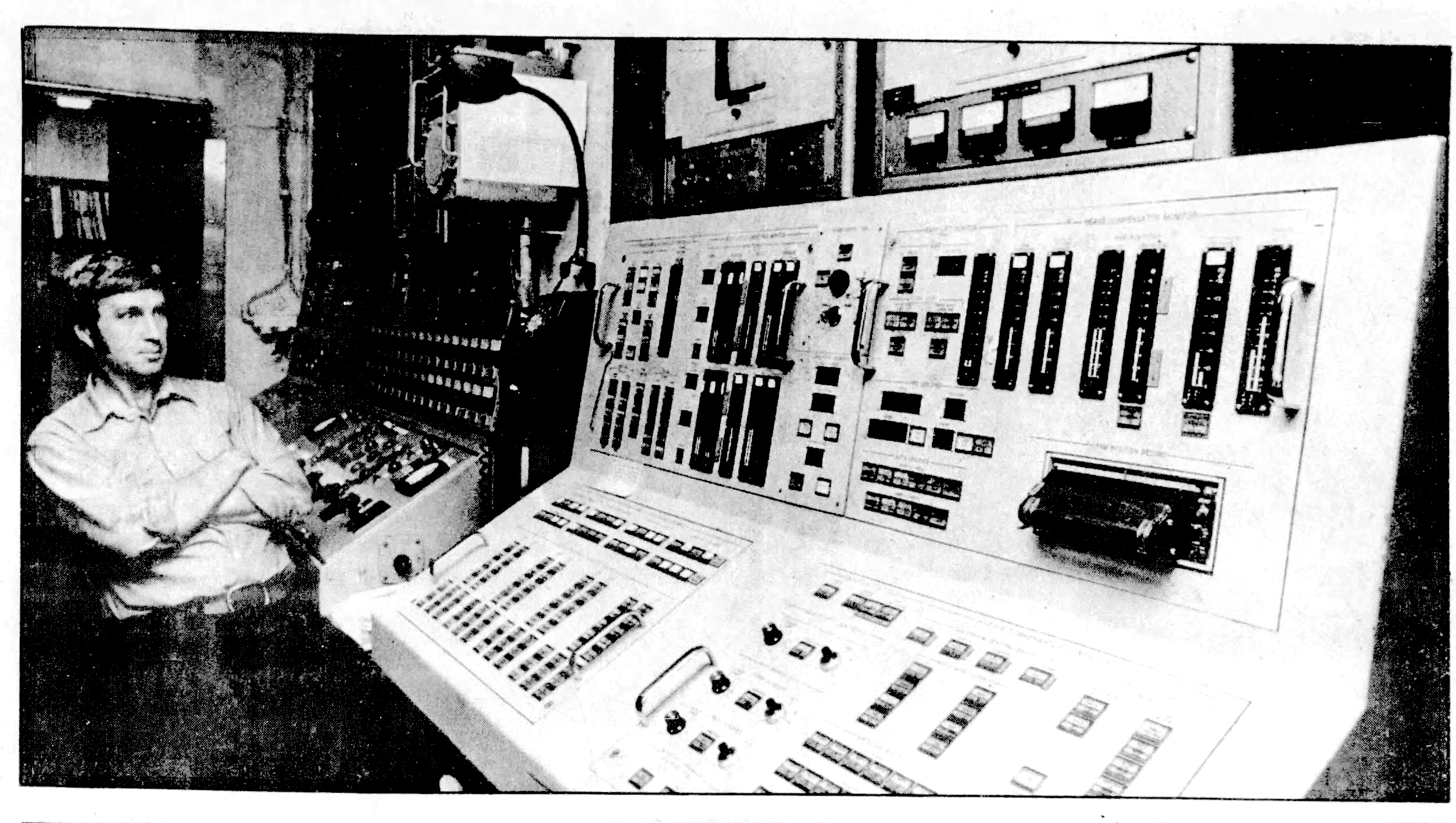
The control room of the Glomar Explorer as seen during a 1978 press tour of the ship. (Staff photo by Jack Lardomita / San Pedro News Pilot archives)
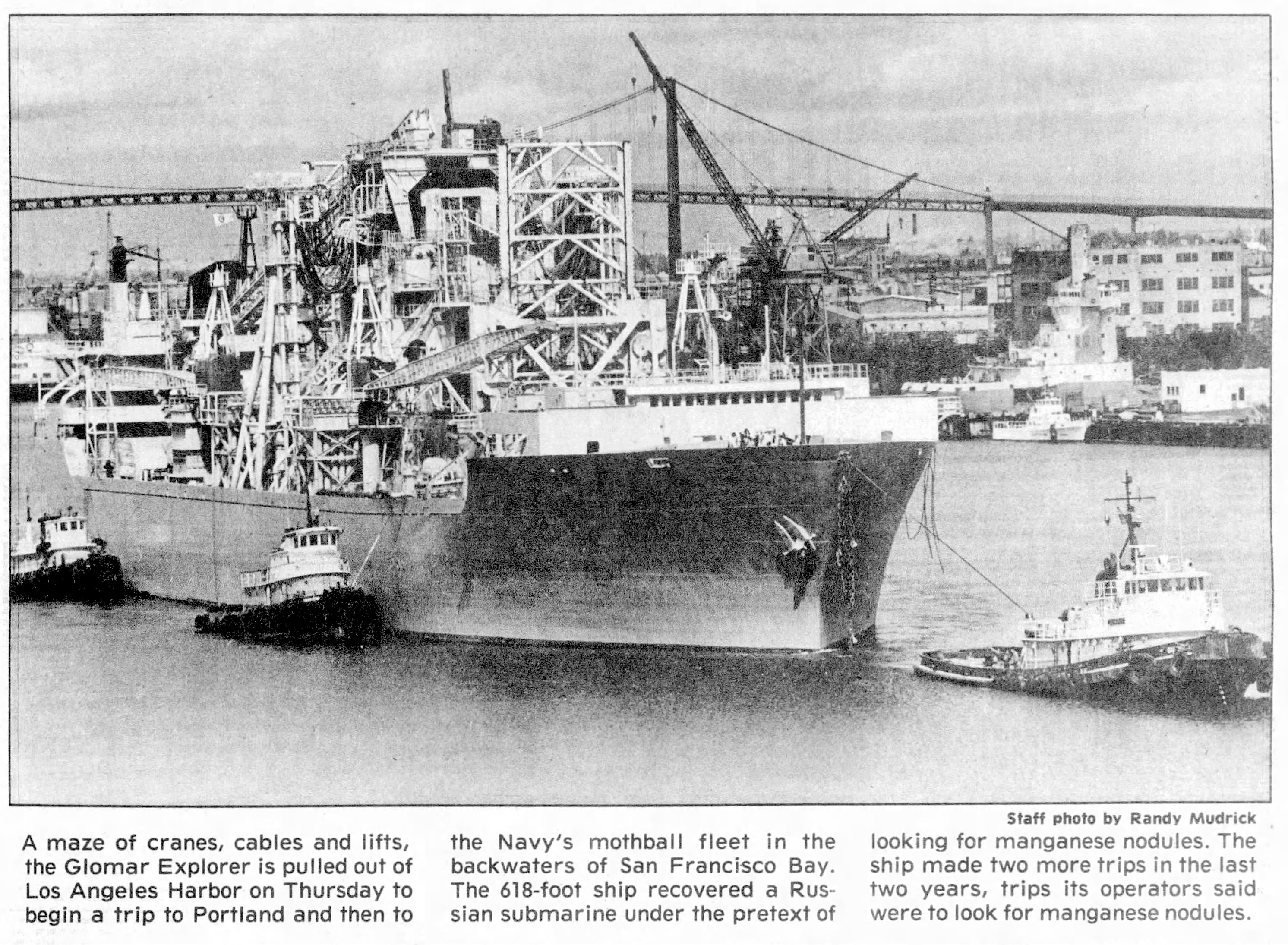
A maze of cranes, cables and lifts, the Glomar Explorer is pulled out of Los Angeles Harbor on Thursday to begin a trip to Portland and then to the Navy’s mothball fleet in the backwaters of San Francisco Bay. The 618-foot ship recovered a Russian submarine under the pretext of looking for manganese nodules. The ship made two more trips in the last two years, trips its operators said were to look for manganese nodules. San Pedro News Pilot, March 7, 1980, Page 1. (Staff photo by Randy Mudrick / San Pedro News Pilot archives)
Show Caption
1 of 6
The Glomar Explorer at sea. Undated U.S. Government photo. (Wikimedia Commons)
The CIA formulated a plan to build a large, powerful ship with a giant submersible claw device capable of clutching the sub’s remains and lifting them to the surface. But such a project would quickly attract the attention of the Soviets, so a cover story had to be concocted.
Enter eccentric genius Howard Hughes. Hughes partnered with Global Marine, a London-based company, to design and build the ship, which was named the Glomar Explorer. The cover story? Hughes announced he would use the ship for a mining operation to scoop up valuable manganese nodules from the deep ocean floor.
Building the massive ship, now officially named the Hughes Glomar Explorer, began in November 1971 at the Sun Shipbuilding yard in Chester, Pennsylvania. It officially launched on Nov. 1, 1972.
The 618 foot-long vessel, with its 116 foot-tall derrick, weighed about 70,000 tons, about 10,000 tons heavier than a typical World War II battleship. It was too large to traverse the Panama Canal, so it had to travel around Cape Horn to get to its California berth, arriving on Sept. 30, 1973.
The spy ship docked at Pier E at the Port of Long Beach, near where Hughes’ famous “Spruce Goose” wooden seaplane was located. Docking it there may have been another attempt to downplay the boat as just another one of Hughes’ fanciful creations.
There was much curiosity about the mysterious ship, but its true mission remained hidden. A San Pedro News Pilot story from Jan. 12, 1974, reported that the ship was preparing to leave port to conduct an undersea manganese mining operation near Nicaragua.
The actual operation began on July 4, 1974, and lasted for two months. Reports on its ultimate outcome vary, but most agree it was a qualified success. The Explorer retrieved a good chunk of the Russian sub – and two nuclear warheads – but lost some key elements, including the ship’s codebook, when part of the section broke off while being lifted up from the ocean floor, according to the CIA’s webpage.
The real purpose of the mission didn’t become public until the Los Angeles Times and New York Times broke the story in 1975. The CIA didn’t declassify its report on Azorian until 2010, when it issued a redacted report that revealed the project’s codename for the first time.
Once the news of the operation went public, Russia assigned ships to patrol the area, making further attempts to scoop up more wreckage from the site impossible. The Explorer returned to its berth.
In September 1975, the Daily Breeze reported that a Soviet spy ship had been planting electronic sensors on the ocean floor off the Palos Verdes Peninsula in an area that the U.S. military was using for underwater weapons testing. The Explorer was sent to those waters to remove the Soviet devices using its lifting mechanism.
With the Explorer’s original mission finished, the question of what to do with the giant ship arose. In early 1976, the U.S. government offered to lease it to private ocean mining operations, but got no immediate takers. The vessel had become something of a “white elephant,” expensive to operate and maintain.
Finally, the decision was made to put the ship in mothballs, and it was sent to the National Defense Reserve Fleet in Suisun Bay near San Francisco. But it would have a second life.
It returned to the Port of Los Angeles in early July 1978 to undergo retrofitting for its planned use in a deep-sea mining venture involving four companies who had leased it from the government.
The retrofitting took place at the Bethlehem Steel Co. shipbuilding yard on Terminal Island at the Port of Los Angeles in San Pedro. For the next 20 years, the Explorer was used in a variety of ocean mining and other such commercial operations. It often returned to San Pedro for maintenance and refittings, even after Bethlehem Steel sold its shipyard to Southwest Marine in 1983.
In 1998, the Explorer was converted into a deep sea oil drilling ship, and operated in that manner until 2015, when its Swiss owner, Transocean Ltd., announced that it would be scrapped.
The ship took its final voyage to Zhousahn, China, in June 2015, where it was dismantled.
Sources: “About Project Azorian,” CIA website. Daily Breeze archives. “5 Things About America’s Daredevil Mission to Salvage a Soviet Nuclear Sub,” by Andrew Moseman, Popular Mechanics website, Aug. 29, 2017. “Inside Project Azorian,” by Capt. Jack G. Newman, U.S. Naval Reserve (retired), U.S. Naval Institute website, December 2025. Los Angeles Times archives. San Pedro News Pilot archives. Wikipedia.