
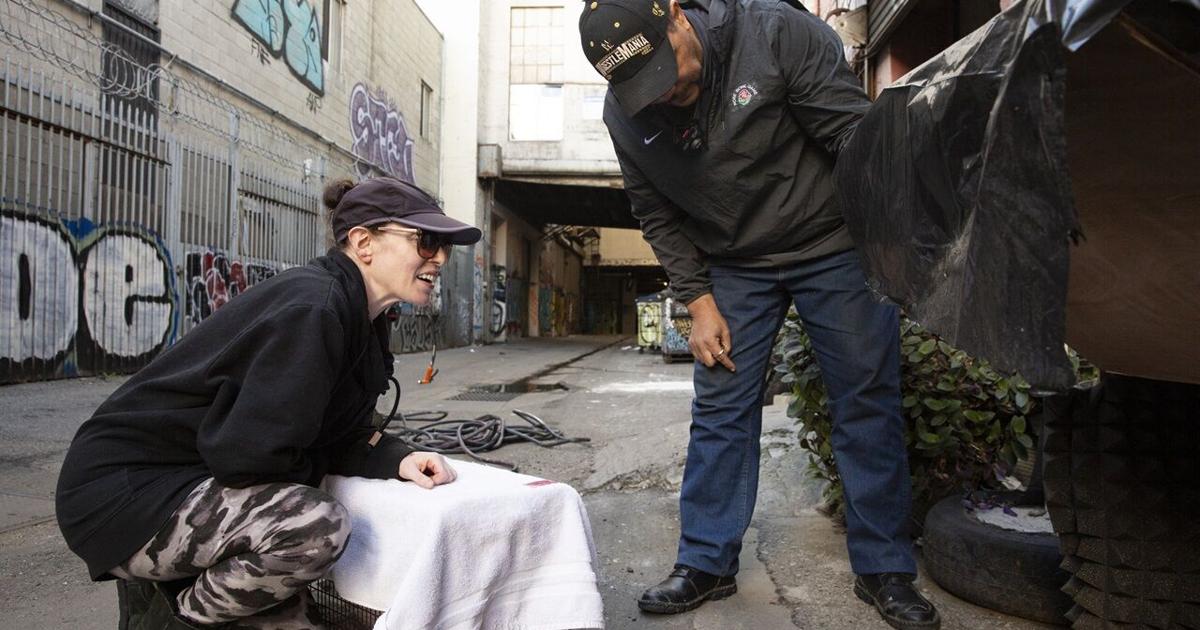
Feeding the cats in the neighborhood is not the problem, according to Jasmine Jones, a longtime DTLA resident and creator of the group DTLA Cats. Everybody leaves food out in the neighborhood. The bigger issue, and the one Jones has been tackling for the past five years, is saving lives through trap-neuter-return (TNR and rescue, reducing shelter intake and euthanasia).
TNR consists of trapping the stray community cats; bringing them to a veterinary clinic to be spayed or neutered, vaccinated and treated for fleas; allowing them to recover safely for a short period of time; and then returning them to the only home they know, which is outdoors.
“It’s the most humane and effective way to reduce the suffering and overpopulation of outdoor cats,” Jones explained. “It prevents endless litters from being born on the streets, reduces fighting and roaming, and helps cats live healthier, safer lives. Los Angeles has one of the largest stray cat populations in the country, and downtown is no exception. This work is urgent, and it’s very local.”
Jones has lived, worked and volunteered in the area for over 20 years.
“I’m currently self employed as a cat sitter,” she shared, “but for the last five years, a major focus of my life has been helping the homeless cats of downtown LA.”
DTLA Cats is a small but dedicated group. Jones was first introduced to the area’s homeless cat population when she started feeding them. Then she got curious about next steps — possibly helping them survive beyond their next meal. She learned about TNR.
“I didn’t even have a vehicle when I started,” shared Jones. “I was taking traps on the bus to the Flower District, where somebody told me there was an alley full of cats. I was renting cars, and people would loan their cars to me. Then eventually I got plugged into the LA rescue community, and I connected with people who were willing to come to Downtown LA and help me trap, and they had the vehicle, and they were transporting them until eventually I bought an SUV about three years ago: an old beater that is the Catmobile.”
Scheduling TNR work can be tricky, and sometimes trapping happens late at night. Despite the obstacles, Jones has attracted more volunteers and securing more volunteer fosters allows the group to rescue more cats.
“We have grown a lot more in the last six to eight months than in the first four years,” Jones said.
“Our goal is to build a Downtown LA community where fewer cats are suffering outside, fewer cats are being born into hardship and fewer cats are being surrendered to the shelter where they might face euthanasia. We want to reduce the number of cats that are entering overcrowded shelters and improve the quality of life for the cats who remain outdoors by ensuring that they have safer colony conditions — basically, they’re not reproducing, and the kittens are not dying of preventable diseases because they don’t have access to vaccines. We’re not trying to take every cat off the street because not every cat is suited or wants to be a house cat. A lot of them are unsocialized, and that’s why they live on the street, but for some that are little kittens or cats that were abandoned, we do try to bring them inside to a foster home first and ultimately into a permanent forever home. Ultimately, the goal is that the need for what we do decreases every year because fewer cats are being born on the streets. We’ll never get all of them, of course, but we are certainly going to try to help as many as we can in the neighborhood.”
Jones’s love of cats goes way back to her childhood. She grew up with them. Some people are just cat people, and she’s always had a soft spot for cats, especially black ones. Her sweet spot for cats has grown deeper from working directly with the cats outside.
“You start seeing each cat as an individual,” she said, “even the ones who are fearful or unsocialized have their own personalities and their own quiet resilience. The more time I spend with them, the more I find them endearing in their own ways.”
It might come as a surprise that a cat person like Jones does not own any cats.
“I’m not set up for permanent cat ownership,” she relayed, “and I’ve been OK with just being a stepping stone in a cat’s journey into a frever home.”
Filing as a nonprofit is a medium-range goal for DTLA Cats. It would also like to establish a mobile neuter clinic. These days, Jones stays busy with TNR and partnering with other rescue organizations to host adoption events, most recently at The Valentino Lounge on Spring Street.
“I didn’t actually go into this wanting to rescue,” Jones explained. “I wanted to fix cats and send them back. But this year, we also started doing a bit of direct adoptions. Eventually maybe we can do that because a lot of the rescues are overwhelmed, so I had a litter of six kittens, and we brought them to an adoption event in December. They got a lot of attention, and eventually they all got placed.”
The city funds much of the TNR work. LA has a budget for about 1,600 cats to be fixed each month, according to Jones, but it’s not enough.
“We want to educate the public about the homeless cat crisis,” she said. “It’s really a result of a lack of free and accessible spay and neuter services, which is why we’ve had all these cats reproducing. The city relies on the goodwill of individual people doing this out of their own pocket. We also try to help the unhoused population because a lot of their cats are living outside. They’re roaming, and they’re getting pregnant or impregnating other cats and contributing to the overpopulation crisis.”
Fortunately, Jones is seeing progress. At her last adoption event, she only had five cats, “which is great.”
“A lot of people were like, ‘Wow, we have cats here. We had no idea’,” Jones said. “We have been able to recruit interested volunteers to help with transport, events and fostering. Another way to help is by donating for vet care, supplies, transport and gas money — that all kind of adds up.”
Find Jasmine on IG at@dtla_cats.