
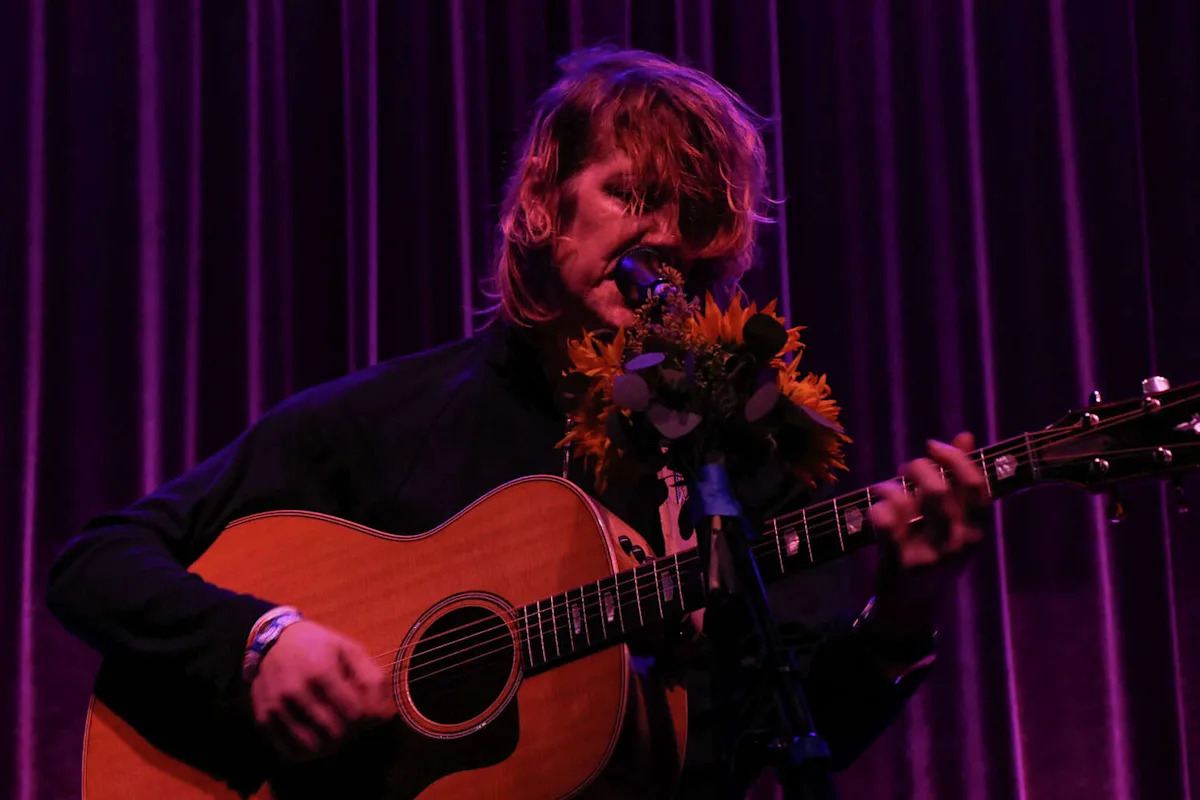
It was clear to everyone at Swedish American Hall that Christopher Owens was a little scared. The frontman of iconic San Francisco garage rock band Girls admitted as much onstage during his Noise Pop Festival show, saying he’d never felt like that before in his life. He looked it too, hiding under a mop of hair, hunched over a well-worn acoustic guitar with no bandmates to fall back on. But in truth, he had nothing to fear – the seated audience of a few hundred people, mesmerized by Owens’ rambling guitar fingerpicking, forgave a clumsy chord here or there as they sat in rapt silence for most of the set. That is until the encore, when in a sweet release, the crowd rushed towards the stage, creating a cathartic dance party.
Although he now lives in New York, Christopher Owens is very much a creature of San Francisco. After growing up with parents who were members of the Children of God religious cult, he escaped and moved to the city in 2007, finding a room in a house at 24th and Barlett in the Mission dubbed “The Dollhouse” after a Dolly Parton poster that hung on the wall. Once in SF, alongside one of his roommates Chet “JR” White, he founded the band Girls, which became poster children for the late aughts garage rock revival. The jangly power-pop glory of singles like “Lust for Life,” which feature Owens’ youthful snarl, paint a picture of a long gone age of San Francisco creative culture.
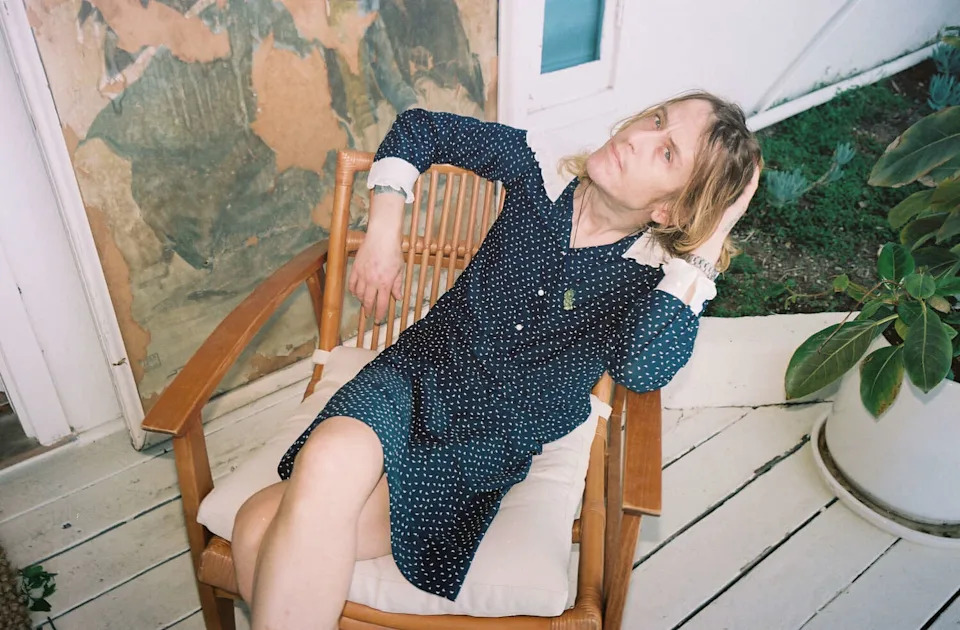
Christopher Owens. (Courtesy of Noise Pop Industries)
“Wind blows the hair on my head, and I can’t remember which bus to take, but I want to get back to the place, where you can see the sun set on the sea,” Owens sung in the Girls song “Life in San Francisco,” which sparked a tender sing-along from the Noise Pop crowd.
The band rocketed to indie rock stardom quickly, with their debut album (cheekily titled “Album”) released on True Panther Sounds receiving a 9.1 from Pitchfork, and landing them in the site’s top 10 albums of the year. The accolades kept coming for their 2011 follow-up, which scored even higher on the P-fork scale at 9.3. However soon thereafter, the band broke up, with Owens citing drug use and burnout on replacing band members as main factors (he counted 21 members over the band’s tenure). Owens released three solo albums between the years 2013 and 2015, and nearly reunited Girls soon thereafter, but his former musical partner White aborted the project. White would go on to die in 2020 at age 40.
The years following the Girls breakup were tumultuous for Owens, in which a 2017 motorcycle crash left his life in chaos, telling SFGATE that it was “hell on earth,” with bouts of homelessness and almost no public performances until the release of his 2024 album “I Wanna Run Barefoot Through Your Hair.”
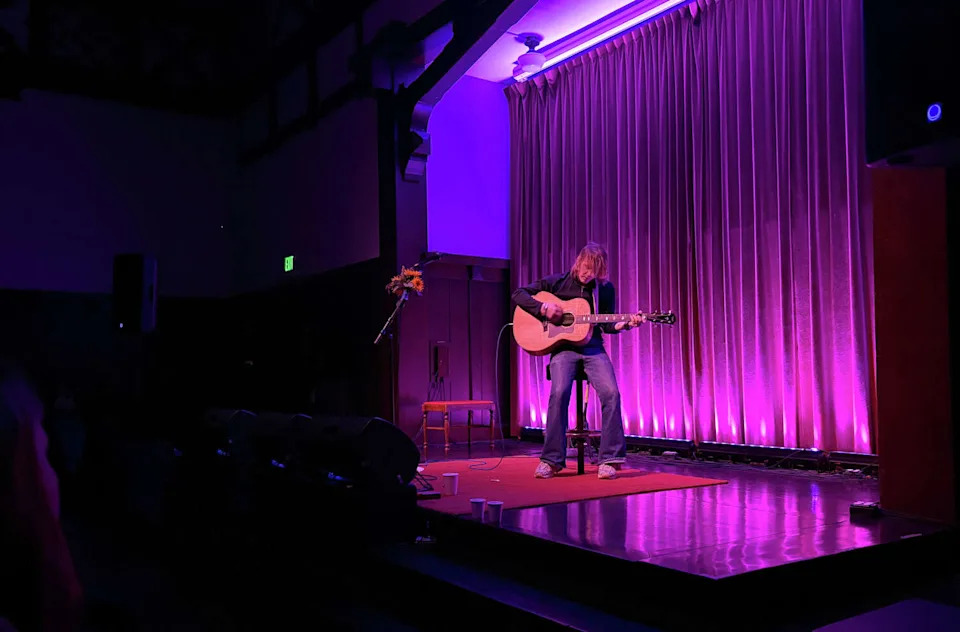
Christopher Owens performs at the Noise Pop Festival in San Francisco at Swedish American Hall on Feb. 20, 2026. (Dan Gentile/SFGATE)
Owens, looking nondescript in a long black T, flared jeans and gym sneakers, took the stage playing an instrumental that showcased the Americana tinge to his guitarwork, with fragile descending melodies and beds of reverb. He next launched into the Girls stomper “Summertime,” with carefree lines about soaking up the sunshine and sleeping in until the afternoon, which hits different 17 years after its release. He followed it with “Life in San Francisco,” then pivoted to a Beach Boys cover of “Disney Girls 1957,” one of several covers that included “Take Me Home, Country Road” and “Leaving on a Jet Plane” by John Denver, plus “All I Have to Do is Dream” by the Everly Brothers, sung as a duet with opener Sedona.
For most of the set, the fear that Owens described led to little audience interaction, his long hair shielding much of his face, taking solace in his instrument, which he wistfully sung about in solo track “This is My Guitar” (“It’s part of me, just like the song I sing”). But once he did decide to address the crowd, he didn’t seem to want to stop talking, sharing his affection for his early days in San Francisco, shouting out landmarks like Glen Park Canyon and Precita Park and reminiscing about walking between house parties before the days of Uber. It was a nostalgic aside, which wasn’t lost on Owens.
“There’s nothing bad about being nostalgic and looking back, if it makes you want to go forward,” he said.
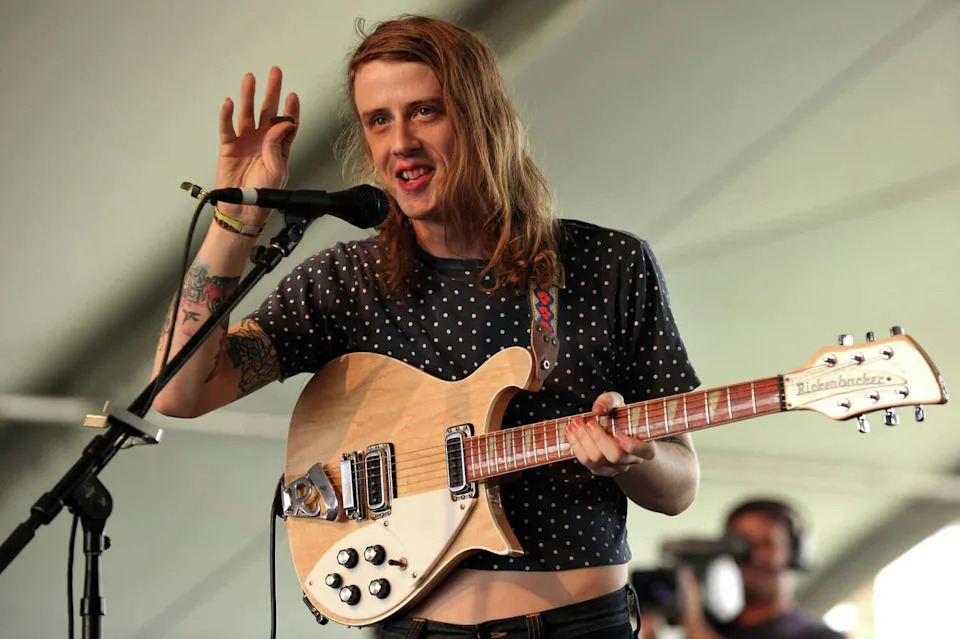
FILE: Musician Christopher Owens of Girls performs during Day 2 of the Coachella Valley Music & Art Festival 2010 held at the Empire Polo Club on April 17, 2010 in Indio, California. (John Shearer/WireImage)
Next came a suite of songs from Owens latest solo album, haunting contrasts to the more freewheeling Girls songs. The emotional high point of the show came just before the encore, when Owens began strumming the stunning closer to his solo album “Do You Need a Friend,” only to be joined by surprised by a second musician playing a piano hiding in a corner offstage. “If you really want to know, I’m barely making it through the days,” he sung, voice soaring over the piano and long washes of reverb.
After about an hour, Owens put his guitar down on the floor and walked offstage to a standing ovation. Given the heart on sleeve sincerity of the set, plus the deer in headlights fear he mentioned, it genuinely seemed unclear whether there’d be an encore. A few fans made their way towards the door, but he quickly returned, launching into Girls’s most popular song, “Lust for Life,” which sparked a full-on dance party as fans ran back towards the stage, everyone now on their feet.
“How I wish I had a suntan, I wish I had a pizza and a bottle of wine, I wish I had a beach house and we could make a big fire every night,” he sung. As the song wrapped, he admitted he’d forgotten a few words, but the crowd was singing so loud it was hard to tell. He followed it with two more Girls songs, “Honey Bunny” and “Big Bad Mean Motherf****r.”
It was clear that all these years later, Owens’ catalog still held up, serving as a musical time capsule of a specific time and place in San Francisco. Although nostalgia for the late aughts doesn’t hold a candle to the Summer of Love, it felt like Owens’ deserved a place on the mantle of SF greats, his contributions to the city’s songbook as meaningful to this crowd as the Dead were to the generations before them. And for all of Owens’ insecurities onstage, it was clear that he was full of gratitude for the legacy of his music.
“I was really happy that we were trying to do something sincere and beautiful that people could sing along to,” he said onstage. “If I die tomorrow, that would be okay, because I did that.”
This article originally published at Fans rush stage during encore from a San Francisco icon returned home.