
The community college system needs to prioritize more than just education.
The topic of abortion is very controversial, and whether or not people agree with it, it should be more widely considered as a health service investment. Especially to a student body that is filled with people of all ages, genders and backgrounds.
Fresno City College is one of the many community colleges that doesn’t provide abortion access.
For how all-inclusive FCC aims to be with sexual and reproductive health providing birth control, STI screenings etc., I think it’s highly dismissive and problematic how the campus, and many others such as Reedley, Clovis and Madera community college don’t provide any medicated resources for an abortion.
It isn’t a matter of limitation on what abortion services they provide. There’s nothing.
This isn’t an issue only within the State Center Community College District as it expands throughout all of California. Community colleges aren’t required to provide these services and it has rightfully led to concerns made by the Student Senate for California Community Colleges for a Community College Reproductive Health Access resolution.
In 2019, California Gov. Gavin Newsom signed into law Senate Bill 24, which requires all California State Universities and University of California campuses, starting and continuing beyond 2023, to provide abortion access under the College Student Right to Access Act.
With this bill, all CSU’s and UC’s were granted $200,000 in state funds to provide “medication abortion readiness.”
The pill comes in two forms, Mifepristone and Misoprosto, which stops the growth of the pregnancy and expels the tissue. While the medication ranges in price depending on the campus, the fact that it’s still accessible to students is a step towards building the sense of security and validation that any school should prioritize for their students.
While these campuses receive significant help from the state of California and their own student health fees, FCC emphasizes “services are provided by Public Health Nurses and are funded by the student health fees,” according to the FCC health services website.
Students have to pay a $21 “Health Fee” each semester.
Although community colleges may not receive the same grants that CSU’s do for Mifepristone and Misoproto pills, there is a sense of obligation the school has to at least acknowledge the scope of needs and crises that students undergo. This could look like advocating for student dollars to go into abortion practices.
I won’t say that FCC or the SCCCD doesn’t prioritize the care for their students at all, there’s just room for improvement. We’re all students in college, and this should be as equal of a priority as it is for other California institutions.
Online, under the health services tab on the FCC website, the list of services related to pregnancy, sex and sexual health, show that FCC offers services related to reproductive health but misses a service that is constantly underserved and limited in actual helpful support when many anti abortion clinics exist and the topic of abortion has been politicized and villainized in some religious communities.
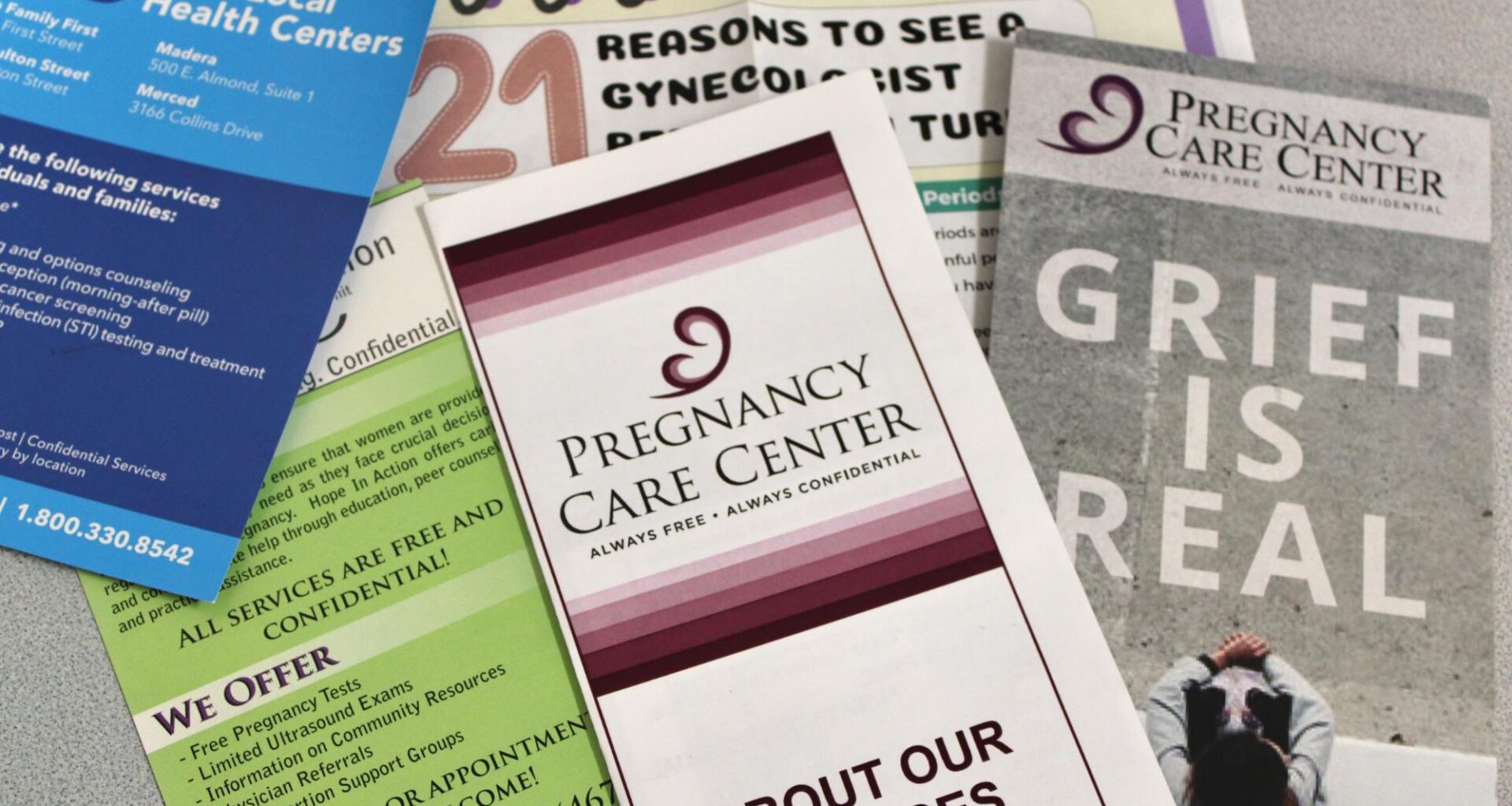
In person, the health services center has a variety of brochures and information regarding mental and physical health care, but in visiting, I was concerned by the minimal information they have on abortion care.
There were brochures from Planned Parenthood, which does provide reproductive care and abortions, but one brochure was from the Pregnancy Care Center in the Tower District particularly stuck out to me. In Fresno, it is labeled as a “Crisis Pregnancy Center,” also known as a fake clinic.
Not many people know about it, but there are many faith-based organizations that provide abortions service information and guidance but try to discourage the option through “deceptive practices.” The Expose Fake Clinic website is founded by Abortion Access Hackathon and Abortion Access Front, working with 60 abortion access, care and support organizations across the country.
I’m not claiming FCC knows about this or even agrees with it, I just think it’s a lack of oversight and there should be extra precaution when it comes to referrals to resources that are so limited and mistrusted.
Under these conditions, it is very possible that students who seek abortion services on their own, with little to no validable direction or guidance, are met with the potential risk of being guilted or pressured out of an abortion.
Because, the truth is many of these clinics will present themselves as a resource supporting the journey to a procedural or medicated abortions but will actually try to convince you out of an abortion through false advertisement of their services and misleading information on the effects of an abortion.
Imagine urgently needing an abortion in an already hostile and judgmental environment surrounding the topic, going into an abortion clinic expecting to receive help and you are told something like this.
“Are you sure you want to kill the unborn child?”
It’s scary.
I worry that if I were ever in this situation, I would feel completely alone and judged.
When the current female-identifying population at FCC since 2024-2025 is more than the male-identifying population, it’s not only critical to meet students where they are, but also consider any potential circumstances that may occur when reproductive health is in need of services, such as abortion.
There could be even more students who would need abortion care when we consider the full proportion of students who have the ability to conceive but may not identify as a woman. This can reflect how much potential there is for these crises to arise and affect students.
I’d argue that it’s telling of the inconsistency when the only reproductive health remotely close to mentioned on our website points to contraceptives preventing pregnancy.
Yes, it’s great that FCC does provide this for people in need of them, but it’s hard for students to fully weigh their options when the closest choice is preventing something that has already happened.
How can we be truly inclusive and equitable to the students who require the privacy and security they might be missing outside of school if we don’t acknowledge one of the most oppressed topics facing reproductive rights?
This is why real advocacy matters. Solutions like abortion care shouldn’t be set aside like it isn’t in the realm of health services or left to outside providers with the assumption that if people need them, they have somewhere to go. It’s disorienting, and not even acknowledging available resources that are trusted is indirectly enabling the ostracism and alienation that surrounds abortion.
No matter how you view the importance of abortion, it’s real and relevant. It does nothing for anyone to bury this under the false safety of birth control.