
California lawmakers this year will consider another proposal that attempts to break up Pacific Gas and Electric Company. State Sen. Scott Wiener, D-San Francisco, introduced a bill on Monday that would specifically change state law to make it easier for cities and counties to take over the utility’s equipment and establish their own public utility company. The proposal comes after homes and businesses in San Francisco were left without power last month and as frustrations persist with the company’s handling of equipment and higher electricity rates. After PG&E was blamed for the state’s deadliest wildfire in Paradise, Wiener filed a proposal that would have required PG&E to turn into a public utility in 2020. That proposal didn’t make it very far at the state Capitol as the company grappled with bankruptcy and lawsuits. Wiener said the bill he filed this year, Senate Bill 875, is a different approach that takes aim at a process that’s overseen by the California Public Utilities Commission.”It’s not just San Francisco, from the entire PG&E territory there is enormous frustration,” Wiener told reporters on the steps of San Francisco City Hall. “This bill says we have an existing process for eminent domain, San Francisco is pursuing that process, let’s make it a fair process and unrig that process and remove the poison pills that PG&E and other utilities have done to give themselves special rights.” “PG&E has had the privilege of serving the residents of Northern and Central California for more than 100 years, and we remain committed to serving them for many years to come,” said PG&E spokesperson Lynsey Paulo in a statement. “We have and continue to make very significant investments in the energy system in San Francisco, including more than $3 billion in the last 20 years. We understand the recent outages in San Francisco impacted our customers, and we remain committed and determined to deliver the safe, reliable, clean and affordable energy that San Franciscans want and deserve every day. Government takeovers of parts of our grid would not make customer energy bills less expensive.” “San Francisco has dramatically underpriced the value of PG&E’s electric system, suggesting that the assets in San Francisco are worth only about $2-$3 billion. Not only is that a lowball amount, but the California Public Utilities Commission (CPUC) has been clear that the City and County of San Francisco (CCSF) would have to pay far more than the value of the assets, which means a takeover will drive customers’ rates up, not lower them,” Paulo said. Gov. Gavin Newsom has not commented on the specific proposal but poured cold water on the idea of breaking up the state’s largest utility earlier this month.”PG&E is a very different company than it was prior to bankruptcy,” Newsom said at a Bloomberg TV event.”Accountability is a persistent issue and needs to be improved, but I’m not convinced that a state that has finally turned the DMV around wants to get in the utility business.” Wiener’s proposal will likely have its first hearing at some point this spring. KCRA 3 Political Director Ashley Zavala reports in-depth coverage of top California politics and policy issues. She is also the host of “California Politics 360.” Get informed each Sunday at 8:30 a.m. on KCRA 3
SACRAMENTO, Calif. —
California lawmakers this year will consider another proposal that attempts to break up Pacific Gas and Electric Company.
State Sen. Scott Wiener, D-San Francisco, introduced a bill on Monday that would specifically change state law to make it easier for cities and counties to take over the utility’s equipment and establish their own public utility company.
The proposal comes after homes and businesses in San Francisco were left without power last month and as frustrations persist with the company’s handling of equipment and higher electricity rates.
After PG&E was blamed for the state’s deadliest wildfire in Paradise, Wiener filed a proposal that would have required PG&E to turn into a public utility in 2020. That proposal didn’t make it very far at the state Capitol as the company grappled with bankruptcy and lawsuits.
Wiener said the bill he filed this year, Senate Bill 875, is a different approach that takes aim at a process that’s overseen by the California Public Utilities Commission.
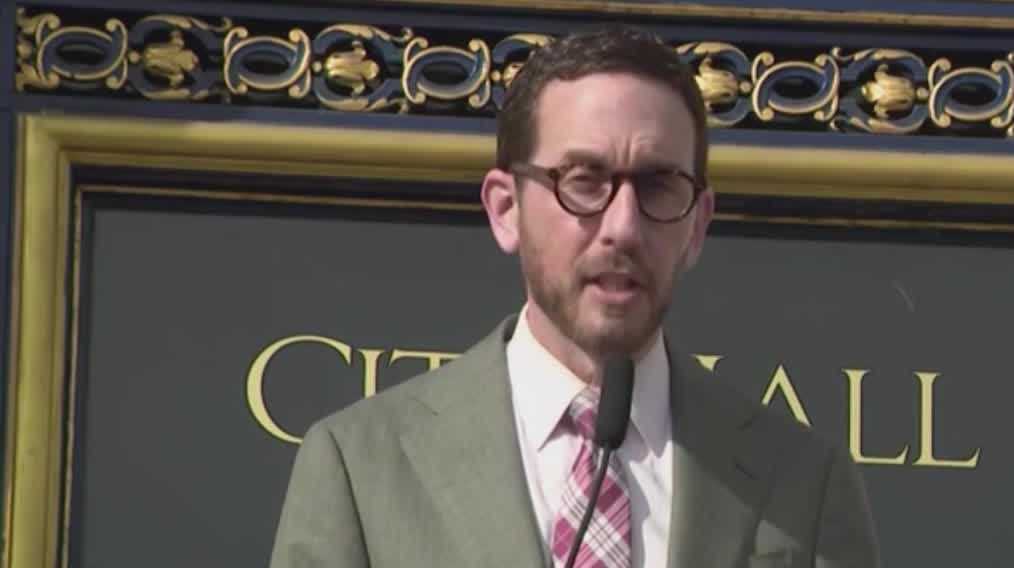
“It’s not just San Francisco, from the entire PG&E territory there is enormous frustration,” Wiener told reporters on the steps of San Francisco City Hall. “This bill says we have an existing process for eminent domain, San Francisco is pursuing that process, let’s make it a fair process and unrig that process and remove the poison pills that PG&E and other utilities have done to give themselves special rights.”
“PG&E has had the privilege of serving the residents of Northern and Central California for more than 100 years, and we remain committed to serving them for many years to come,” said PG&E spokesperson Lynsey Paulo in a statement. “We have and continue to make very significant investments in the energy system in San Francisco, including more than $3 billion in the last 20 years. We understand the recent outages in San Francisco impacted our customers, and we remain committed and determined to deliver the safe, reliable, clean and affordable energy that San Franciscans want and deserve every day. Government takeovers of parts of our grid would not make customer energy bills less expensive.”
“San Francisco has dramatically underpriced the value of PG&E’s electric system, suggesting that the assets in San Francisco are worth only about $2-$3 billion. Not only is that a lowball amount, but the California Public Utilities Commission (CPUC) has been clear that the City and County of San Francisco (CCSF) would have to pay far more than the value of the assets, which means a takeover will drive customers’ rates up, not lower them,” Paulo said.
Gov. Gavin Newsom has not commented on the specific proposal but poured cold water on the idea of breaking up the state’s largest utility earlier this month.
“PG&E is a very different company than it was prior to bankruptcy,” Newsom said at a Bloomberg TV event.
“Accountability is a persistent issue and needs to be improved, but I’m not convinced that a state that has finally turned the DMV around wants to get in the utility business.”
Wiener’s proposal will likely have its first hearing at some point this spring.
KCRA 3 Political Director Ashley Zavala reports in-depth coverage of top California politics and policy issues. She is also the host of “California Politics 360.” Get informed each Sunday at 8:30 a.m. on KCRA 3