
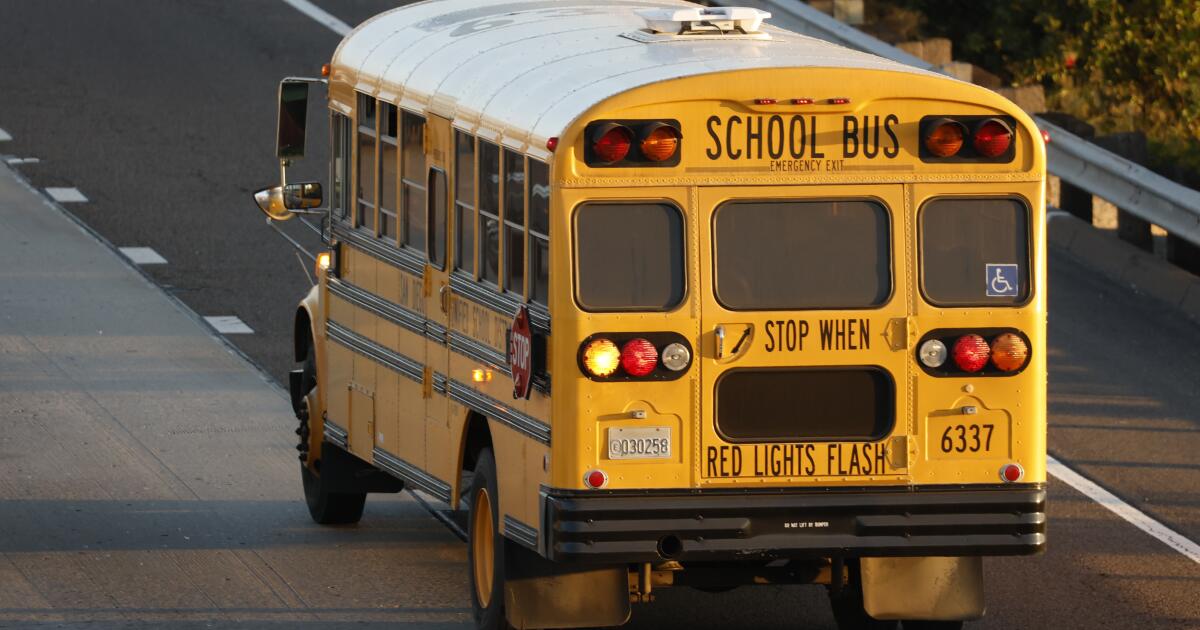
San Diego teachers have canceled a districtwide, one-day strike that was set for Thursday after reaching a new contract agreement that includes district investment in special education staffing and services.
The teacher’s union had protested overcrowded special education classes, inadequate student services and lack of assistance for teachers.
“These issues that the teachers organized around to elevate the importance of support for students with special needs were really critical, especially when we consider that the percentage of students in our district with [Individualized Education Programs] has increased from 13% to 18%,” said San Diego Unified School District Board President Richard Barrera.
It would have been the first time in 30 years that San Diego teachers staged a strike, but the district agreed to address teachers’ demands.
The new contract includes planning time for special education teachers, stipends for over-sized classes and education funds for teachers earning special education credentials. It also includes additional student support services and LGBTQ protections. But a negotiated pay raise won’t take effect until a state funding issue is resolved.
“These negotiations, while at times tense, yielded an outcome that will stabilize our educator workforce and ensure all students are supported in the classroom,” Supt. Fabi Bagula said in a statement.
San Diego Unified officials have recently lobbied lawmakers to increase special education funding and restore $5.6 billion in school funding that Gov. Gavin Newsom wants to withhold in order to balance the state budget. California’s state funding formula is based on an estimate of the next year’s revenues, and Newsom wants to adopt a lower revenue figure, then make up the difference later if more money comes in.
Some other portions of the governor’s proposed budget would add money for schools, but the deferred payment of $5.6 billion would shortchange San Diego by about $85 million, Barrera said.
The district pledged to increase wages by 2.5% for the next two years once state education funding is restored, and to retroactively apply raises. San Diego Unified is the second largest school district in California, with about 95,000 students, second only to Los Angeles Unified. The last San Diego teacher strike was in 1996, when teachers walked out of class for a week over pay and school decision-making.
The San Diego union reached an agreement just as San Francisco teachers concluded a four-day strike last week. The San Francisco action included picket lines, rallies and negotiations and ended with a $183-million deal that provided raises and fully funded healthcare.
The one-day San Diego strike hastened negotiations over special education demands, Barrera said.
The San Diego agreement will add intervention counselors to support social and emotional needs of all students. It will introduce stronger support for students with Individual Education Programs, the legally binding documents that spell out services for special education students. And it adds five days of non-classroom time for education specialists to focus on case management, complete assessments and work with families.
San Diego Unified also aims to retain education specialists and fill vacancies by offering better pay and reimbursing costs for teachers who earn special education credentials. And it agreed to maintain full health benefits for employees, spouses and dependents.
The contract also calls for establishing an immigrant student legal center at one campus, confirming that students and staff have the right to be called by their preferred names and pronouns, and creating gender-neutral bathrooms in schools.
Despite the tentative agreement with the district, the union will keep pressing for more investment in education.
“We have to advocate with district leaders for the state to fund schools in an equitable manner in the wealthiest state in the country,” San Diego Education Assn. President Kyle Weinberg said.
Teachers rallied last month in advance of the strike to press their demands for special education funding. San Diego Unified sets special education caseloads at 20 students to one teacher, below the state standard of 28 to one, Weinberg said.
But teachers said they often have class sizes that exceed standards and include students of widely varied cognitive levels, which makes it hard to establish lesson plans and instruction methods that fit all students. Some classes include students with behavioral problems and there aren’t enough aids to help manage the workload, they said.
The new agreement provides teachers extra pay for additional students above the 20-to-1 caseload, with the stipend increasing the more students are over limits, Barrera said.
“One of the things the overage stipend does is create a financial incentive for the district to hire more special education teachers,” he said.
Brennan writes for CalMatters.