
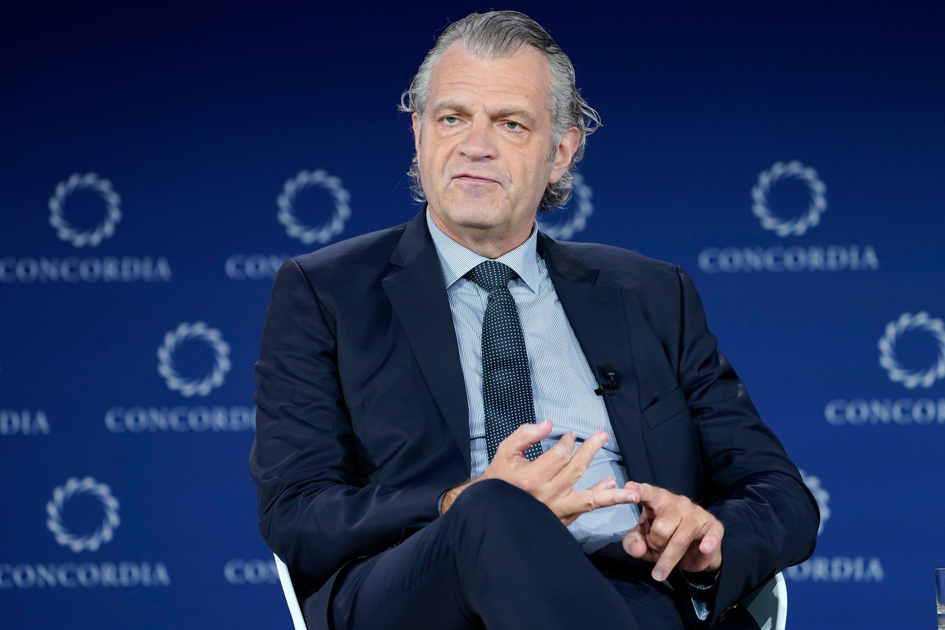
In January 2025, Daniel Diermeier, the chancellor of Vanderbilt University, attended a dinner in the South Bay with Ned Segal, the former Twitter executive who now serves as Mayor Daniel Lurie’s chief of housing and economic development. Vanderbilt had already announced plans to expand to three satellite campuses across the country. And that evening, Diermeier and Segal teased the possibility of San Francisco being the next stop for what some call “the Harvard of the South.”
One year later, California College of the Arts announced that it would close at the end of the 2026-27 school year and would hand its campus to Vanderbilt for an undisclosed sum.
The deal comes at a turning point for higher education in the U.S. In 2023, 40% of private colleges ended the year in a deficit, twice the rate of public universities, according to Robert Kelchen, head of educational leadership and policy studies at the University of Tennessee, Knoxville. At this moment of precarity, Diermeier is determined that his university will evolve rather than be relegated to the past. Since he took leadership of Vanderbilt in 2019, the university has gone on an expansion tear.
In 2023, Vanderbilt announced plans for a graduate campus in West Palm Beach, Florida; in 2025, it launched an institute in Chattanooga, Tennessee, focused on quantum computing; and a New York City campus is scheduled to open this year. Now, Vanderbilt has come west to occupy CCA’s campus in Potrero Hill. But unlike New York’s finance industry or Chattanooga’s crush of fiber optic cable, San Francisco’s ailing art scene has been in a free fall over the last year — from gallery closures to budget deficits at major institutions that have meant layoffs at best and, at worst, the shuttering of entire museums. The artificial intelligence industry, however, is alive and well.
The Standard met with Diermeier on Monday on the Embarcadero to discuss Vanderbilt’s intentions and goals in San Francisco. For the chancellor, the university’s newest venture represents a return of sorts. In the mid-1990s, he lived in San Francisco as a faculty member at Stanford University’s business school, during the early days of the web. He has kept mum on the finances behind the deal to acquire CCA, declining to say whether Vanderbilt took on the massive debt load that helped sink the art school’s status as an independent institution. But he is adamant that Vanderbilt will establish a healthy arts program, even if what that looks like is currently unclear.
This interview has been edited for length and clarity.
What can you say about the finances of CCA prior to the acquisition?
We don’t have a lot of understanding of exactly what happened at CCA over the years. There were serious financial developments that they were experiencing, and they made the decision that they were not sustainable in the long run. In late summer of last year is when our conversations really started. We basically said, “Look, we’re going to be a partner. We’re going to help you in this process of winding down the operations. And we’ll support you with that.” Then our responsibility is to honor the legacy and make sure that we provide a world-class arts education for the city of San Francisco.
You were originally looking at the Chronicle building in SoMa. Why did you go with CCA for the campus?
We wanted to be in San Francisco and looked at various options. The Chronicle building was exciting: It was the right size, and it had a great history. The challenge with the Chronicle building is that we also have to have student housing, and we would have to have a solution for that. It was more complicated, it would have been more expensive, and it would have taken longer. Once the discussion with CCA began, it was pretty clear that this was better.
We wanted something in the intersection between innovation and the arts. From our point of view, it was wonderful that we could build on CCA’s tradition in that way.
How much longer would it have taken?
We would have to find a solution for student housing, which means that we probably would have to build something. We had very initial discussions about what that would look like, but that’s a three-year project at least. It basically would have looked like 2029-30 as opening days. They were great partners. We really liked working with them. But when you looked at the details, it was much more complicated.
Was the mayor’s office advocating for one option?
They would have liked it if we had taken the Chronicle building, for obvious reasons, but they were very supportive. There was no arm-twisting or anything like that.
Obviously, the revitalization of downtown is super important, and we looked at that very seriously.
Vanderbilt is expanding across the country. What’s the theory behind that model?
If we think about the future of great universities, we have this old model, where you’re in this kind of bucolic space and you’re sitting under a tree reading books. That’s fine. But modern universities are thriving in particular when they’re deeply connected with the ecosystem and the community around them. That has accelerated in the last 10 to 15 years.
So we know how much universities can benefit the community, but it goes the other way around. Where you are matters. For example, if you want to have a world-class film school, it’s better if it’s in New York or in L.A., right? I lived in San Francisco from ’94 to ’97, but I was faculty at Stanford when the internet economy was born. It was amazing to see the interaction and intersection and permeability between the valley and the university. Magic was created. There are certain things that we can do fantastically well in Nashville. We’re the healthcare management capital. We do a lot of things in mobility, entertainment, and music, but not every city can have everything.
When we looked at New York, we wanted to be in a global city that allows our faculty and our students to be deeply connected with industries that just are not as strong in Nashville — for example, media or finance. In Chattanooga, we’re building a quantum campus, because they have the best fiber optics network in the country.
San Francisco is a different idea. San Francisco is the capital of innovation and a great arts community.
Both of these things are super interesting to us, to be in the capital of innovation, and to be in a place where there’s a thriving artist community, and then to explore also the interconnection between the two of them. No other place in the world has that.
Some universities, when they think about having a second location, they think, “We’re doing something great here, and now we’re going to do it over there as well.” like Wharton with Wharton West. It’s not what we’re doing. We’re trying to ask ourselves, what do we want to create that hasn’t been created, and that requires the strength of the place.
What are the priorities of Vanderbilt’s programming in San Francisco? Stewarding the legacy of an art school or building on our AI boom?
The first thing is having an idea of what we want to do. That’s where we were last year when we said we wanted to do something in San Francisco. We said, “It’s going to be something in innovation, something in the arts.” Then you look for whether this is even feasible, we looked at other places, but it wasn’t feasible.
You have to reach an agreement, which includes details and legal stuff, and these have to be confidential, for obvious reasons. That’s the phase that ended in January. During this phase, it’s not possible to have broad conversations with people, because you need to focus on getting the agreement done, and every party wants to maintain confidentiality.
The next phase is, what exactly does this mean? Now our faculty play a role, and now we talk to people in the community, and you see, and because now you’re learning, what is the art community here? What are the needs? How do people in the innovation community think? What’s the support there? What ideas do we have?
That’s super exciting, but that’s going to take a little while until we have this fully conceptualized. We’re very comfortable of having this polarity in our head of, OK, there’s ceramics and AI, and how do these things speak to each other?
We’re a little in this phase where we’re trying to think through exactly what we want to do.
Was the AI boom a driver in Vanderbilt’s decision to come to San Francisco?
The AI boom is the most recent manifestation of the innovative capacity of San Francisco, and of course, it’s the most dramatic. This is now the place where most of the AI activity in the world is happening. It’s staggering. AI is a humongously important thing. But we have to think in 100-year terms. We’re betting that this will be a place where, 50 years from now, innovative people want to be, creative people want to be, artists want to be. They want to invent the future, and that’s what we’re betting on. So AI is great, and we obviously want to be super connected with that. But the way we’re thinking about it is, what are the characteristics of San Francisco that will work for this vision decades ahead?
Does Vanderbilt intend to keep any of the CCA staff?
Once we have a clear idea of what the structure of this thing is, we’re going to talk to all the staff members and anybody who wants to have a conversation with us.
We know how great the work of the people has been. We know the legacy, we know there’s a tremendous amount of talent there, we also know the facilities, and we just need to go through a process of learning exactly what we need here and there. We will absolutely have conversations with people to say, look, this is what we’re trying to do. Do you want to join us? We just don’t know exactly what that looks like.