
Every day, thousands of students pass by “the wall.” A simple concrete structure in front of the Golden Bear Café, a few feet high and roughly 50 feet long, the wall appears plain and unassuming — yet it carries a rich legacy today during the 100th anniversary of Black History Month.
For more than 50 years, the wall has served as an unofficial meeting place for UC Berkeley’s Black community. The tradition dates back to the late 1960s, when Black students began meeting by the wall for protests.
Those protests include the third world Liberation Front, or twLF, strike on campus, a key moment in the history of Black student activism that led to the establishment of the UC Berkeley Ethnic Studies Department. UC Berkeley students chose to fashion the first two letters in “twLF” in lowercase in order to symbolize the marginalization of “Third World” countries.
Calls for a Black student program began in 1968 from a small group of Black students, who constituted just 1% of the student body, according to the self-guided Black history walking tour by Black Lives at Cal.
Campus students took inspiration from students at San Francisco State University. At SFSU, students had formed the Third World Liberation Front, organizing an official strike and presenting 10 demands to the SFSU administration, including the creation of a Black studies department.
Motivated by the actions of SFSU students, campus students also formed the Afro-American Studies Union. In the fall of 1968, the AASU submitted a petition for a Black studies department. Although campus administration established the department, it did not meet the demands of the AASU, according to the twLF website.
Thus, in January 1969, the twLF initiated a strike and presented five demands to the administration, including the creation of an autonomous Third World College with people of color in positions of authority. Students participated in the strike through various forms of protest, such as rallies, sit-ins and class boycotts.
The administration’s response included violent attacks and arrests of students by law enforcement. Yet as support grew from students, faculty, staff and community organizations, the movement successfully pressured the administration to participate in negotiations.
Ultimately, campus administration agreed to some of the twLF’s demands, including the establishment of the ethnic studies department that included Afro-American studies, Chicano studies, Asian American studies and Native American studies programs.
The Afro-American Studies program, which has since been renamed to African American and African Diaspora Studies, began appointing new Black faculty members in the 1973-74 academic year. These faculty included professor Barbara Christian, who later became the first Black woman to be granted tenure at UC Berkeley and serve as an Academic Senate member.
While Black students engaged in activism on campus in the 1960s, Black alumni were fighting for civil rights off campus.
Daniella Lake, a UC Berkeley alumna who co-organized the self-guided Black History Walking Tour run by Black Lives at Cal, remarked that many Black campus alumni have gone on to become notable figures across California.
“So many of the Black trailblazers we mentioned in the tour are also trailblazers in the state of California,” Lake said.
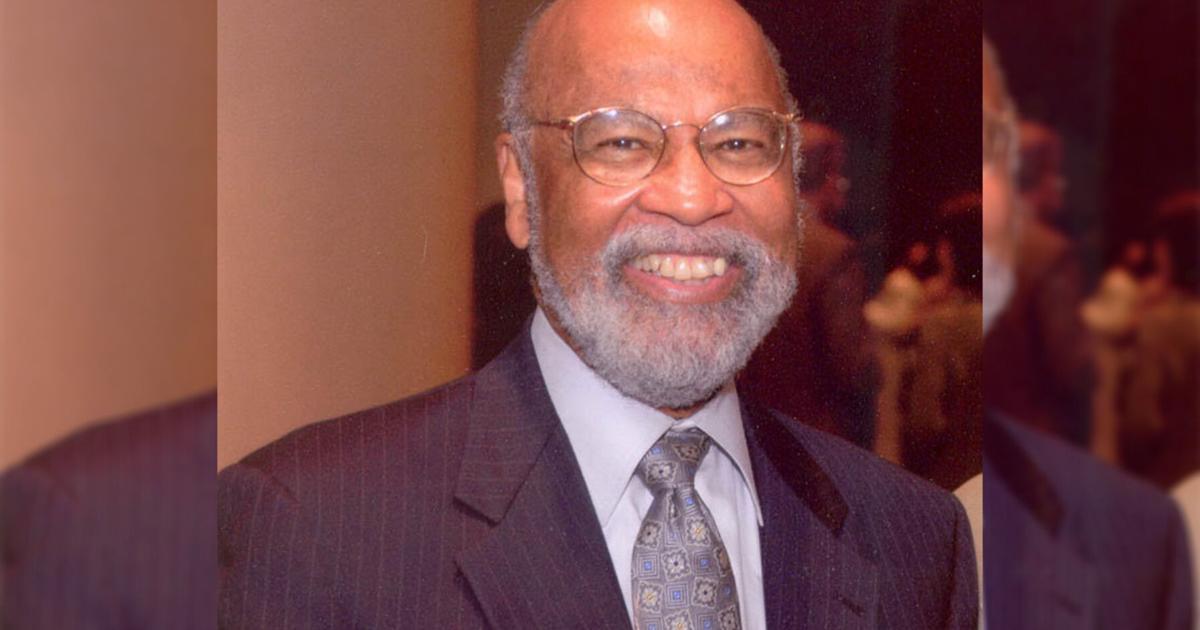
One such alumnus is Thelton Henderson, who attended UC Berkeley as both an undergraduate and law student, graduating from the UC Berkeley School of Law in 1962 as one of two Black students in his class.
Henderson became the first Black attorney in the Civil Rights Division of the U.S. Department of Justice, where he worked with civil rights leaders such as the Rev. Martin Luther King, Jr. to protect voter rights in the Deep South.
Henderson later served as a federal judge and made a number of major decisions, such as protecting dolphins from the tuna industry and ruling in favor of marriage equality for LGBTQ+ people — a decision the Ninth Circuit Court of Appeals reversed before the Supreme Court legalized same-sex marriage 28 years later.
In 1996, Henderson ruled to strike down Proposition 209, the voter-approved ban on affirmative action. His ruling was later reversed, and Prop. 209 continues to be in effect today, but Henderson said he remains “proud” of his ruling, despite the backlash he received for it.
Black enrollment at UC Berkeley fell after Prop. 209 and has never recovered. Yet Henderson, who most recently served as a visiting professor at Berkeley Law, remains optimistic about the future of civil rights and social justice.
“Martin Luther King … famously said the civil rights movement is one of progress where you take two steps forward, and then you take a step backward,” Henderson said. “The Trump presidency has been so extraordinary, Dr. King would probably admit that we’ve probably taken two steps backward instead of one, (but) there will come a time when we’ll begin taking those steps forward again.”