
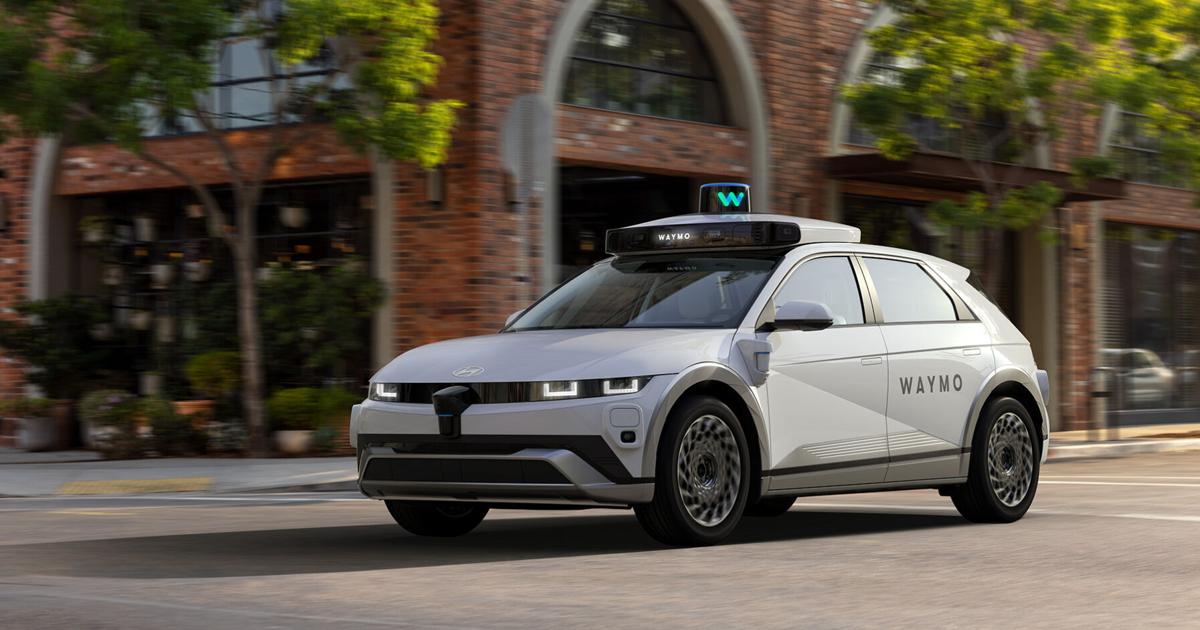
In San Francisco, a certain sight has become more familiar. As the Salesforce tower, a monument exalting the tech industry, glints in the sunlight, and a billboard towering overhead asks, “Are your APIs ready for AI agents?”, a Waymo zips by to complete the grotesque technological menagerie.
Waymo is a corporation that represents the excesses of the tech industry in our cultural imaginary like no other. The self-driving car has long been a herald of the technological future. It is fitting, perhaps, that one of their cars recently struck and killed a cat beloved by its neighbors at a decades-old store. The new destroys the old, convenience destroys community and automation destroys the alive and tactile.
Recently, Berkeley was approved for the “testing and deployment” of Waymo’s driverless vehicles by California’s Department of Motor Vehicles. Imagine the already gridlocked Durant Street beset by a dozen self-driving vehicles idling next to Tap Haus. Just as it has in San Francisco and Los Angeles, Waymo will fundamentally reshape our city, and humans are not in the driver’s seat.
More insidiously, Waymo’s expansion into Berkeley implies an expansion of the city’s surveillance and security apparatuses. Waymo’s “5th-generation” vehicles have 29 external cameras constantly recording the city around them. As one WIRED reporter noted, it is unclear where this data is stored and for how long.
What is clear, however, is that this data is in some capacity circulatable. Waymo frequently receives police requests for footage from its vehicles. In at least one instance, this has involved requests related to crimes and events completely unrelated to the operation of the vehicle.
This is deeply troubling. A private corporation, unaccountable to the interests of residents, is storing massive troves of data obtained from driving around our cities. Its formal privacy policy states that it shares user data to comply with law enforcement requests. Cities that Waymo operates in, then, are transmuted into vast networks of public and private surveillance, which we know little to nothing about.
While Waymo and its mobile surveillance devices are perhaps the most glaring examples of this phenomenon, they are part and parcel with a broader trend toward the securitization of public space. Consider the Super Bowl ad for Ring, which promised that its network of doorbell cameras could be turned on to find lost pets. The ad displayed a graphic showing all of these cameras turning on at once, scanning the city to look for a particular animal.
It does not stretch the imagination to think this could and will be used for police investigations — or worse. Indeed, Berkeley recently postponed a vote on an expanded contract with Flock Safety, a corporation that provides automated license plate reading and video surveillance for police through cameras installed throughout a city. The city already has 52 such cameras installed; the postponement seemed to pacify dissent without making meaningful concessions to concerned citizens.
For anyone worried about the rise of privatized or law enforcement power, the mere fact that this data is being collected and stored is dangerous. All aspects of life in the public sphere are increasingly subject to monitoring. State and corporate power become totalizing and all-encompassing: You must comply and behave, for you are always being watched.
Waymo automates the decision to surrender control over our image and activity. You don’t even have to be a Waymo user to be subject to Waymo’s gaze. We perform the same fundamental trade we’ve become accustomed to in a technological era, swapping privacy and agency for a small amount of convenience.
Waymo advocates, such as San Francisco Mayor Daniel Lurie, claim the technology is an economic revitalizer. They point to the capital generated by Waymo and the value of the service it provides. Implicit in these arguments seems to be a sense of inevitability — adopt the new technology or be left behind — that has conditioned much of the area’s approach to technological change.
The actual benefits are murkier. Waymo generates plenty of capital for its parent company, Google, though it’s unclear whether tech capital meaningfully benefits most Bay Area residents. This is especially true for Uber and Lyft drivers. Waymo’s product is the same as other ridehailing apps, but with one less person employed; the already precarious position of gig workers will be worsened yet again.
Furthermore, Waymo comes at the cost of access to and investment in reliable public transit. San Francisco recently adopted a policy allowing Waymos in its car-free zone on Market Street, increasing the clog and traffic that prevents buses from operating smoothly. While we let unrestrained Waymos roam our cities, our public transit networks languish under a lack of funding or administrative support. Trading one form of car dependency for another is not the answer to our city’s transit problem.
This is especially true given that Waymos are, themselves, expensive. On average, Waymos are five to six dollars more than Lyft or Uber rides. By eliminating jobs for drivers, funneling capital to the rich and replacing existing modes of transit for exclusive and expensive rides, the corporation’s predominance creates a new set of winners—tech corporations and the ultra-rich — and a new set of losers: the rest of us.
While the DMV is set on allowing Waymos in Berkeley, the decision is not final. Expanding Waymo requires approval from the California Public Utilities Commission, which has yet to sign off on the proposal. The inevitability of new technology is always a spurious claim; if we did not allow these cars to operate, the advent of these cars would not be inevitable.
Should the change be approved, the city is not powerless and should act to protect citizens from surveillance and drivers from automation. The City Council must pass a protective policy banning the operation of autonomous vehicles in Berkeley. Anything less gambles the future of our city on the goodwill of cost-cutting technology oligarchs who share autonomously collected video with the cops. It’s a bad bet.