
The Abridged version:
Decreasing enrollment is affecting several schools and districts across the Sacramento region. But private Catholic schools face the added hurdle of asking families to pay rising tuition costs.
The shrinking student bodies have led to a shakeup in the parochial landscape. Most recently, the Diocese of Sacramento announced the consolidation of three South Sacramento schools.
Last fall, historically all-boys institution Jesuit High School made the move to start welcoming female students. The decision was motivated in part by dropping registration numbers.
Catholic schools in the Sacramento area are contending with a woe that plagues public and private schools alike, both here and nationwide — fewer students.
Shrinking student bodies are, in part, a byproduct of declining birth rates, many educators have said.
But Catholic school leaders add that they have an extra complication — the cost of tuition. Some families who might want to send their child to a private Christian campus simply can’t afford it amid a rising cost of living.
Other administrators cited competition from public schools, where brawny athletic programs or impressive career courses capture student interest.
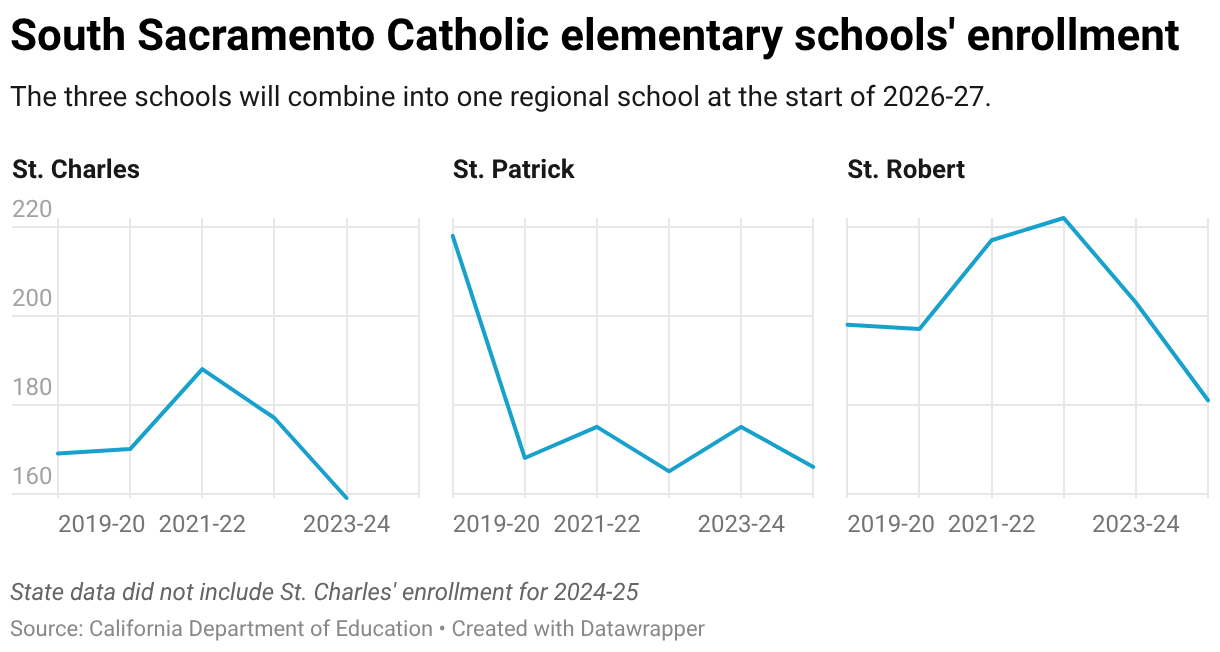
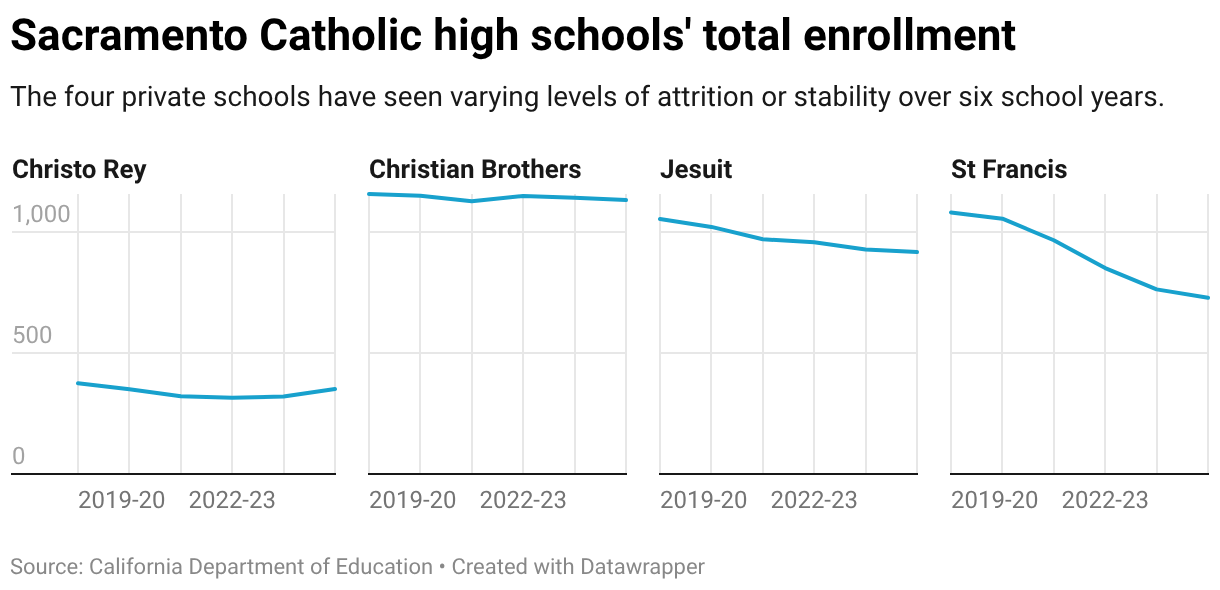
Data from the California Department of Education shows several Sacramento Catholic schools with anywhere from slight to sharp drops in enrollment between the 2019-20 and 2024-25 school years.
Sign Up for the Morning Newsletter
The Abridged morning newsletter lands in your inbox every weekday morning with the latest news from the Sacramento region.
Some schools saw a brief boost around the 2020-21 and 2021-22 years, as private institutions were often quicker to return to in-person learning compared to public districts. That relief was largely fleeting, though, as most Catholic school enrollments have resumed their decline.
Educators said such patterns explain the upheaval in the local parochial education landscape, from longstanding identity changes to controversial school closures.
Three schools become one
Bishop Jaime Soto, head of the Diocese of Sacramento, announced in January his decision to consolidate three elementary schools, closing two campuses in the process. Representatives from the local Catholic governing body then made the rounds at each of the affected schools, addressing crowds at a series of community meetings.
Diocese leaders defended the consolidation as the unfortunate result of declining enrollment plus rising costs of education.
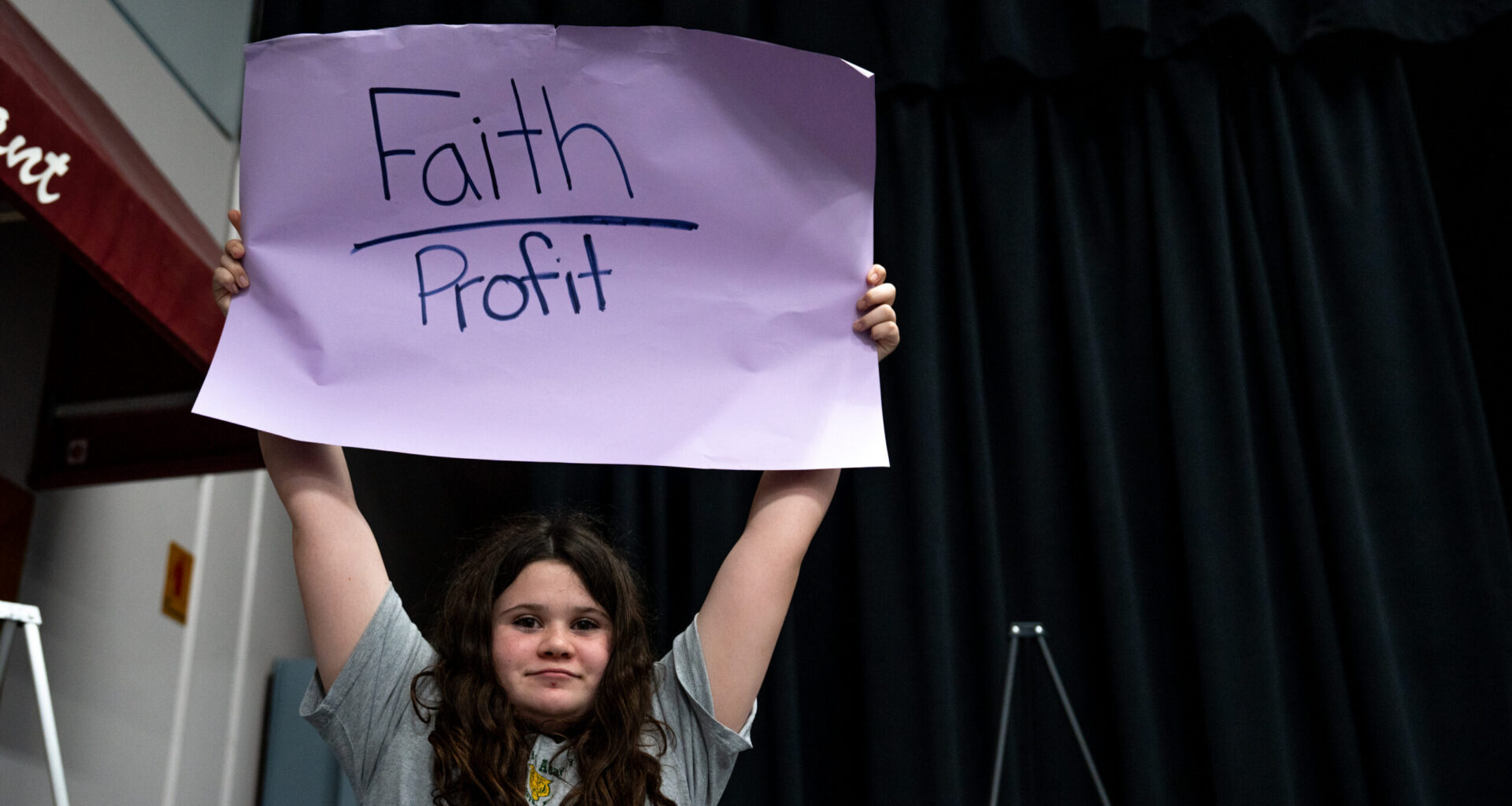
“It’s a math equation,” Tosha Tillotson, associate superintendent for the diocese, said during one of the forums. “We have to have income at schools in order to be able to keep the lights on, in order to pay our teachers.”
A new regional school will open in August on what is currently the St. Robert School grounds in Hollywood Park. The yet-to-be-named institution will combine St. Robert’s population with that of St. Patrick Academy and St. Charles Borromeo School.
 St. Robert Catholic School welcome sign on Feb. 12, 2026. (Denis Akbari)
Enough room?
St. Patrick parents have been outspoken since the decision became public.
Many said they feel abandoned, explaining that while they understand urgent enrollment challenges, they do not understand why their campus faces closure.
A spokesperson for the diocese pointed to a 45% drop in registration at St. Patrick since a peak of 322 students in 2015-16. State data show that since 2020-21 school year, the TK-8 school has stayed between 165 and 175 students.
St. Robert, meanwhile, hit its peak of a little over 200 students in 2021-22 and was home to about 180 as of 2024-25.
Diocese staff have said they are anticipating around 300 students at the new school, adding that the facilities can hold up to 350.
There are more than 400 kids currently at St. Robert, St. Patrick and St. Charles.
‘Classism’
Marcos Arriaga, a devout Catholic and St. Patrick parent, said he is worried South Sacramento families have been disregarded in the process.
“I think there’s definitely some classism there,” Arriaga said. “I just can’t grasp my head around, ‘why are we closing down the Catholic schools in South Sacramento?’”
Sending his daughter to the consolidated campus in Hollywood Park next fall, he said, would feel too much like surrender.
“I equate putting my daughter here as me waving the white flag,” Arriaga said in early February, while standing outside the St. Robert gymnasium.
He is weighing alternative options, he said, including visits to other prospective Catholic schools.
“But then at the end of the day, every Catholic school you go to right now, they’re really impacted,” Arriaga said.
Tuition costs may force families out
Arriaga’s could be one of many families who choose to leave before the new facility opens. Others, he and fellow St. Patrick parents speculated, may opt to return to public school, either out of frustration with the diocese or because of budget.
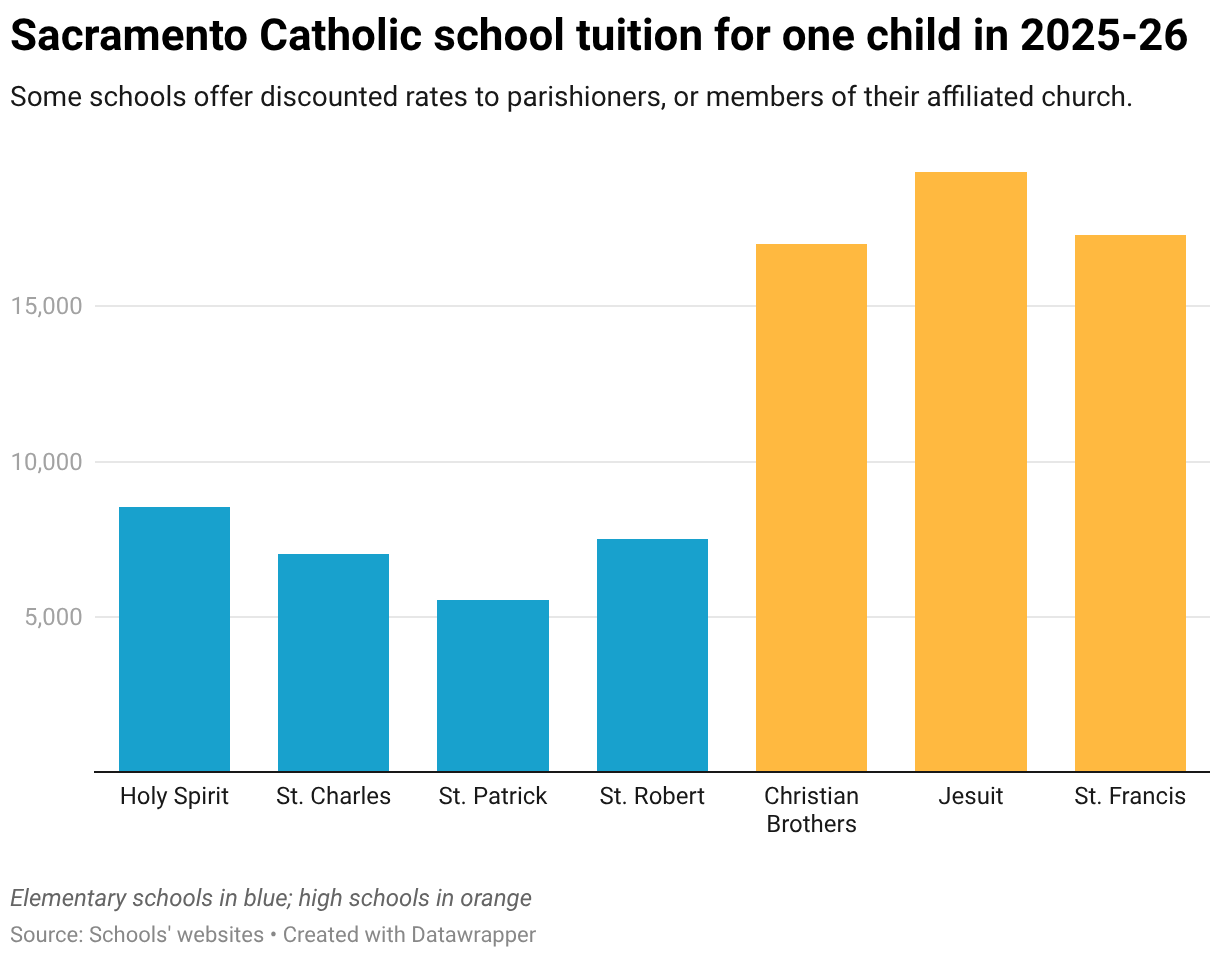
According to the three schools’ websites, St. Patrick has the lowest annual tuition, starting at $5,551 for one student this school year. Tuition was closer to $7,000 for St. Charles and $7,500 for St. Robert in 2025-26, for non-church members.
The diocese plans to announce tuition costs for the new school in mid-March. But staff hinted during a community meeting that the number could fall somewhere between St. Patrick and St. Robert’s current rates.
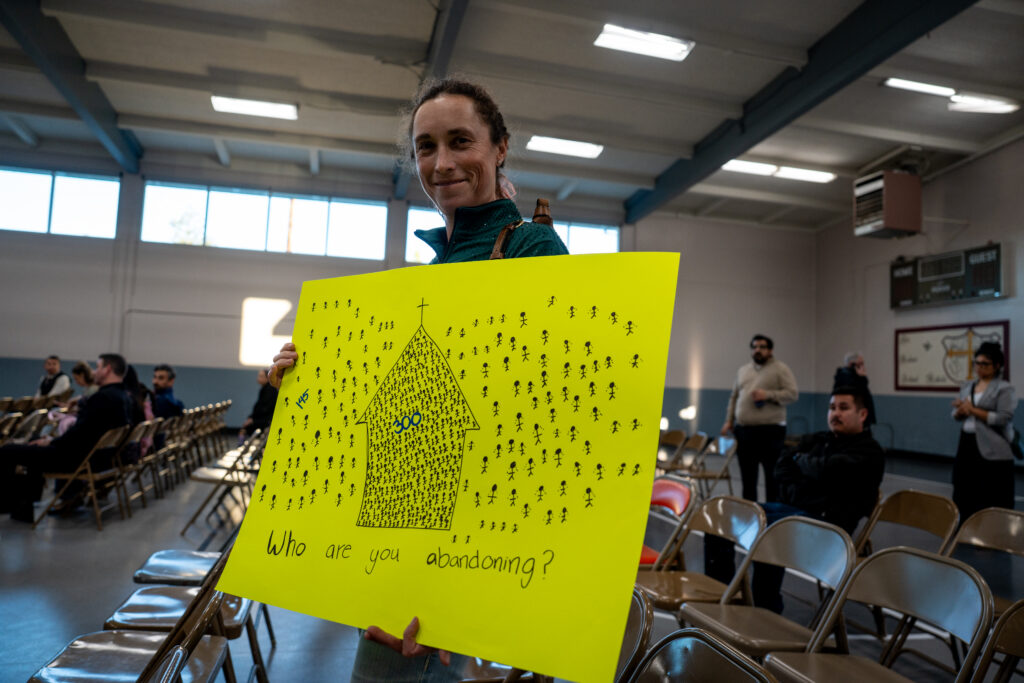 Hope Janelle Jones, St. Patrick Academy parent, holding a sign at the merger meeting at St. Robert Catholic School on Feb. 12, 2026. (Denis Akbari)
Cash-strapped diocese
For Catholic schools across the country, competition largely comes from traditional public or charter schools, according to Sister Dale McDonald, vice president of public policy for the National Catholic Educational Association. “It’s kind of hard to compete with free.”
Most of the parochial institutions offer financial assistance. While schools often have their own fundraising efforts that go toward scholarships, many dioceses will also contribute, Dale said.
But, she said, “those (subsidies) have been shrinking, shrinking, shrinking through the sex abuse crisis.”
Around 40 dioceses in the U.S. — including the Diocese of Sacramento — have filed for bankruptcy following a wave of lawsuits from decades of clergy sexual assault victims.
An Oct. 2024 report from St. Patrick Principal Julie Nguyen said the diocesan subsidy for the school dropped from $600,000 in 2022-23 to $520,000 in 2023-24.
The diocese spokesperson did not respond to a question of whether declining contributions were a result of bankruptcy. However, handouts to families stated that the consolidation was not related to the legal proceedings.
Some schools see success
Not all parochial schools are feeling the squeeze, though.
As of mid-February, Holy Spirit in Land Park already had a waiting list for grades TK-2, according to the elementary school’s principal, Raphael Domingo.
“We’ve been blessed,” Domingo said.
Christian Brothers High School in Oak Park has also held strong. Enrollment there has dropped by 25 students over six school years and sat just above 1,100 teens in 2024-25, according to the state Department of Education.
The reasons for their success are to some degree intangible, said Christian Brothers President David Perry. But he pointed to their high student-to-counselor ratios, co-educational setting and special interest clubs as pieces of their appeal.
Perry said the administration is also being thoughtful about ways to protect the school’s reputation.
“We’re not sticking our heads in the sand, thinking we’re this big (now), we’ll always be this big,” he said.
Tuition at Christian Brothers is about $17,000 this school year. Kristen McCarthy, the high school’s director of admissions and communications, said they offer need-based financial assistance and that 43% of students currently receive some amount of aid.
‘We can buck trends’
Other Catholic high schools are finding ways to adapt and contend with the widespread enrollment issue.
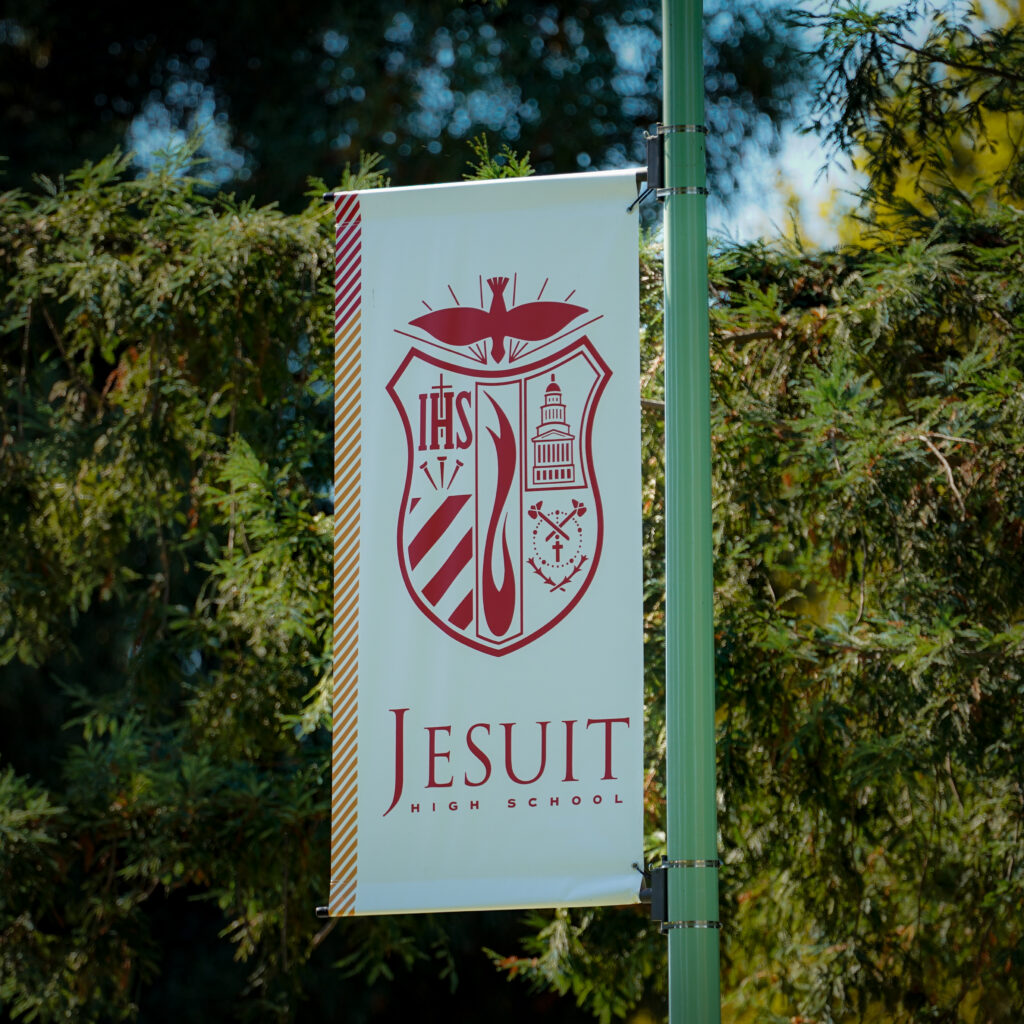
In October, Jesuit High School, a historically all-boys school, took the controversial step to open its doors to female students. The first cohort of girls will start school at Jesuit in fall of 2027.
The decision was made in part with the sinking student count in mind, Jesuit President Chris Alling said at the time.
 Jesuit High School on Oct. 6, 2025. (Martin Christian)
Out of all Sacramento County Catholic high schools, St. Francis has suffered one of the largest blows to its student body size in recent years. State reports show the all-girls academy shrinking from just over 1,000 pupils in 2019-20 to fewer than 750 in 2024-25.
But St. Francis President John Moran, in his first year with the school, is finding cause for optimism.
“It has always been my contention that we can buck trends,” he told Abridged.
Part of his approach means adding new and unique extracurricular activities, including stunt cheerleading, beach volleyball and a rare International Space Station program.
Moran said they are also broadening recruitment efforts, attempting to reach a wider geographic and more diverse socioeconomic group of families. The school will increase fundraising goals in order to meet financial assistance needs.
As far as ever going co-educational or co-divisional like Jesuit, though, Moran said that’s not on the table.
“We’re going to stick to our core.”
Savannah Kuchar is a reporter covering education. She came to Sacramento to be a part of the Abridged team and contribute to a crucial local news source.