
You don’t need to move to the jungle to learn about yourself, but sometimes it helps.
I met Carly Schwartz on March 30, 2012, when she was a panelist on a political roundtable I hosted. Schwartz, founding editor of the San Francisco bureau of HuffPost, appeared alongside political scientist Dr. Larry Gerston and Marina Times editor Susan Dyer Reynolds. It wasn’t long before Schwartz was raptured up to the HuffPost headquarters in Manhattan; years later she returned as editor of the San Francisco Examiner, and then this bright young journalist-on-the-rise was seemingly gone again.
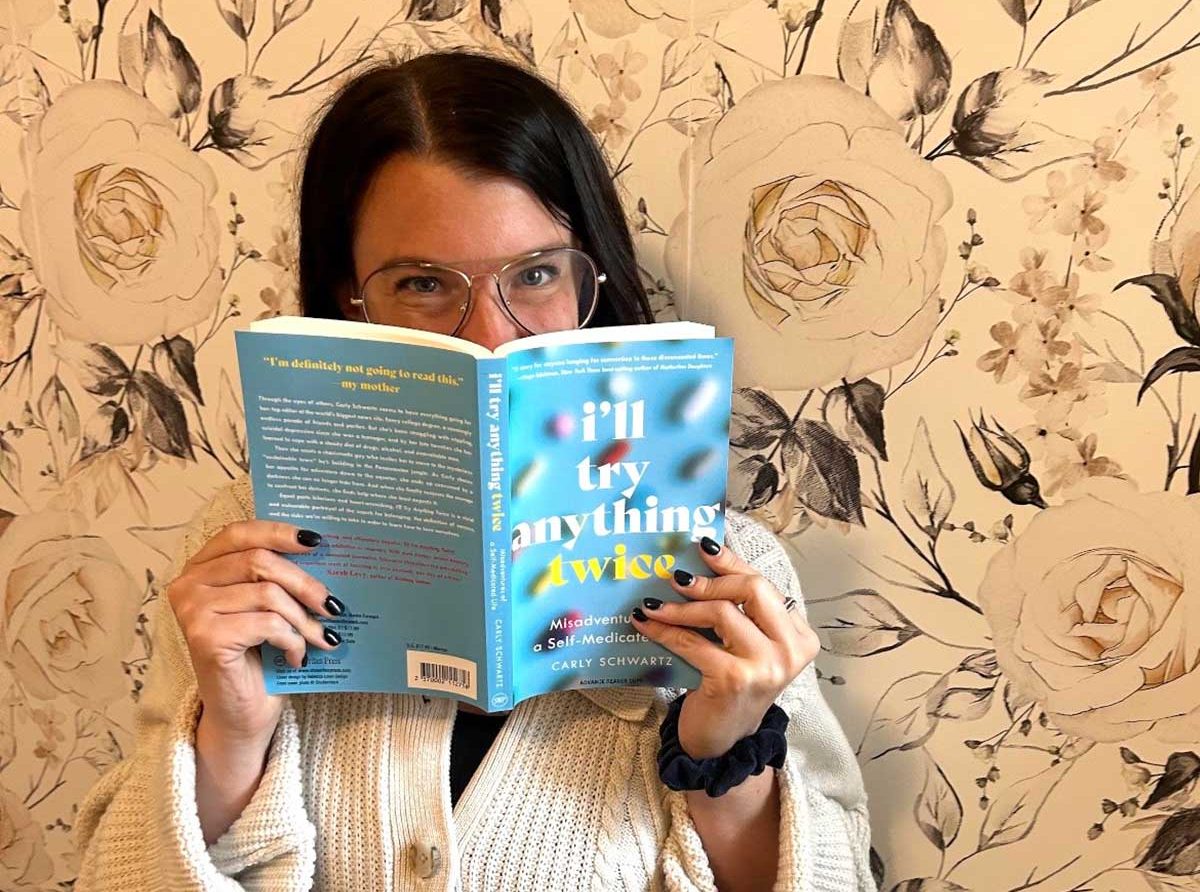
What happened to her in the meantime is a wild and deeply personal story she tells in her new book I’ll Try Anything Twice: Misadventures of a Self-Medicated Life, which launches in San Francisco March 12. It tells of her professional and personal journeys, including an attempt to teach journalism in a wacky jungle settlement, and culminates in a reckoning with addiction and mental health.
She recently sat down for a talk with The Voice.
One of the main parts [of your book] is your story about your experience in the Panamanian jungle and the project you were working on. You were quite positive about it even through all of these incredible challenges, until right toward the end. What made the idea of this new community and this new school in a distant jungle appeal to you?
Great question, because I like to talk about how the crux of the book is I left home to find myself, and I found myself back home where I actually found myself — that home being obviously San Francisco. I’ve always just had this sort of romantic, wanderlust, adventurous side that I almost feel like I got a little bit cheated out of in college when my depression got really, really bad for the first time; it became more of an act of survival than an act of exploration and adventure. …
I wound up as one of the early employees of HuffPost. But after four and a half years in that really, really fast-paced newsroom, I turned 30. I know now that 30 is not a ripe old age, but you turn 30 and you’re like, “Whoa, my youth is gone.” I still had that nagging dream to go somewhere and to kind of make good on this adventure I’d always wanted. I wound up with a fellowship from the microfinance organization Kiva. They were phenomenal; it was a fantastic experience. I was in Mexico City and I found myself at this point where my depression was totally at bay, I think because I was feeling so fed from all the novelty. …
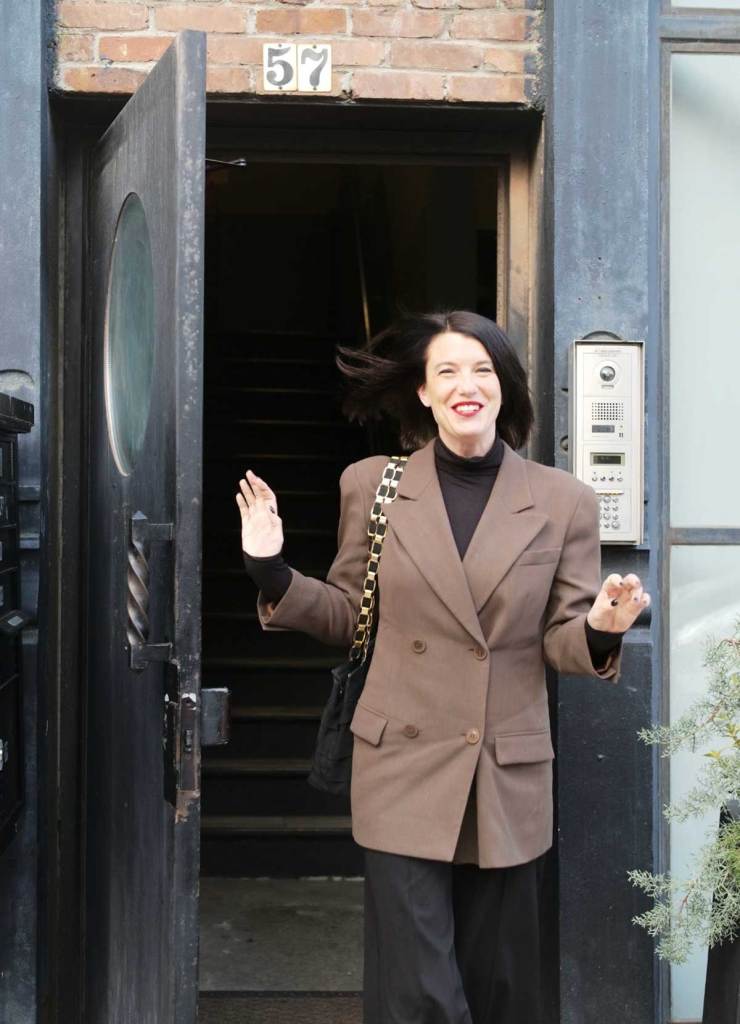 Schwartz exercised her journalism muscles in big American cities and the Panamanian jungle. | Niels Joubert
When that fellowship ended, … I was like, well, what’s next? … It’s just so cliché and embarrassing to say, I met this guy at Burning Man who invited me to move down to this Panamanian experiment he was running. It sounds like such a cult when you say it now, but at the time I was like, “Oh, a town in the Panamanian jungle, why not?”
I remember my first morning waking up in this banana leaf hut, taking a dip in the river, pouring myself this instant coffee, finding ants in my cereal and just being like, “This is so beautiful.” It just struck me [that] this could be my life. I just want to embrace the weirdest parts of life. I had this hunger, and I think it was coalescing with a little bit of, I don’t want to say mania irresponsibly, because I may have been misdiagnosed with bipolar [disorder]. I’ve never had a manic episode in sobriety, which has been seven and a half years now. But it was definitely manic feelings, and I was doing a lot of partying. This group was very steeped in drugs and uppers, and marijuana had just been legalized more broadly in the U.S.
The irony is that in persistently doing drugs, it keeps you from ever actually getting well; the one thing that makes you feel good is the one thing that’s keeping you from feeling good.
So all of that, plus all of these opportunities for me to create something totally new, coalesced in this way that made me feel almost uncomfortably full of possibility, like bursting-at-the-seams full of possibility. He invited me to move down full-time, open this school. Anyone coming down would be like, “This is a scammy little fake school that you’re luring people to with Instagram ads. But really it’s like this undeveloped site in the middle of the jungle where you’re getting people to pay to come down to do hard labor in the sun, to build it out on the guise of it being school.”
It was so far from my conception of what the world could be that I didn’t see that. He wanted me to build this journalism school, because he just wanted free marketing content.
So he wouldn’t have cared what you were teaching, just as long as you were bringing the students down and doing the marketing.
As long as we were producing content that made it look good. I love the people I was in the trenches with, but I think I can comfortably say, and they would agree with me, that there was not a ton of academic rigor. I developed this really meticulous journalism curriculum, and I remember the guy who was running the place was like, “Wow, media mogul, I hear you’re killing it.” I’m like, “Yeah; do you want to see my lesson plans?” And he’s like, “Nope.”
I’m partying at night and doing this interesting work. Then at the height of all of that, I go off my antidepressants cold-turkey. Looking back, I’m like, “No, don’t do that.” But at the same time, maybe it’s a good thing I did, because I needed such a scary jolt of what was at stake to get … out of there.
If you had not run into that combo of depression and addiction, do you think you would’ve stayed around there a lot longer?
I left because I had literally no choice. As you read in the book, I am so pushed to the brink. It’s the closest I’ve felt to psychosis. I mean, I was seeing red at the time.
I think it would’ve crashed at some point. I mean, there’s only so much living in a tent with no resources in the middle of the tropical, rainy season with 80 people in squalor. …
There are a number of points in the book where you recount someone in a business or a social setting taking out a bag of cocaine and setting everyone up. I found that stunning; no one’s ever done that around me.
You’re lucky.
I might’ve lived a sheltered life.
No, you haven’t.
Do you think you consciously or unconsciously sought out people who had an open attitude toward drugs and overuse?
Definitely. I have this joke that I actually made as a comment on a sobriety influencer’s Instagram account recently. It was that I always used to say, “I don’t understand how cocaine just finds me everywhere I go.” And it’s like, no, it doesn’t. Secretly I’m subconsciously planting these breadcrumbs to seek out these fast-paced partying, sort of privileged, freewheeling [people]. I came of age in San Francisco and New York as a member of a pretty hot media startup. I was already surrounded by people moving pretty quickly. Also a lot of my friends in San Francisco were part of the Burning Man scene. I always have been a person who gravitates towards the weird and unconventional, but I was also a drug addict. So a lot of that gravitation happened to be toward the facets of those communities that were also partying all the time, which is really common.
It’s like someone would take out a bag and my antenna went, “Time to make a best friend for 24 hours who I’m never going to see again.” It was all about just feeling so disconnected on my own. The depression really just makes you hate yourself. And when you live inside a mind that’s telling you you’re the worst person in the world for 15 years or longer, it just gets so exhausting. Drugs were such an escape from that.
The irony is that in persistently doing them, it just keeps you from ever actually getting well; the one thing that makes you feel good is the one thing that’s keeping you from feeling good.
I will happily say that as a sober woman, I still like things to be interesting and weird. I think there’s just a way to find adventure in much calmer pursuits now.
When I follow the heated pro- and anti-drug debates in San Francisco, I’m sometimes struck by either an ignorance about or a lack of interest in the role played by addiction. In light of your experiences, both personally and then of course with the journalist side, what do you make of the overdose crisis and the drug issues in San Francisco?
I think about this all the time. I think about it in a very heated way. I’ve agreed and disagreed very strongly with different policy measures, kind of punishing versus treating. I really think that if you don’t look at what’s going on in San Francisco with homelessness, with crime, with addiction, a public health crisis first and foremost, then you’re never going to get to the root of it.
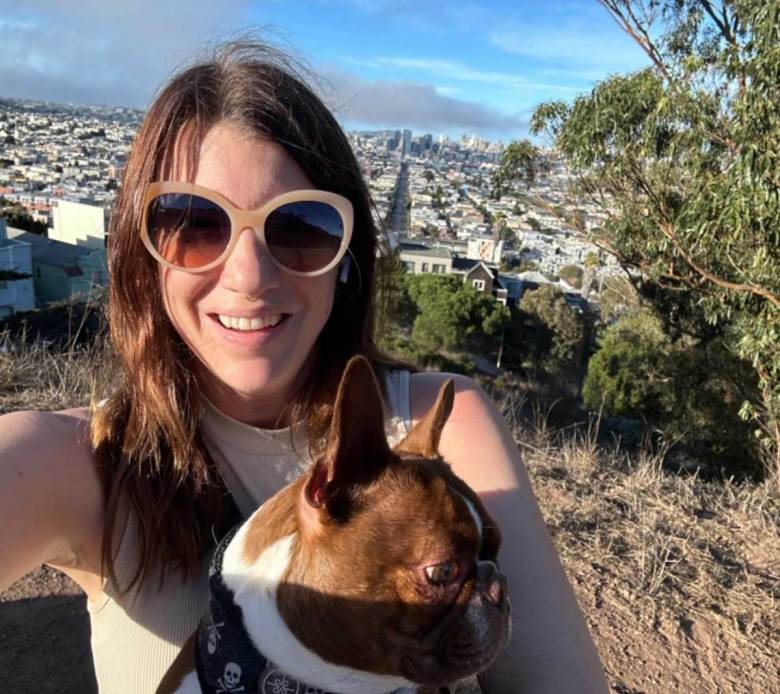 I’ll Try Anything Twice recounts Schwartz’s adventures in life as well as her love affair with San Francisco, which she enjoys with her dog, Nacho. | Carly Schwartz
Why did you return to San Francisco then, and why do you stay?
San Francisco is the longest running love story of my life. I was born at what is now California Pacific Medical Center. And in 1986, I was forcibly removed against my will by my parents — I was a baby, so that’s obviously a joke. But they wanted to raise me and my soon-to-be younger brother on the East Coast, because that’s where they were from. But growing up, San Francisco always just had this sort of mythological presence in our house.
The summer after my freshman year of college, my mom took me to San Francisco. The minute I stepped into … Union Square, I was like, “Oh my gosh, this is home.” It was almost like a spiritual feeling. Then at one point, I was taking the 30-Stockton up through Chinatown. I got out in North Beach and it just smelled … so familiar to me that I almost started crying. When I met up with my mother, she’s like, “That’s the neighborhood we lived in when my first apartment was in Telegraph Hill.”
I made this grand statement: When I grow up, I want to live in San Francisco. After college, I went to live in San Francisco. My first apartment was in North Beach. I just spent all of my early twenties falling in love with San Francisco.
I’m so repeatedly taken with San Francisco, and it happens over and over and over again. I’ll fall out of love with it for a minute because it’s the pandemic and things are hard and crime is on the rise and the streets are empty, downtown is empty. Then I’ll just reorient and I’ll be like, no, this is home.
Rachel Maddow has said that San Francisco is the only city that has magic in it.
It’s so magic. Even just driving home from SFO, that strip on the water when you’re going towards Oyster Point, and even if it’s foggy, [with] the water on both sides and the hills, it just constantly takes my breath away. It’s awe-inspiring.
Related