
February 24, 2026
By Karan Singh
Just weeks after successfully dodging a statewide sales ban in California, Tesla is taking the legal fight directly to the state’s Department of Motor Vehicles.
Late last year, an administrative law judge ruled that Tesla’s use of the terms “Autopilot” and “Full Self-Driving” was misleading to consumers and violated state law. The California DMV subsequently gave Tesla 60 days to correct its marketing language or face a 30-day suspension of its manufacturing and dealer licenses – a move that would have temporarily halted all vehicle sales in Tesla’s single largest US market.
Tesla capitulated to the demands, removing Autopilot from new vehicle sales, dropping the “Autopilot” branding, and moving its marketing for FSD to “Full Self-Driving (Supervised)” and “Tesla Self Driving”, both designed to emphasize the need for active driver attention and better manage consumer expectations.
Now that the immediate threat of a sales ban has passed, Tesla has filed a lawsuit to completely erase the DMV’s ruling.
The Lawsuit: “Wrongful and Baseless”
In a complaint filed on February 13, 2026, Tesla’s legal team escalated the battle by suing the California DMV to reverse the false advertising label.
According to the lawsuit, Tesla alleges that the agency “wrongfully and baselessly” branded the company a false advertiser. Tesla’s core argument rests on the claim that the DMV failed to actually prove that California customers were misled or confused about their vehicles’ capabilities when buying them.
Essentially, Tesla is arguing that because the agency didn’t present evidence of direct consumer deception, the sweeping regulatory action and the false advertising label were administrative overreaches by the DMV.
Why Fight a Ruling You Already Complied With?
On the surface, it seems contradictory for Tesla to formally comply with the DMV’s marketing demands, only to then immediately sue the agency over them. However, when you look at the bigger financial and legal picture, Tesla’s motivation seems incredibly transparent.
Robotaxi Valuation
Tesla’s multi-trillion-dollar future valuation is heavily anchored in its aspirations of becoming a dominant robotaxi, artificial intelligence, and robotics company. Tesla frequently notes its growing FSD subscriber base and miles driven, as well as safety statistics, to investors and customers.
Having a formal, on-the-record ruling from the state of California declaring that the foundational branding of its self-driving software is “unambiguously false and counterfactual” directly undermines the core pitch to both investors on Wall Street and everyday consumers.
Legal Liabilities
Perhaps even more pressing is the legal precedent this ruling sets for civil litigation. Tesla is currently facing a growing pile of lawsuits related to Autopilot and FSD collisions. Just recently, a federal judge denied Tesla’s bid to overturn a massive $243 million jury verdict regarding a fatal 2019 Autopilot crash.
If the California DMV’s ruling stands, plaintiffs in future crash lawsuits will have a much easier time arguing that Tesla’s marketing inherently deceived drivers into believing that cars were safer or more autonomous than they actually were.
By suing to reverse the ruling, Tesla is attempting to patch a vulnerability in its so-far relatively effective legal armor around FSD and Autopilot.
Subscribe to our newsletter to stay up to date on the latest Tesla news, upcoming features and software updates.
February 24, 2026
By Karan Singh
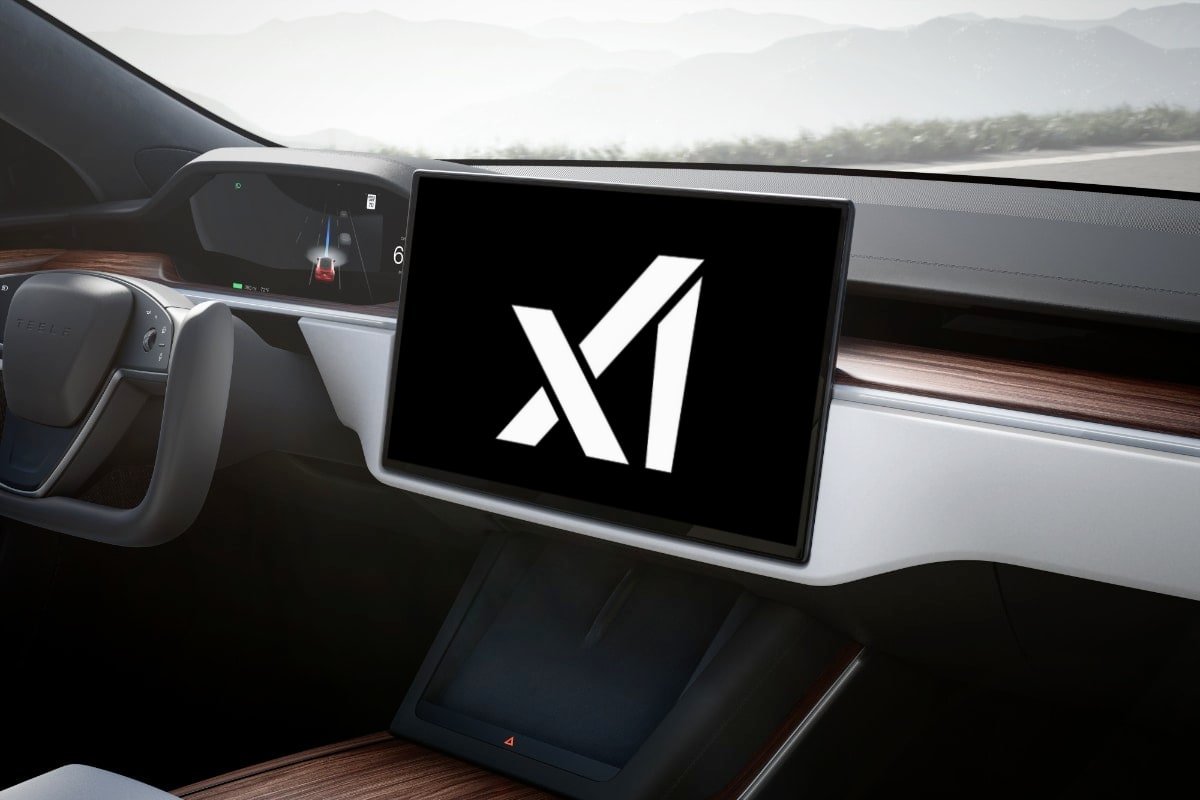
Following its initial debut in North America, Tesla is officially bringing xAI’s powerful Grok AI assistant to the Southern Hemisphere. As per the release notes for software update 2025.2.6.1, Tesla has begun rolling out Grok with Navigation Commands to owners across Australia and New Zealand.
Instead of relying on rigid, pre-programmed voice commands, this update transforms the navigation system into a more modern experience with conversational AI, making route and trip planning easier and more intuitive.
This is the second international rollout of Grok, following last week’s launch in Europe.
The Magic of Natural Language Routing
Tesla’s standard voice commands, which are still available, require precise and specific phrasing to work correctly. With the integration of Grok, your car can now understand complex, multi-layered requests using everyday, conversational language.
Grok can seamlessly add, edit, or completely reroute your destination on the fly. You can ask incredibly specific, context-aware questions, such as: “Navigate to the best Thai restaurant near me”, or “Find a Supercharger with a coffee shop nearby.”
Rather than fumbling with the touchscreen keyboard while driving or futzing with your phone, Grok handles the heavy lifting, figuring out what you want, and instantly routing your vehicle.
Who Gets Grok?
Just like with the original launch in North America and the subsequent European launch, Grok is not coming to the entire fleet.
Grok will be available for vehicles equipped with the AMD infotainment (MCU3) – older vehicles with the legacy Intel Atom processor don’t have the necessary on-board compute to run Grok as it currently stands.
We do believe that Tesla is actively working on bringing Grok to Intel-based vehicles, but we haven’t heard much since last summer. Intel owners can likely look forward to this feature eventually arriving on their vehicles.
Beyond the hardware, you’ll need to be on software update 2025.2.6, which has just begun rolling out to customers in the region. Finally, you’ll need to either be subscribed to Premium Connectivity or keep your vehicle connected to a mobile Wi-Fi hotspot to use Grok.
Expansion Continues
The rollout in Australia and New Zealand is the latest step in Tesla’s fairly rapid expansion of Grok. Tesla is hard at work integrating xAI’s conversational AI into your vehicle, including the future ability to dictate exactly how your vehicle parks at its destination.
We expect that Grok’s rollout will eventually expand to cover all of Tesla’s official service regions, with the exception of China. While Chinese owners may not be receiving Grok for some time due to data privacy regulations, they are receiving a more localized Smart Assistant, which now includes the “Hey, Tesla” wake word.
February 23, 2026
By Nehal Malik
Tesla owners in Europe have been patiently waiting for the full capabilities of Full Self-Driving (FSD) for years. While the software has been a staple of the North American Tesla experience, European regulations have kept it largely unavailable. However, a new discovery in Tesla’s website source code suggests that the wait for a more flexible way to pay for the system might be nearly over.
Eagle-eyed users recently spotted commented-out code on the Tesla Netherlands website that references a “Subscription Price Hook,” as shared on X by @Tesla_NL_TR. The code hints that the infrastructure for a €99 per month subscription is already baked into the site, just waiting for a server-side flag to go live. While the €99 price point might be a placeholder — matching the $99 monthly fee in the U.S. — it’s a clear sign that Tesla is preparing its backend for a European subscription launch.
FSD in Europe: What’s the Hold-Up?
Tesla has been working behind the scenes for years to get FSD (Supervised) approved for European roads. The company recently laid out an ambitious plan to officially launch the system by February 2026. This timeline was tied to Tesla’s collaboration with the Dutch vehicle authority (RDW), which was positioned as a gateway for wider European approval. However, FSD is yet to be approved by regulators in the Netherlands, let alone anywhere else in the EU.
To build hype and prove the system’s safety, Tesla even launched a well-received FSD ride-along program in cities like Hamburg, Berlin, and Amsterdam last year. These demo drives have allowed Europeans to experience the system’s evolving competence firsthand. While Elon Musk hinted in recent weeks that the first formal approvals could come as soon as this month, we are already in the final week of February with no official word yet.
One-Time Purchase vs. Subscription
The move toward a subscription model follows a massive policy shift in North America. Earlier this month, Tesla officially discontinued the option to purchase FSD as a one-time, $8,000 upgrade in the U.S. and Canada. Now, a monthly subscription is the only way for new owners in North America to access the software.
Europe currently still offers the one-time purchase option, but history suggests that won’t last forever. In Australia, where FSD subscriptions launched last fall, Tesla has already announced it will scrap the one-time purchase option on March 31. It’s becoming increasingly likely that once subscriptions officially go live in Europe, the “buy it once” era will quickly come to an end there as well.
Looking Ahead
The discovery of subscription hooks on the Netherlands site suggests that Tesla is ready to flip the switch the moment regulators give the green light. For many owners, a €99 monthly fee is a much easier pill to swallow than a massive four-figure upfront cost, especially for a feature that is still technically in “supervised” mode.
As we cross Tesla’s previously set February 2026 target date, expect more “leaks” like this to surface as the company prepares to bring its most advanced AI to the world’s most regulated roads.