
For the last eight years, the city’s transportation department has found a way to dramatically increase its budget from the city — by winning some $70 million a year in grant money, mostly from federal, state, regional, and county agencies. This cash has buoyed key programs to fix roads and add new, traffic-slowing infrastructure.
According to a department staff member, if the city is successful in its applications this year, 2026 grant revenue could reach $75 million. OakDOT’s city budget this year is about $33.5 million. The agency is also expected to spend tens of millions in city capital funds this year.
At a meeting of the Bicycle and Pedestrian Advisory Commission last week, Yvonne Chan, a transportation planner with the department’s funding strategy group, said the team was currently administering about 70 separate grants, including both active projects and proposals in development. For the 2026 calendar year, she said, the department was developing 13 proposals totaling at least $75 million.
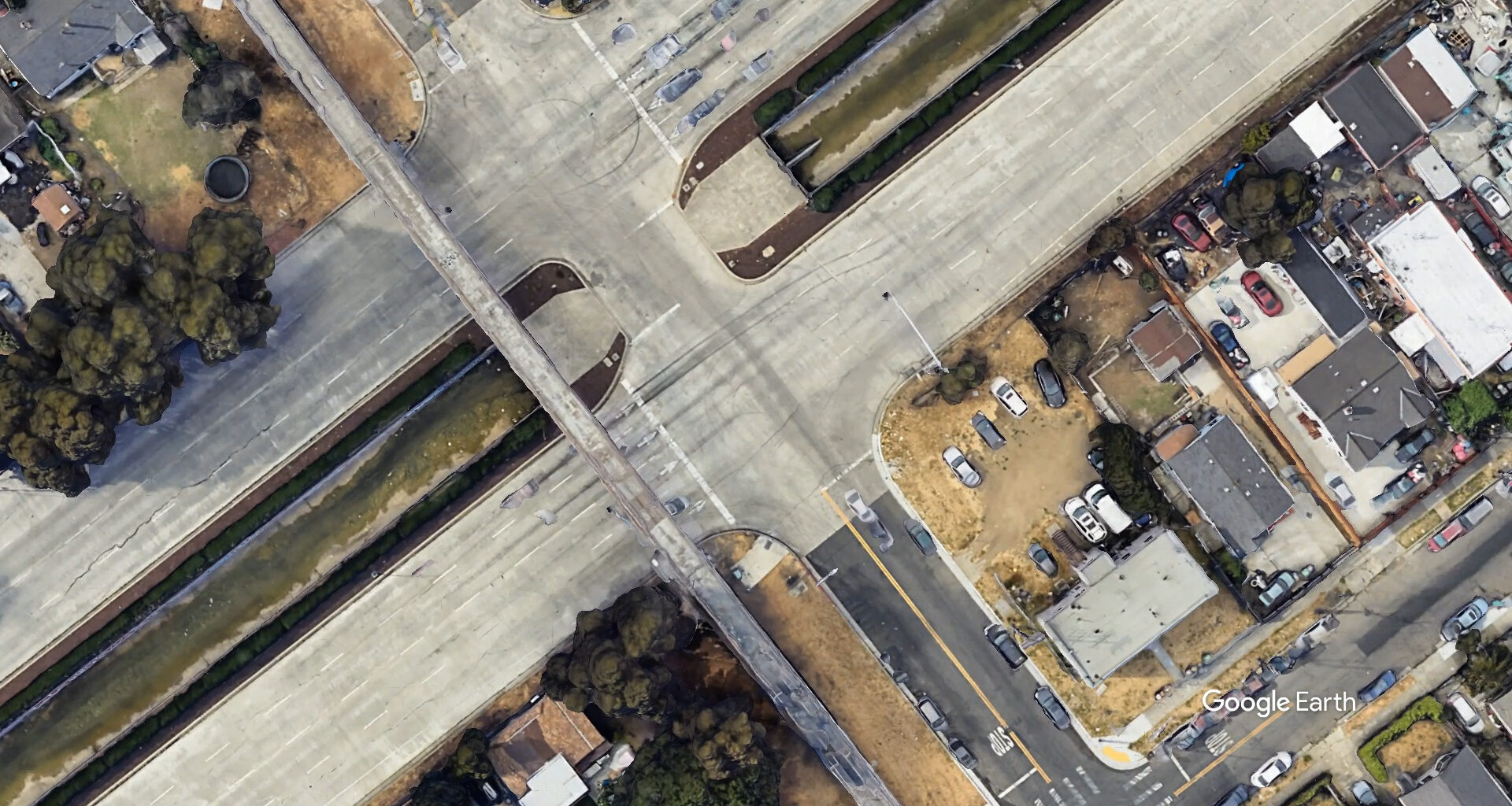
Chan said the next deadline is a March submission to the Metropolitan Transportation Commission, the Bay Area transit agency, for a Complete Streets project on Hegenberger Road from International Boulevard to Doolittle Drive at the entrance of the Oakland Airport.
The city will seek a $700,000 grant to plan and design new pedestrian and bike infrastructure for that stretch of Hegenberger Road. According to the city’s letter of intent, 40% of vehicles on this part of Hegenberger travel “at more than 10 mph over the posted limit,” and 219 crashes occurred there between 2018 and 2022. Of these crashes, three people died, there were 13 severe injuries, and 89% of the people affected in the crashes were people of color. The collision data was drawn from UC Berkeley’s Transportation Injury Mapping System, which The Oaklandside also uses to confirm collisions.
“The Hegenberger Road/Coliseum Way/Edes Avenue intersection had the highest number of reported collisions with 46 collisions, followed by the Hegenberger Road/Baldwin Street intersection with 19 collisions,” the letter said. Chan said that providing this sort of collision analysis has been helpful in securing grants.
She said the biggest funding request the strategy group has identified for this year, so far, will be about $50 million total for two applications to state and regional Active Transportation Grant programs. One will be to advance the 73rd Avenue Active Routes to Transit project to the design phase, for a widened median with a mixed-use path, sidewalk extensions, and improved signals. The other will be a proposal to build out the West Grand Avenue Corridor Improvements project, which is expected to include safe bulbouts at intersections and a protected bike lane, among other changes.
OakDOT is also considering applying for a California Affordable Housing & Sustainable Communities grant from the Strategic Growth Council to support new sidewalks, bus shelters, and crosswalks in four locations in East Oakland.
Leveraging city matching funds
Chan said the grant team has been successful in winning grants since the department’s inception in 2016 by seeking out opportunities that “find alignment” with priorities of both the city and the funding agencies.
At the BPAC meeting, she put up a Venn diagram, saying the left side showed city priorities, including “projects that have high project readiness, are feasible to deliver, and have stakeholder support. And then on the right side of the diagram, key factors important for grant application include what’s actually eligible to be funded, the goals of the grant programs, as well as their local match needs and administrative requirements.”
“We’re seeking to fund projects that have already been embedded through our process,” she said.
These priorities, according to Chen, are developed through the city’s weighted point system, which helps the city identify the most urgently needed projects. Among these criteria are projects that invest in historically underserved communities, address dangerous existing conditions, protect health and safety, or create economic opportunities, among other goals.
Chan appeared at the BPAC to present the department’s grant calendar for 2026 because the commission, by city law, reviews these grants before they are submitted. The commission also sometimes provides official letters of support to OakDOT, which are submitted alongside the technical and financial details of a grant application to make it even more competitive.
One of the most important ways the department wins competitive grants is by offering matching funds from the city’s Capital Infrastructure Program. The current two-year capital budget for projects is $192 million, funded primarily by Measure KK and Measure U bond money, with 80% of that figure going to paving.
Of the grants OakDOT has received in the last eight years, about $350 million, or about 60% of the total, have come from state agencies like the California Transportation Commission. Regional agencies such as the Metropolitan Transportation Commission account for 20%, or about $115 million, and county agencies like the Alameda County Transportation Commission have provided about 14%, or $80 million a year, on average.
“*” indicates required fields