
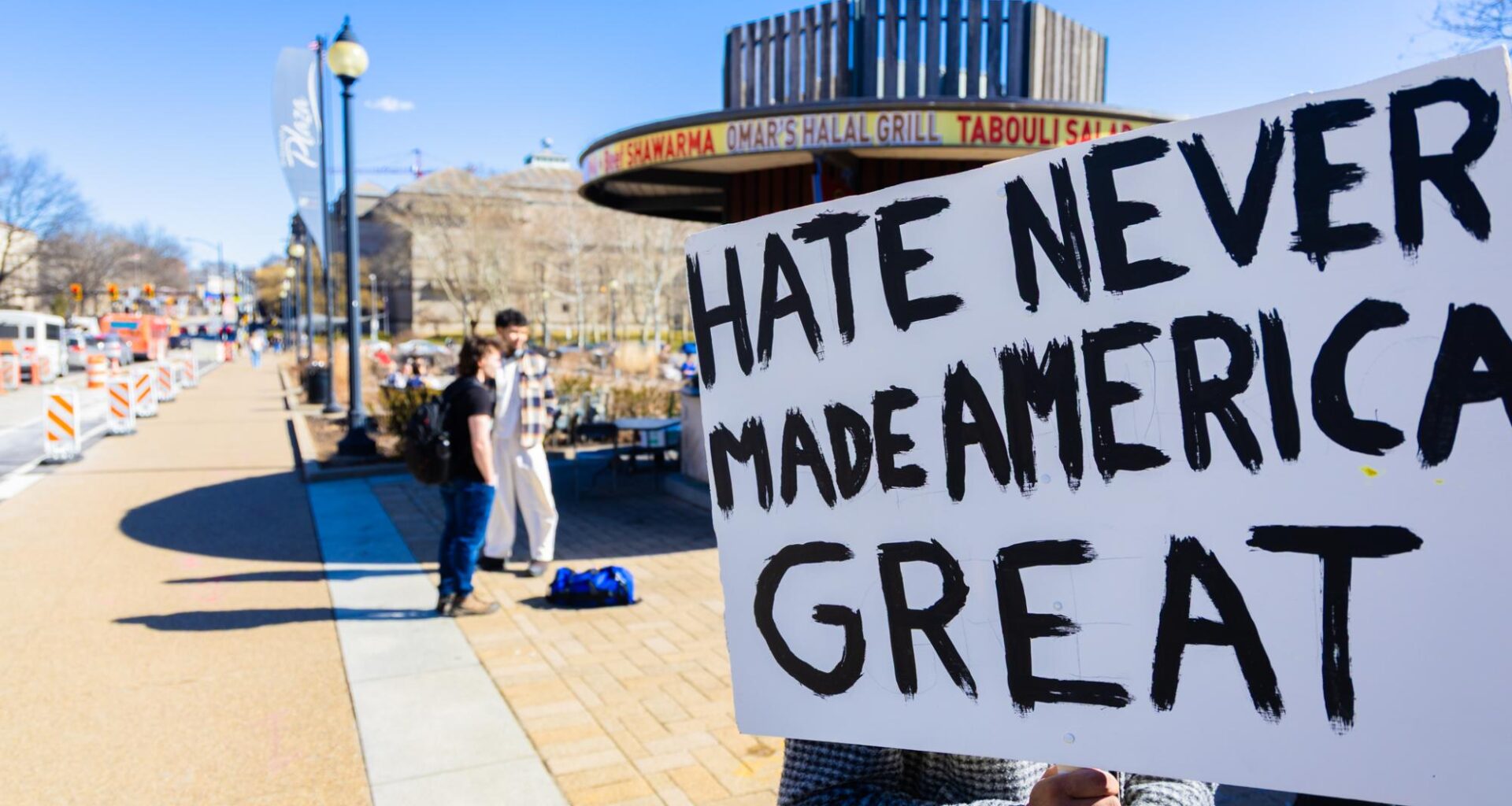
A group of about 20 University of Pittsburgh and Carnegie Mellon University students gathered in Schenley Plaza last Friday to protest U.S. Customs and Border Protection’s (CBP) Virtual Career Expo events posted to Pitt’s Career Central event calendar.
The protest followed a student walkout demonstration at Pitt earlier in the day, and another protest at Carnegie Mellon opposed to the university’s decision to host Palantir Technologies, a data analytics and AI conglomerate giant.
Pitt has since removed the posts advertising the events and clarified they were posted by CBP to Handshake, a third-party career network and job search platform not directly affiliated with the university.
Despite the protests, Carnegie Mellon doubled down on their choice, hosting Palantir Friday.
“Palantir is trying to recruit students,” Ilyas Khan, a Carnegie Mellon student said. “Palantir is a company that uses AI surveillance in order to thought-crime migrants and people of color in order to put them in detention camps.”
Khan said the protest aims to call on both university presidents, Farnam Jahanian of CMU and Joan Gabel of Pitt, to end ICE threats to their campuses and take proactive steps to protect immigrant students.
“They’ve sort of skirted around it,” Khan said. “We want real, concrete action from the university administrations to prevent ICE raids and potential CBP actions.”
Khan said he predicts ICE activity will increase in the city in coming weeks, citing recent ICE arrests as close to Oakland as Wilkinsburg.
Pitt student protester Mo Rivera said the modest turnout can be attributed to the protest being announced with short notice, but said it’s still emblematic of a growing country-wide consensus on ICE.
“The whole nation seems to be taking to decentralized organization, which I think speaks to the power of the sentiment and the power behind the movement,” Rivera said. “We don’t need a leader if everyone feels the same.”
In May of last year, the New York Times reported President Donald Trump partnered with Palantir, giving the company $113 million in federal government spending to track data of people in the U.S., including their bank account numbers, figures on student debt as well as medical claims and disability status.
According to the American Immigration Council website, U.S. Immigration and Customs Enforcement (ICE) has partnered with Palantir “to use artificial intelligence and data mining to identify, track, and deport suspected noncitizens.”
Khan said he worries Pitt and Carnegie Mellon will be targeted by ICE for their high international student populations.
As of the 2023-24 academic year, Pitt reported 3,200 international students, and Carnegie Mellon reported nearly 10,000.
“We have so many folks of color here at these universities that [ICE activity near campus] is a huge risk for them,” Khan said. “It’s terrifying but that’s the reality for a lot of us and we don’t want to have to live that way.”
Khan said that despite being a natural-born citizen, he still carries his passport with him everywhere he goes.