
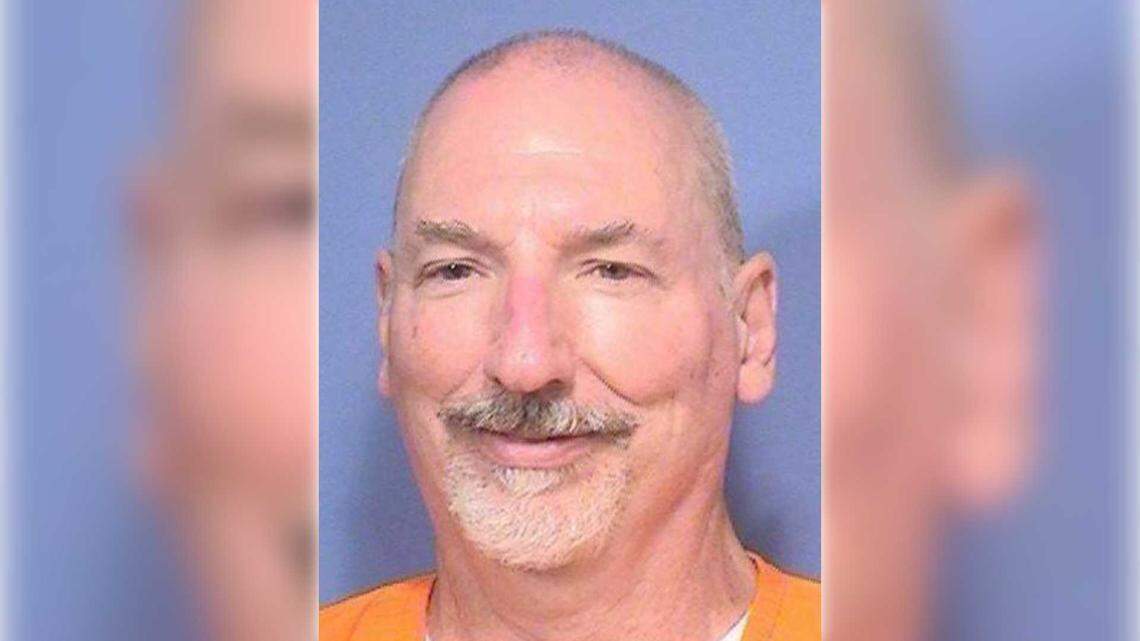
Gov. Gavin Newsom said he opposes California parole officials’ controversial decision to release convicted serial Sacramento child rapist David Allen Funston from state prison on elderly parole, but said state law bars him from overturning the decision.
“Bureau of Parole Hearings is an independent agency and made this decision,” said Newsom spokesperson Diana Crofts-Pelayo on Tuesday. “The Governor asked for BPH to re-review its decision. The Governor doesn’t agree with the outcome.”
Bureau officials said Funston was not considered to be a public safety risk, Crofts-Pelayo said.
Newsom disagreed, “but he has no power to overturn this case, per state law,” Crofts-Pelayo said.
The parole board’s decision is being blasted by victims and Sacramento law enforcement roughly a week after the state Board of Parole panel reaffirmed its recommendation that the 64-year-old Funston, now serving three life terms for the kidnaps, rapes and sexual abuse of eight Sacramento-area children in 1995, go free.
Funston’s eventual release 27 years into his indeterminate life sentence was set in motion in late September, according to California Department of Corrections and Rehabilitation officials. The state’s Board of Parole Hearings first ruled Funston suitable for parole in a Sept. 26 decision.
Newsom, on Jan. 12, sent the North Highlands man’s case back to the board for its review, said CDCR officials. State parole board officials reaffirmed their decision in February.
Funston was convicted in 1999 of 16 counts of kidnapping and child molestation in the 1995 attacks on children in North Highlands, Foothill Farms, Roseville and elsewhere. Funston used toys, dolls and candy to lure victims ranging in age from 3 to 7 into his vehicle before raping and beating them.
Funston is housed at the California Institute for Men in Chino where he is 27 years into the multiple life sentence.
The board’s Feb. 18 decision angered and mystified Funston’s victims and the law enforcement agencies who worked for his conviction three decades ago. A story Sunday in the Los Angeles Times laid out the outrage from victims and former Sacramento County District Attorney Anne Marie Schubert, then the lead prosecutor in the case.
An angry Sacramento County Sheriff Jim Cooper, flanked by a Funston victim and investigators who helped bring Funston to justice, called reporters to sheriff’s headquarters Monday afternoon to condemn the decision.
“This can’t happen. It’s not OK. You can’t rehabilitate people like this,” Cooper said at the Monday afternoon news conference. “The things he did to those children cannot be undone. Victims come first, especially children. I’m pissed.”
California’s elderly parole program originated from a federal court order. In 2014, a three-judge panel directed CDCR to implement a parole process for incarcerated people who were 60 or older and had served at least 25 years.
Sacramento Sheriff Jim Cooper holds a stack of victim statements during a news conference on Monday, Feb. 23, 2026, at the Sheriff’s office headquarters, about the early release of David Allen Funston, who was convicted of 16 counts of kidnapping and child molestation in 1999. HECTOR AMEZCUA hamezcua@sacbee.com
Lawmakers codified the program in 2018. Nearly three years later, they expanded it, lowering the eligibility age to 50 for people who had served 20 years of continuous incarceration.
Under the expanded law, eligibility begins once an incarcerated person turns 50 and has served at least 20 years in prison. At elderly parole hearings, the Board of Parole Hearings “shall give special consideration to the individual’s age, time served, and diminished physical condition, if any,” when determining suitability for parole.
The violent spree terrified and shocked Sacramento at the time.
“You became the monster parents fear most,” Sacramento Superior Court Judge Jack Sapunor said in imposing the three consecutive life terms plus additional prison time designed to ensure Funston would, at the time, never receive a parole hearing.
It was not known where or when Funston would be released, or whether he would be classified as a sexually violent predator under state law. CDCR does not provide information on the time or location of parole release, citing safety and security reasons.
“He was hunting for young children. He lured them with toys and Barbie dolls. He’s the poster child for why sex offenders should be exempt from elderly parole,” Schubert told The Bee on Monday. “It’s a very extreme crime spree in a short amount of time. I’m mortified that they think this is a good decision.”
This story was originally published February 24, 2026 at 6:40 PM.
Related Stories from Sacramento Bee
.JPG)
The Sacramento Bee
Darrell Smith is a local reporter for The Sacramento Bee. He joined The Bee in 2006 and previously worked at newspapers in Palm Springs, Colorado Springs and Marysville. Smith was born and raised at Beale Air Force Base and lives in Elk Grove.