

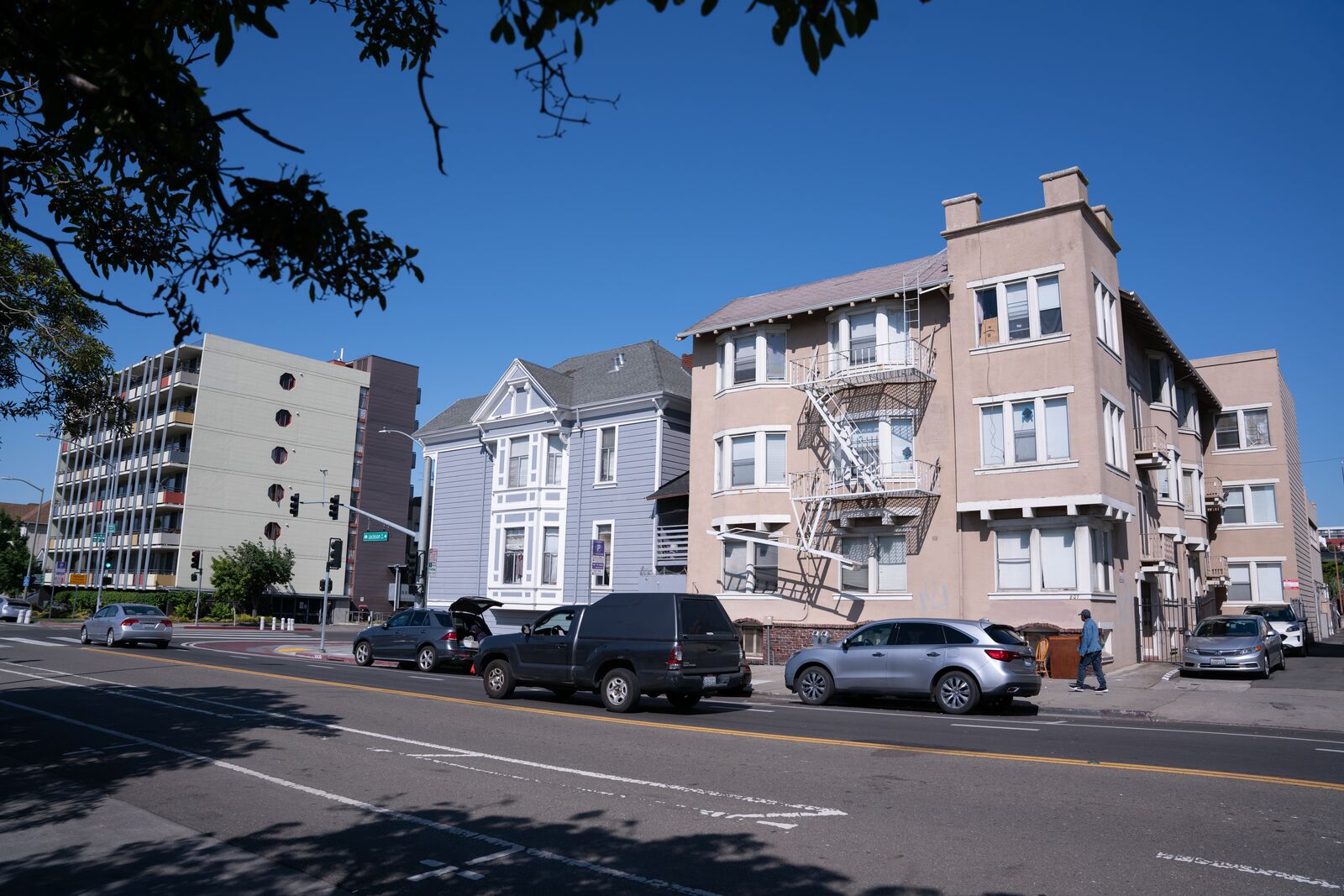
 A majority of Oakland apartments are covered by rent control, which allows rent hikes only under certain circumstances. A recent lawsuit takes aim at one attempted raise. Credit: Florence Middleton for The Oaklandside
When Lily Woo saw the listing for the two-bedroom on Van Buren Avenue in March 2024, they eagerly set up a viewing with their partner at the time.
It was a good location, a few blocks up from Lake Merritt, and the rent felt fair at $2,350 a month. The pair moved in together that spring.
But when they split up the following year and Woo chose to stay in the apartment with a new roommate, they were hit with a sizable rent increase and told to leave if they weren’t willing to pay. Now Woo is suing the property owner, arguing he violated Oakland’s rental housing laws.
In response, the landlord has walked back the rent hike, but the ongoing lawsuit calls attention to a California rental rule that can have vastly different impacts depending on whether it’s followed and how it’s understood.
A 27% rent hike
Most apartment buildings in Oakland, like Woo’s, are covered by the city’s rent control law. That law states that landlords can only raise the rent by a certain percentage each year. A few years ago, Oakland capped this percentage at3%.
But under a state law called the Costa-Hawkins Rental Housing Act, landlords can reset the starting rent price at any level once tenants move out of a unit and new residents move in.
That’s where things got tricky in Woo’s situation.
According to a lawsuit Woo filed in January, their building’s property manager had Woo’s partner sign the lease in March 2024. Woo, even though they were the one who’d found the apartment and would be moving in together with their then-partner, was told to sign a separate document instead.
That document, according to Woo, was called the “Addendum For Purpose of Future Costa-Hawkins Rent Increase.” It allegedly stated Woo was not an “original tenant” of the unit and said that the landlord, Jeffrey Jue, could raise Woo’s rent beyond what Oakland law allows if their partner, the one who signed the lease, moved out.
The statement Woo signed falsely stated that they were not an original tenant “because I am replacing a vacating tenant and/or I was not a party to the original rental agreement and did not begin my tenancy fewer than 30 days thereafter,” Woo quoted in the lawsuit. They are represented by attorneys from the California Center for Movement Legal Services.
Woo, who was unfamiliar with Oakland tenant laws at the time, thought “original tenant” referred to the first people who ever lived in the building, and said they felt pressured to sign the addendum on the fly.
About a year later, Woo notified property manager Kathleen Morton, who’s also named in the lawsuit, that their partner was planning to move out and that Woo intended to stay in the unit with a new roommate. Morton allegedly responded by text message that Jue “hasn’t recently been allowing roommates” to stay. The implication was that Woo was a roommate, not an official tenant.
Once Woo gave formal notice, the lawsuit says, Morton notified them that the landlord would reset the rent at $2,995. She later followed up, saying, “If this is not acceptable than all tenants must be out of the unit by August 31st. He is sticking to the market rental rate.”
The new rent price would constitute a 27% increase, “far above the 2.3% allowable under Oakland’s Rent Adjustment Ordinance,” Woo’s lawsuit says.
Dispute over who’s an ‘original’ renter
“It was very stressful,” said Woo of the messages from the property manager. Woo said they’d made an effort to be “transparent” with the landlord about their situation and to make the case that they’d been a good tenant, always paying rent on time.
“I just want to stay in my home, for the legal price we rented it at,” Woo said. A massage therapist, they said they wouldn’t be able to afford the $650 monthly increase.
After speaking with other renters in the 29-unit building, Woo said it appeared that their landlord has taken similar steps with other tenant pairs.
Reached by phone, Morton said she was “not at liberty” to discuss the lawsuit. Jue did not respond to an email or a voicemail seeking an interview.
According to public records, Jue owns eight properties in Oakland and Berkeley, mostly mid-sized apartment buildings.
Woo and their lawyers are adamant that anyone who moves into a unit at the start of a tenancy is an “original occupant” under state and city law, regardless of what apparent contracts they’ve signed. That means even if one tenant in the unit moves out, the landlord still has to abide by rent control rules for the others, instead of treating it like a brand new tenancy and resetting the rent price.
“You can’t just keep people off the lease,” said Woo’s lawyer Ethan Silverstein. “Landlord’s can’t just do that to get a big rent increase.”
And telling Woo to move out if the rent increase wasn’t satisfactory is also illegal, he said, since he argues Woo is a legal tenant and Oakland only permits evictions under certain circumstances and through a specific formal process.
From Silverstein’s perspective, “many landlords think they have creative solutions through contracts to undermine rent control. These solutions don’t work. But it can be very upsetting and very stressful, especially when tenants are not experts in the ins and outs of the law.”
However, there are specific circumstances when a landlord can legally raise rent after a tenant leaves, he acknowledged.
“Under specified conditions, Costa-Hawkins permits an owner to set initial rents without restriction when a covered unit is sublet or assigned and none of the original occupants permanently reside in the covered unit,” Oakland’s rent ordinance says.
Many landlords find Oakland’s rent control laws too restrictive; the East Bay Rental Housing Association, a landlord advocacy group, opposes such ordinances, arguing they “worsen housing shortages, damage their communities, and both overly burden the wrong owners and subsidize the wrong renters.”
After their lawsuit was filed in January, according to Silverstein, Woo received a letter from the landlord’s lawyers, agreeing to let them stay in the apartment at the original rent.
But they’re not withdrawing the lawsuit and are still seeking damages for the period before that agreement. “They had to live with the emotional stress of their tenancy being in flux for months,” Silverstein said.
“*” indicates required fields