
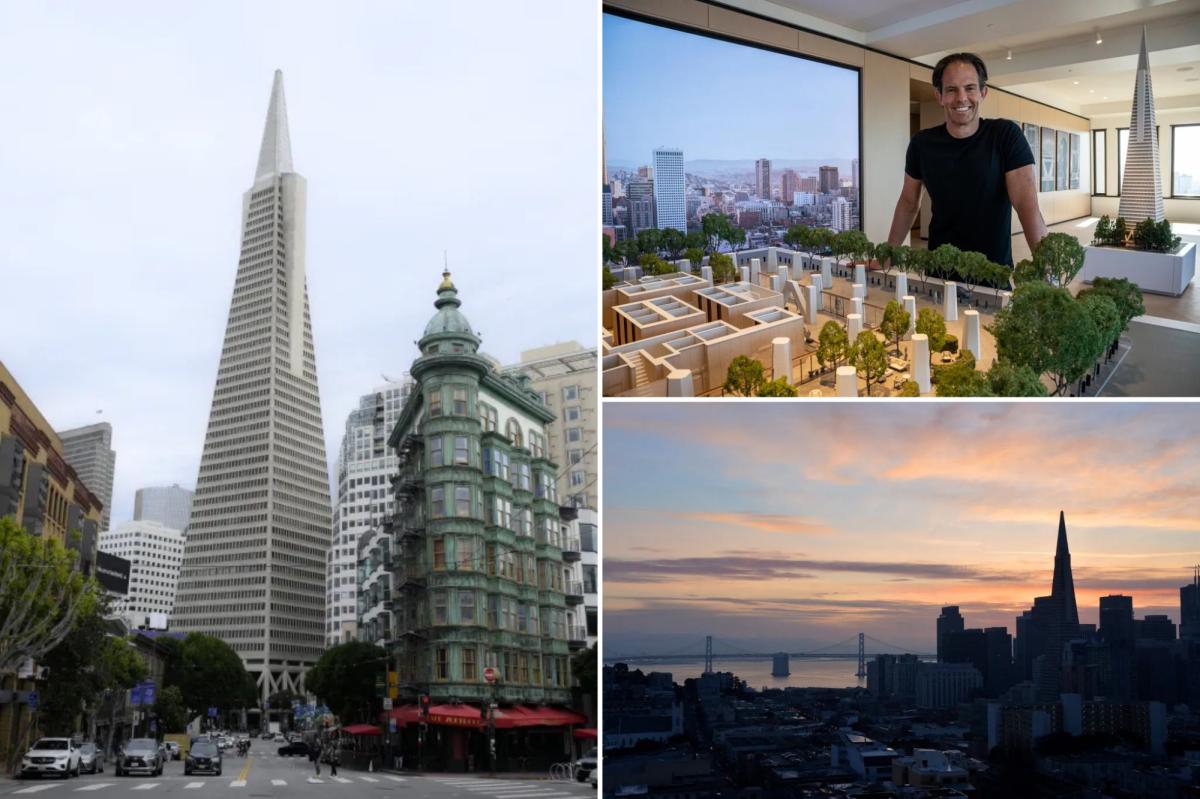
For the second time in six years, the Transamerica Pyramid — the slender spire that has long stood as the defining silhouette of San Francisco’s skyline — is poised to change hands again, a move that underscores ongoing fragility in the city’s commercial real estate sector.
A joint venture led by developer Michael Shvo and Deutsche Finance America has agreed to sell the 48-story tower and adjacent buildings to Cyprus-based Yoda Plc, according to Bloomberg.
Those people, who declined to be named because the deal has not closed and terms remain private, would not disclose the price. This follows Shvo’s 2020 acquisition of the property for about $650 million and years of renovation costing roughly $1 billion.
Just this past weekend, the “ball was up in the air” regarding which way the sale would go, a separate source told SF Chronicle, describing the situation as “changing minute by minute.”
For the second time in six years, San Francisco’s iconic Transamerica Pyramid is poised to change hands. Anadolu via Getty Images
Shvo, whose firm has pursued high-end projects from Manhattan to Miami, celebrated recent leasing wins at the Pyramid. This includes rents over $300 per square foot, reportedly a West Coast record — but larger financial strains have shadowed his portfolio.
“The Transamerica Pyramid has long symbolized the city’s ambition and resilience,” Shvo said in an emailed statement to the outlet. “We are proud to have strengthened that legacy — physically, financially, and culturally — and I am confident it will continue to define the skyline and serve generations to come under its next custodian.”
Representatives for Yoda did not immediately respond to requests for comment. Deutsche Finance and the German pension fund backing the original purchase declined to comment.
Developer Michael Shvo and Deutsche Finance America have agreed to sell the 853-foot tower and surrounding complex to Cyprus-based Yoda Plc in a deal that has not yet closed and whose price was not disclosed. Bloomberg via Getty Images
Shvo’s ambitious buying spree, which is estimated at about $3 billion across trophy properties, has left longtime backers uneasy, particularly German pension investors who have flagged potential write-downs exceeding $1 billion on partnered deals nationwide.
Shvo has publicly referred to himself as its “proud owner,” though the extent of his equity stake has not been confirmed. Despite securing a record-setting lease of more than $300 per square foot for a 4,000-square-foot office space to Tiger Global, his relationship with German pension fund Bayerische Versorgungskammer has grown strained, according to the Chronicle.
The fund reportedly explored replacing Shvo as operator of the Pyramid and other office assets after becoming dissatisfied with the performance of certain residential and hotel investments in other markets, some of which have already been sold.
BVK has disclosed that it invested about $1.9 billion in US real estate ventures with Shvo and Deutsche Finance and warned it could face losses approaching $1 billion tied to weakness in the office sector, including properties in Chicago and Manhattan.
Shvo’s group purchased the landmark (pictured on the right) in 2020 for $650 million and spent roughly $1 billion renovating it before reopening in 2024. Kirby Lee-USA TODAY Sports
While the pension fund has said those losses represent only a small portion of its broader portfolio, members are reportedly seeking more transparency and considering legal action.
Sources told The Chronicle, BVK had begun soliciting proposals from alternative office managers before abruptly halting the effort earlier this year. Shvo has dismissed suggestions of a rift, calling the reports “totally false” and likening the controversy to background distraction, saying, “It’s all noise, just drive.”
Other high-profile assets, including Miami’s historic Raleigh Hotel and Beverly Hills condo developments, have already been sold or restructured under financial pressure.
The Pyramid’s repeat sale comes as San Francisco’s commercial real estate market remains in flux.
The sale comes amid continued strain in San Francisco’s commercial real estate market, where office vacancy remains around 30% following tech downsizing and remote-work shifts. Gado via Getty Images
Office vacancy rates in the city have hovered near some of the highest in the nation — roughly 30% or more — even as a wave of tech-sector leasing and AI-driven demand helped drop availability and boost leasing activity in late 2025.
Despite pockets of renewed interest and positive absorption, the city’s downtown still shows scars from the pandemic era. Former transit corridors that once bustled with office commuters saw foot traffic plunge, leaving many older buildings with persistent vacancies well above historic norms.