
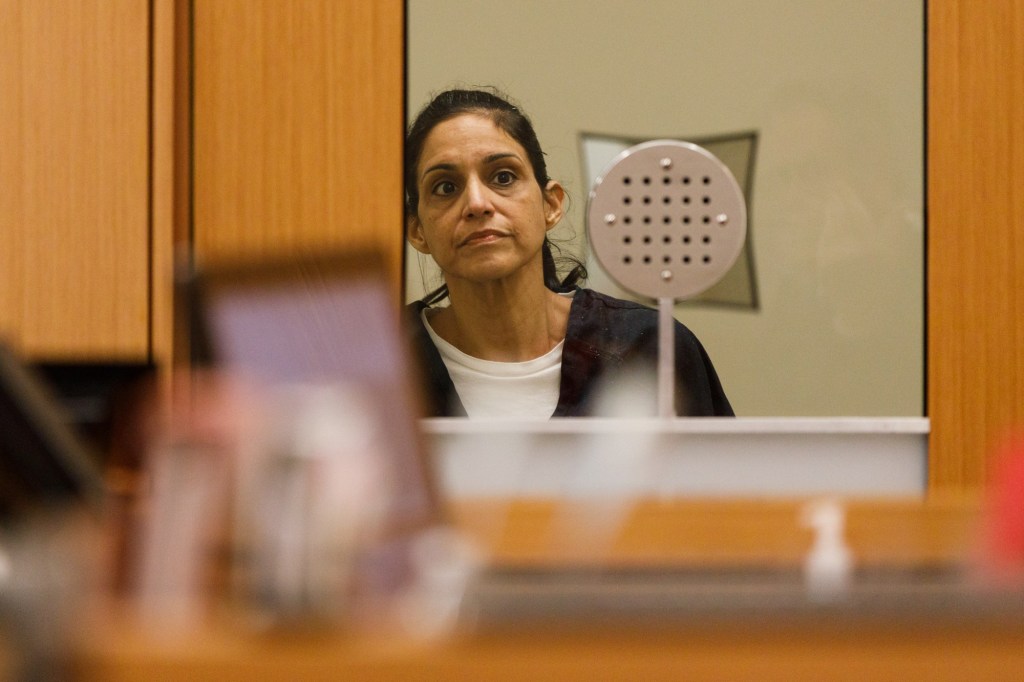
An already dire picture of a woman taking money meant for San Diego’s most vulnerable and spending it on everything from plastic surgeries to personal vacations grew even darker this week when prosecutors gave a public update about their ongoing investigation.
The previous estimate that at least $132,000 in San Diego County funds had been stolen by Amy J. Knox, 43, has now been upped to $210,000. What happened to an additional $600,000 is still a mystery. And Knox’s work with a local foundation and the state of New Mexico may have endangered additional taxpayer dollars.
“She has a lot of money ready to go,” Deputy District Attorney Matthew Dix said Wednesday morning in a downtown courtroom. “She’s a flight risk.”
Judge Melinda Lasater appeared to agree. She raised the bail to a half-million dollars — far more than the $300,000 prosecutors were asking — and continued to block any attempt to release Knox from jail until everyone was sure a bail payment wasn’t going to be made with stolen money.
Knox is the former chief operating officer of the Harm Reduction Coalition of San Diego. The organization has long worked to reduce overdoses in the region, especially among the homeless population, and San Diego County gave the group two contracts worth millions of dollars: One to pay for drug tests and the other for distributing naloxone, an opioid-overdose-reversing nasal spray commonly known by the brand name Narcan.
Yet prosecutors believe Knox siphoned money away from those contracts to take a family trip to Disneyland, buy subscriptions to streaming services and pay off stacks of personal credit card bills, among other expenses.
Knox has pleaded not guilty. If convicted of the updated felony charges, Knox faces up to eight years in prison. Previously, she’d only been looking at seven.
The next court hearing is scheduled for April 1.
Her attorney, Richard Katzman, denied that Knox would flee if released, saying that she’s responsible for an 11-year-old daughter. He also highlighted Knox’s involvement with a number of causes and service organizations, including the California Native Vote Project, Shadow Mountain Church and a syringe exchange program.
Katzman argued that a recent sale of a $20,000 motorcycle owned by Knox’s husband should make for a sufficient bail payment. (Defendants must often pay 10% of their bail to walk free, and before Wednesday’s hearing Knox’s bail was set at $200,000.) The judge instead asked for more evidence that the money was untainted.
In addition, Katzman has suggested in court that the harm reduction coalition’s CEO, Tara Stamos-Buesig, might be guilty of misconduct.
Stamos-Buesig has denied wrongdoing and said she was the one to alert the District Attorney’s Office that there was a problem with the group’s finances. Prosecutors have confirmed that she tipped them off. However, the agency did note that in 2023 a “concerned citizen” accused Stamos-Buesig of storing Narcan under a tarp in her front yard during “100-degree weather.”
Narcan should be kept below 77 degrees Fahrenheit, according to product instructions. Stamos-Buesig declined to comment on that accusation.
The investigation may get more complicated in the coming months.
Knox used to serve on a volunteer board overseeing the local Crossroads Foundation, which aids women with substance use disorders. A spokesperson has said Knox never had access to the organization’s finances, but prosecutors on Wednesday said she once filed paperwork with the state posing as the foundation’s CEO. Plus, she managed a Crossroads’ fundraiser.
Then there’s a Narcan distribution deal Knox allegedly has with the state of New Mexico worth more than $1 million, investigators said. “We don’t have any idea if that’s legit,” Dix, the prosecutor, told the judge.
The District Attorney’s Office has slammed San Diego County leaders for not catching the alleged fraud sooner. Among the warning signs was the fact that Knox already had a record of theft. About a decade ago, she served time in prison after stealing hundreds of thousands of dollars from a family business and a small contracting company, officials said.
County leaders have pledged to review how the harm reduction coalition was able to get access to so much money with apparently little oversight.