
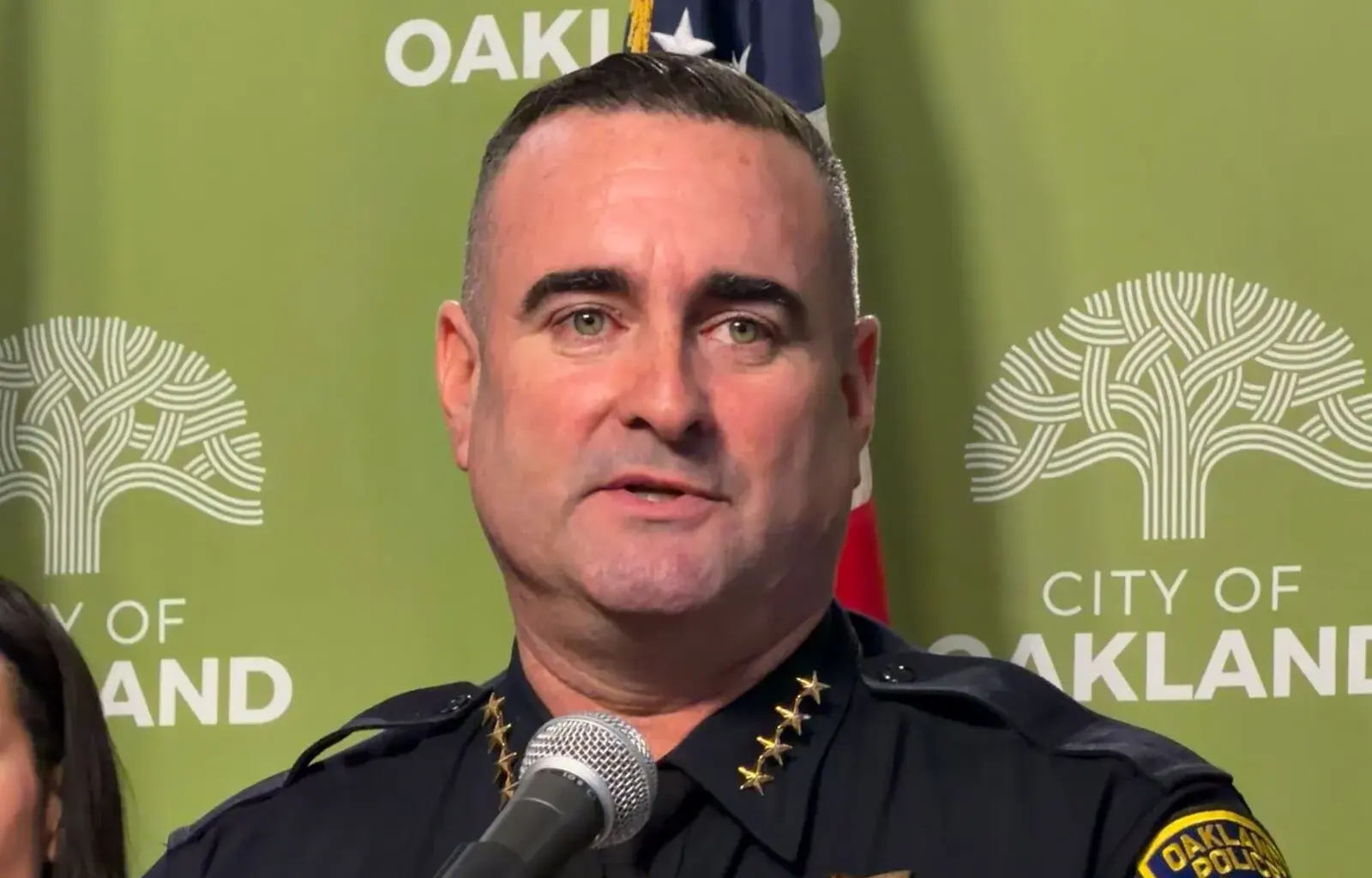
It was a routine report from the Oakland Police Department.
At the Police Commission’s Jan. 22 meeting, Lisa Ausmus, deputy chief of OPD’s Bureau of Risk Management, was walking commissioners through the typical stats — the number of sworn staff, how many officers were on leave, how many were eligible for retirement.
But one metric, in particular, stood out: the sharp drop in pending Skelly hearings.
Most people probably haven’t heard of a Skelly hearing. But they are a major issue for police departments, and if they aren’t dealt with in a timely manner, they can lead to all kinds of problems. Under state law, if a city wants to discipline a public employee, like a police officer, for misconduct, the city has to first give the officer an opportunity for a Skelly hearing. These are mandatory hearings for California public employees facing suspension, demotion, reduced pay, or termination. Only after a Skelly hearing can a city discipline an employee.
Ausmus said that when she started reporting out Skelly data during Police Commission meetings in late 2024, OPD had nearly 170 pending Skelly hearings at the time.
“Right now, we’re down to 46,” she told the commission. “So we’ve made a significant dent in that.”
The massive backlog is related to OPD’s federal oversight, now in its 23rd year. Under federal court supervision, one of OPD’s mandated reforms is to ensure timely internal investigations and a fair disciplinary process.
In January of this year, OPD reported 56 officers were waiting for Skelly hearings.
The progress was again highlighted at the City Council’s Public Safety Committee meeting Tuesday night, where OPD leaders said that at its peak in October 2024, there were 169 pending Skelly hearings. Today, the department has 46, a 73% reduction in a 15-month period, according to Internal Affairs Captain Bryan Hubbard.
“This was not an overnight fix,” he said. “This was many months in the works.”
A lack of Skelly hearing officers and other problems
Hubbard and Interim Police Chief James Beere attributed the Skelly backlog to understaffing, stringent requirements for staff to recuse themselves from acting as hearing officers, outdated technology, and competing responsibilities.
Until recently, Beere said, just one professional staff member was assigned to coordinate Skelly hearings. Now, OPD has a staff member, a supervisor, and a lieutenant to work on Skelly’s.
Heavy administrative workloads made the problem worse. Previously, an OPD staff member had to redact sensitive information by hand in documents in an officer’s “Skelly binder,” which consists of the evidence supporting the charges against the officer, such as investigative reports, body-worn camera footage, personnel records, and other documents. Today, Hubbard said, new software has streamlined the process.
Skelly data are broken down into two categories: by subject, meaning the number of officers under review for disciplinary action, and by case.
Not all Skelly cases involve just one officer, explained Beere. Across the 46 pending Skelly hearings, 64 officers are the subjects of those cases.
OPD leaders also noted that the number of pending Skelly hearings does not equal the number of officers on administrative leave. Sixteen officers, Hubbard said, are currently on paid administrative leave. Of those, 12 are awaiting Skelly hearings for “rather serious” violations, according to Hubbard. Four of them are pending termination.
Due process rights for public employees
The name Skelly comes from Skelly v. State Personnel Board, a 1975 California Supreme Court case that held that public employees have property rights to their jobs and rights to due process in disciplinary matters.
The law requires three things before discipline can be imposed:
A written notice of the proposed disciplinary action and the reason for it
A copy of the charges and supporting materials
An opportunity for the employee to respond, either orally or in writing, before an impartial and uninvolved reviewer, known as a Skelly hearing officer
“A Skelly hearing is not a full evidentiary trial,” Hubbard said during the meeting on Tuesday. “It is a procedural safeguard, a check to ensure the department’s process was fair, the investigation was adequate, and the proposed discipline is just, given the circumstances and the employee’s record.”
Some officers accused of misconduct may choose to waive their right to a Skelly hearing and accept discipline.
Not all officers are eligible to be Skelly reviewers, Hubbard said. They cannot be a witness to the alleged misconduct, cannot have been involved in the investigation, cannot have served in the subject’s chain of command, and cannot play a role in recommending discipline.
Hubbard also noted that Skelly hearings are duties that officers take on in addition to their normal, unrelated workloads. “These are commanders and executives who serve as Skelly hearing officers on top of their other responsibilities,” he said. “They’re running bureaus, managing patrol operations, overseeing critical functions.”
The department currently has 18 trained hearing officers. Hubbard told the committee that OPD leaders are working on training more officers to bring that number up to 30.
Other potential solutions?
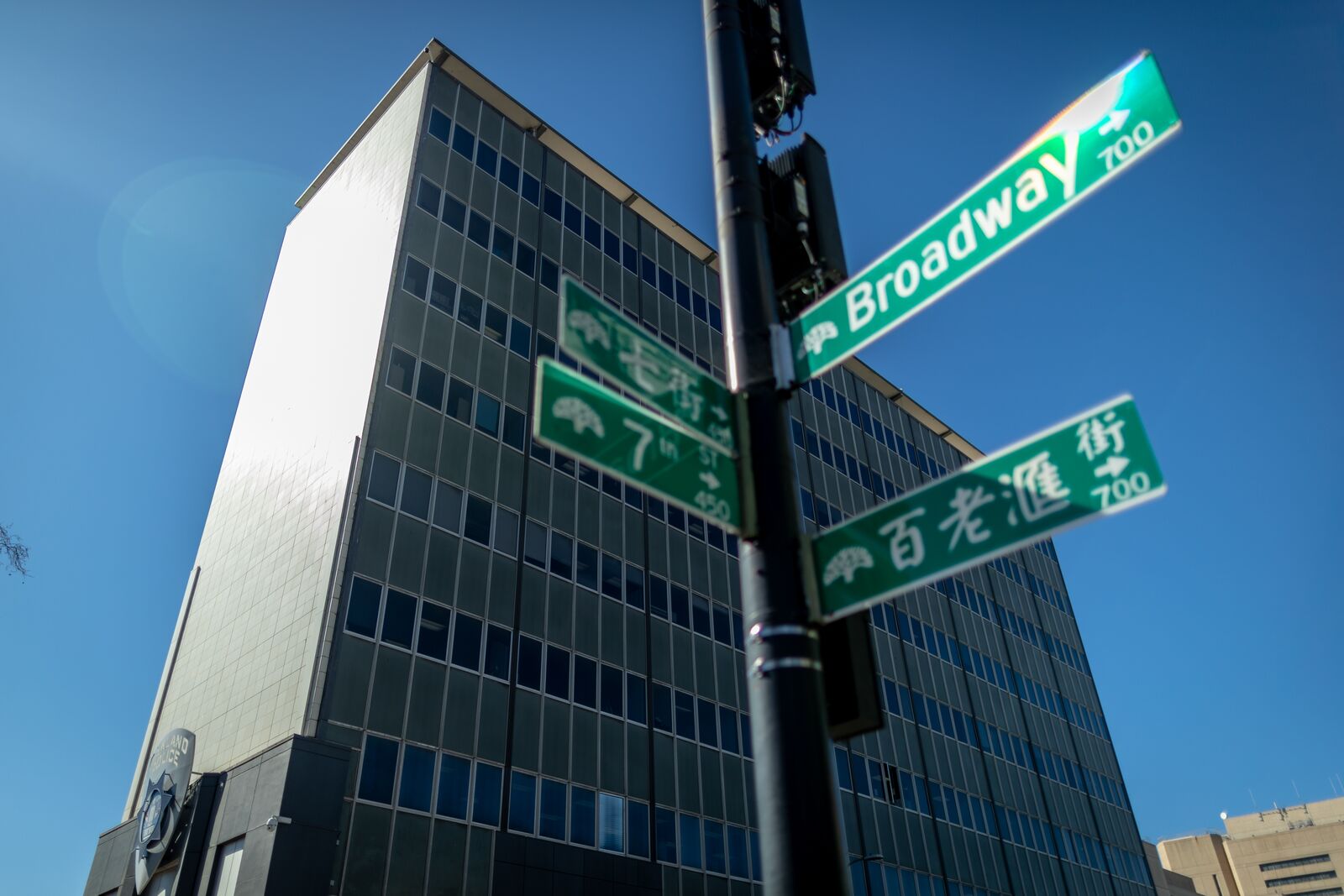 Public agencies like OPD must offer Skelly hearings to employees facing termination, reduced pay, or suspension before imposing discipline. Credit: Amir Aziz/The Oaklandside
Despite the department’s progress in reducing the Skelly backlog, questions remain over who should take charge of the process.
During Tuesday’s meeting, District 3 Councilmember Carroll Fife asked OPD whether some of the Skelly duties can be transferred to the department’s human resources section or other staff so that “higher-ranking law enforcement officials can focus on other, more important things.”
“This sounds like work that an entry-level paralegal could do with the appropriate training,” Fife said.
Antonio Lawson, the newly appointed director of the Community Police Review Agency or CPRA, has proposed that CPRA take over managing the hearings and using external Skelly officers. His agency’s budget includes $200,000 to address the Skelly backlog, and CPRA recently hired a project manager to take on that effort.
During public comment, Millie Cleveland with the Coalition for Police Accountability said she supports CPRA’s proposal, citing concerns about impartiality.
“I think the best measure is to move Skelly hearing officers outside of the department, which occurs with all the other general employees in SEIU, IFPTE, IBEW,” said Cleveland, referring to the unions representing other city employees.
Some community members pushed back on that. Tuan Ngo, a public safety activist and frequent critic of civilian police oversight, called the proposal “a power grab by CPRA.”
“Why would we replace a process that’s working with a hare-brained, ill-informed idea to use untrained civilian staff?” Ngo told committee members.
“Before adding another layer of administrative expense, it seems reasonable to allow the current reforms to continue,” said Rajni Mandal, another public safety activist.
Charlene Wang, chair of the council’s Public Safety Committee and District 2 councilmember, directed OPD and the City Administrator’s Office to return in six months with another update on the Skelly backlog.
“*” indicates required fields