
What does it mean to understand human history, to know the trials and tribulations, as well as the successes and accomplishments of humanity?
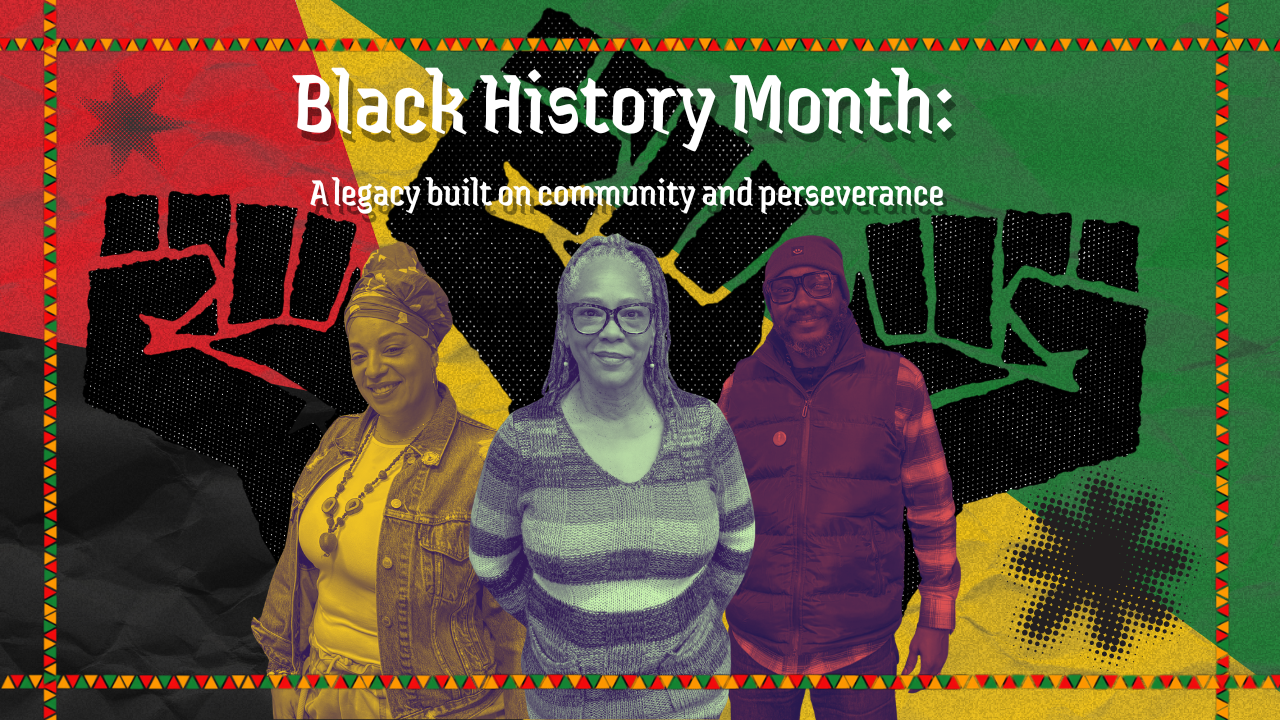
One thing is certain: humans came from the continent of Africa and eventually diversified into the cultures we have now. Black History Month is a testament to the foundation of humanity and the human connection. Three Pan-African ethnic studies professors at Sacramento State weigh in on the importance of Black History Month.
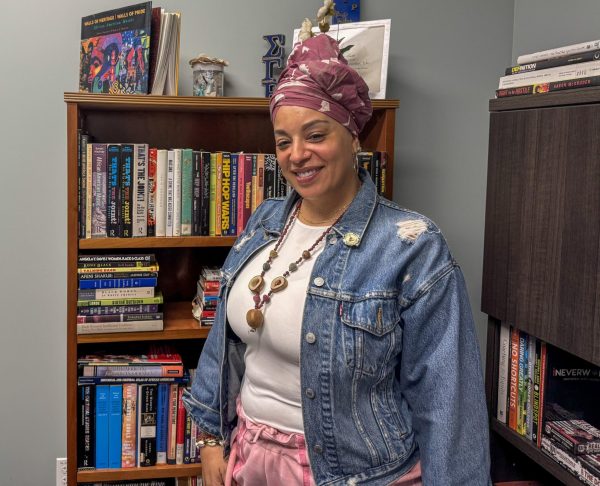 Professor Andrea L. Smith stands in front of her office library Friday, Feb. 13, 2026. She is currently writing a book centered around her spiritual journey and resistance. (Photo by Julian Panela)
Professor Andrea L. Smith went through a long, arduous journey of education. She spent six years in community college, before transferring to UC Davis for another eight years to earn her Ph.D. in Cultural Studies. She eventually found herself at Sac State, where she teaches general ethnic studies, Pan-African studies and many more classes within the social sciences field.
Smith is an advocate for social movements, even helping in the production of “We were Hyphy,” a documentary centered around the subgenre of hip-hop called “hyphy.” It reflects a movement that started in the Bay Area that gives credit where it was previously not attributed.
“What I like to do is I like to look at marginalized voices and center them. I connect that to historical social movements in Black history or in American history,” Smith said.
Smith stresses the significance of understanding this history as it is important to scholars and the everyday person.
“Our scholars and just people in this country in general are not familiar with the contributions of Black Americans in this country,” Smith said. “They’re not familiar with the fact that we have a pre-colonized history that also speaks to descendants of Africa on the continent, but also throughout the globe, and specifically in the United States of America.”
Smith explained how vastly undertaught this pre-colonized history is. She explained how African indigenous groups have lived in the states before the colonial period. Most people don’t know these histories, leading to an inaccurate portrayal of history that Smith wants to correct.
A big motivator behind Smith’s dedication to teaching ethnic studies is getting rid of the rose-tinted glasses most people grew up learning in general education. It is especially important to Smith to combat the anti-Blackness that shows up not only within other cultures, but within Black communities as well.
“Anti-Blackness is rampant even amongst Black communities, and so some of the ways to eradicate some of that anti-Blackness is to provide people with an education about the histories, her-stories and the our-stories of these people to validate their contributions in this country, and also to have a personal sense of responsibility to ourselves,” Smith said.
There is a big responsibility when it comes to teaching newer generations of students the importance of Black History Month, but one thing Smith highlights is how similar everyone is, regardless of all the baggage they carry or what skin tone they have.
Related: Black History Month 2026
“In spite of the things we’ve had to fight, we still have joy, we still have love and we still are here for those who are coming behind us,” Smith said.
Smith works in the Cooper Woodson College enhancement program, which has been around since 1990. Many identity celebrations have been modeled around it at Sac State, as well as student programs such as the MLK Center, Full Circle Project and the Black Honors College. Smith proposes that students do their research on these programs and their legacies, as they modernly impact a lot of students with its rich legacy of education and Black empowerment.
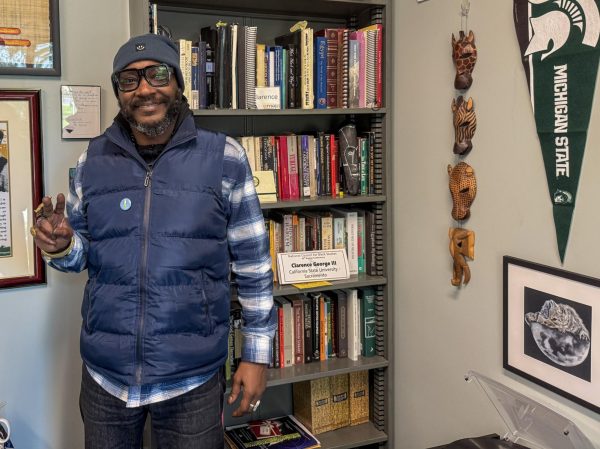 Professor Clarence George III stands in front of his office library Friday, Feb. 6, 2026. George is surrounded by his achievements, such as being a part of the Black Honors College. (Photo by Julian Panela)
Professor Clarence George III started his higher education at San Joaquin Delta College, where he explored honors programs that elevated his curiosity in the sciences. George then came to Sac State and studied communications and ethnic studies. His last stop in California was at San Francisco State, finishing his master’s degree in Pan-African and African American studies, before attending Michigan State for his doctorate.
Black History Month is an acknowledgment of endurance through adversity for George; Not only is it a month for Black Americans to acknowledge, but for all marginalized communities to remember how far they have come in a country that was not initially welcoming.
“All people have walked from the continent of Africa, and the history is relevant to all of humanity,” George said. “Part of the recognition of human history is through the importance of the first people who have existed on Earth; to know African history is to know world history and your history.”
Black History Month started as a one-week celebration known as “Negro History Week,” created by Carter G. Woodson in 1962. George expressed the importance of knowing the history behind the creation of Black History Month, especially through the lens of an educator like Woodson.
“Black History Month was created for people of African descent to have agency, understand their history, to know the trials and tribulations were not the only stories for Black history,” George said. “It helps minority populations to reflect the greatness and growth of their experiences, particularly in the United States.”
George highlighted how important the month is to him.
“For me, Black History Month is a highlight of the importance of education, of the community, of heritage, of knowing where you come from, to knowing where you are going,” George said. “It is an opportunity to give homage to our ancestors.”
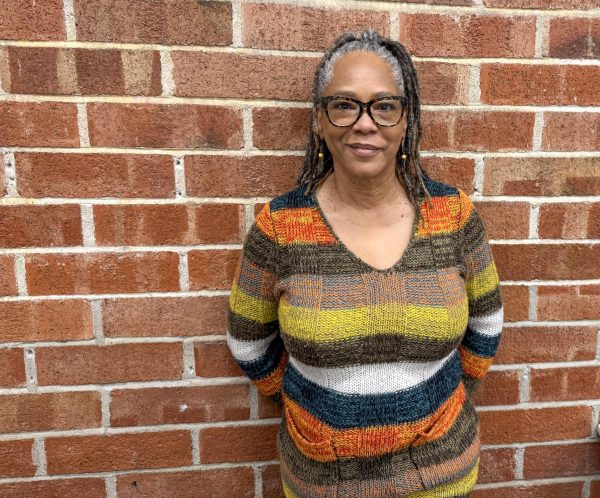 Professor Katrina Bell McDonald poses after finishing one of her classes Monday, Feb. 16, 2026. McDonald teaches a Pan-African history class where she encourages students to engage in discussion. (Photo by Julian Panela)
Professor Katrina Bell McDonald has over 25 years in education. She started by running a computer lab for students at California State East Bay, eventually getting an opportunity to teach something she never expected, ethnic studies. Her successful time teaching and positive feedback from students pushed her to earn her sociology Ph.D. at UC Davis. She spent 25 years at Johns Hopkins University on the East Coast, becoming the second-ever fully tenured Black professor at the university.
As a Pan-African Studies Professor, McDonald stresses the importance of her students’ understandings of Black History Month and accepting different cultures. She explained that students expressed frustration from not knowing the true histories left buried under falsities.
“I think it’s just as important to know as many different cultures as you can because we’re all on the same planet, and Black History Month is an opportunity for people to do so,” she said. “I think as the years have gone on, it’s become more of a multicultural kind of event.”
Even through years of teaching, it becomes difficult to teach sensitive topics such as Black history, as some find it redundant. However, McDonald thinks that it is integral to repeat these stories and continue the legacies of the people who have fought before and the people who will continue to fight after. The devaluing of some people’s cultures has been something that she is vehemently opposed to.
“To deny that their culture is important means yours isn’t, right? We need to appreciate who we all are, and it helps us better understand the world at large. When we need to bind together, we know I can count on you not to be my enemy,” McDonald said. “You’re different, but you’re not my enemy; your history is just as rich and important as my history is.”
McDonald explained the concept of a “philomath,” which is someone who is a lover of learning. When it comes to learning, she suggests that people should go into learning about other cultures with that same love philomath’s do.
She not only focuses on the human connection and learning through events like Black History Month, but also similar observational times for other cultures. This is not only important for Black History, but all history.
“Black History Month is a time to celebrate and to learn, and so forth. I think it’s important as a practice for the things to come, perhaps, or what we’re already going through,” McDonald said. “We need to bind together, stick with what we notice, celebrate who we are, mourn who we need to mourn, but know that we are deserving to be here, particularly given the trauma our ancestors and we have suffered.”