
A proposed ballot measure that would impose a hefty tax of as much as $15,000 a year on thousands of empty second homes in San Diego cleared a major hurdle Wednesday when elected leaders agreed to advance it to the full City Council next week.
The council’s Rules Committee voted unanimously to move the proposal forward so council members can decide whether it should be placed on the June ballot. The deadline for doing so is next Friday. The council is expected to weigh the ballot measure on Tuesday.
The proposal, which initially calls for an annual $8,000 tax on more than 5,000 largely unoccupied homes — plus a $4,000 surcharge for corporate-owned dwellings — is being pushed by Councilmember Sean Elo-Rivera, who just a month ago failed to win support from his colleagues for a far broader measure that would have also taxed whole-home short-term rentals.
With that component now excised completely from his proposed ballot measure, Wednesday’s nearly two-hour special committee hearing drew far more public speakers offering support rather than opposition, among them labor unions, community organizers and nonprofits focused on promoting affordable housing. Noticeably absent were Airbnb, the San Diego Regional Chamber of Commerce and scores of short-term rental hosts who appeared a month earlier to oppose the vacation rental tax.
Elo-Rivera emphasized Wednesday that his now revised proposal would specifically include language stating that it does not apply to the rental of entire homes on a short-term basis. An empty second home is defined as one that is left unoccupied for more than 182 days out of the year and is not an owner’s primary residence. Elo-Rivera argues that by keeping such homes off the rental or for-sale market, owners are depriving San Diegans of much needed housing.
“Housing is foundational to dignity and stability and that’s why we don’t believe homes should sit empty during a housing crisis,” Elo-Rivera said in advance of the committee vote. “San Diego is making real strides in housing … and today we have an opportunity to take a critical step toward asking the voters to provide us with yet another strategy that can directly help San Diegans stay in San Diego.
“I can’t predict exactly how many homes will return to the long-term market if this measure passes, but we do know this: It will change incentives and homes will come back into use. And just like every new home we build, every home returned to housing is worthy of celebration because it opens the door to a family that gets to stay in San Diego, potentially even as a homeowner.”
Elo-Rivera’s office estimates that there are 5,115 such properties that are not claimed as a primary residence. That figure is based on the number of homes whose owners sought a second home/vacation home exemption from paying the Rental Unit Business Tax because they do not use their properties as a primary residence or as a short- or long-term rental but instead keep them largely uninhabited.
A lengthy analysis prepared by the Office of the Independent Budget Analysis offered a more conservative estimate of anywhere from 1,790 to 2,812 empty homes that would be affected by the proposal. However, that estimate takes into consideration properties that would fall under a number of exemptions proposed by Elo-Rivera, as well as those instances where owners opt to sell their properties or convert them to short- and long-term rentals.
The Independent Budget Analyst’s office also concluded that the measure, if passed by voters, could generate from $12.1 million to $23.8 million in new revenue to the city during the first year of implementation. That could increase to $15.3 million to $30 million in the second year, which is still considerably less than the $51 million calculated by Elo-Rivera’s office.
It’s likely those figures could change as the city conducts more analysis, should the measure be placed on the ballot, said Noah Fleishman, senior fiscal and policy analyst with the IBA’s office.
Under the current version of the empty homes tax measure, owners of vacant second homes would have to pay an annual levy of $8,000 the first year, effective in 2027, and $10,000 every following year. An additional surcharge of $4,000 the first year and $5,000 thereafter would be imposed on corporate-owned dwellings.
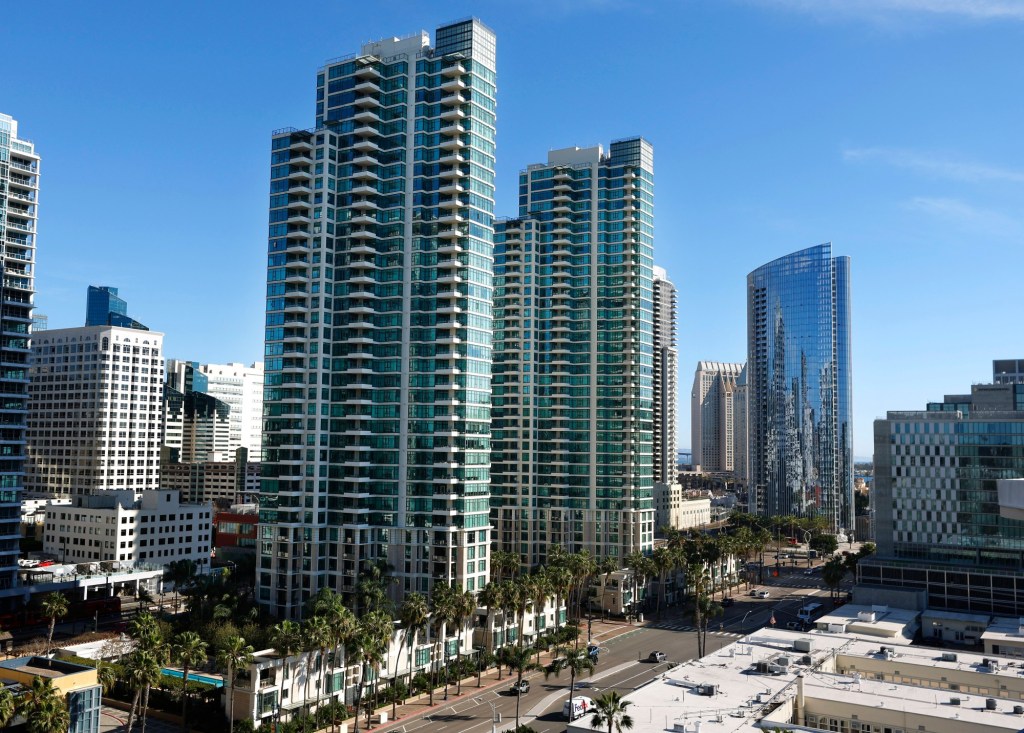
According to Elo-Rivera’s office, the single largest concentration of unoccupied homes is in downtown San Diego, with 792, followed closely behind by La Jolla, with 751.
Council members who were unwilling to support Elo-Rivera’s original tax measure because it included short-term rentals said Wednesday they were pleased with the changes.
“We are absolutely experiencing a housing crisis, and I do want to be clear that different types of housing stock do have impacts on housing availability and affordability,” said Councilmember Kent Lee. “If someone can afford to own a second home and not use it for any purpose, they can absolutely afford to pay that tax and should.”
Councilmember Raul Campillo said he was willing to move the measure forward but raised concerns about it withstanding likely legal challenges, an issue raised by some property owners who spoke out against the proposal during the public hearing.
Not long after San Francisco voters passed an empty homes tax in 2022, a coalition of real estate interests sued the city, and in October 2024, a Superior Court judge struck down the law. The city has appealed the ruling.
“Before this item reaches the ballot, there’s still a little more homework to be done from the city attorney’s office to make sure we get this right,” said Campillo, noting that his final decision on the measure would depend on the responses he gets from the city attorney’s office. “I’m requesting that the city attorney prepare a memorandum to robustly explain to the City Council the city’s strengths and weaknesses in defending this proposal in court, which is incredibly important to me, given that another court has struck down (an empty homes tax) on summary judgment, which is before trial, (ruling) that it violated the Ellis Act and had constitutional issues.”
He also asked the city attorney’s office to include recommendations to make the proposal more legally defensible. Elo-Rivera’s office says it modeled the San Diego measure after a similar one in Berkeley that has safeguards that were not included in the San Francisco measure.
Kevin Darnall, a San Diego resident who has owned a second home in Carmel Valley for more than 40 years but has kept it vacant since having to evict a non-paying tenant in 2021, told the council committee that the city does not have the right to tell homeowners how they can or cannot use their property. In a separate email to the Union-Tribune, Darnall said that it makes sense for him and his wife at this point in their lives to hold on to the property so they can pass it on to their children.
“The right to keep your property as you like it — vacant, rented, occupied — is the property owner’s right, not the right of the jurisdiction that may govern it,” Darnall, 73, told the council. “I would ask that you consider this and understand that this will probably be litigated.”
Another property owner, who said he was calling in to the hearing from Colorado, noted that he owned six homes in San Diego County, although he didn’t indicate whether they are located in the city of San Diego.
“I just don’t appreciate you guys stepping on my property rights,” said Kevin Hastings. “I worked hard for those to achieve the American dream,” he said. “I tried renting these out. You know, renters are dirty, they’ve got kids, they’re always destroying the place. They need to go get their own place and stop being poor is what it really comes down to. Stop looking for handouts.”
Many more individuals talked about the difficulties San Diegans face in finding any housing, rental or otherwise, that they can afford.
“Like many longtime residents, I’m still struggling to afford a home, to afford rent and to even stay in the city I love,” said Patricia Mondragon, of Alliance San Diego, a community nonprofit. “I worked in real estate and saw firsthand how often speculators outbid local families with all-cash offers. When our neighbor passed away, an investor bought the house next to my parents in North Park, and they left it vacant for over five years while the value more than doubled. No housing was created, no family was helped. Homes should be for people who live here and work in San Diego, not for corporations to warehouse wealth.”
The proposed tax does include some room for exemptions, such as disaster periods when a home is uninhabitable, circumstances where the owner is in long-term care, a family member is living in the home, financial hardship and qualifying military service, and where the owner of four or fewer housing units lives in one of them. Also exempted would be newly built homes that remain vacant while being offered for sale and instances where an owner can show evidence of a rental lease for more than 182 days in the previous calendar year.
Elo-Rivera acknowledged that the second home tax alone cannot solve the city’s affordability crisis, but he hopes little by little, such efforts will make a difference. He also said that even though short-term rentals are no longer included in the ballot measure proposals, he still wants to address loopholes in the city’s regulations that allow corporate owners of housing to secure multiple vacation rental licenses.
“We have not given up on the idea that the current short-term rental ordinance needs to have loopholes closed because it’s being exploited,” he said. “I continue to believe that there should be a waiting period for corporations before they’re able to purchase homes that gives everyday people a fighting chance to buy that first home.”